
SVB's Collapse Exposed What Entrepreneurs of Color Already Knew: The Banking System Was Never Built for Them
SVB's Collapse Exposed What Entrepreneurs of Color Already Knew: The Banking System Was Never Built for Them When the Bank Collapsed, Founders of Color Felt the Quake First When customers at Silicon Valley Bank rushed to withdraw billions of dollars last month, venture capitalist Arlan Hamilton stepped in to help some of the founders of color who panicked about losing access to
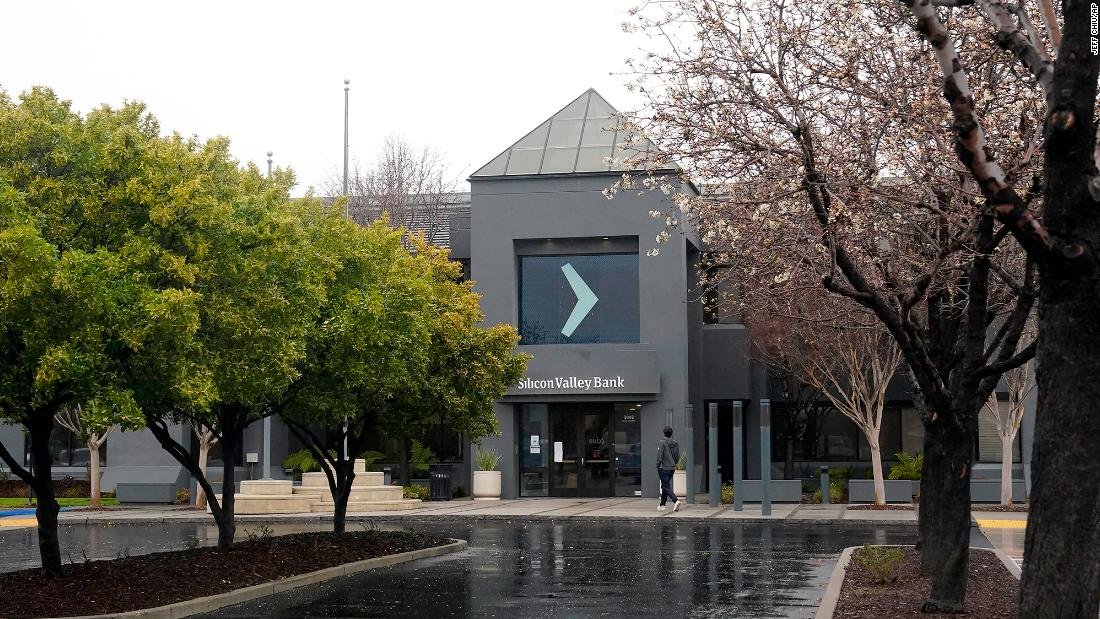
When the Bank Collapsed, Founders of Color Felt the Quake First
When customers at Silicon Valley Bank rushed to withdraw billions of dollars last month, venture capitalist Arlan Hamilton stepped in to help some of the founders of color who panicked about losing access to payroll funds. As a Black woman with nearly 10 years of business experience, Hamilton knew the options for those startup founders were limited. SVB had a reputation for servicing people from underrepresented communities like hers. Its failure has reignited concerns from industry experts about lending discrimination in the banking industry and the resulting disparities in capital for people of color.
Hamilton, the 43-year-old founder and managing partner of Backstage Capital, said that when it comes to entrepreneurs of color, "we're already in the smaller house. We already have the rickety door and the thinner walls. And so, when a tornado comes by, we're going to get hit harder." This collapse did not create the problem. It simply laid bare the fragile foundation that minority founders have operated on for generations. The rush to withdraw funds exposed how quickly access to capital can vanish for those already operating at the margins.
Established in 1983, the midsize California tech lender was America's 16th largest bank at the end of 2022 before it collapsed on March 10. SVB provided banking services to nearly half of all venture-backed technology and life-sciences companies in the United States. For founders of color, that concentration meant SVB was not just another bank. It was often the only reliable door open when larger institutions slammed theirs shut.
SVB's Commitment to Underrepresented Communities
Hamilton, industry experts and other investors told CNN the bank was committed to fostering a community of minority entrepreneurs and provided them with both social and financial capital. SVB regularly sponsored conferences and networking events for minority entrepreneurs, said Hamilton, and it was well known for funding the annual State of Black Venture Report spearheaded by BLK VC, a nonprofit organization that connects and empowers Black investors. "When other banks were saying no, SVB would say yes," said Joynicole Martinez, a 25-year entrepreneur and chief advancement and innovation officer for Rising Tide Capital.
Martinez said SVB was an invaluable resource for entrepreneurs of color and offered their clients discounted tech tools and research funding. This approach stood in sharp contrast to the major national banks that routinely turned away minority applicants. SVB's willingness to engage directly with these communities created pathways that extended beyond simple account services into genuine partnership and visibility.
The bank's sponsorship of events and reports helped amplify voices that larger institutions ignored. Founders gained not only capital but also connections that fueled growth in sectors where representation remains scarce. This model proved that targeted support could yield results when traditional gatekeepers refused to participate.
Decades of Discrimination in Lending Exposed
Minority business owners have long faced challenges accessing capital due to discriminatory lending practices, experts say. Data from the Small Business Credit Survey, a collaboration of all 12 Federal Reserve banks, shows disparities on denial rates for bank and nonbank loans. In 2021, about 16% of Black-led companies acquired the total amount of business financing they sought from banks, compared to 35% of White-owned companies.
"We know there's historic, systemic, and just blatant racism that's inherent in lending and banking. We have to start there and not tip-toe around it," Martinez told CNN. These numbers reflect more than isolated rejections. They reveal a pattern where Black-led firms receive less than half the success rate of their White counterparts when seeking the same financing. The gap persists across multiple years of survey data and underscores why alternative institutions like SVB became essential.
The Federal Reserve findings make clear that denial rates are not random. They track directly with race and ethnicity in ways that cannot be explained by creditworthiness alone. This systemic barrier forces entrepreneurs of color into smaller, more vulnerable banking relationships that larger shocks can destroy overnight.
Arlan Hamilton's Stark Warning on Vulnerability
Hamilton's description of minority founders already living in the smaller house with rickety doors captures the daily reality of operating without a safety net. When SVB failed, those thinner walls offered no protection against the sudden loss of payroll access. Her intervention to support founders of color highlighted how quickly panic spreads when the one accessible bank disappears.
With nearly 10 years of business experience, Hamilton understood that limited options leave little room for recovery. The collapse did not create new barriers. It amplified existing ones that have kept minority entrepreneurs in precarious positions for decades. Her actions demonstrated the need for community-level responses when institutional failures hit hardest.
Hamilton's perspective forces a direct confrontation with the fact that SVB's role was never about charity. It was about filling gaps left by mainstream banks that have refused to serve these communities equitably. The tornado she described arrived on March 10 and exposed every structural weakness in the system.
Joynicole Martinez and the Lifeline SVB Provided
Joynicole Martinez, a 25-year entrepreneur, saw SVB as more than a lender. It was a consistent partner when others said no. Her role at Rising Tide Capital placed her in direct contact with clients who relied on the bank's discounted tools and research funding to stay competitive. These resources helped offset the capital shortages that discriminatory practices create.
Martinez emphasized that SVB's approach went beyond transactions. The bank invested in community events and reports that built networks among minority founders. This support created momentum that larger banks have never matched. When SVB collapsed, that momentum faced immediate disruption.
Her blunt assessment of historic and systemic racism in lending leaves no room for euphemisms. Martinez insists the conversation must begin with that reality rather than polite detours. Her experience shows how one institution's targeted engagement can make a measurable difference until broader reforms occur.
Asya Bradley's Struggle with the Big Four Banks
Asya Bradley is an immigrant founder of multiple tech companies like Kinley, a financial services business aiming to help Black Americans build generational wealth. Following SVB's collapse, Bradley said she joined a WhatsApp group of more than 1,000 immigrant business founders. Members of the group quickly mobilized to support one another. Immigrant founders often don't have Social Security numbers nor permanent addresses in the United States, Bradley said, and it was crucial to brainstorm different ways to find funding in a system that doesn't recognize them.
Many women, people of color and immigrants opt for community or regional banks like SVB, Bradley says, because they are often rejected from the "top four banks" — JPMorgan Chase, Bank of America, Wells Fargo and Citibank. In her case, Bradley said her gender might have been an issue when she could only open a business account at one of the "top four banks" when her brother co-signed for her. "The top four don't want our business. The top four are rejecting us consistently. The top four do not give us the service that we deserve. And that's why we've gone to community banks and regional banks such as SVB," Bradley said.
Bradley’s experience illustrates how even basic account access requires extraordinary workarounds for immigrant women founders. The WhatsApp mobilization after the collapse revealed the scale of the problem, with over 1,000 founders seeking alternatives in real time. None of the top four banks provided a comment to CNN, leaving the pattern of rejection unchallenged by those institutions.
The Ripple Effects on Minority Business Ownership
The failure of SVB threatens to widen the already stark financing gaps documented by Federal Reserve data. With 16 percent of Black-led firms securing full financing compared to 35 percent of White-owned businesses, any loss of accessible banking options compounds existing disadvantages. Founders who relied on SVB for both capital and community now face renewed isolation.
Immigrant and minority entrepreneurs have built businesses despite consistent rejection from the largest banks. The collapse removes one of the few institutions willing to say yes. This creates immediate payroll and operational crises that larger firms can weather through diversified banking relationships.
The broader economy loses when these founders cannot scale. Their companies target markets and communities often overlooked by mainstream players. SVB's role in sponsoring reports and events helped surface those opportunities. Its absence leaves a vacuum that discriminatory practices will fill once again.
Charting a Course Beyond SVB's Failure
The path forward requires acknowledging that the banking system was never designed to serve entrepreneurs of color on equal terms. Hamilton, Martinez, and Bradley each describe a reality where community and regional banks became necessary because the top four institutions refused to engage. Rebuilding must start with that admission rather than temporary fixes.
Policy responses should target the documented 19-point gap in financing success rates between Black-led and White-owned firms. Without structural changes to lending practices, the next bank failure will produce the same disproportionate harm. Founders of color cannot afford another tornado with only rickety walls for protection.
Industry leaders must move beyond sponsorship of events toward sustained capital commitments that match the scale of the problem. The mobilization of over 1,000 immigrant founders after SVB's collapse shows the demand for alternatives. Meeting that demand means confronting the systemic racism in lending that Martinez identified as the starting point for any real solution.
By Jessica Ali, Staff WriterThis article was produced with AI-assisted research and editorial support. Reporting is based on sources cited in the article.
What's Your Reaction?
 Like
0
Like
0
 Dislike
0
Dislike
0
 Love
0
Love
0
 Funny
0
Funny
0
 Wow
0
Wow
0
 Sad
0
Sad
0
 Angry
0
Angry
0

Editor-in-Chief at Global1.News. Atlanta-based journalist who cuts through the BS and tells it like it is. Lead anchor, host, and the voice you hear when the spin stops and the truth starts.













Comments (0)