
China Attributes Beijing Skyscraper Crash to Pilot's Personal Crisis, Exposing Regulatory and Security Trade-offs
China Attributes Beijing Skyscraper Crash to Pilot's Personal Crisis, Exposing Regulatory and Security Trade-offs The Crash and Official Determination On Friday June 26, 2026, a 66-year-old pilot identified only by the surname Liu deliberately flew a small aircraft into the 109-storey CITIC Tower, also known as China Zun, Beijing's tallest skyscraper. The Chaoyang district gove
The Crash and Official Determination
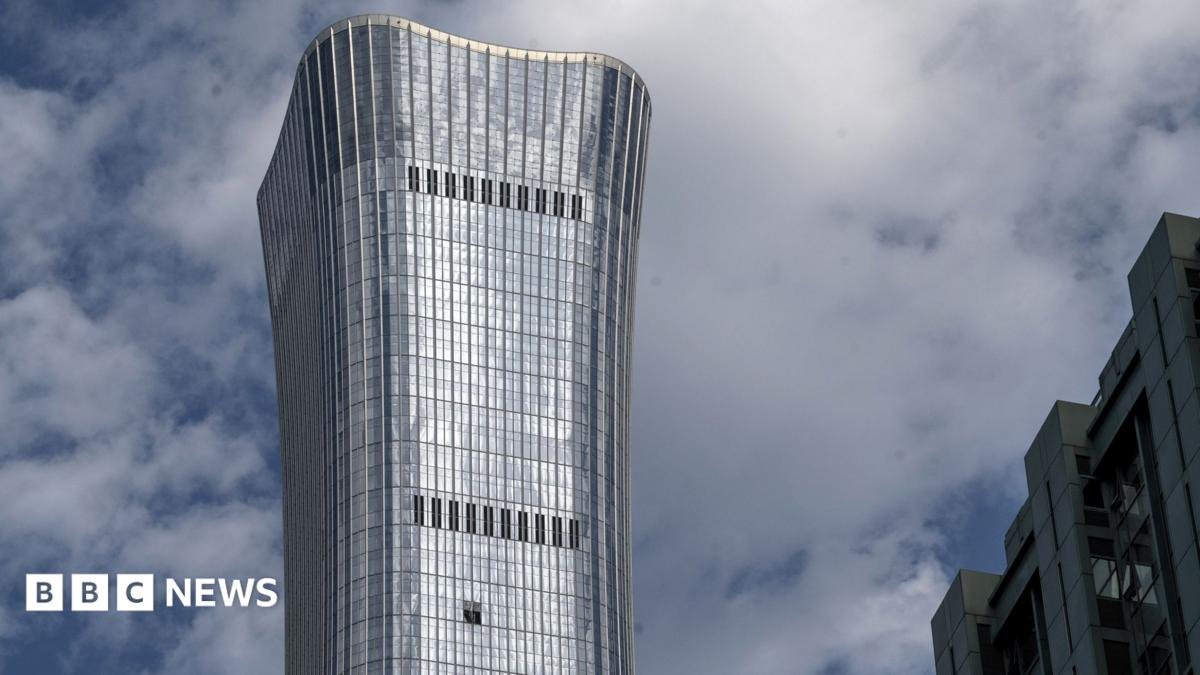
On Friday June 26, 2026, a 66-year-old pilot identified only by the surname Liu deliberately flew a small aircraft into the 109-storey CITIC Tower, also known as China Zun, Beijing's tallest skyscraper. The Chaoyang district government released its findings on Thursday July 2, 2026, concluding that the incident constituted "a case of endangering public safety caused by personal reasons." Liu, who held a sport pilot's licence obtained in 2021 and a private pilot's licence issued in 2024, took off from an airport in Pinggu district. After completing accompanying and solo flights, he deviated from the designated area, lost contact with the airport, and struck the building. The crash killed Liu and wounded 13 people, one of whom has since been discharged from hospital. The aircraft involved was a two-seat Aurora SA60L manufactured by Sunward Aircraft.
(Getty Images)
Pilot Background and Mental Health Context
Official statements described Liu as a divorced freelancer living alone in Beijing. Investigators cited his diary, which contained "multiple expressions of ending his life," alongside reports of chronic insomnia and anxiety. These details framed the event as an individual act rather than a coordinated threat. Within China's aviation regulation framework, such findings trigger immediate scrutiny of medical certification processes for private and sport pilots. The case highlights how personal psychological factors intersect with access to aircraft, prompting questions about ongoing fitness assessments that extend beyond initial licensing. Authorities have not released further operational details, consistent with established procedures that limit disclosure in cases involving potential public safety risks.
General Aviation Expansion and Its Constraints
China has pursued measured growth in general aviation over the past decade, seeking to balance economic development goals with stringent security requirements. The Aurora SA60L's use in this incident illustrates the expanding presence of domestically produced light aircraft from manufacturers such as Sunward Aircraft. Yet the crash immediately led at least three aviation firms to suspend light aircraft operations following directives from regulators. This response reflects the persistent tension between promoting recreational and private flying and maintaining tight oversight near sensitive urban zones. Beijing's regulatory approach prioritises domestic security priorities, requiring pilots to adhere to strict flight corridors and real-time monitoring, measures that become more restrictive after any deviation incident.
Information Control and Social Media Measures
Videos of the crash circulated briefly on Chinese social media platforms before swift removal. Even unrelated photographs of CITIC Tower were taken down, demonstrating the speed and scope of content moderation practices. Such actions align with established censorship protocols that treat incidents near politically significant sites with heightened caution. The proximity of CITIC Tower to Zhongnanhai, the Communist Party headquarters located only a few kilometres away, amplified the perceived sensitivity. By limiting visual dissemination, authorities sought to prevent speculation and maintain narrative control, a pattern observed in prior domestic security events. This approach underscores the priority placed on information stability over open public discourse.
Symbolic Location and Domestic Security Priorities
The choice of CITIC Tower as the impact site carries symbolic weight due to its status as Beijing's premier commercial landmark and its location in the capital's central business district. The Chaoyang district government's rapid classification of the event as personal rather than ideological served to contain broader security narratives. In the context of China's domestic security framework, incidents involving aircraft near Zhongnanhai receive layered review to assess any implications for leadership protection and urban airspace integrity. The suspension of light aircraft activities across multiple firms signals a recalibration that favours caution, potentially slowing the pace of general aviation expansion in the short term while reinforcing centralised command over flight permissions.
Regulatory Implications and Future Framework Adjustments
The July 2 findings are likely to influence revisions to medical and psychological screening within China's private pilot licensing system. Current regulations already mandate detailed reporting for conditions such as insomnia and anxiety, yet the Liu case may accelerate requirements for more frequent evaluations or flight-data monitoring. Regulators face the challenge of sustaining general aviation growth—viewed as an economic driver—while addressing vulnerabilities exposed when individuals operate aircraft independently. Historical patterns show that China has repeatedly tightened operational rules following isolated incidents, often extending restrictions to entire categories of light aircraft. The resulting framework will probably emphasise enhanced coordination between aviation authorities and public security organs, further embedding security considerations into what began as an economic liberalisation effort.
Overall, the June 26 incident and its official handling reveal the structural trade-offs inherent in China's aviation policy. Economic ambitions for a vibrant general aviation sector continue to encounter the overriding imperative of domestic stability and information control. The measured release of findings on July 2, combined with operational suspensions and content restrictions, illustrates a consistent strategic preference for containment and central oversight. As regulators refine licensing and monitoring standards in response, the episode serves as a reminder that security priorities remain the decisive factor shaping the boundaries of private flight in Chinese airspace.
By Prof. Marcus Chen, Staff WriterThis article was produced with AI-assisted research and editorial support. Reporting is based on sources cited in the article.
What's Your Reaction?
 Like
0
Like
0
 Dislike
0
Dislike
0
 Love
0
Love
0
 Funny
0
Funny
0
 Wow
0
Wow
0
 Sad
0
Sad
0
 Angry
0
Angry
0

World Politics Analyst at Global1.News. Based in Beijing, covering US-China relations, global trade, and geopolitical strategy. Brings deep analytical perspective to the power dynamics shaping international affairs.














Comments (0)