
Balkans Geopolitics: US-Israeli Axis Reshapes Albania
The Balkans as a Renewed Geopolitical Arena The Balkans have long been described as a geopolitical crossroads where great powers compete for influence, but the region's strategic importance has intensified dramatically in recent years. Today, the Western Balkans — a zone characterized by weak institutions, unresolved ethnic tensions, and porous borders — has become a theater wh
The Balkans as a Renewed Geopolitical Arena
The Balkans have long been described as a geopolitical crossroads where great powers compete for influence, but the region's strategic importance has intensified dramatically in recent years. Today, the Western Balkans — a zone characterized by weak institutions, unresolved ethnic tensions, and porous borders — has become a theater where multiple global actors pursue competing objectives that extend well beyond tourism and economic development. The region's position along Black Sea-Adriatic-Mediterranean transit corridors gives it relevance that connects directly to Middle Eastern dynamics, energy security, and great power competition between the United States, Russia, China, and regional players like Turkey and Israel.
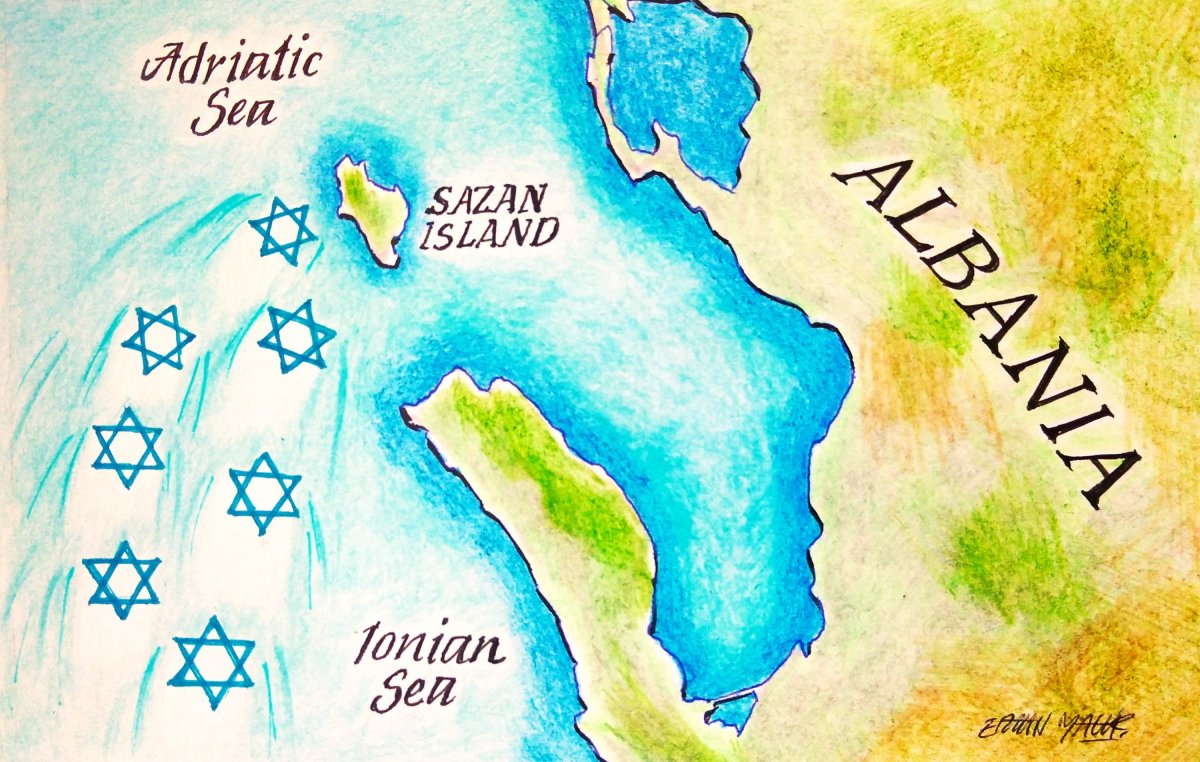
Recent developments in Albania illustrate this trend with particular clarity. Mass protests, foreign investment controversies, and diplomatic realignments have combined to place the small Adriatic nation at the center of a broader strategic contest. The involvement of Jared Kushner's Affinity Partners in a luxury tourism project on Sazan Island, a surge in Israeli-linked companies operating along Albania's coastline, Prime Minister Edi Rama's overt diplomatic alignment with Israel, and a controversial proposal for a Bektashi micro-state all point to a region being reshaped by overlapping economic, security, and identity-driven calculations.
For analysts of Middle Eastern geopolitics, these developments carry direct significance. They influence Turkey's naval posture in the Eastern Mediterranean, affect Iran's regional calculus, and test the boundaries of Arab-Israeli normalization dynamics. What unfolds in the Balkans does not stay in the Balkans — it reverberates through energy corridors, military basing arrangements, and the shifting alliances that define contemporary Middle Eastern politics.
Albania's geographic placement amplifies these linkages because its southern coastline sits near critical maritime routes that Turkish naval assets already monitor through the Pashaliman Naval Base. Turkish strategic planners view sustained presence there as essential for balancing Greek and Israeli maritime activities in the Eastern Mediterranean. Any expansion of external commercial or security footprints therefore forces Ankara to recalibrate its forward deployment posture and coordination with the Turkish Republic of Northern Cyprus.
United States policy toward the Balkans intersects with these calculations through broader efforts to contain Russian and Chinese influence while managing the aftereffects of Arab-Israeli normalization. Washington watches Albanian developments closely because instability or realignment in Tirana could affect NATO cohesion on the alliance's southeastern flank. This creates secondary effects on energy transit planning that ultimately reach Middle Eastern producers seeking diversified export routes.
Sazan Island and Kushner's Affinity Partners Project
Legislative amendments passed by Prime Minister Edi Rama enabled the luxury tourism project on Sazan Island to proceed under management by Affinity Partners. These changes cleared regulatory hurdles for large-scale development on a strategically located Adriatic site. Mass protests erupted across Albania in response, reflecting domestic concerns over sovereignty and foreign control of coastal assets.
The project sits within a wider pattern of external economic engagement that Albanian authorities have actively courted. Rama's government framed the initiative as an economic opportunity capable of generating employment and infrastructure gains. Critics inside the country argued that the scale of foreign involvement risked creating long-term dependencies that could constrain future policy choices.
Second-order effects extend to regional maritime security because Sazan Island lies near established naval transit lanes. Turkish planners monitoring Eastern Mediterranean developments must factor any new commercial infrastructure into assessments of potential dual-use facilities. This linkage illustrates how a single Albanian investment decision can ripple outward to affect Turkish naval planning and coordination with Northern Cyprus authorities.
Energy security considerations also surface because Adriatic corridors remain relevant for future pipeline or LNG routing options. External investors gaining footholds on Sazan Island could influence which actors gain preferential access to future transit arrangements. Such outcomes would directly intersect with Turkish and Israeli calculations over Eastern Mediterranean resource development.
Israeli Investment Patterns and Silent Land Acquisition in Albania
Albanian academic Fredinant Hasmuça documented 68 Israel-linked companies operating in Albania, comprising 54 direct Israeli entities and 14 joint ventures. These firms concentrate in tourism, real estate, energy, and services sectors. The documented presence reflects sustained Israeli commercial interest along the Albanian coastline.
Flights between Tel Aviv and Tirana increased to twice daily, facilitating greater movement of personnel and capital. Investors frequently utilize citizenships from Bulgaria, Romania, and Albania to structure land transactions in ways that obscure direct ownership. This practice has concentrated activity along the southern coast near the Pashaliman Naval Base.
Turkish strategic calculus registers these patterns because proximity to Pashaliman affects naval access and monitoring capabilities. Ankara maintains a presence at the base and coordinates with Northern Cyprus on Eastern Mediterranean security matters. Expanded Israeli-linked holdings nearby therefore prompt Ankara to reassess force posture and alliance management in the region.
Israeli planners view Albanian investments as part of a broader diversification strategy that reduces exposure to single-country risks. The resulting commercial networks create potential intelligence and security cooperation channels that align with Rama's stated intentions. These developments generate second-order effects on regional alliances as Turkey weighs responses to shifting coastal demographics.
Edi Rama's Diplomatic Pivot: The January 2026 Knesset Speech
Prime Minister Edi Rama delivered a January 2026 address to the Knesset in which he stated that until Hamas is completely eradicated, the two million prisoners in Gaza will never truly be free. He further declared that for Albania, Israel is a friend and pledged increased cooperation in defense, security, cybersecurity, and counterterrorism. The speech marked an explicit public alignment with Israeli positions.
Rama's statements occurred against the backdrop of expanded commercial ties and the documented surge in Israeli-linked companies. Albanian authorities presented the pivot as consistent with long-term security interests and economic modernization goals. Domestic audiences responded with mixed reactions, including protests that highlighted competing views on foreign policy direction.
Turkish officials tracking these developments must incorporate Albania's alignment into assessments of Eastern Mediterranean dynamics. Ankara's coordination with Northern Cyprus on maritime security gains added complexity when a NATO member state deepens defense ties with Israel. This forces recalibration of Turkish naval planning and diplomatic outreach.
Iranian strategists also register the shift because Albanian-Israeli security cooperation could constrain Tehran's operational space in the Balkans. The resulting environment affects Iranian calculations regarding influence projection and alliance management across multiple theaters. Second-order effects include adjustments in how regional actors approach energy and migration corridors that transit the Adriatic.
Military Dimensions: Pashaliman Naval Base and Turkey's Strategic Stake
The Pashaliman Naval Base hosts Turkish naval presence that supports Ankara's monitoring of Eastern Mediterranean routes. Israeli-linked projects have concentrated along the southern Albanian coast in proximity to this facility. Turkish planners therefore evaluate any new infrastructure for potential implications on access and operational freedom.
Coordination between Turkey and the Turkish Republic of Northern Cyprus on Eastern Mediterranean security provides institutional context for these assessments. Rama's public commitment to expanded defense and cybersecurity cooperation with Israel adds another variable to Turkish calculations. Ankara must weigh how Albanian territory could serve as a platform for activities that intersect with its own maritime interests.
United States strategic interests in the Balkans emphasize NATO interoperability and containment of external influence. Albanian decisions on base access and foreign investment therefore carry implications for alliance cohesion. Turkish responses to these developments influence how Washington manages relations with both Ankara and Tel Aviv simultaneously.
Energy transit considerations further connect the naval dimension to Middle Eastern dynamics. Control or influence over coastal infrastructure near Pashaliman could affect future routing options for resources originating from or destined for Eastern Mediterranean fields. This creates layered incentives for all involved actors to monitor Albanian developments closely.
The Bektashi Micro-State Proposal: Identity Engineering
Baba Mondi, leader of the Bektashi Order, met with the Pope at the Vatican to discuss establishing a sovereign Bektashi micro-state within Tirana. The proposal represents an attempt to engineer a distinct religious and political identity in Albania. Albanian authorities have not finalized the arrangement, yet the initiative has drawn international attention.
The Bektashi community maintains historical roots that span Turkey and the Balkans. Turkish officials therefore track the proposal for its potential to affect domestic religious dynamics and regional influence patterns. Any sovereign entity could alter existing networks of religious diplomacy that Ankara has cultivated over decades.
Israeli and Iranian actors also register the development because identity-based projects in the Balkans can intersect with broader alliance strategies. Rama's government has pursued multiple foreign policy tracks simultaneously, creating space for such initiatives to advance alongside security cooperation with Israel. This multiplicity generates uncertainty for external planners.
Second-order effects include possible impacts on migration and cultural diplomacy corridors that connect the Balkans to the Middle East. A new micro-state could serve as a focal point for transnational religious networks, requiring Turkey, Israel, and Iran to adjust their respective outreach approaches. The proposal thus adds another layer to the region's evolving strategic landscape.
Iran's Shadow: Cyberattacks and Albania's Security Calculus
Iran conducted cyberattacks against Tirana in 2022 that prompted Albania to establish a formal security and intelligence protocol with additional partners in 2023. The incidents highlighted vulnerabilities in Albanian critical infrastructure and accelerated efforts to strengthen defensive capabilities. Rama's subsequent pledges of cybersecurity cooperation with Israel reflect this sharpened focus.
Iranian strategists view Albanian territory as potentially relevant for influence operations that extend into Europe. The 2022 attacks demonstrated willingness to target Albanian systems directly, creating lasting effects on Tirana's threat perceptions. This history shapes how Albanian officials evaluate offers of security assistance from multiple external actors.
Turkish planners must account for Iranian activity in the Balkans when managing their own naval and diplomatic posture in the Eastern Mediterranean. Any expansion of Iranian cyber or influence capabilities through Albania could affect Turkish interests in regional stability. Coordination with Northern Cyprus therefore incorporates assessments of these wider threats.
United States and Israeli security cooperation with Albania gains additional rationale from the Iranian dimension. Enhanced intelligence sharing and defensive protocols serve mutual interests in limiting Tehran's reach. These arrangements produce second-order effects on energy security and alliance management that ultimately connect Balkan developments to Middle Eastern strategic contests.
Regional Implications for the Middle East and Eastern Mediterranean
Albanian developments aggregate into a coherent set of pressures on Turkish, Israeli, Iranian, and American strategic planning. The combination of commercial investments, naval proximity, diplomatic alignment, and security incidents creates a dense web of interactions. Each actor must adjust posture to protect core interests while avoiding direct confrontation.
Turkey's Eastern Mediterranean posture depends partly on maintaining effective presence at Pashaliman and coordination with Northern Cyprus. Israeli-linked activity along the Albanian coast requires Ankara to integrate new variables into maritime assessments. This dynamic influences how Turkey approaches energy development and alliance management in adjacent waters.
Iran's calculus incorporates the risk that Albanian-Israeli security ties could constrain its operational options in the Balkans. The 2022 cyberattacks and subsequent Albanian responses illustrate the costs of escalation. Tehran's adjustments in response affect broader regional calculations involving energy routes and proxy networks.
United States policy seeks to balance support for Albanian sovereignty with management of competing external influences. Rama's alignment with Israel and the documented investment patterns create opportunities and risks for Washington. The resulting environment shapes how American strategy addresses energy security and alliance cohesion across the Mediterranean theater.
Ultimately, the Balkans function as an extension of Middle Eastern strategic contests rather than an isolated periphery. Decisions taken in Tirana regarding Sazan Island, defense cooperation, and identity proposals generate measurable effects on Turkish naval planning, Iranian threat assessments, and Israeli diversification efforts. These linkages ensure that developments in Albania will continue to influence Eastern Mediterranean security for the foreseeable future.
By Malik Hassan, Staff WriterThis article was produced with AI-assisted research and editorial support. Reporting is based on sources cited in the article.
What's Your Reaction?
 Like
0
Like
0
 Dislike
0
Dislike
0
 Love
0
Love
0
 Funny
0
Funny
0
 Wow
0
Wow
0
 Sad
0
Sad
0
 Angry
0
Angry
0

India/South Asia Correspondent at Global1.News. Analytical voice with a background in science and health journalism. Based in New Delhi, covering Indian politics, education, healthcare, technology, and policy. Breaks down complex data into clear, actionable reporting.












Comments (0)