
Carney Faces Trump Tariffs at P.E.I. Premiers Summit
Prime Minister Mark Carney arrives in Charlottetown amid a sharp escalation in U.S. tariffs that directly imperils Canadian exporters and the USMCA framework itself. With 50 per cent duties now looming on goods ranging from hockey sticks to wine, the premiers' summit has become a focal point for coordinated national strategy.
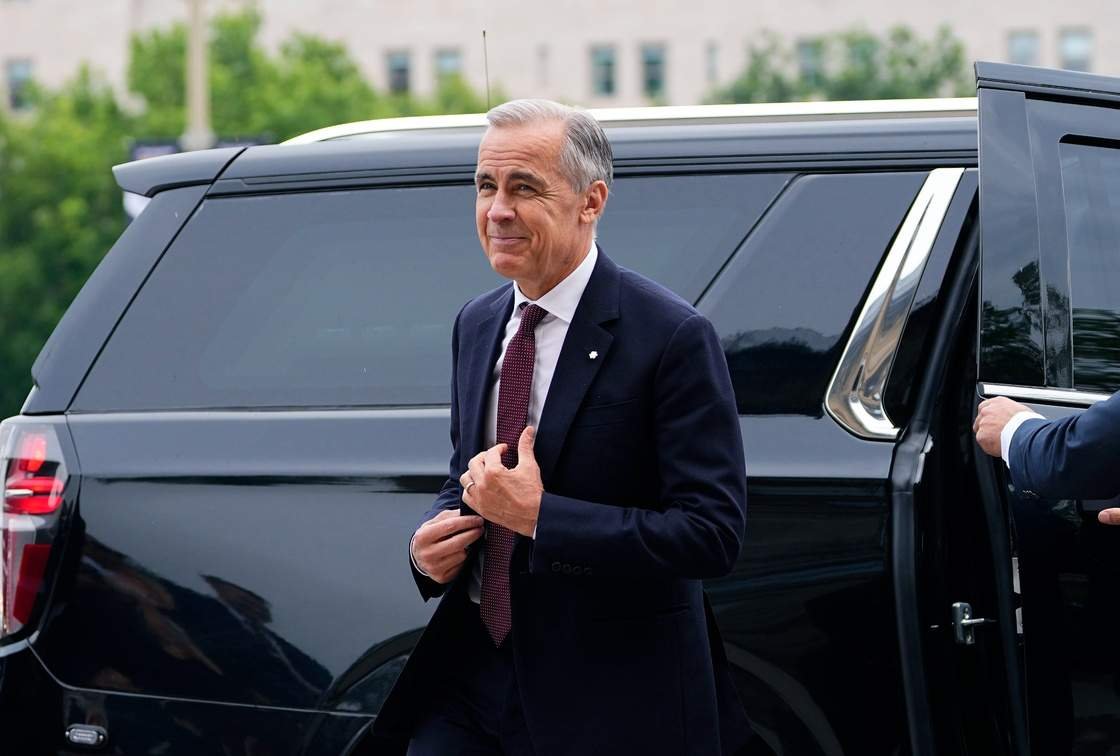
Carney Faces Trump Tariffs at P.E.I. Premiers Summit
Charlottetown, P.E.I. – July 23, 2026 — Article continues...
Prime Minister Mark Carney arrives in Charlottetown this Thursday facing an abrupt escalation in trade tensions that directly threatens Canadian exporters and the stability of the USMCA framework. The meeting with premiers comes as U.S. President Donald Trump signed orders imposing a 50 per cent tariff increase on a range of Canadian products, including hockey sticks, honey, cement, wine and alcoholic beverages, with the measures scheduled to take effect Aug. 19.
These duties mark a departure from earlier tariff rounds because they target goods that currently qualify for duty-free treatment under the USMCA, raising fresh questions about the durability of the continental trade deal that Canada, the United States and Mexico renegotiated in 2020. The federal government has described its own earlier actions as a measured response to U.S. measures, yet the latest American orders explicitly cite provincial liquor bans, Canada's supply-managed dairy system and vehicle import quotas as justification.
The Tariff Triggers and Provincial Measures
The White House has linked the new tariffs to long-standing irritants in bilateral trade. Provincial restrictions on U.S. liquor sales, the supply-management regime that governs dairy, poultry and egg production, and limits on certain vehicle imports have been cited as the immediate causes. Senior White House officials indicated the tariffs would be applied within 30 days of the signing of the orders, placing the effective date around mid-August.
Prime Minister Carney has stated that Canada "merely matched" earlier U.S. actions, a position that underscores Ottawa's strategy of calibrated reciprocity rather than escalation. The approach reflects the federal government's broader effort to keep channels open for the upcoming USMCA review while avoiding measures that could further inflame the situation.
Ontario's LCBO has long served as a key barrier against American spirits, with similar restrictions now enforced through Quebec's SAQ and British Columbia's central liquor distribution network. These provincial controls, rooted in longstanding trade protections, directly counter the U.S. tariffs by limiting market access for American producers.
Supply management in Canada dates back to the 1970s, when both Liberal and Conservative governments introduced systems to stabilise dairy, poultry and egg sectors through quotas and price supports. This framework has endured across decades of political shifts, providing farmers with predictable incomes and preventing the boom-and-bust cycles seen in unregulated markets.
Trump's proposed 50 per cent tariff marks a sharp escalation from the earlier 25 per cent duties on steel and aluminium, amplifying the stakes for cross-border commerce. This increase not only raises costs for Canadian exporters but also prompts swift provincial countermeasures aimed at preserving local control over key imports.
Federal-Provincial Coordination in Charlottetown
The premiers' gathering, hosted by P.E.I. Premier Rob Lantz, concludes its three-day session with a dedicated session alongside Prime Minister Carney. All 13 provincial and territorial leaders have signalled unified support for the federal negotiating team, a rare display of cohesion on trade matters that historically have exposed regional divides.
Ontario Premier Doug Ford has publicly urged a firmer stance in the talks, highlighting the need to protect manufacturing jobs in his province. At the same time, the premiers are expected to press the federal government for increased health-care transfers and faster regulatory approvals for major resource and infrastructure projects, illustrating the intertwined nature of fiscal federalism and trade resilience.
The current approach echoes the Team Canada strategy employed during Trump's first term from 2018 to 2020, when federal and provincial leaders presented a united front to defend Canadian interests. This collaborative model emphasised shared messaging and joint advocacy to counter tariff threats, proving effective in securing exemptions for certain sectors.
Deputy Prime Minister Chrystia Freeland played a pivotal role in those earlier discussions, leveraging her experience to build alliances and navigate complex bilateral talks. Her involvement helped align provincial concerns with federal objectives, ensuring that regional industries received adequate representation.
Premiers such as Ontario's Doug Ford and Quebec's François Legault have publicly emphasised the need for coordinated responses, with Ford highlighting automotive vulnerabilities and Legault focusing on dairy protections. Other leaders from the Prairies and Atlantic provinces have echoed calls for federal support.
Economic Stakes for Workers, Businesses and Consumers
The new tariffs reach sectors that employ thousands of Canadians across multiple provinces. Cement producers in Quebec and British Columbia, honey operations on the Prairies, and wineries in Ontario and British Columbia all face higher costs when selling into the U.S. market. Because the duties apply to USMCA-qualified goods, exporters cannot simply reroute shipments to avoid the levies without losing the preferential access the agreement was designed to guarantee.
Economists have noted that the USMCA has been instrumental in shielding Canadian consumers from sharp price increases during previous tariff episodes. If the new duties remain in place, analysts anticipate upward pressure on construction costs, grocery prices for certain imported ingredients, and retail prices for alcoholic beverages.
Ontario's wine industry supports more than 20,000 jobs across vineyards, processing facilities and retail networks, making it particularly vulnerable to disruptions in U.S. market access. In Quebec, cement production faces similar risks as higher input costs ripple through infrastructure projects, while Prairie honey operations contend with reduced export opportunities that could force smaller producers to scale back.
Construction costs are poised to climb as tariffs inflate prices for imported materials, directly affecting housing developments and public works across the country. Grocery prices may follow suit if supply chains for processed foods and beverages encounter delays or added duties.
The Bank of Canada could respond by adjusting interest rates if prolonged trade uncertainty begins to dampen overall economic growth and investment. Such measures might include targeted easing to support affected industries, though officials would need to balance this against risks of currency volatility.
The USMCA Renewal Context
The timing of the tariff announcement coincides with preparations for the formal review of the USMCA, which is scheduled to begin in 2026. Both Ottawa and Washington have signalled interest in modernising provisions related to digital trade, automotive rules of origin and agricultural market access. The current dispute over supply management and provincial liquor controls risks complicating those discussions before they formally begin.
Canadian negotiators are therefore balancing immediate de-escalation efforts with the longer-term objective of securing a renewed agreement that preserves duty-free access for the majority of bilateral trade. The premiers' presence in Charlottetown provides an opportunity to align provincial interests with federal strategy ahead of those talks.
Since its implementation in 2020, the USMCA has underpinned roughly $2 billion in daily bilateral trade, facilitating seamless movement of goods from automotive parts to agricultural products. This volume has been essential for Canadian manufacturers and exporters who depend on predictable access to U.S. markets.
Under Article 34, the formal review process requires both nations to assess the deal six years after entry into force, setting the stage for potential adjustments or extensions. If either party opts to withdraw, the agreement could terminate after a notice period, leaving trade relations in limbo and forcing rapid renegotiations.
Compared to the NAFTA renegotiation during Trump's first term, the current USMCA framework offers more structured review timelines yet faces similar challenges from protectionist rhetoric. The earlier overhaul involved intense provincial consultations and last-minute concessions, lessons that now inform preparations for the upcoming evaluation.
Health Funding and Project Approvals on the Agenda
Beyond trade, the premiers are bringing concrete requests for additional federal health-care funding to address post-pandemic pressures on provincial systems. They are also seeking accelerated federal environmental and regulatory approvals for major energy and transportation projects that could support economic diversification if tariff pressures persist.
These domestic priorities illustrate how trade shocks quickly intersect with other areas of federal-provincial relations. Any federal response package is likely to be measured against both its effectiveness in supporting affected industries and its ability to advance shared goals in health care and infrastructure.
Forward-Looking Steps and Cautious Outlook
Officials in Ottawa have indicated that technical discussions with U.S. counterparts will continue in the coming weeks, though no specific timeline for resolution has been announced. The premiers are expected to leave Charlottetown with a coordinated message of support for the federal position while continuing to advocate for their individual fiscal and regulatory concerns.
Business associations and labour groups are monitoring developments closely, preparing contingency plans that range from inventory adjustments to potential legal challenges under USMCA dispute-settlement mechanisms. The coming months will test whether the current unity among Canadian governments can translate into a durable accommodation with Washington before the tariffs take full effect.
Tags: Mark Carney, Rob Lantz, Doug Ford, USMCA, tariffs, supply management, federal-provincial relations, trade policy, Charlottetown, P.E.I.
By Alex Thompson, Staff Writer
This article was produced with AI-assisted research and editorial support. Reporting is based on sources cited in the article.
What's Your Reaction?
 Like
0
Like
0
 Dislike
0
Dislike
0
 Love
0
Love
0
 Funny
0
Funny
0
 Wow
0
Wow
0
 Sad
0
Sad
0
 Angry
0
Angry
0

Canada Correspondent at Global1.News. Based in Toronto, covering Canadian politics, energy, trade, and US-Canada relations. Provides the Canadian perspective on North American and global affairs.













Comments (0)