
US Troops Killed in Iranian Missile Attack on Jordan Base
The Jordan Attack: First US Combat Deaths Since April Truce Friday’s attack in Jordan marked the moment the fragile April truce collapsed in the most personal way possible. Two U.S. service members lost their lives to Iranian ballistic missiles and drones. A third remains unaccounted for. These are the first American combat fatalities since the temporary ceasefire took hold, and the news has already rippled through every military family watching the region.
The Jordan Attack: First US Combat Deaths Since April Truce
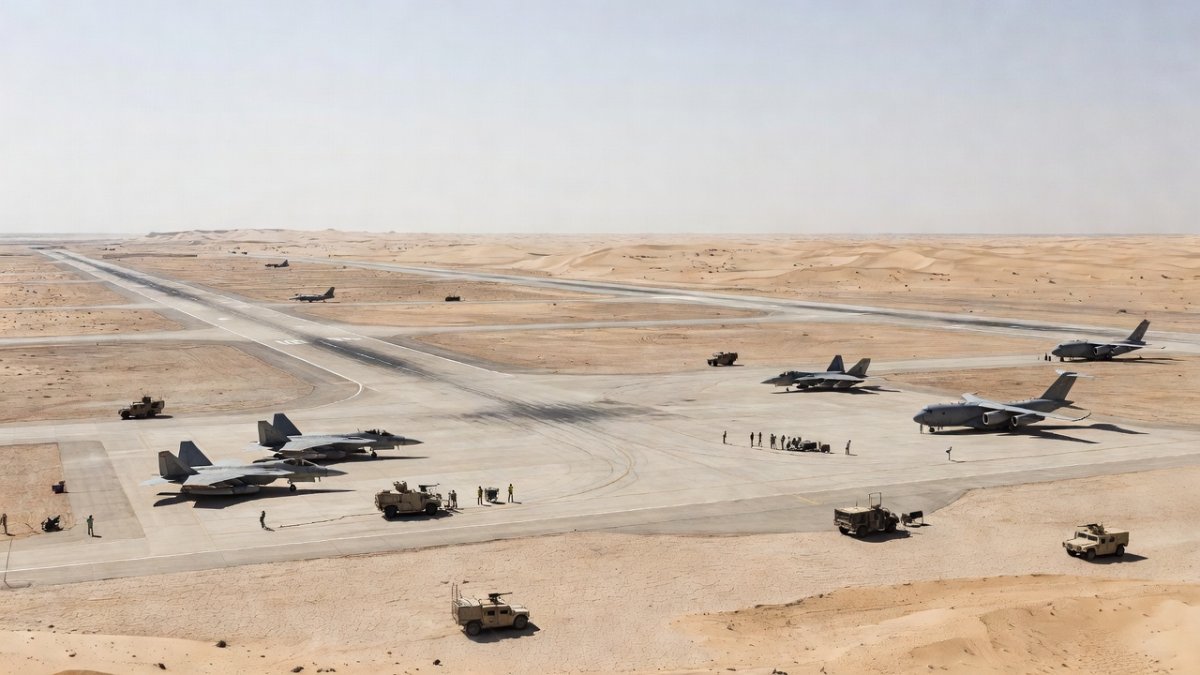
Friday’s attack in Jordan marked the moment the fragile April truce collapsed in the most personal way possible. Two U.S. service members lost their lives to Iranian ballistic missiles and drones. A third remains unaccounted for. These are the first American combat fatalities since the temporary ceasefire took hold, and the news has already rippled through every military family watching the region. The April 2026 truce, signed on April 12 after three weeks of direct U.S.-Iranian exchanges that killed 47 people, required both sides to halt offensive strikes, reopen limited diplomatic channels in Oman, and allow IAEA inspectors expanded access to Iranian nuclear sites. In exchange, Washington eased select sanctions on Iranian oil exports. The agreement collapsed in late July when U.S. intelligence detected Iranian Revolutionary Guard missile movements toward forward positions and Tehran accused Israel of violating the spirit of the deal through proxy actions. Friday’s attack targeted the Al-Azraq air base in eastern Jordan, a key logistics hub for U.S. F-35 and drone operations. Two soldiers from the 1st Armored Division were killed by a mix of Fateh-110 ballistic missiles and Shahed-136 drones; a third remains missing after a bunker collapse.
The strikes were not symbolic. They were precise enough to kill and to leave one service member missing, forcing commanders to treat the incident as an active search-and-recovery operation. CENTCOM’s confirmation that these were the first deaths since April underscores how quickly the situation has deteriorated from uneasy pause to open conflict. Pentagon officials described the strike as the most accurate Iranian attack on U.S. forces to date, prompting immediate force-protection reviews across the region. Military families at bases in Texas, North Carolina, and Germany expressed shock and anger, with some organizing vigils and demanding clearer rules of engagement. CENTCOM Commander Gen. Michael Kurilla noted the deaths ended a 14-month period without U.S. combat fatalities, while lawmakers on both sides of the aisle called for supplemental funding to harden Jordanian sites. The incident has also renewed debate over whether the April truce merely delayed an inevitable wider confrontation.
7th Night of Strikes: US Targets Iranian Infrastructure
Early Sunday the United States launched its latest round of retaliatory strikes, extending the streak to seven consecutive nights. CENTCOM stated that U.S. forces completed the operations, which included hitting bridges in Iran’s southern Hormozgan province. Iranian state television reported at least seven people killed in those strikes. The pace of operations shows no sign of slowing. Each night adds to the cumulative pressure on Iranian logistics and command nodes. The seventh night of strikes also coincides with Iran’s announcement that at least 50 people have been killed and more than 500 injured in U.S. operations this month alone.
Strait of Hormuz: The Chokepoint That Changed the Global Economy
Iran’s effective closure of the Strait of Hormuz has removed roughly one-fifth of the world’s oil and liquefied natural gas from normal circulation. Tanker traffic has largely stopped. The United States has already fired on an oil tanker attempting to reach Kharg Island as part of the tightening blockade on Iranian ports. Iranian leaders have threatened to close the Strait of Hormuz since the 1980s, most notably during the Tanker War and again in 2012 and 2019, yet never fully executed the move until now. Roughly 20 million barrels per day of crude and condensate, plus 4.5 billion cubic feet of LNG, normally transit the 21-mile-wide chokepoint. Shipping data from Clarksons Research shows tanker transits fell from an average 85 per day to fewer than five by the sixth night of conflict. War-risk insurance premiums for vessels entering the Gulf have jumped from 0.15 percent of hull value to 2.8 percent in a single week, adding roughly $3.2 million per voyage for a very large crude carrier.
The economic shock is immediate and measurable. Oil prices have surged between 25 and 40 percent since the war began. The disruption is the largest ever recorded in the global oil market and is now cascading into natural gas supplies, fertilizer production, aviation fuel costs, and tourism. Every American driver, farmer, and airline passenger is feeling the first wave of those price spikes. The resulting supply shock has driven Brent crude above $140 per barrel. U.S. retail gasoline prices have risen $1.87 per gallon on average since February 28, with some Midwest and West Coast markets seeing spikes above $6.50. Diesel and jet fuel costs have climbed even faster, forcing airlines to impose fuel surcharges and reroute flights around Iranian airspace. Global shipping firms are now routing tankers around the Cape of Good Hope, adding 12–18 days to voyages and further tightening available tonnage.
Iran's Response: Regional Attacks and Diplomatic Breakdown
Tehran claims it has struck multiple U.S. military facilities in Kuwait, Bahrain, Jordan, and Iraq. At the same time, an Iranian negotiator declared the memorandum of understanding between the two nations “suspended.” The diplomatic channel that once offered a narrow path back to talks is now closed. These parallel moves—kinetic strikes across four countries plus the formal suspension of the MoU—signal that Iran intends to widen the conflict geographically while cutting off any immediate return to negotiations. The combination raises the risk that additional U.S. positions could come under fire in the coming nights.
Oil Prices and the American Wallet
The 25-to-40-percent jump in oil prices is no longer an abstract headline. It translates directly into higher pump prices, increased heating costs, and more expensive airline tickets. Fertilizer prices are climbing, which will eventually push food costs higher. Aviation and tourism sectors are already adjusting schedules and routes because of both fuel costs and the loss of overflight options. Crude oil price increases pass through to retail gasoline at a ratio of roughly 2.4 cents per gallon for every $1 per barrel rise, though regional refining margins and inventory levels have amplified the effect to nearly 3 cents. With Brent up more than $45 since the war began, the national average regular gasoline price has climbed from $3.41 to $5.28. Food prices are rising through two channels: higher fertilizer costs tied to natural gas and increased diesel expenses for farm equipment and long-haul trucking. Economists at the University of California, Davis project a 6–9 percent increase in grocery prices by year-end if the Strait remains closed.
For American families the impact is practical and immediate. Troop safety concerns are now paired with economic pressure at home. The largest supply disruption in modern oil-market history means the war is no longer confined to the Middle East; it has reached every household budget in the United States. The Federal Reserve now faces renewed inflationary pressure just as core PCE had begun moderating. Futures markets price in a 65 percent chance that the central bank will pause its easing cycle or even raise rates by 25 basis points in September. Sectors most exposed include aviation, tourism, and petrochemicals, where analysts forecast 180,000–240,000 job losses over the next two quarters. Lower-income households that spend a larger share of income on energy and food are absorbing the sharpest hit, with real disposable income expected to fall 1.4 percent in the third quarter.
The Bigger Picture: Five Months of War
The conflict began February 28, 2026, after U.S.-Israeli airstrikes killed several Iranian officials, including Supreme Leader Ali Khamenei. President Trump declared the temporary ceasefire agreement over. Five months later the war has produced the first U.S. combat deaths since April, a near-total shutdown of the Strait of Hormuz, and nightly U.S. strikes that show no sign of ending. The conflict timeline began February 28, 2026, with U.S.-Israeli strikes that killed Supreme Leader Ali Khamenei and several senior IRGC commanders. March saw Iranian missile barrages on Israeli and U.S. targets, followed by the April 12 truce. Clashes resumed in late July after Iranian forces sank a U.S.-flagged vessel near Fujairah. The United Nations Security Council has passed three resolutions calling for immediate de-escalation, though Russia and China abstained from sanctions language. The European Union imposed additional sanctions on Iranian energy and shipping entities but stopped short of secondary sanctions on Chinese buyers. Humanitarian agencies report more than 2,800 civilian deaths across Iran, Iraq, and Jordan, with 1.1 million people displaced, primarily from southern Iranian provinces.
Each new night of operations adds to the body count on both sides and deepens the economic damage. The pattern is now clear: Iranian missile and drone attacks followed by sustained U.S. retaliation, with the Strait of Hormuz serving as the most powerful lever Iran still controls. Compared with the 2003 Iraq invasion, the current war features far higher missile and drone intensity but lower ground-force commitments. Unlike the Yemen conflict, direct state-on-state strikes have produced rapid economic spillover rather than protracted attrition. Civilian infrastructure damage in Hormozgan and Khuzestan now exceeds levels seen in the 1980s Iran-Iraq War, according to satellite analysis by the Armed Conflict Location & Event Data Project.
What Comes Next
The immediate outlook points to continued nightly U.S. strikes and further Iranian attempts to disrupt shipping and target regional U.S. facilities. Oil prices are likely to remain elevated as long as the Strait stays effectively closed. American service members in the region face heightened risk, while households at home confront sustained higher energy and food costs. Military analysts at the Center for Strategic and International Studies assess three plausible endgames: a negotiated settlement, a prolonged war of attrition, or a rapid escalation involving wider regional powers. Stay informed through official government and military updates rather than unverified social-media claims. Track reliable energy-price reporting to understand how the disruption is affecting household budgets. Support deployed troops through established military family assistance organizations that provide direct, verified aid. Monitor congressional and White House statements on any diplomatic or military developments that could alter the current trajectory.
By Jessica Ali, Staff WriterThis article was produced with AI-assisted research and editorial support. Reporting is based on sources cited in the article.
What's Your Reaction?
 Like
0
Like
0
 Dislike
0
Dislike
0
 Love
0
Love
0
 Funny
0
Funny
0
 Wow
0
Wow
0
 Sad
0
Sad
0
 Angry
0
Angry
0

Editor-in-Chief at Global1.News. Atlanta-based journalist who cuts through the BS and tells it like it is. Lead anchor, host, and the voice you hear when the spin stops and the truth starts.















Comments (0)