
The Fox-Dominion Settlement: How $787.5 Million Exposed a Media Giant's Election Lies
Fox News paid Dominion $787.5M on April 18, 2023, settling a $1.6B defamation suit hours before trial. Discovery exposed Carlson, Hannity, and Murdoch texts/emails showing they knew 2020 election fraud claims were false.
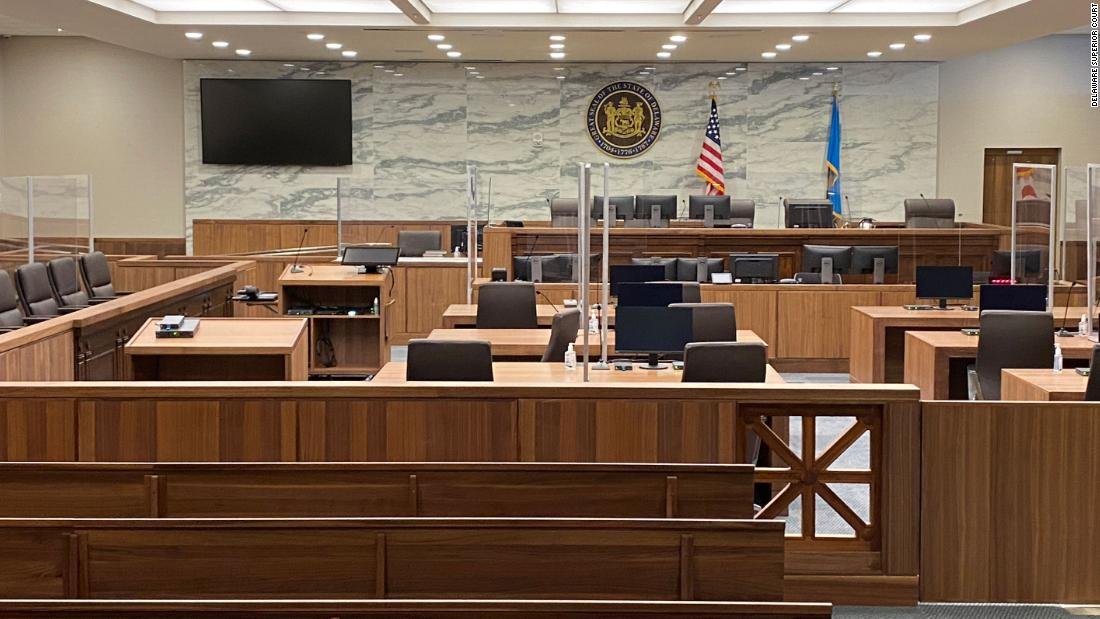
The Day Fox News Paid the Price
On April 18, 2023, just hours before opening statements were set to begin in a Delaware courtroom, Fox News cut a check that rewrote the rules of media accountability. The network agreed to pay Dominion Voting Systems $787.5 million to settle a $1.6 billion defamation lawsuit, the largest such payout in U.S. media history. No jury ever heard the case. No verdict was rendered. Yet the pretrial record alone delivered a damning verdict on how one of America's most powerful news organizations amplified baseless election fraud claims it knew were false.
This was not a quiet corporate resolution. It was a public reckoning forced by mountains of internal texts, emails, and deposition testimony that laid bare the gap between what Fox hosts said on air and what they believed off camera. Dominion CEO John Poulos had drawn a hard line: the company's voting machines were not tools of a stolen election, and the relentless on-air attacks after November 2020 had inflicted real commercial damage. Fox, facing the prospect of Rupert Murdoch himself testifying under oath, chose the exit ramp.
As an Atlanta-based journalist who watched the 2020 election cycle unfold in real time, I saw the damage those claims inflicted on public trust. The settlement did not erase that damage. It simply put a price tag on it—$787.5 million—and forced the rest of the industry to confront an uncomfortable truth: repeating a lie because your audience wants to hear it is not journalism. It is a business decision with catastrophic legal consequences.
The trial that never happened still changed everything. Discovery turned private cynicism into public evidence, and the "we were just covering newsworthy allegations" defense collapsed under the weight of Fox's own words.
From Lawsuit to Settlement: The Timeline That Mattered
Dominion filed its defamation suit in April 2021, seeking $1.6 billion for what it described as a coordinated campaign of false statements that destroyed its reputation and business relationships. The complaint targeted specific broadcasts and statements by Fox personalities who pushed claims that Dominion machines switched votes or were somehow controlled by foreign interests. Those claims had already been debunked by election officials, cybersecurity experts, and Fox's own reporting staff.
For nearly two years the case ground through pretrial motions. Fox tried and failed to have the suit dismissed. By early 2023 the discovery process had produced a trove of internal communications that Dominion's lawyers were prepared to parade before a jury. Judges in Delaware made clear that key evidence would come in. The network's options narrowed by the day.
On April 18, 2023, with jury selection complete and opening arguments hours away, the parties announced the $787.5 million settlement. Fox admitted no wrongdoing in the formal agreement. That legal nicety fooled no one who had read the discovery record. The network paid nearly half the original demand to keep Murdoch, Tucker Carlson, Sean Hannity, and network executives from having to explain their private messages in open court.
The speed of the final collapse was telling. When the alternative is watching your own CEO and prime-time stars dismantled on the stand with their texts on the screen, $787.5 million starts to look like damage control rather than justice.
Discovery: The Internal Texts That Destroyed the Defense
The heart of the case was never going to be Dominion's machines. It was Fox's own people. Pretrial discovery unearthed private communications showing that hosts and executives understood the election fraud narrative was nonsense even as they continued to platform it. Tucker Carlson's texts mocked the very claims his show amplified. Sean Hannity exchanged messages acknowledging the absence of evidence. These were not ambiguous notes. They were contemporaneous admissions.
Rupert Murdoch's deposition proved especially damaging. The patriarch acknowledged that some claims aired on his network were false and that certain open-mic moments and internal discussions revealed widespread skepticism inside the building. Suzanne Scott, then CEO of Fox News, faced questions about editorial oversight and the decision to keep airing guests who pushed disproven theories long after the network's own reporters had knocked them down.
Dominion's legal team framed these documents as proof of actual malice—the legal standard requiring knowledge of falsity or reckless disregard for the truth. Fox's lawyers had argued the network was covering a matter of public concern. The texts made that argument look like willful blindness dressed up as journalism. When your prime-time talent is privately calling the narrative "insane" while publicly treating it as credible, the newsworthiness defense evaporates.
Those communications became public through court filings long before any settlement. They remain the most enduring legacy of the case: primary-source evidence that a major news organization elevated claims its own people did not believe.
The Stars and the Bosses: Carlson, Hannity, Murdoch, Scott
Tucker Carlson's private messages captured the cynicism most clearly. He expressed contempt for the fraud narrative and for some of the lawyers peddling it, yet his show remained a central venue for those same claims. Sean Hannity's exchanges showed a similar pattern—private doubt paired with on-air amplification. These were not junior producers. They were the faces of the network's highest-rated hours.
Rupert Murdoch, in deposition, could not escape the contradiction. He conceded that Fox had aired false statements and that he could have intervened more forcefully. Suzanne Scott, responsible for the day-to-day operation of the news division, had to account for why corrective reporting never matched the volume or intensity of the original accusations. John Poulos and Dominion's leadership used these admissions to argue that the network chose audience retention over accuracy at a moment of national tension.
The personal stakes were enormous. A trial would have put these figures under oath in front of cameras, with their own words as the cross-examination script. The $787.5 million payment bought silence on that score. It did not buy back credibility. Viewers who watched the discovery materials surface understood exactly what had happened: the network's biggest names knew better and did it anyway.
That reality still hangs over every subsequent conversation about media trust. When the people paid to tell you the truth are texting each other that the story is garbage, the audience eventually notices.
What $787.5 Million Actually Bought
The settlement was the largest defamation payout in American media history. It did not require Fox to apologize on air or admit liability in the legal sense. It did require the network to part with a staggering sum and to watch its internal culture get dissected in the press for months. For Dominion, the money represented compensation for lost contracts, security costs, and reputational harm that no press release could repair.
More important than the dollars was the precedent. The "Fox defense"—that airing explosive allegations from prominent figures is automatically protected as newsworthy—took a body blow. Courts and future plaintiffs now have a roadmap: if discovery can show the broadcaster's own talent and leadership doubted the claims, actual malice becomes far easier to prove. That changes risk calculations across the industry.
Election disinformation did not begin or end with Fox. But this case marked an inflection point because the evidence was so stark and the financial consequence so severe. Networks and digital platforms that treat conspiracy content as an engagement strategy now operate under a clearer threat of ruinous litigation. The settlement announced that some lies are too expensive to keep selling.
I have covered enough media scandals to know that institutions rarely reform out of sudden moral clarity. They reform when the bill arrives. $787.5 million is a bill that concentrates the mind.
Aftermath: Accountability Without a Verdict
In the months that followed April 18, 2023, Fox moved to contain the damage. Prime-time lineups shifted. Public statements emphasized the absence of an admission of wrongdoing. Yet the discovery record could not be walked back. Journalists, researchers, and rival networks continued to cite the Carlson and Hannity texts, the Murdoch deposition, and the internal emails as Exhibit A in the case against incentivized disinformation.
Dominion, for its part, used the victory to stabilize its business and to signal that voting technology companies would not absorb baseless attacks in silence. Other defamation suits against media outlets and individuals involved in 2020 election falsehoods gained fresh oxygen. The settlement became a reference point in congressional hearings, academic studies, and newsroom ethics debates.
Did it clean up the information ecosystem? Hardly. Outrage content still travels farther and faster than corrections. But the case raised the cost of the most reckless versions of that content when it originates from organizations with assets worth suing. That is a narrower form of accountability than a full trial would have delivered, yet it is accountability nonetheless.
The absence of a jury verdict left some questions unresolved in the formal legal sense. The public record resolved the most important one: Fox personnel knew the dominant election fraud narrative they amplified was not true.
Media Trust in the Rearview Mirror
Retrospective analysis demands candor. The Fox-Dominion saga did not occur in a vacuum. It reflected a broader collapse of shared facts after a bitterly contested election. Viewers hungry for validation found it on air. Executives hungry for ratings supplied it. The $787.5 million settlement exposed how that transaction worked in practice and how badly it could end.
For working journalists, the lesson is elemental. If your private communications contradict your public product, you are not reporting. You are performing. And performance has a legal half-life when it destroys someone's business with claims you already know are garbage. The Murdoch deposition and the hosts' texts removed any benefit of the doubt.
Atlanta newsrooms, like newsrooms everywhere, felt the aftershocks. Local election officials who had endured harassment over Dominion machines saw validation. Viewers who had been told the system was rigged received a very expensive correction, even if it came wrapped in a no-wrongdoing clause.
The case stands as a warning written in nine figures: truth still has a constituency in the courts, and discovery can turn a newsroom's internal Slack and text threads into the most powerful evidence imaginable.
The Inflection Point We Cannot Ignore
April 18, 2023, did not restore faith in media. It did establish that there is an upper limit to the profit that can be extracted from knowingly false election narratives when the target has the resources to fight. Dominion's $1.6 billion claim forced Fox to the table. The resulting $787.5 million transfer of wealth remains the clearest market signal yet that systemic disinformation carries systemic risk.
John Poulos and his company walked away with compensation and a measure of vindication. Rupert Murdoch's organization walked away poorer and publicly humiliated by its own words. Tucker Carlson, Sean Hannity, and Suzanne Scott saw their private skepticism become permanent exhibits in the history of the 2020 election aftermath. The trial that never happened still produced a verdict the industry cannot unsee.
High-octane media thrives on conflict. It dies, or at least pays dearly, when the conflict is exposed as manufactured against better knowledge. That is the enduring takeaway from the largest defamation settlement in U.S. media history. The documents are public. The dollar figure is public. The failure of the newsworthiness defense is public. Everything else is spin.
Facts first. Always. The alternative just cost one network three-quarters of a billion dollars and a chunk of its credibility that no settlement clause can repurchase.
By Jessica Ali, Staff WriterThis article was produced with AI-assisted research and editorial support. Reporting is based on sources cited in the article.
What's Your Reaction?
 Like
0
Like
0
 Dislike
0
Dislike
0
 Love
0
Love
0
 Funny
0
Funny
0
 Wow
0
Wow
0
 Sad
0
Sad
0
 Angry
0
Angry
0

Editor-in-Chief at Global1.News. Atlanta-based journalist who cuts through the BS and tells it like it is. Lead anchor, host, and the voice you hear when the spin stops and the truth starts.















Comments (0)