
EU Approves Landmark Trade Deal with Mexico on July 14
The European Union has taken the final step to greenlight a landmark trade agreement with Mexico, unlocking immediate tariff relief for exporters on both sides of the Atlantic after nearly a decade of talks. This development arrives at a pivotal moment as Mexico seeks to broaden its economic horizons beyond its dominant U.S. market. Families and businesses from Michoacán avocado groves to Monterrey factories now stand to gain steadier opportunities and greater stability.
The European Union has taken the final step to greenlight a landmark trade agreement with Mexico, unlocking immediate tariff relief for exporters on both sides of the Atlantic after nearly a decade of talks. This development arrives at a pivotal moment as Mexico seeks to broaden its economic horizons beyond its dominant U.S. market. Families and businesses from Michoacán avocado groves to Monterrey factories now stand to gain steadier opportunities and greater stability.
EU Council Approves Mexico Trade Pact for Stronger Ties
Mexico City, Mexico — The EU Council’s formal adoption on July 14 marks the conclusive procedural step that activates the trade provisions without further delay, closing a process that began with the political agreement signed at the May 22 summit in Brussels and received European Parliament consent on July 8. This sequence ensures Mexican exporters gain immediate tariff relief while the broader Modernised Global Agreement continues its ratification journey through member-state parliaments. The Interim Agreement on Trade functions as a self-contained pact limited to commercial matters; it will automatically lapse once the full MGA, encompassing political dialogue and cooperation chapters, enters into force. For families in export-oriented regions, this timeline means predictable market access rather than prolonged uncertainty, allowing small producers to plan harvests and shipments with greater confidence.
EU Council Delivers Final Approval for Trade Pact
On July 14, 2026, the Council of the European Union formally adopted the decision approving the Interim Agreement on Trade with Mexico. This step followed the European Parliament’s consent on July 8, 2026, completing the EU’s internal procedures for the interim deal.
The approval came after nine years of negotiations that began in 2016 and concluded in January 2025. Mexican officials in Mexico City viewed the decision as a concrete step toward reducing reliance on a single market where 80 percent of Mexican exports currently head.
Signing Ceremony Held in Mexico City
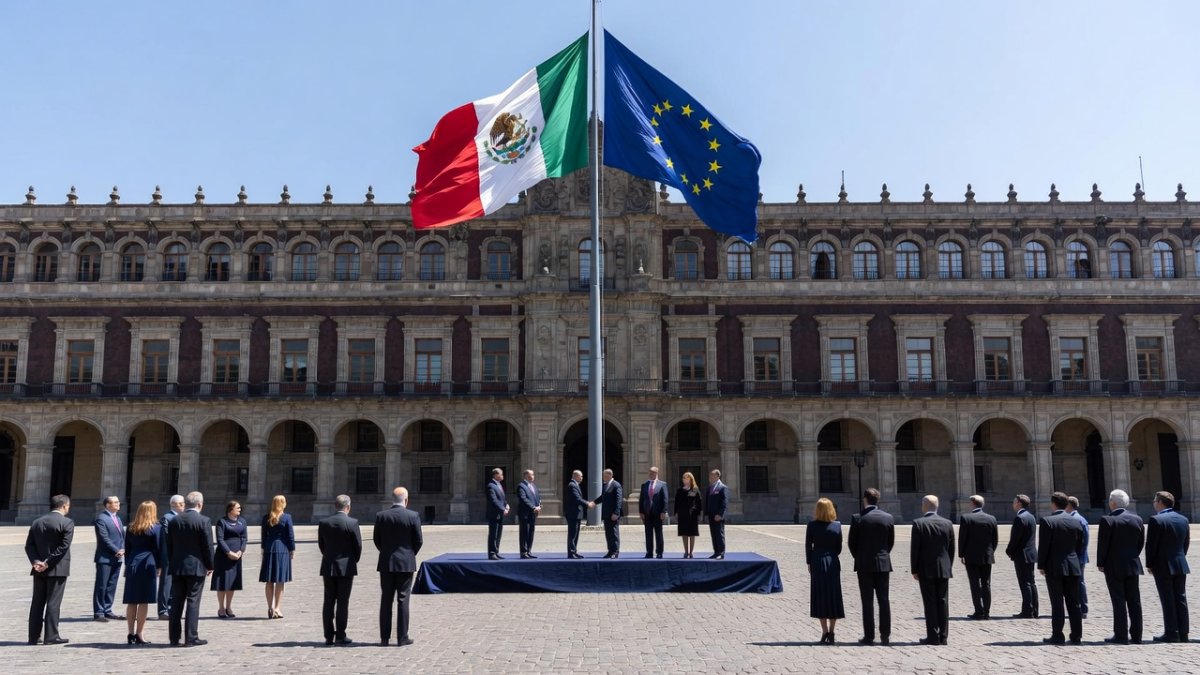
President Claudia Sheinbaum hosted European Commission President Ursula von der Leyen and European Council President Antonio Costa at the EU-Mexico Summit on May 22, 2026, in Mexico City. The leaders signed the agreement during the event attended by representatives from both sides.
The ceremony took place at a time when Mexico is actively organizing new trade routes. Local business chambers in Mexico City noted that the presence of the two European presidents signaled long-term commitment to expanded cooperation in digital trade and customs procedures.
Current Scale of Bilateral Trade Flows
Bilateral trade in goods reached €87 billion in 2025, while services trade stood at €29 billion in 2024. Combined annual trade in goods and services now exceeds €100 billion, making the European Union Mexico’s third-largest trading partner globally.
Mexico ranks as the EU’s second-largest trading partner in Latin America. More than 45,000 EU companies, most of them small and medium-sized enterprises, currently export to Mexico and stand to gain from the new framework.
Tariff Reductions Target Agricultural Exports
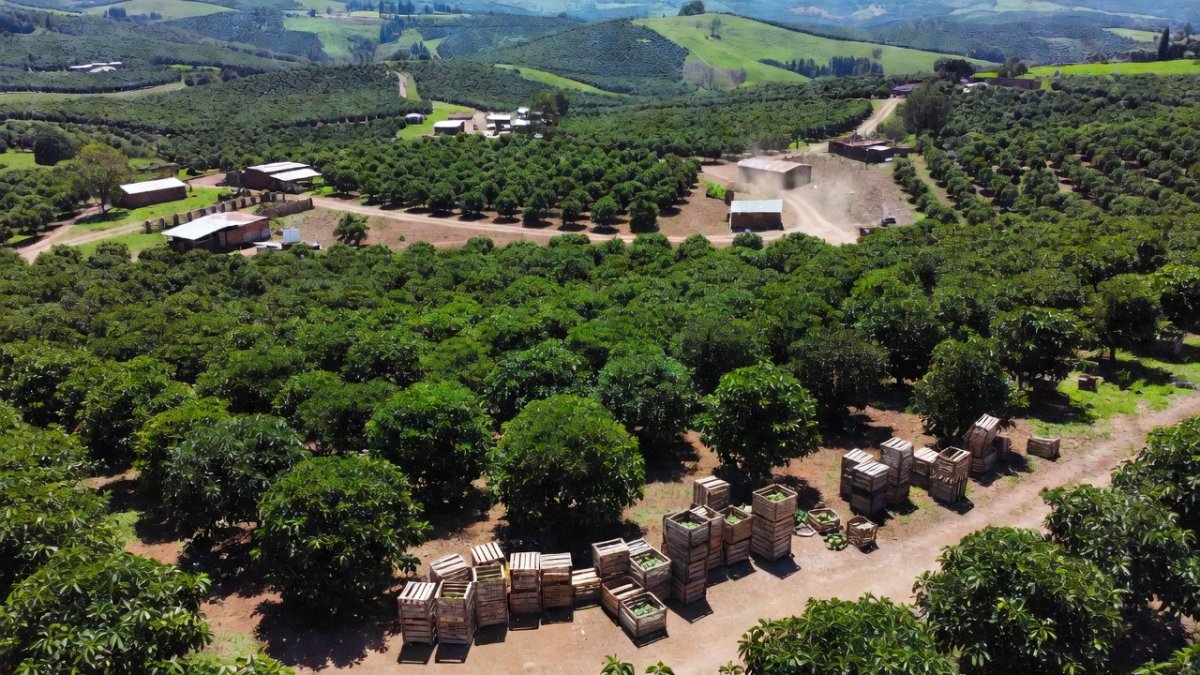
The Interim Agreement on Trade eliminates most remaining customs duties, removing 95 percent of Mexican tariffs on EU agricultural exports. This change directly affects producers of wine, cheese, and olive oil seeking wider access to Mexican supermarket shelves.
Farmers in regions such as Jalisco and Michoacán will face new competition, yet the same provisions also open European markets for Mexican avocados, berries, and tequila under strengthened geographical indications rules that protect traditional Mexican products. Mexican avocado growers in Michoacán and tequila distillers in Jalisco now face sharply lower duties on shipments to Europe, while European wines, cheeses, pork cuts, and olive oil enter Mexico under reciprocal reductions that the Secretaría de Economía projects will lift bilateral agricultural trade by 18 percent within three years. The dual tariff cuts operate symmetrically: Mexican berries and tomatoes reach European supermarkets at competitive prices, yet COFEPRIS maintains rigorous sanitary checks on incoming European dairy and meats to protect local standards. In neighborhood tianguis from Guadalajara to Oaxaca, vendors already note steadier supplies of imported cheeses at stable prices, while tortillerías benefit from diversified grain sourcing that cushions against U.S. price swings. Geographical indications safeguard tequila’s Denominación de Origen alongside European regional specialties, preserving cultural value for artisans whose livelihoods depend on authentic branding rather than generic competition.
Expanded Access Across Services and Procurement
The agreement broadens access to public procurement markets, financial services, digital trade, telecommunications, and transport sectors. Mexican firms can now bid on a wider range of European government contracts previously restricted.
Cooperation will deepen in intellectual property, competition policy, and critical raw materials supply chains. These areas matter for manufacturers in Monterrey and Guadalajara who rely on stable supplies of specialized components.
Diversification Strategy Responds to USMCA Review
The deal forms part of Mexico’s strategy to diversify trade partners while the USMCA undergoes joint review in 2026. President Claudia Sheinbaum’s administration has emphasized reducing exposure to any single market amid uncertainty over renewal.
Chatham House analysts warned that a U.S. refusal to renew the USMCA would create economic uncertainty for Mexico. The EU agreement provides an alternative channel that already accounts for substantial existing trade volumes and can absorb additional Mexican exports if needed. With the USMCA joint review commencing July 1, 2026, and former President Trump again threatening non-renewal, Mexico’s decision to anchor 80 percent of its exports in the U.S. market now carries heightened risk. President Sheinbaum’s dual-track approach pairs retention of USMCA preferences with the new EU corridor, a strategy Chatham House analysts describe as prudent insulation against unilateral shocks. INEGI data show that even a modest 10 percent drop in U.S.-bound shipments would cost 420,000 formal jobs; the EU pact spreads that exposure across additional partners. Exporters in border maquiladoras and central automotive clusters therefore gain breathing room, protecting paychecks that sustain entire neighborhoods from Ciudad Juárez to Aguascalientes.
Effects on Mexican Workers and Communities
Workers in export-oriented factories across northern Mexico stand to benefit from increased European demand for automotive parts and electronics. The expanded digital trade rules may also support tech startups in Mexico City and Querétaro.
Small-scale agricultural producers in southern states gain clearer pathways to European markets once the agreement enters into force. At the same time, local retailers in urban centers will see more European food products on shelves, giving consumers greater variety at potentially lower prices after tariffs drop. Maquiladora workers in Tijuana and Nogales, many of them mothers balancing assembly-line shifts with family remittances, stand to benefit from diversified orders that reduce reliance on single-market cycles. In Puebla’s auto plants and Guadalajara’s tech parks—often called Mexico’s Silicon Valley—engineers and technicians see expanded European supply chains that could stabilize overtime schedules. Agricultural communities in Michoacán’s avocado highlands and Jalisco’s berry fields gain similar security, their seasonal incomes less vulnerable to U.S. policy swings. By broadening trade destinations, the agreement helps keep remittance flows steady for households that depend on them for school fees and medical care, turning macroeconomic diversification into tangible daily stability for millions of Mexican families.
Timeline Toward Full Modernised Global Agreement
The Interim Agreement on Trade will enter into force on the first day of the second month after both sides notify completion of internal procedures. Mexico is expected to complete ratification after summer 2026.
The full Modernised Global Agreement will later replace the interim text once ratified by all EU member states and Mexico. Until then, the interim provisions will govern day-to-day trade while both sides continue work on remaining chapters.
By Rosa Martinez, Staff Writer
This article was produced with AI-assisted research and editorial support. Reporting is based on sources cited in the article.
What's Your Reaction?
 Like
0
Like
0
 Dislike
0
Dislike
0
 Love
0
Love
0
 Funny
0
Funny
0
 Wow
0
Wow
0
 Sad
0
Sad
0
 Angry
0
Angry
0

Latin America/Andes Correspondent at Global1.News. Based in Bogota, covering politics, environment, energy, and social movements across the Andean region. Passionate about environmental journalism and communities protecting their land.














Comments (0)