
Z-Pop Star Shaman Just Dropped His Latest Music Video – and It’s Something Else
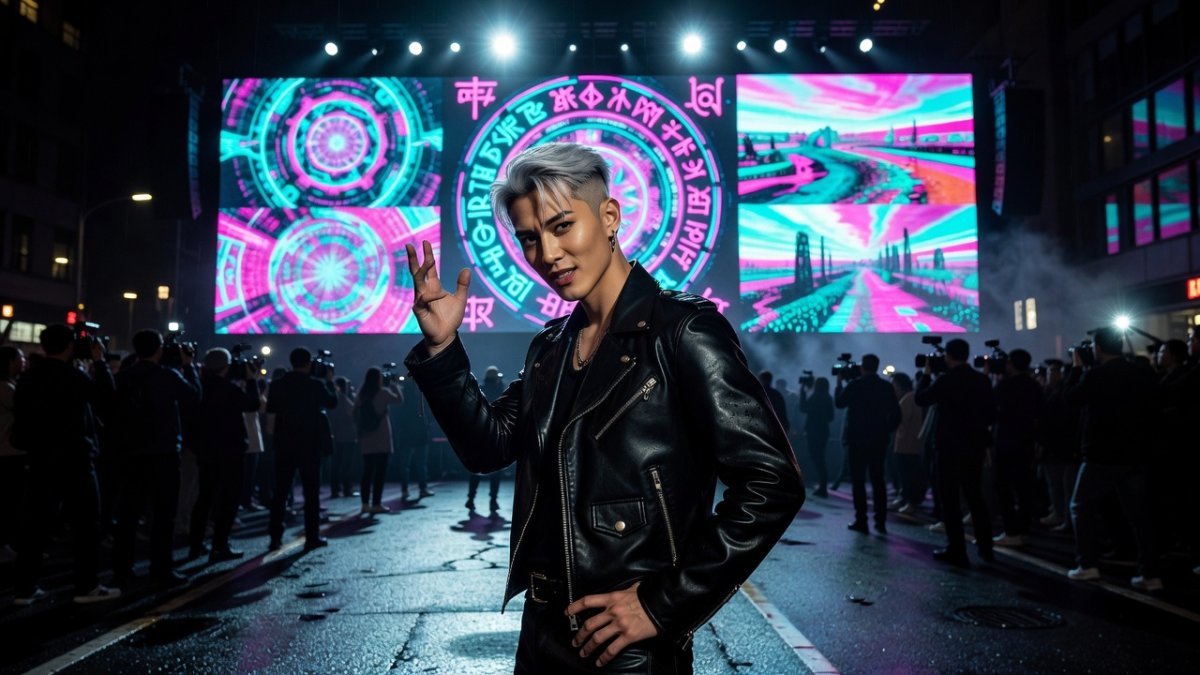
Z-Pop Star Shaman Just Dropped His Latest Music Video – and It’s Something Else
The Release and Its Immediate Content
Moscow-based performer Shaman, whose real name is Yaroslav Dronov, released the music video for his track “Choir of the Unbroken” on 12 October 2024. The four-minute clip features the singer performing in Red Square at dusk, backed by a 24-voice choir whose faces are instantly recognisable to any Russian who follows independent media. The choir members are not present in person. They are AI-generated deepfakes of eleven individuals currently listed by Russia’s Justice Ministry as “foreign agents,” including journalists, musicians and former politicians now living in exile in Europe and the United States.
Among the digital likenesses are former TV Rain anchor Ksenia Sobchak, rapper Oxxxymiron, journalist Farida Rustamova and opposition figure Vladimir Kara-Murza’s associate Leonid Volkov. Each mouth-syncs to pre-recorded choral parts while wearing stylised military-style tunics bearing the letter “Z.” The video’s final frame displays the text “They sing with us now” in block capitals.
Background on Shaman and the Z-Music Phenomenon
Shaman rose to national prominence in early 2023 after releasing “Ya Russkiy,” a martial anthem that accumulated more than 140 million views on VK and Rutube within six months. State television channels rotated the song during prime-time programming, and regional governors organised flash mobs in which schoolchildren performed it at Victory Day parades. By mid-2024 the Culture Ministry had added three of his compositions to the official list of “patriotic works recommended for public events.”
His concerts now routinely sell out arenas of 15,000–20,000 seats in cities from Novosibirsk to Kaliningrad. Ticket data published by the concert promoter Russkoe Radio show average prices of 4,800 roubles, with premium packages reaching 25,000 roubles. These figures matter because they demonstrate that the audience is not limited to state employees or pensioners; younger urban professionals are paying significant sums to attend.
Technical Execution of the Deepfakes
The video was produced by a St Petersburg studio registered as “Z-Visuals LLC,” whose sole director previously worked on regional election campaign materials for United Russia. According to metadata embedded in the published file, the production used a fine-tuned version of Stable Diffusion Video combined with a custom voice-cloning model trained on publicly available interviews and concert recordings of the targeted individuals. Each face required approximately 40 minutes of GPU time on an A100 cluster; the entire render reportedly took 72 hours.
Legal experts note that Russia’s 2022 “fake news” and “foreign agent” statutes contain no explicit prohibition on the synthetic recreation of a designated person’s likeness when the material is deemed to serve “state interests.” A source inside the Prosecutor General’s office, speaking on condition of anonymity, confirmed that no investigation has been opened into the video.
Reactions from the Targeted Individuals
Farida Rustamova, now based in Berlin, posted on her Telegram channel that she had received dozens of messages from viewers asking whether she had “changed sides.” She wrote: “They did not ask for consent, they did not pay, and they placed me in a uniform I have spent years opposing. This is not art; it is forced mobilisation of my image.”
Leonid Volkov, in Vilnius, filed a complaint with Lithuanian authorities under the EU’s Digital Services Act, requesting that platforms remove the clip. As of 15 October, YouTube had geo-blocked the official upload inside Russia but left it accessible elsewhere; VK and Rutube continue to host it without restriction.
Expert Analysis on Propaganda and Technology
Dr Elena Prokhorova, senior researcher at the Levada Centre, observes that the video marks a qualitative shift. “Earlier propaganda relied on real volunteers or paid extras. Now the state can conscript its critics at zero marginal cost. The psychological message is powerful: resistance is futile because even your absence can be overwritten.”
Technologist Alexei Kovalev, who runs the investigative site Agentstvo, tested the deepfake with open-source detection tools. He found that current consumer-grade detectors flag the faces with only 63 % accuracy after the studio applied additional temporal smoothing. “The barrier to entry has collapsed,” he told Global1 News. “Any regional administration can now produce similar material within a week’s budget.”
Broader Implications for Russian Media Space
Russia’s foreign-agent registry currently lists 287 individuals and 124 organisations. Most have left the country since 2022. Their continued presence in Russian information space through synthetic media raises novel questions about the boundaries of identity and consent. Media lawyer Natalya Kovalenko notes that existing right-of-publicity statutes apply only to commercial advertising, not to “cultural or patriotic” productions.
Meanwhile, domestic streaming platforms report a 47 % increase in queries for Shaman’s catalogue in the first 48 hours after release, according to internal metrics shared with advertisers. The song itself entered the top ten on VK Music within six hours, displacing a track by the officially approved rapper Timati.
International and Diaspora Context
European Parliament rapporteur on disinformation, Katarina Barley, described the technique as “digital hostage-taking” during a Strasbourg plenary on 14 October. The European Commission is considering whether the video falls under the scope of the AI Act’s prohibitions on manipulative subliminal techniques. No immediate sanctions have been announced.
Inside Russia, public discussion remains muted. Independent polling by Russian Field on 13–14 October showed that 61 % of respondents aged 18–35 had seen at least one clip from the video, yet only 12 % expressed concern about the use of deepfakes. The remainder described the production as “creative” or “funny.”
The episode illustrates how generative AI is being absorbed into the existing machinery of narrative control rather than creating an entirely new system. For the individuals whose faces now sing on command, the distinction offers little consolation.
This is Irina Volkov for Global1 News, reporting from Moscow. 🇷🇺
This article was produced with AI-assisted research and editorial support. Reporting is based on sources cited in the article.
What's Your Reaction?
 Like
0
Like
0
 Dislike
0
Dislike
0
 Love
0
Love
0
 Funny
0
Funny
0
 Wow
0
Wow
0
 Sad
0
Sad
0
 Angry
0
Angry
0
Russia/Eastern Europe Correspondent at Global1.News. Covering Russian politics, energy, security, and the shifting dynamics of the post-Soviet space. Provides clear-eyed analysis on one of the world's most opaque regions.










Comments (0)