
Russia Ramps Up Pressure on Armenia With Produce Import Ban
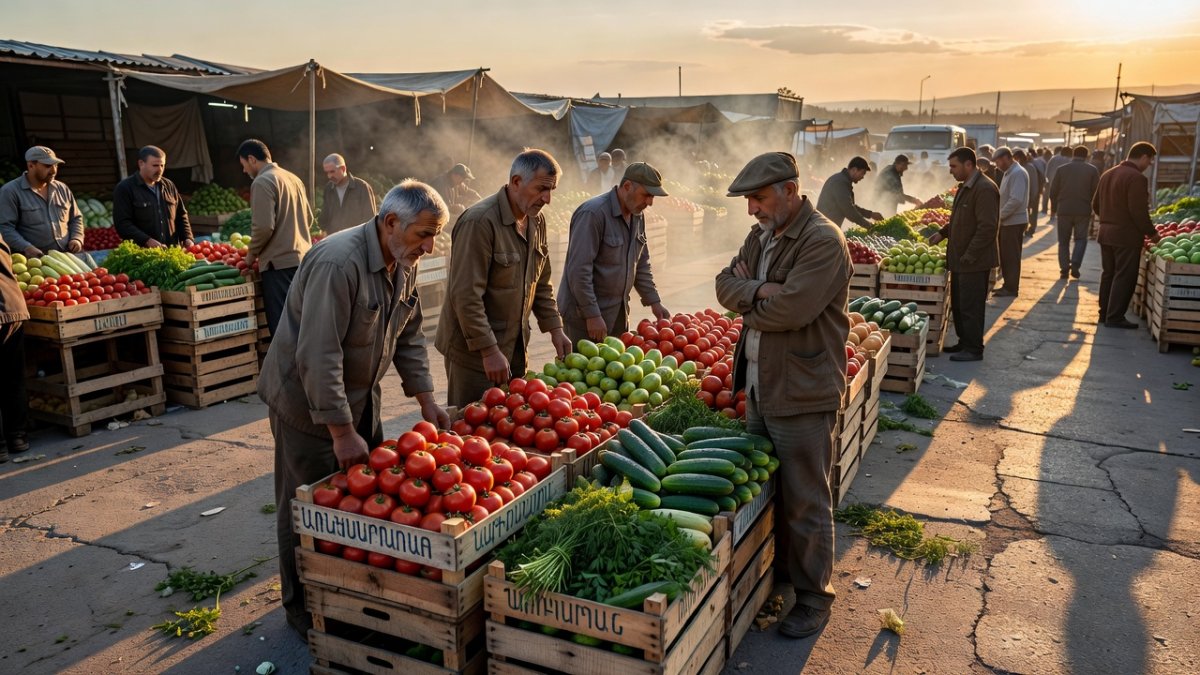
Russia Imposes Fruit and Vegetable Import Ban on Armenia in Retaliation for Gas Deal Threat
The Sudden Trade Restriction and Its Timing
Russian authorities announced on October 12 that they would suspend imports of fresh produce from Armenia, citing repeated violations of phytosanitary standards detected at border checkpoints. The measure targets apricots, peaches, tomatoes, cucumbers, and grapes—products that accounted for $142 million in Armenian exports to Russia last year. The decision followed by one day a statement from Deputy Prime Minister Alexei Overchuk warning that Moscow could terminate the 2013 intergovernmental agreement on discounted natural gas supplies to Armenia unless Yerevan clarified its commitments within the Eurasian Economic Union.
Officials at Rosselkhoznadzor documented 47 cases of quarantine pests in Armenian shipments between January and September 2024, a 28 percent increase from the same period in 2023. Yet Armenian exporters insist laboratory tests conducted in Yerevan showed compliance. The discrepancy has fueled accusations that technical regulations are being weaponized for political leverage.
Energy Leverage and the Gas Agreement at Stake
Armenia receives Russian natural gas at a preferential price of $165 per thousand cubic meters under the existing deal, well below European spot prices. Gazprom Armenia, the local subsidiary, supplies over 85 percent of the country’s gas needs, including feedstock for the Metsamor nuclear power plant’s backup systems. Termination of the agreement would force Armenia to purchase gas at market rates estimated at $320–$380 per thousand cubic meters, adding roughly $180 million annually to the national import bill.
Moscow’s threat emerged after Armenian Prime Minister Nikol Pashinyan declined to endorse a joint CSTO statement criticizing Western sanctions policy during the organization’s September summit in Astana. Russian negotiators had sought written guarantees that Armenia would not pursue alternative energy corridors through Iran or Azerbaijan without prior EAEU approval.
Economic Exposure and Trade Data
Armenia’s agricultural sector employs 32 percent of the workforce and contributes 14 percent to GDP. Russia absorbs 68 percent of its fresh produce exports. In 2023, Armenian apricots alone generated $47 million in revenue from Russian buyers. A prolonged ban would idle packing facilities in the Ararat Valley and reduce seasonal incomes for an estimated 85,000 farming households.
Customs statistics reveal that Armenian re-exports of Georgian and Iranian produce to Russia have grown 19 percent this year, prompting Russian inspectors to intensify checks for origin fraud. Any Armenian attempt to reroute shipments through third countries now faces additional documentation requirements that add 12–18 days to delivery times.
Regional Context and Shifting Alignments
Armenia joined the Eurasian Economic Union in 2015 under then-President Serzh Sargsyan, securing tariff-free access to the Russian market in exchange for policy coordination. Since the 2018 Velvet Revolution, Pashinyan’s government has diversified partnerships, signing a Comprehensive and Enhanced Partnership Agreement with the European Union and accepting U.S. development assistance exceeding $120 million since 2022. These moves have been interpreted in Moscow as gradual drift from the post-Soviet security architecture.
The current friction echoes earlier episodes. In 2013, Russia blocked Moldovan wine and produce after Chisinau initialed an EU association agreement. Similar tactics were applied to Georgia in 2006 and 2019. Analysts note that Russia accounts for only 4 percent of Armenia’s total foreign direct investment yet remains the dominant supplier of both energy and remittances, with $1.1 billion sent home by Armenian workers in Russia in 2023.
Expert Perspectives on Moscow’s Calculus
Konstantin Kosachev, chair of the Federation Council’s foreign affairs committee, stated that “economic instruments remain legitimate tools when partners question their treaty obligations.” In contrast, Yerevan-based economist Narek Manukyan argued that the ban violates Article 15 of the EAEU Treaty, which prohibits arbitrary restrictions on mutual trade. Manukyan estimates the immediate GDP contraction at 0.8–1.2 percent if the measure lasts through the winter harvest season.
Carnegie Russia Eurasia Center analyst Alexander Baunov observed that Moscow is signaling limits to tolerance for “multi-vector” policies among CSTO members. He noted that Armenia’s refusal to host planned CSTO military exercises in 2024 already reduced Russian force projection options along the Iranian border.
Implications for Armenian Energy Security and Domestic Politics
Pashinyan’s administration has accelerated talks with Tehran for a 500-million-cubic-meter annual gas swap arrangement and with the World Bank for financing of a new 400-kilovolt interconnection with Georgia. These projects require three to five years to become operational, leaving a near-term vulnerability that Russian officials appear prepared to exploit.
Domestic polling conducted by the International Republican Institute in September showed Pashinyan’s approval rating at 29 percent, down from 41 percent in May. Opposition parties have seized on the import ban to argue that the prime minister’s Western tilt has jeopardized both economic stability and security guarantees previously provided by Russia.
Broader Geopolitical Ramifications
The produce ban and gas threat coincide with renewed fighting along the Armenia-Azerbaijan border, where Russian peacekeepers have reduced patrols since the 2023 withdrawal from Nagorno-Karabakh. Yerevan has requested additional CSTO consultations, but Moscow has conditioned any response on renewed alignment with EAEU trade rules.
European diplomats in Yerevan privately acknowledge that Brussels lacks immediate capacity to offset Russian energy supplies or replace the Russian market for Armenian agriculture. This reality constrains the speed at which Armenia can pivot westward without incurring severe short-term costs.
This is Irina Volkov for Global1 News, reporting from Moscow. 🇷🇺
This is Irina Volkov for Global1 News, reporting from Moscow. 🇷🇺
This article was produced with AI-assisted research and editorial support. Reporting is based on sources cited in the article.
What's Your Reaction?
 Like
0
Like
0
 Dislike
0
Dislike
0
 Love
0
Love
0
 Funny
0
Funny
0
 Wow
0
Wow
0
 Sad
0
Sad
0
 Angry
0
Angry
0
Russia/Eastern Europe Correspondent at Global1.News. Covering Russian politics, energy, security, and the shifting dynamics of the post-Soviet space. Provides clear-eyed analysis on one of the world's most opaque regions.













Comments (0)