
Z-Image Turbo Brings ControlNet to Low VRAM GPUs
In the fast-evolving world of AI-driven image generation, accessibility has long been the bottleneck separating enthusiasts from professionals. Enter the latest upgrade to Z-Image Turbo, which now brings robust ControlNet Union support to GPUs with as little as 6-8GB VRAM. This development, spotlighted in the recent Aitrepreneur video, transforms what was already a lightning-fa
In the fast-evolving world of AI-driven image generation, accessibility has long been the bottleneck separating enthusiasts from professionals. Enter the latest upgrade to Z-Image Turbo, which now brings robust ControlNet Union support to GPUs with as little as 6-8GB VRAM. This development, spotlighted in the recent Aitrepreneur video, transforms what was already a lightning-fast 6B-parameter model into a versatile powerhouse for precise creative control without requiring enterprise-grade hardware.
Z-Image Turbo ControlNet Upgrade Democratizes Precision AI Art on Budget GPUs
Atlanta, GA – June 14, 2026 — The AI image synthesis landscape just leveled up in a major way. Z-Image Turbo, the 6B-parameter text-to-image model from Tongyi-MAI, has received a groundbreaking upgrade that integrates ControlNet Union capabilities while maintaining compatibility with low-VRAM setups. Thanks to GGUF quantization, users can now harness advanced controls like pose guidance, depth mapping, and Canny edge detection on consumer GPUs starting at 6GB, all within the free, open-source ComfyUI environment. This isn't just an incremental tweak—it's a seismic shift that puts professional-grade image control into the hands of hobbyists and indie creators who previously had to settle for basic outputs or invest in costly hardware.
The Core of Z-Image Turbo: Speed Meets Scale
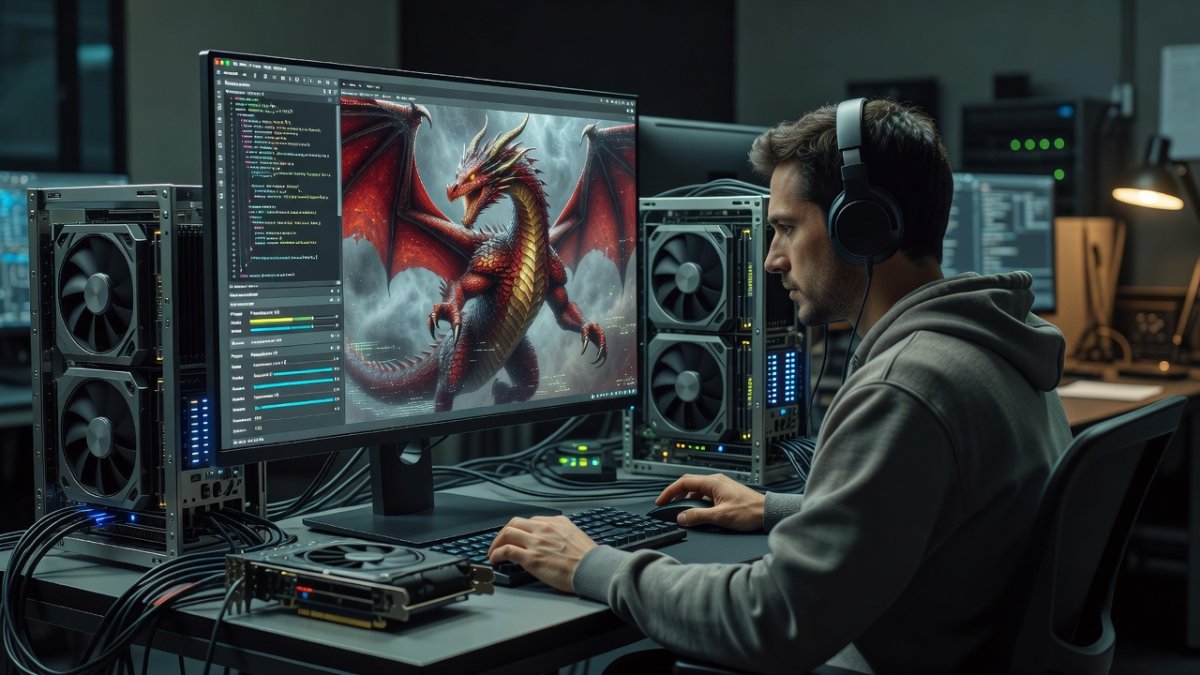
Z-Image Turbo stands out with its 8-step inference process, delivering high-quality images in a fraction of the time compared to traditional diffusion models. Developed by Tongyi-MAI, this 6B-parameter architecture balances detail and efficiency, making it ideal for rapid iteration in creative workflows. The base model already impressed with its ability to generate coherent visuals from text prompts alone, but the addition of GGUF quantization has been the key enabler for broader adoption. By compressing the model weights intelligently, it runs smoothly on modest VRAM allocations without sacrificing too much fidelity. This quantization breakthrough means that what once demanded 24GB or more can now thrive on laptops and mid-range desktops, opening doors for mobile creators and students alike.
Unlocking ControlNet Union on Constrained Hardware
The headline feature of this upgrade is ControlNet Union support tailored specifically for low-VRAM environments. ControlNet acts as a conditioning layer that injects structural guidance into the generation process, allowing users to dictate exact poses, spatial relationships, and edge details. Previously, such tools were VRAM hogs, often requiring high-end cards to avoid out-of-memory errors during inference. With the new optimizations, Z-Image Turbo's ControlNet integration leverages efficient memory management to keep everything under 8GB. This means pose control can lock in human figures with anatomical accuracy, depth mapping adds realistic layering to scenes, and Canny edge detection preserves sharp outlines from reference sketches—all without the system grinding to a halt. The upgrade represents a technical triumph in balancing computational load, proving that advanced AI features don't have to be exclusive to flagship hardware.
Practical Features: Pose, Depth, and Edge Mastery
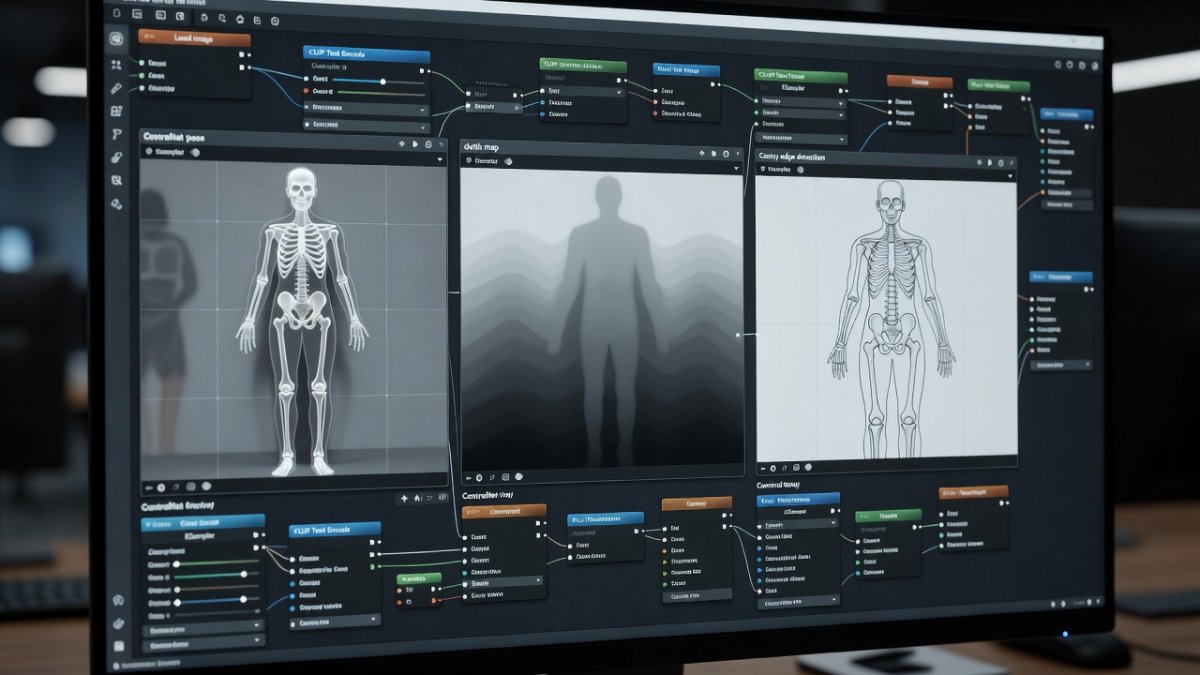
Diving deeper, the ControlNet features shine in real-world applications. Pose control lets artists upload skeleton references to enforce specific body positions, eliminating the guesswork in character animation or product visualization. Depth mapping excels at creating immersive 3D-like compositions, where foreground elements pop against detailed backgrounds, enhancing everything from architectural renders to cinematic stills. Meanwhile, Canny edge detection provides pixel-perfect adherence to line art, making it a favorite for comic book artists and logo designers who need crisp boundaries. These tools operate seamlessly in ComfyUI's node-based interface, where users can chain workflows for batch processing or experimental hybrids. The low-VRAM optimization ensures these features activate without swapping to disk or reducing resolution, maintaining the model's signature 8-step speed even under heavy conditioning.
ComfyUI Integration and Open-Source Accessibility
Running entirely within ComfyUI, the upgraded Z-Image Turbo benefits from a vibrant ecosystem of custom nodes and community extensions. ComfyUI's modular design allows drag-and-drop assembly of pipelines that incorporate the new ControlNet Union without complex coding. Since the entire package is free and open-source, developers worldwide can fork, optimize, and share improvements, accelerating innovation. GGUF quantization plays a starring role here by enabling quantized variants that fit snugly into limited VRAM pools, often with negligible quality loss. This accessibility ethos aligns perfectly with the broader push toward democratized AI, where barriers like expensive cloud credits or proprietary software no longer gatekeep creativity. Early adopters report generating studio-quality outputs on everyday rigs, underscoring how this upgrade bridges the gap between research labs and living rooms.
Broader Implications for AI Creativity and Industry
Beyond the technical specs, this development signals a maturing phase in generative AI where efficiency trumps raw power. By supporting low-VRAM GPUs, Z-Image Turbo's ControlNet upgrade challenges the notion that cutting-edge tools require premium investments, potentially spurring wider adoption in education, small businesses, and emerging markets. Creators can now experiment with precise controls that were once the domain of high-budget studios, fostering diversity in visual storytelling. However, it also raises questions about model safety and ethical use, as easier access to controlled generation could amplify both artistic expression and potential misuse. Tongyi-MAI's commitment to open-sourcing ensures transparency, inviting scrutiny and collaborative refinement. In an industry racing toward ever-larger models, this focus on optimization feels refreshingly pragmatic and user-centric.
Future Outlook and Community Momentum
Looking ahead, the Z-Image Turbo ecosystem is poised for rapid evolution. With ControlNet Union as a foundation, expect community-driven extensions like multi-ControlNet blending or real-time preview modes optimized for even lower hardware thresholds. The Aitrepreneur coverage highlights practical tutorials that lower the entry curve, encouraging more users to dive in. As quantization techniques improve further, we may see 4GB VRAM viability, expanding reach to ultrabooks and integrated graphics. This trajectory not only sustains momentum for Tongyi-MAI but also pressures competitors to prioritize inclusive design. Ultimately, the upgrade reinforces that the future of AI art lies in empowerment rather than exclusion, turning casual tinkerers into skilled practitioners overnight.
The Z-Image Turbo ControlNet upgrade isn't merely a feature drop—it's a manifesto for accessible innovation in AI. By marrying speed, precision, and low-resource efficiency in an open ComfyUI package, it empowers a new generation of creators to push boundaries without hardware limitations holding them back. As adoption grows, expect ripple effects across digital media, design, and beyond, proving once again that great technology thrives when shared freely.
By Jessica Ali, Staff Writer.Z-Image Turbo, ControlNet Union, low VRAM AI, GGUF quantization, ComfyUI, Tongyi-MAI, text-to-image model, pose control, depth mapping, Canny edge detectionThis article was produced with AI-assisted research and editorial support. Reporting is based on sources cited in the article.
What's Your Reaction?
 Like
0
Like
0
 Dislike
0
Dislike
0
 Love
0
Love
0
 Funny
0
Funny
0
 Wow
0
Wow
0
 Sad
0
Sad
0
 Angry
0
Angry
0

Editor-in-Chief at Global1.News. Atlanta-based journalist who cuts through the BS and tells it like it is. Lead anchor, host, and the voice you hear when the spin stops and the truth starts.














Comments (0)