
Xi Jinping Pyongyang Visit Deepens Sino-DPRK Ties
Xi Jinping's Pyongyang Visit Underscores Enduring Sino-DPRK Strategic Partnership The Symbolism of Xi Jinping's First State Visit of the Year Chinese President Xi Jinping concluded a two-day visit to Pyongyang on Tuesday, marking his first official trip to North Korea since 2019. North Korean leader Kim Jong Un extended an elaborate welcome that included red-carpet ceremonies a
The Symbolism of Xi Jinping's First State Visit of the Year
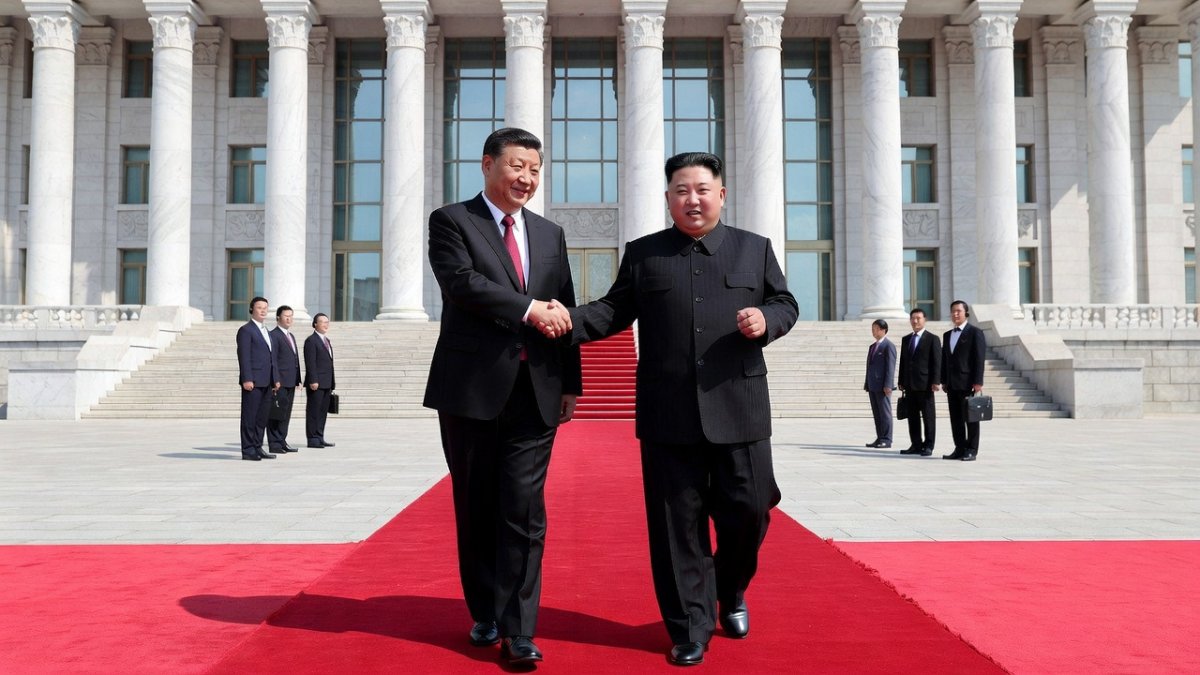
Chinese President Xi Jinping concluded a two-day visit to Pyongyang on Tuesday, marking his first official trip to North Korea since 2019. North Korean leader Kim Jong Un extended an elaborate welcome that included red-carpet ceremonies and acrobatic performances, reflecting the high ceremonial value both sides placed on the occasion. State media reports from KCNA and Xinhua emphasized that Xi's selection of Pyongyang as the destination for his initial state visit of the year conveyed the "utmost importance" attached to bilateral relations. This gesture occurs against a backdrop of shifting alignments, where Beijing seeks to reinforce its position as North Korea's primary political and economic partner while the latter has cultivated closer contacts with Russia.
Historical Foundations and the 65th Anniversary of the Defense Pact
The timing of the visit coincides with the 65th anniversary of the 1961 Sino-North Korean Treaty of Friendship, Cooperation and Mutual Assistance, China's sole formal defense pact with any nation. During the trip, both leaders visited the Friendship Tower commemorating Chinese soldiers who fought in the Korean War and planted a fir tree at Pyongyang's top cadre school to symbolize enduring ties. Xi described the two countries as "linked by mountains and rivers and share a common destiny," language that echoes longstanding Chinese framing of the relationship. Kim reaffirmed North Korea's prioritization of friendship with China and reiterated support for Beijing's "One China" principle. These exchanges highlight how historical wartime solidarity continues to anchor contemporary diplomacy even as international sanctions constrain North Korea's options.
Beijing's Calculated Reassertion of Influence
China remains North Korea's most critical lifeline amid heavy international sanctions tied to its nuclear program. Xi traveled with a high-level delegation that included de facto chief of staff Cai Qi, Defense Minister Dong Jun, Foreign Minister Wang Yi, and Commerce Minister Wang Wentao. The composition of this entourage signals Beijing's intent to engage across political, military, and economic channels. By hosting such a prominent visitor shortly after Xi's meetings with U.S. President Donald Trump and Russian President Vladimir Putin, Kim gains domestic and international visibility that underscores his access to major powers despite isolation. For Beijing, the visit serves to remind Pyongyang that its principal benefactor remains China, particularly as North Korea has drawn closer to Moscow in recent years. This move aligns with China's broader foreign policy doctrine of maintaining regional stability on its northeastern border while advancing strategic autonomy.
Absence of Denuclearization and Evolving Policy Priorities
Notably absent from official readouts were any references to denuclearization of the Korean Peninsula. In recent years, Chinese state media and diplomatic statements have significantly reduced emphasis on this issue in public settings. The omission reflects a pragmatic adjustment in Beijing's approach, prioritizing the preservation of influence over repeated public calls that have yielded limited results. Kim appeared to secure this framing during the talks, allowing the visit to focus instead on high-level exchanges and people-to-people bonds. Xi noted that the two sides had reached an "important consensus" to "grasp the trend of the times" and deepen cooperation. This shift illustrates how China balances its role as a permanent member of the UN Security Council with the imperative of managing an unpredictable neighbor whose actions affect Northeast Asian security dynamics.
Ideological Divergences and Economic Reform Expectations
Despite the public displays of unity, underlying differences persist. Xi expressed hope that the visit would "jointly open up a brighter future for the socialist cause of both countries," a formulation that subtly references Beijing's long-standing encouragement for North Korea to adopt elements of China's reform model—combining one-party rule with expanded markets, foreign investment, and international trade. North Korean state media, however, made no mention of any developmental learning process or economic opening. Analysts have noted that such omissions suggest continued reluctance in Pyongyang to emulate China's path. These frictions do not derail the alliance but reveal the limits of Chinese leverage when core regime survival concerns dominate North Korean decision-making. The visit therefore served more as a reaffirmation of political solidarity than a platform for economic transformation.
Geopolitical Ramifications for Regional Actors
The strengthened optics of Sino-DPRK ties carry second-order effects across multiple theaters. For ASEAN states, sustained Chinese influence over North Korea reduces the risk of sudden escalations that could disrupt trade routes and investment climates. European Union policymakers may interpret the visit as further evidence that sanctions regimes require complementary diplomatic engagement rather than isolation alone. In the Global South, the episode reinforces perceptions of China as a reliable partner capable of managing complex relationships without external dictation. Meanwhile, the United States and its allies face the reality that Beijing's diplomatic and economic tools remain the most direct channel for influencing Pyongyang's behavior. The absence of new concrete agreements during the trip indicates that both sides view the relationship through a long-term strategic lens rather than transactional milestones. This approach allows China to safeguard its northeastern periphery while preserving flexibility amid great-power competition.
By Prof. Marcus Chen, Staff WriterThis article was produced with AI-assisted research and editorial support. Reporting is based on sources cited in the article.
What's Your Reaction?
 Like
0
Like
0
 Dislike
0
Dislike
0
 Love
0
Love
0
 Funny
0
Funny
0
 Wow
0
Wow
0
 Sad
0
Sad
0
 Angry
0
Angry
0

World Politics Analyst at Global1.News. Based in Beijing, covering US-China relations, global trade, and geopolitical strategy. Brings deep analytical perspective to the power dynamics shaping international affairs.















Comments (0)