
Paulson Urges Constructive Strategic Stability in US-China Relations at CCG Event
Paulson Urges Constructive Strategic Stability in US-China Relations at CCG Event In a recent CGTN report covering former US Treasury Secretary Henry Paulson's address at the Center for China and Globalization event in Beijing, the speaker outlined four pressing areas where Washington and Beijing must find pragmatic common ground despite deep mistrust. Paulson framed the emergi
Defining Constructive Strategic Stability
Paulson positioned constructive strategic stability as an evolution beyond the earlier "strategic competition" framing that has dominated US policy documents since 2017. The term implies both sides accept fundamental differences in political systems and security interests while committing to predictable channels of communication. This approach aligns with Beijing's long-standing emphasis on the Dual Circulation strategy, which seeks to insulate the domestic economy from external shocks while preserving selective global engagement. Chinese officials, including those at the Ministry of Foreign Affairs, have repeatedly stressed that stability requires mutual respect for core interests rather than one-sided concessions.
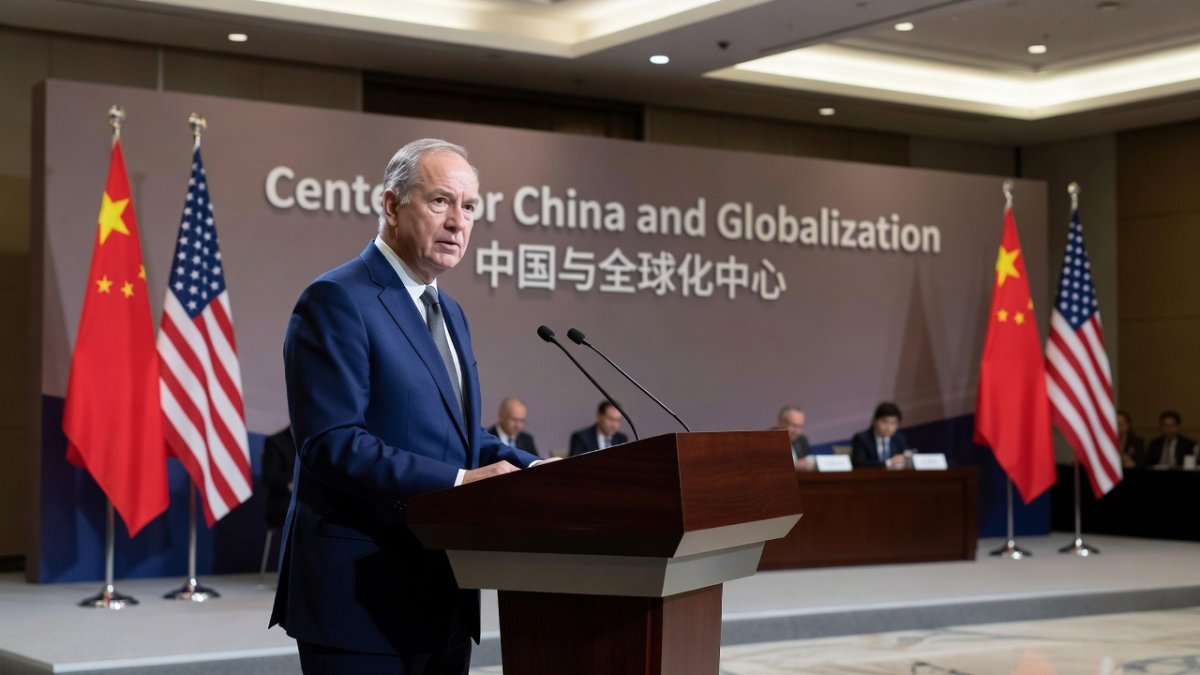
The concept also reflects Washington's recognition that complete economic decoupling carries prohibitive costs for American firms and consumers. Paulson's remarks therefore serve as a reminder that interdependence remains a structural reality even as both capitals pursue technological self-reliance.
Global Financial Crisis Risks and Interdependence
Paulson devoted significant attention to the elevated probability of another systemic financial crisis, citing high debt levels, rapid capital flow reversals, and opaque cross-border exposures. He noted that neither the United States nor China can insulate itself from contagion originating in the other's financial system. This assessment carries direct implications for China's financial regulators, who have been tightening oversight of property sector leverage and shadow banking under the 14th Five-Year Plan.
Beijing's leverage in this domain lies in its massive holdings of US Treasuries and its role as a major destination for foreign direct investment. Washington, in turn, controls critical nodes in the global payments system. Both sides therefore possess tools that could either stabilize or destabilize markets, making coordinated macroprudential dialogue a rational choice even amid political friction. Second-order effects would ripple through ASEAN economies that rely on stable renminbi-dollar dynamics for trade invoicing and reserve management.
AI Governance and the Technology Competition Dimension
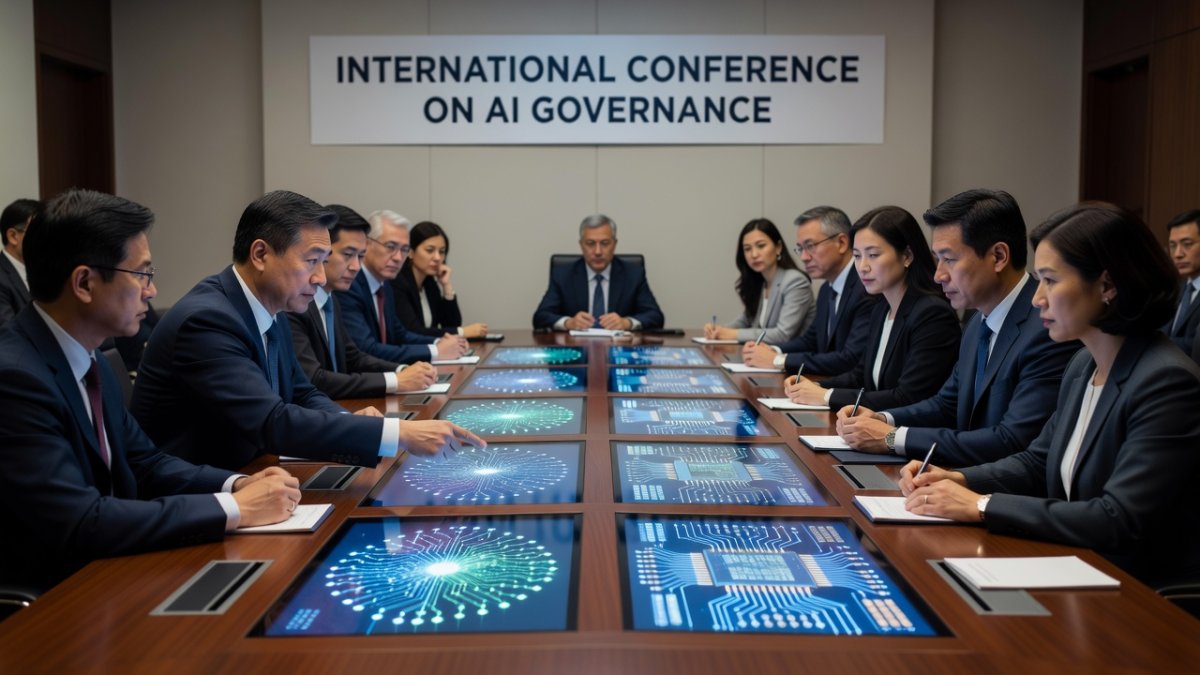
On artificial intelligence, Paulson highlighted its dual-edged nature: productivity gains alongside risks of labor displacement and governance challenges. He called for bilateral technical exchanges to establish baseline norms on safety and misuse prevention. This topic intersects directly with US-China tech competition, where Washington has imposed export controls on advanced semiconductors through the Department of Commerce while Beijing accelerates indigenous chip development under the Made in China 2025 framework.
China's strategic calculus centers on achieving technological self-sufficiency to reduce vulnerability to future sanctions. The United States seeks to maintain qualitative edges in foundational models and cloud infrastructure. Yet both governments share an interest in preventing uncontrolled proliferation of dual-use AI capabilities that could empower non-state actors. Pragmatic collaboration on narrow technical standards, rather than broad political agreements, offers a feasible entry point. Such limited cooperation could also shape emerging rules within multilateral forums where Global South countries are increasingly vocal.
Climate and Biodiversity as Areas of Potential Alignment
Paulson identified climate change and biodiversity protection as domains where interests converge most clearly. Both countries have committed to net-zero pathways, albeit on different timelines, and both face domestic pressures from extreme weather events. China's National Development and Reform Commission has integrated biodiversity targets into ecological civilization policies, while US agencies continue to fund research on carbon capture and nature-based solutions.
Cooperation here carries lower political risk than security or trade disputes. Joint projects on methane reduction or forest conservation could generate tangible results without requiring either side to alter fundamental positions on Taiwan or the South China Sea. For ASEAN nations, such collaboration might translate into technology transfer and financing mechanisms that support their own energy transitions, thereby expanding China's regional influence through infrastructure and green finance initiatives.
Strategic Calculus Under Current Geopolitical Conditions
Paulson's intervention signals that influential voices within the US foreign policy establishment continue to view managed engagement as preferable to unmanaged rivalry. Beijing's response will likely emphasize reciprocity: open channels on functional issues while defending sovereignty claims and industrial policy autonomy. The Ministry of Commerce has already indicated willingness to resume certain trade dialogues provided core technology restrictions are not expanded further.
Second-order effects extend beyond bilateral ties. European capitals watch for signs that Washington may soften its approach, potentially easing pressure on firms to diversify supply chains away from China. Global South governments, meanwhile, seek reassurance that great-power competition will not crowd out development finance and climate assistance. Constructive strategic stability, if operationalized, could create space for these actors to pursue multi-alignment strategies rather than forced binary choices.
Outlook for Sustained Dialogue
The CCG appearance underscores that personal diplomacy by former officials can still surface ideas that official channels find difficult to articulate publicly. Whether these concepts translate into concrete mechanisms—such as renewed working groups on financial stability or AI safety—depends on political will in both capitals. China's foreign policy doctrine continues to prioritize a stable external environment conducive to domestic modernization, while US strategy seeks to constrain China's rise without triggering uncontrolled escalation. The coming period will test whether constructive strategic stability can move from rhetorical aspiration to operational practice.
By Prof. Marcus Chen, Staff Writer
This article was produced with AI-assisted research and editorial support. Reporting is based on sources cited in the article.
What's Your Reaction?
 Like
0
Like
0
 Dislike
0
Dislike
0
 Love
0
Love
0
 Funny
0
Funny
0
 Wow
0
Wow
0
 Sad
0
Sad
0
 Angry
0
Angry
0

World Politics Analyst at Global1.News. Based in Beijing, covering US-China relations, global trade, and geopolitical strategy. Brings deep analytical perspective to the power dynamics shaping international affairs.














Comments (0)