
Widow's Viral Plea Exposes PhilHealth's 24-Hour Confinement Policy as Family Forced to Watch Husband Die
MANILA, Philippines — A Family's Nightmare Unfolds Marvin Sulit was rushed to Manila Doctors Hospital at exactly 5:59 a.m. on June 4 after suffering a severe brain hematoma that required immediate surgical intervention. Doctors determined that the life-saving procedure would cost approximately P4 million, a figure that quickly overwhelmed the family's limited resources. When th
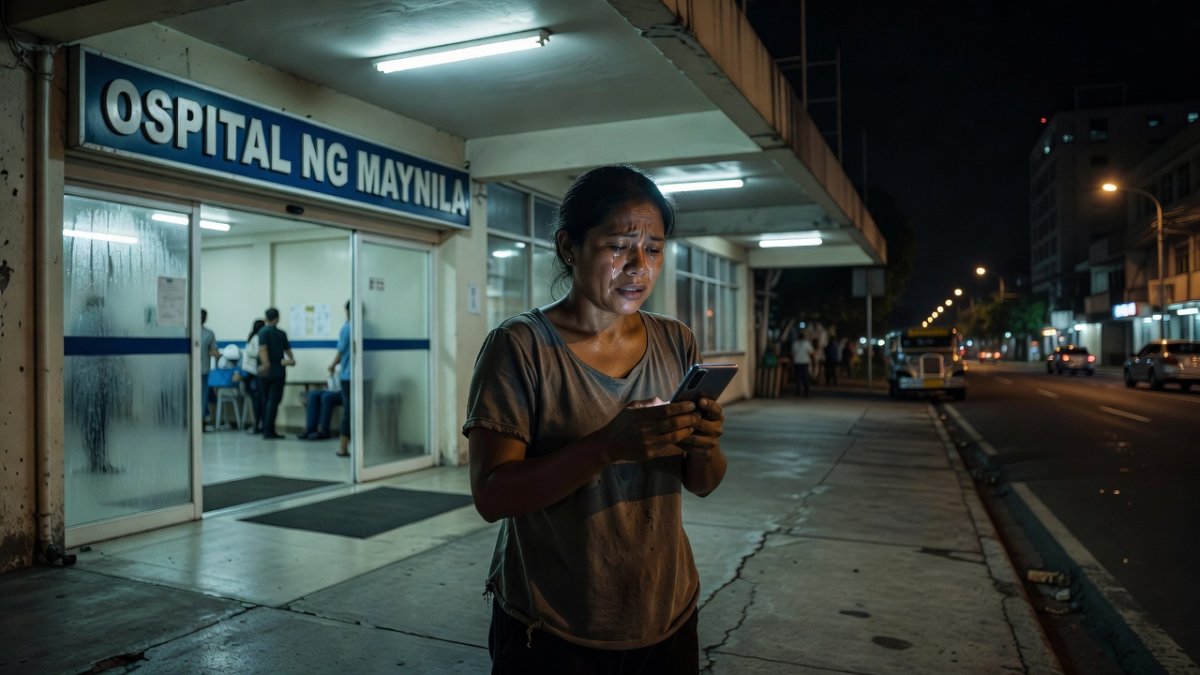
MANILA, Philippines — A Family's Nightmare Unfolds
Marvin Sulit was rushed to Manila Doctors Hospital at exactly 5:59 a.m. on June 4 after suffering a severe brain hematoma that required immediate surgical intervention. Doctors determined that the life-saving procedure would cost approximately P4 million, a figure that quickly overwhelmed the family's limited resources. When the hospital reduced the quoted amount to P2 million, the Sulits still could not secure the necessary funds in time. The medical team then recommended an urgent transfer to the University of the East Ramon Magsaysay Memorial Medical Center, known as UERM, which demanded a P1 million down payment before admission. Because the family could not meet this requirement, Marvin remained at Manila Doctors Hospital where his condition deteriorated rapidly. He passed away at 12:29 a.m. on June 5, roughly 18.5 hours after admission, leaving his wife and children in profound shock.
The timeline of events revealed how quickly a medical emergency can turn catastrophic for ordinary Filipino families. Marvin had been a lifelong PhilHealth member for more than 25 years, faithfully paying his contributions through his employment. His wife, Maria Lourdes Sulit, later recounted how the couple had always believed their membership would provide a safety net during health crises. Instead, the short confinement period meant the family watched helplessly as medical staff attempted to stabilize Marvin without the benefit of PhilHealth coverage. The 18.5-hour stay fell just short of the required threshold, compounding the financial and emotional devastation. Relatives who gathered at the hospital described the atmosphere as one of mounting despair as each hour passed without resolution.
Medical records later showed that Marvin's hematoma demanded swift neurosurgical attention that Manila Doctors Hospital was equipped to provide. However, the absence of immediate cash payments blocked access to the operating room. The family exhausted every possible source of funds, including borrowing from relatives and selling personal items, yet still came up short. By the time the decision was made to transfer Marvin, his vital signs had already begun to decline. Maria Lourdes remembered the final hours as a blur of frantic phone calls and repeated explanations to hospital staff about their inability to pay. The tragedy unfolded in full view of their children, who had expected their father to recover and attend a family milestone the following day.
Neighbors and coworkers who learned of the incident expressed disbelief that a quarter-century of contributions yielded no assistance at the moment of greatest need. The Sulit family had lived modestly, relying on Marvin's steady income and the promise of social protection. When the hematoma struck without warning, the system they trusted offered no immediate relief. Hospital billing statements documented P200,000 in accumulated charges even before any major procedure could begin. These costs mounted while the family waited for decisions that never came in their favor. The 18.5-hour confinement became the central fact that later ignited national discussion about PhilHealth rules.
PhilHealth's Official Response
PhilHealth issued a formal statement on June 14 acknowledging the Sulit case and expressing regret over the circumstances surrounding Marvin's death. The agency stated that it had mobilized resources immediately upon learning of the incident through social media and news reports. Officials confirmed they reached out directly to Maria Lourdes Sulit to offer assistance and clarify the status of her husband's claim. Coordination efforts with both Manila Doctors Hospital and UERM were initiated to review the medical documentation and explore possible avenues for support. The statement emphasized that PhilHealth was reviewing internal processes to prevent similar situations in the future. Agency representatives noted that the case highlighted gaps between policy and real-world emergencies.
Despite the public response, PhilHealth maintained that existing rules governed benefit eligibility based on documented confinement length. The agency explained that its outreach to the widow included guidance on filing any available claims and accessing other government assistance programs. Hospital administrators at Manila Doctors Hospital confirmed they had provided all necessary records to PhilHealth for evaluation. UERM officials similarly indicated willingness to cooperate if a transfer had occurred under different financial conditions. The June 14 statement avoided direct criticism of the 24-hour policy while signaling openness to dialogue with lawmakers. Maria Lourdes received the communication with cautious hope that some form of relief might still be possible for her family.
PhilHealth's swift mobilization reflected growing public pressure after the story gained traction online. The agency assigned dedicated personnel to handle the Sulit case and ensure timely communication with the bereaved family. Internal reviews focused on how claims processors had applied the confinement rule in this instance. Officials reiterated that lifelong contributors like Marvin deserved every possible consideration within the bounds of current regulations. The coordination with hospitals aimed to verify whether any exceptions or supplemental benefits could apply. Maria Lourdes later shared that the contact from PhilHealth came after her Facebook post had already circulated widely among netizens.
Health advocates welcomed the agency's acknowledgment but stressed that statements alone would not resolve systemic issues. PhilHealth committed to providing updates on the Sulit claim as the review progressed. The June 14 response also included an invitation for the family to submit additional documents that might support their case. Both hospitals involved pledged to assist in any follow-up inquiries from the state insurer. The episode prompted PhilHealth to examine how emergency cases are triaged when down payments cannot be met. Maria Lourdes expressed appreciation for the outreach while continuing to advocate for broader policy changes.
The 24-Hour Rule Explained
PhilHealth's 24-hour confinement policy requires patients to stay in an accredited facility for at least one full day before benefits are released. In Marvin Sulit's case, the 18.5-hour stay fell short of this threshold, resulting in automatic denial of coverage. Maria Lourdes expressed shock upon learning that her husband's 25 years of contributions did not override the strict time requirement. She questioned how a policy could disqualify a patient who died during emergency treatment simply because death occurred before the 24-hour mark. The rule, intended to prevent abuse, has drawn criticism when applied to fatal cases where extended confinement is impossible. Advocates argue that exceptions should exist for patients who expire while receiving intensive care.
The denial left the Sulit family responsible for all medical expenses despite decades of premium payments. Maria Lourdes described the moment she received the explanation as one of disbelief and anger. She noted that her husband had never missed a contribution and had always viewed PhilHealth as reliable protection. The 24-hour rule, she argued, fails to account for sudden deaths that occur within the first day of admission. Health experts have pointed out that many critical conditions require immediate decisions that do not align with administrative timelines. The policy's rigidity became the focal point of the viral discussion that followed Marvin's passing.
Under current guidelines, PhilHealth processes claims only after verifying the exact duration of confinement through hospital records. The Sulit claim was rejected because documentation showed Marvin's stay ended at 12:29 a.m. on June 5. Maria Lourdes called for the complete abolition of the rule in cases involving death, describing it as inhumane. She emphasized that families already grieving should not face additional financial ruin due to technicalities. Lawmakers later echoed her concerns, suggesting that fatal emergencies warrant separate consideration. The 25-year contribution history added emotional weight to arguments that the system should demonstrate greater flexibility.
Critics of the policy contend that it prioritizes procedural compliance over compassionate care. Maria Lourdes recounted how she had expected PhilHealth to cover at least a portion of the mounting bills. Instead, the family received formal notice that no benefits would apply because the confinement period was insufficient. The rule's application in this instance sparked broader debate about whether time-based criteria should govern life-and-death situations. Health policy analysts noted that similar cases have surfaced in the past but rarely gained national attention. The Sulit tragedy provided a concrete example of how the 24-hour requirement can leave families destitute.
The Crushing Cost of Emergency Care
The initial P4 million estimate for Marvin's surgery at Manila Doctors Hospital represented an insurmountable barrier for the Sulit family. Even after the hospital reduced the figure to P2 million, the required P1 million down payment for transfer to UERM remained out of reach. Daily accumulating charges reached P200,000 before any major intervention could occur, pushing the family deeper into debt. Maria Lourdes described their financial situation as hand-to-mouth, with no savings or insurance to bridge the gap. Relatives pooled whatever resources they could, yet the amounts fell far short of hospital demands. The absence of immediate cash meant Marvin could not access the operating room despite being admitted.
Emergency care in private hospitals often hinges on upfront payments that many middle-income families cannot provide. The Sulits faced this reality when staff explained that procedures would be delayed without guarantees of payment. Maria Lourdes remembered repeated conversations with billing departments that offered no flexibility for long-term PhilHealth members. The P200,000 in preliminary charges alone consumed funds intended for daily living expenses. Without the ability to pay the P1 million down payment, transfer options evaporated. The family watched as medical options narrowed with each passing hour.
Manila Doctors Hospital maintained its policy of requiring deposits for major surgeries, a common practice among private institutions. UERM similarly required the substantial down payment before accepting the transfer. These requirements left the Sulits with no viable path to the specialized care Marvin needed. Maria Lourdes later reflected that the financial barriers effectively decided her husband's fate. The combination of P4 million, P2 million, P1 million, and P200,000 figures illustrated the scale of costs that PhilHealth was expected to mitigate. Instead, the 24-hour rule prevented any coverage from materializing.
Community members who heard the family's story expressed outrage that cash requirements could override medical necessity. The Sulits had no access to credit lines or rapid loan facilities that might have covered the initial payments. Each attempt to negotiate with hospital administration ended with the same insistence on upfront funds. Maria Lourdes described the helplessness of knowing treatment existed but remained inaccessible. The financial details of the case later fueled calls for PhilHealth to guarantee coverage in emergency admissions regardless of initial deposits. The tragedy underscored how quickly medical costs can overwhelm even responsible, long-term contributors.
Widow's Viral Plea
Maria Lourdes Sulit posted a heartfelt message on Facebook detailing her husband's final hours and the subsequent denial of PhilHealth benefits. Her question, "how could he not be eligible?", resonated with thousands who shared the post within hours. She described the added pain of facing her daughter's graduation the following day without Marvin present. The post included specific details about the 18.5-hour confinement, the P4 million surgery quote, and the family's 25 years of contributions. Netizens expressed outrage at the policy that left the family with P200,000 in bills and no coverage. The viral spread prompted media outlets including PhilStar to investigate the case further.
The timing of the post, coming just days after Marvin's death, amplified its emotional impact. Maria Lourdes wrote candidly about the moment she learned the claim had been rejected due to the 24-hour rule. She recounted how the family had rushed Marvin to Manila Doctors Hospital at 5:59 a.m. on June 4 with hope that treatment would succeed. The post also mentioned the failed attempt to transfer to UERM because of the P1 million down payment requirement. Readers responded with offers of assistance and demands for policy reform. The graduation reference struck a particularly poignant chord, highlighting the human cost of the denial.
Within 48 hours, the Facebook post had been shared across multiple platforms and discussed in online forums. Maria Lourdes received messages from fellow PhilHealth members who feared similar outcomes. She used the attention to call for the abolition of the 24-hour rule in fatal cases. The post included the exact times of admission and death, underscoring how narrowly the family missed eligibility. Community outrage focused on the perceived injustice of denying benefits to a lifelong contributor. The viral plea transformed a private tragedy into a national conversation about social protection.
Supporters organized small fundraisers to help the Sulits cover remaining hospital charges. Maria Lourdes expressed gratitude while emphasizing that financial aid alone would not address the underlying policy issue. She continued to share updates about PhilHealth's response and her interactions with hospital staff. The post's reach extended to health advocates who cited the case in calls for legislative action. The combination of specific figures and personal loss created a compelling narrative that sustained public interest. Maria Lourdes became an unexpected voice for families navigating similar emergencies.
Lawmakers Join the Call
Several senators publicly expressed concern over the Sulit case and urged PhilHealth to review its 24-hour confinement policy. They highlighted the need for exceptions when patients die during emergency treatment, regardless of the exact duration of stay. Health advocates joined the lawmakers in recommending that fatal cases receive automatic consideration for benefits. The discussion referenced Marvin's 25 years of contributions and the family's inability to meet the P1 million down payment at UERM. Lawmakers noted that the P4 million surgery estimate and subsequent P200,000 charges illustrated the financial stakes involved. The case prompted calls for hearings to examine how PhilHealth rules affect critical care access.
Legislators argued that the policy, while designed to curb abuse, should not penalize families facing sudden death. They pointed to the specific timeline of Marvin's admission at 5:59 a.m. on June 4 and death at 12:29 a.m. on June 5 as evidence that rigid time requirements can produce unjust outcomes. Some proposed amendments that would allow PhilHealth to cover expenses when death occurs within the first 24 hours of emergency admission. The lawmakers' statements amplified the visibility of Maria Lourdes's viral plea. Health committee members indicated they would request data on similar denied claims. The involvement of elected officials signaled potential movement toward reform.
Advocates testified that the 24-hour rule disproportionately affects lower- and middle-income families who rely on PhilHealth as their primary safety net. They cited the Sulit family's experience with Manila Doctors Hospital and the failed transfer to UERM as typical of barriers encountered during crises. Lawmakers agreed that exceptions for fatal emergencies would align the system with its original intent of providing meaningful protection. The discussion also touched on the need for hospitals to accommodate patients whose PhilHealth eligibility is under review. Maria Lourdes welcomed the attention, hoping it would lead to concrete changes. The lawmakers' participation transformed the individual story into a policy debate with national implications.
Proposed measures included requiring PhilHealth to process claims for patients who expire during intensive treatment without applying the standard confinement threshold. Senators emphasized that 25 years of contributions should carry weight in eligibility determinations. The case also prompted questions about coordination between PhilHealth and private hospitals regarding down payment requirements. Advocates urged swift action to prevent future families from facing the same denial. The lawmakers' statements received widespread media coverage, sustaining momentum for reform. Maria Lourdes continued to engage with the officials who reached out following the viral post.
The Path Forward
PhilHealth announced it is exploring additional support mechanisms for the Sulit family while conducting a broader review of the 24-hour policy. Officials indicated that compassionate reform could include new guidelines for fatal emergency cases. Maria Lourdes has stated that she speaks not only for her own family but for millions of Filipinos who depend on the state insurer. The agency has committed to publishing findings from its internal assessment of the June 4-5 incident at Manila Doctors Hospital. Discussions with UERM and other facilities aim to improve transfer protocols when down payments cannot be met. The path forward involves balancing fiscal responsibility with the urgent needs of patients facing life-threatening conditions.
Reform advocates recommend that PhilHealth establish a dedicated unit to handle claims involving death within the first 24 hours of admission. Such a unit could apply expedited review processes that consider the patient's contribution history, including Marvin's 25 years of payments. The agency has signaled willingness to pilot exceptions for cases where medical records clearly document critical care efforts. Maria Lourdes has offered to participate in consultations to ensure the patient perspective informs any changes. Hospitals have expressed support for clearer guidelines that reduce administrative delays during emergencies. The ongoing dialogue represents a potential turning point in how PhilHealth addresses catastrophic health events.
Long-term solutions may include legislative amendments that codify exceptions to the 24-hour rule for fatal cases. Lawmakers have indicated they will incorporate lessons from the Sulit tragedy into upcoming health financing bills. PhilHealth's exploration of support options for the family includes possible ex-gratia payments or coverage of the P200,000 in documented charges. Maria Lourdes has emphasized that meaningful reform must prevent other widows from experiencing the same denial. The agency has pledged transparency throughout the review process, with updates expected in the coming months. The case continues to serve as a reference point in national discussions about social health insurance adequacy.
Ultimately, the Sulit family's experience has catalyzed a reevaluation of policies that affect the most vulnerable moments in people's lives. PhilHealth's commitment to exploring support and reform offers hope that the 24-hour rule will be applied with greater compassion. Maria Lourdes remains active in advocating for changes that honor the contributions of lifelong members. The coordinated efforts among hospitals, lawmakers, and the agency suggest that systemic adjustments are under serious consideration. The tragedy of Marvin's 18.5-hour confinement may yet lead to protections that better serve Filipino families in crisis. By Bella Reyes, Staff Writer.
This article was produced with AI-assisted research and editorial support. Reporting is based on sources cited in the article.
What's Your Reaction?
 Like
0
Like
0
 Dislike
0
Dislike
0
 Love
0
Love
0
 Funny
0
Funny
0
 Wow
0
Wow
0
 Sad
0
Sad
0
 Angry
0
Angry
0

Philippines/Southeast Asia Correspondent at Global1.News. Manila-based journalist covering Philippine politics, environment, maritime security, and social issues. Passionate about marine conservation and the communities protecting the Philippines' natural heritage.















Comments (0)