
Himalayas warming Jammu Kashmir
Himalayas Warming: J&K Temperature Rises 1°C in Two Decades, Glacier Risks Mount Srinagar, Jammu and Kashmir – July 14, 2026 — High-altitude zones across Jammu and Kashmir have experienced a temperature increase of nearly 1°C between 2004 and 2024, according to new research that draws on India Meteorological Department records and field observations from the Wadia...
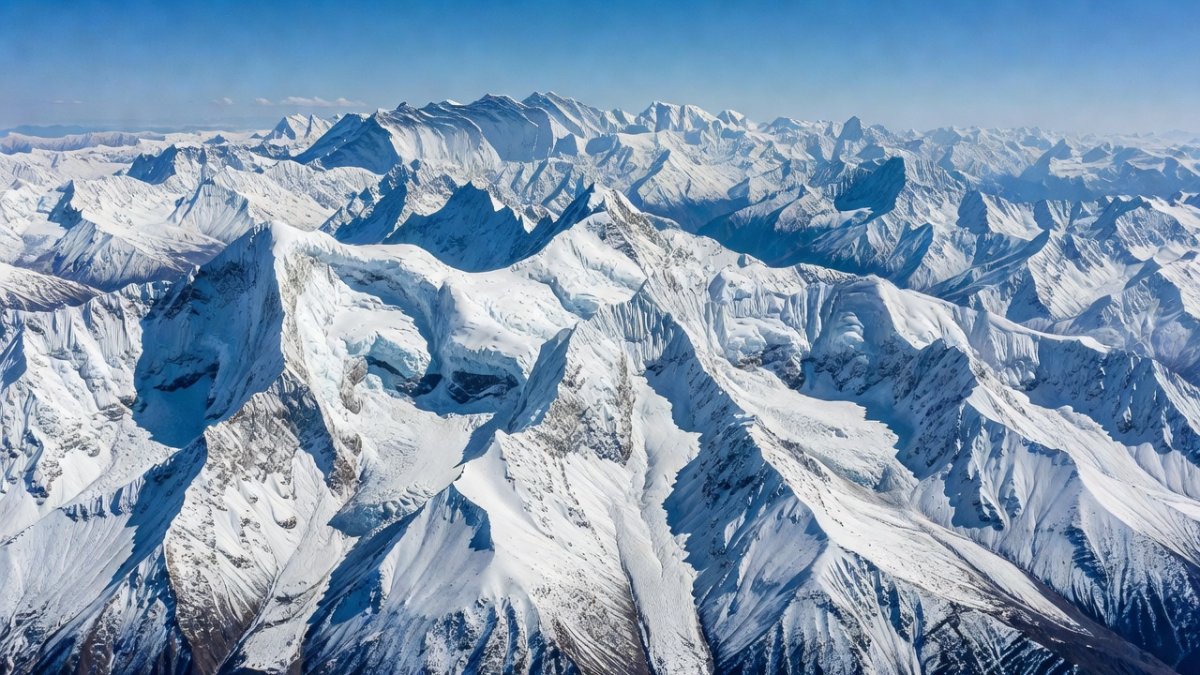
Himalayas Warming: J&K Temperature Rises 1°C in Two Decades, Glacier Risks Mount
Srinagar, Jammu and Kashmir – July 14, 2026 — High-altitude zones across Jammu and Kashmir have experienced a temperature increase of nearly 1°C between 2004 and 2024, according to new research that draws on India Meteorological Department records and field observations from the Wadia Institute of Himalayan Geology. The rate of warming exceeds the global average of roughly 0.2°C per decade, placing the region on a trajectory that threatens both glacier stability and downstream water supplies for more than 500 million people.
A Himalayan Fever: The Study's Core Findings
Scientists from the Indian Institute of Technology, working with colleagues at the Wadia Institute of Himalayan Geology, analysed daily maximum and minimum temperatures at 12 stations above 2,500 metres. Pahalgam recorded a rise of 1.1°C and Gulmarg 1.05°C over the two-decade span. Stations above 3,000 metres warmed 0.15°C faster than those at lower elevations, confirming an elevation-dependent amplification effect previously documented in the central Himalayas but now quantified for the first time in Jammu and Kashmir.
The study period coincides with a 14 percent reduction in winter snow cover duration measured by MODIS satellite imagery. Researchers note that the observed 1°C rise has already shifted the equilibrium line altitude of several benchmark glaciers upward by 25–40 metres, accelerating mass loss at rates of 0.4–0.6 metres water equivalent per year.
The Night Warming Effect — A Silent Accelerator
Minimum temperatures rose 1.3 times faster than daytime maxima, a pattern that directly impairs glacier refreezing. Night-time warming of 1.2°C at Sonamarg has reduced the duration of sub-zero conditions by 18 days per winter season. Without prolonged cold periods, meltwater that would normally refreeze within crevasses instead drains away, thinning ice tongues that feed the Indus and Jhelum headwaters.
India Meteorological Department automatic weather stations installed in 2018 corroborate the trend, showing that the diurnal temperature range has narrowed by 0.8°C since 2004. This compression limits the thermal gradient that drives katabatic winds, further slowing heat dissipation from glacier surfaces.
India's Water Security at Stake
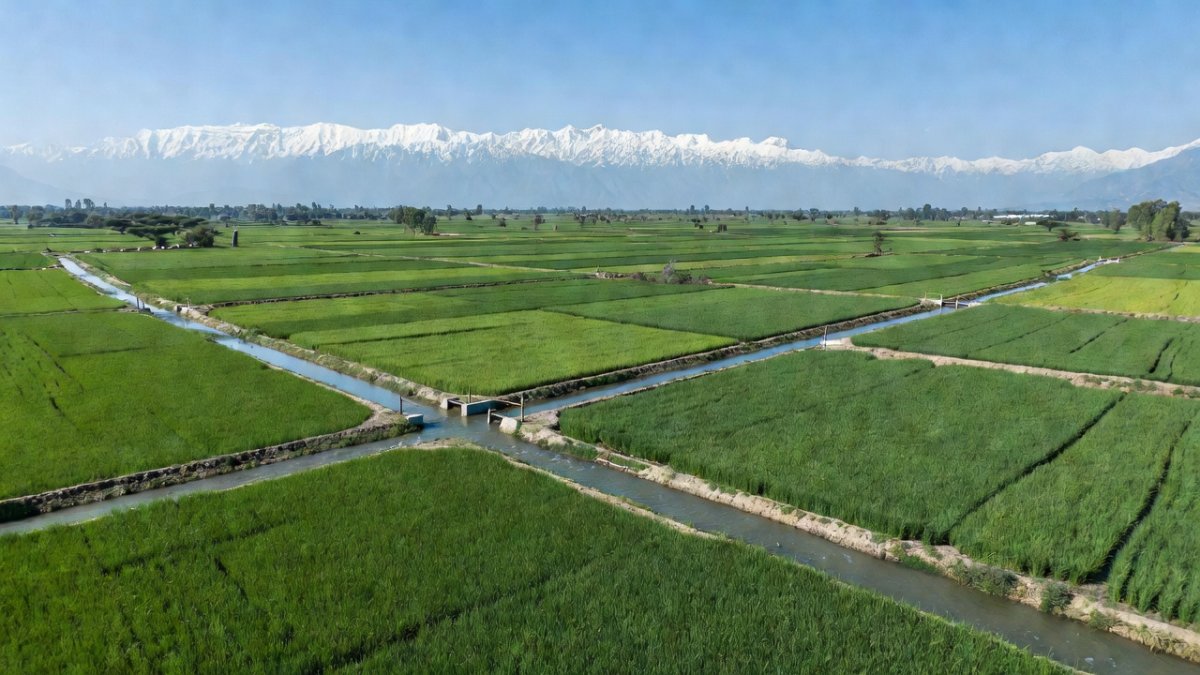
The accelerated melt directly affects the Indus, Ganga and Yamuna basins that together support agriculture across Punjab, Haryana, Uttar Pradesh and Bihar. The Ministry of Environment, Forest and Climate Change estimates that these rivers contribute 35 percent of India’s total irrigation water. A sustained 1°C warming could advance peak melt timing by 12–15 days, disrupting sowing calendars for wheat and paddy that currently rely on June–July flows.
Farmers in Punjab’s Doaba region already report a 9 percent decline in canal water availability during the critical April–May window. The National Water Policy 2012 emphasises conjunctive use of surface and groundwater, yet the policy’s implementation remains fragmented across state boundaries. Without updated allocation mechanisms that account for earlier snowmelt peaks, downstream states face heightened inter-basin conflict risks by 2035.
Glacial Lake Risks and Flood Hazards
Remote sensing analysis by the Wadia Institute identified 28 new glacial lakes larger than 0.5 hectares near Sonamarg and Kargil since 2015. Lake area expansion rates average 4.2 percent annually, raising the probability of glacial lake outburst floods. A 2023 modelling exercise projected that a breach at the largest lake above Kargil could release 12 million cubic metres of water within two hours, threatening National Highway 1D and downstream hydropower infrastructure.
The Central Water Commission has flagged 14 sites in Uttarakhand and Himachal Pradesh for enhanced monitoring, yet only six automatic early-warning systems are currently operational. Increased silt loads from faster glacier erosion have already reduced reservoir capacities at the Tehri and Nathpa Jhakri projects by 2.8 percent since 2018, raising maintenance costs for state utilities.
The Bigger Picture: Himalayan Climate Crisis and Policy Gaps
India’s updated Nationally Determined Contribution under the Paris Agreement commits to a 45 percent reduction in emission intensity by 2030, yet adaptation funding for Himalayan states remains below 12 percent of total climate expenditure. The Ministry of Environment, Forest and Climate Change’s National Mission for Sustaining the Himalayan Ecosystem has mapped only 60 percent of glaciers in Jammu and Kashmir at high resolution, leaving critical data gaps for hazard assessment.
Policy analysts argue that the 2012 National Water Policy must be revised to incorporate elevation-specific warming rates and dynamic glacier mass-balance projections. Integration with the National Disaster Management Authority’s glacial lake guidelines could reduce GLOF exposure for 1.8 million residents in the Chenab and Zanskar valleys. International collaboration through the International Centre for Integrated Mountain Development offers additional avenues for real-time data sharing with Nepal and Bhutan.
The Bottom Line
The 1°C warming documented in Jammu and Kashmir over just two decades signals an urgent need for coordinated action across scientific institutions, state governments and central ministries. Farmers in the Indo-Gangetic plains, hydropower operators in the hills and urban planners in Srinagar all depend on the same shrinking ice reserves. Timely revision of the National Water Policy, expanded GLOF monitoring networks and sustained investment in climate-resilient agriculture will determine whether northern India can adapt before irreversible thresholds are crossed.
Failure to act risks cascading impacts on food production, energy security and disaster preparedness for half a billion citizens who rely on Himalayan rivers. The data from IIT, Wadia and the India Meteorological Department provide a clear baseline; the policy response must now match the pace of observed change.
— By Dr. Raj Patel, Staff WriterThis article was produced with AI-assisted research and editorial support. Reporting is based on sources cited in the article.
What's Your Reaction?
 Like
1
Like
1
 Dislike
0
Dislike
0
 Love
0
Love
0
 Funny
0
Funny
0
 Wow
0
Wow
0
 Sad
0
Sad
0
 Angry
0
Angry
0

India/South Asia Correspondent at Global1.News. Analytical voice with a background in science and health journalism. Based in New Delhi, covering Indian politics, education, healthcare, technology, and policy. Breaks down complex data into clear, actionable reporting.












Comments (0)