
HPV Vaccine Eliminates Cervical Cancer Deaths, Lancet Study Finds
A landmark July 2026 Lancet study has delivered the first direct evidence that HPV vaccination can drive cervical cancer deaths to zero in young women, with England recording no fatalities among those aged 20-24 between 2020 and 2024. This outcome, achieved through 80-90% coverage rates, carries immediate relevance for India, where approximately 80,000 women die from cervical cancer each year and the government launched a national HPV vaccination
A landmark July 2026 Lancet study has delivered the first direct evidence that HPV vaccination can drive cervical cancer deaths to zero in young women, with England recording no fatalities among those aged 20-24 between 2020 and 2024. This outcome, achieved through 80-90% coverage rates, carries immediate relevance for India, where approximately 80,000 women die from cervical cancer each year and the government launched a national HPV vaccination program in February 2026. The findings underscore how high-uptake immunization can transform outcomes within India’s public health system.
Lancet Data Shows HPV Vaccine Ends Cervical Cancer Deaths
New Delhi, India – July 16, 2026 — The Lancet published a landmark study on July 11, 2026, led by Professor Peter Sasieni of Queen Mary University of London and funded by Cancer Research UK. This research provides the first direct proof that HPV vaccination saves lives rather than merely preventing precancerous lesions. Between 2020 and 2024, England recorded zero cervical cancer deaths among women aged 20-24—the first time in recorded history. Approximately 200 lives have already been saved nationwide. Without vaccination, around 23 deaths would have been expected in this age group. The study tracked vaccinated cohorts born after 1995, using national cancer registry data to compare observed versus expected mortality rates, confirming a complete elimination of deaths in the target age band.
Groundbreaking Evidence from The Lancet
The Lancet published a landmark study on July 11, 2026, led by Professor Peter Sasieni of Queen Mary University of London and funded by Cancer Research UK. This research provides the first direct proof that HPV vaccination saves lives rather than merely preventing precancerous lesions. Between 2020 and 2024, England recorded zero cervical cancer deaths among women aged 20-24—the first time in recorded history. Approximately 200 lives have already been saved nationwide. Without vaccination, around 23 deaths would have been expected in this age group. The methodology involved linking vaccination records with cancer registries across England, allowing researchers to isolate the impact of the vaccine on mortality rather than incidence alone. Professor Sasieni noted that the data represent a historic shift, moving beyond surrogate markers like CIN3 lesions to hard endpoints of death. For Indian health authorities, these rigorous methods offer a template for evaluating the national program’s long-term impact through ICMR-led surveillance systems.
England's Vaccination Success Story: Data That Speaks Volumes
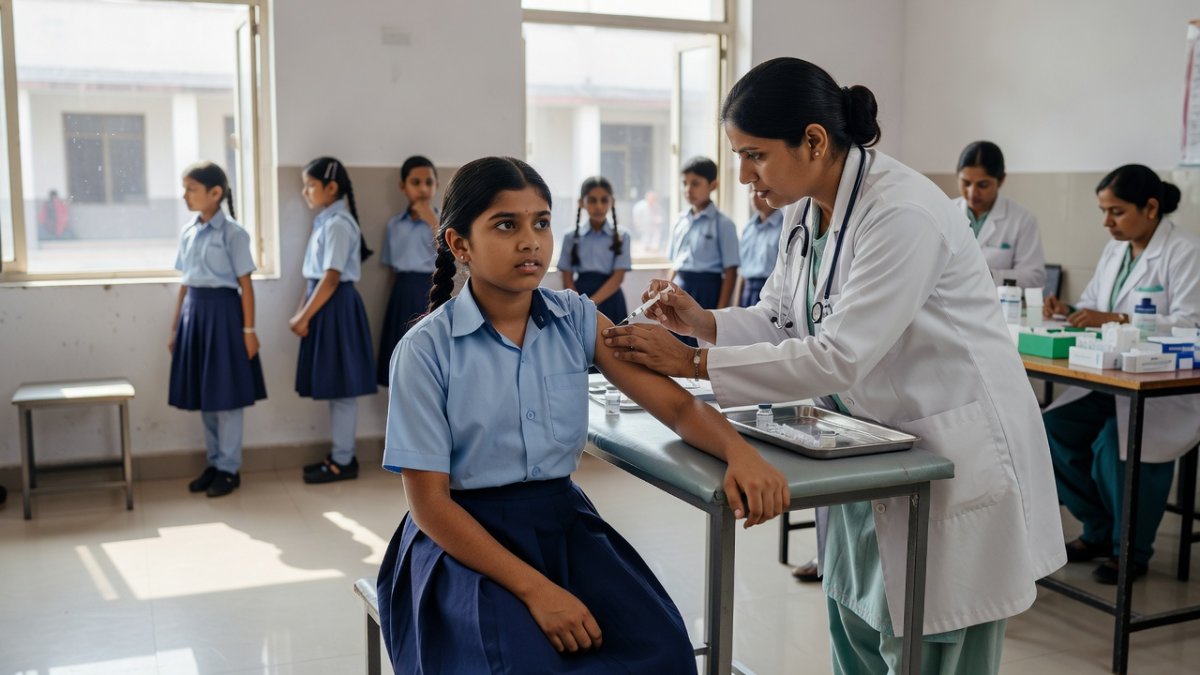
England introduced the HPV vaccine in 2008 for girls aged 12-13, achieving 80-90% coverage before the COVID-19 pandemic. Around nine in ten women in their early 20s received the vaccine. HPV causes 99% of cervical cancer cases. Professor Sasieni stated, “It’s incredible to think that a single jab can almost eliminate a particular type of cancer.” Cancer Research UK CEO Michelle Mitchell called the results an “incredible milestone.” The NHS in England aims to eliminate cervical cancer by 2040, while WHO targets 90% vaccination coverage; England currently stands at 76% for girls by age 15. Additional analysis showed that even partial coverage in catch-up cohorts contributed to the mortality drop, with herd effects protecting unvaccinated individuals. These figures demonstrate that sustained school-based delivery can reach the thresholds needed for population-level protection, a model directly applicable to India’s school health initiatives coordinated by the Ministry of Health.
 >
>
India's Cervical Cancer Burden: Why This Matters
India accounts for one-third of global cervical cancer cases, with approximately 80,000 deaths annually. On February 28, 2026, Prime Minister Narendra Modi launched a nationwide HPV vaccination drive for 14-year-old girls using the Gardasil quadrivalent vaccine. The Ministry of Health oversees the rollout, supported by ICMR and AIIMS. Within the first few weeks, 3 lakh girls had been immunized. India joined more than 160 countries with national HPV immunization programs. This initiative directly addresses India’s disproportionately high disease burden through the public healthcare framework. Regional data indicate higher incidence in states with limited screening access, making vaccination the most scalable intervention within Ayushman Bharat-linked primary care networks. The England results provide Indian policymakers with quantifiable benchmarks for projecting reductions in tertiary care demand at institutions such as AIIMS.
The Modi Government's Vaccination Drive: Progress So Far
The England data demonstrate that high-coverage vaccination can drive cervical cancer mortality to zero in vaccinated cohorts. For Indian patients, this means thousands of preventable deaths each year if coverage reaches England’s pre-pandemic levels. Taxpayers fund the program through the Ministry of Health budget; early investment in vaccination yields long-term savings by reducing treatment costs at tertiary centers such as AIIMS. The political commitment under PM Modi signals sustained prioritization within India’s education-linked school health initiatives. Six states have reported the fastest uptake in the initial phase, supported by state-level task forces involving ICMR researchers. Integration with existing immunization schedules has allowed rapid scaling without new infrastructure, aligning with WHO elimination targets adapted for India’s demographic profile.
Challenges Ahead: Misinformation and Coverage Gaps
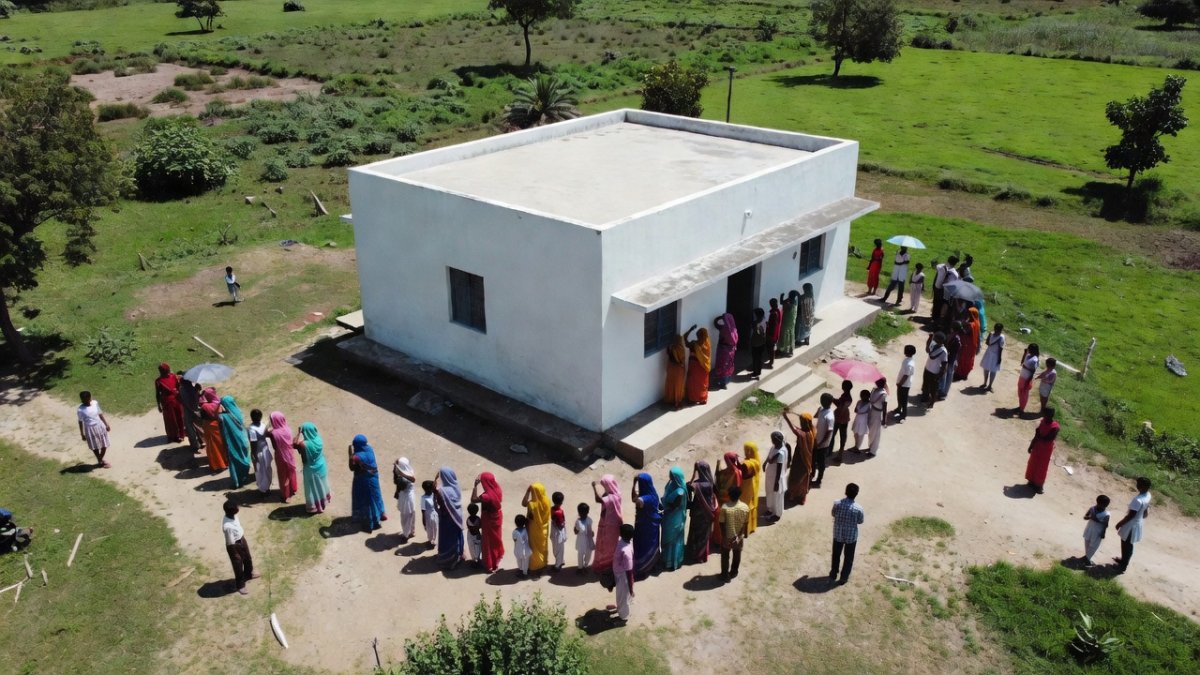
Vaccine misinformation remains a significant barrier in India. Current national coverage lags behind WHO’s 90% target. The England experience shows that 80-90% uptake is achievable and sufficient to eliminate deaths in young cohorts. ICMR and AIIMS are tasked with countering hesitancy through evidence-based communication. Sustained efforts are required to maintain momentum beyond the initial 3 lakh vaccinations recorded by March 2026. Targeted campaigns in rural districts and among minority communities will be essential, drawing on successful polio eradication strategies previously deployed by the Ministry of Health. Real-time monitoring dashboards developed with AIIMS input can flag coverage shortfalls early.
 >
>
The Bottom Line
England’s zero-death outcome in the 20-24 age group validates the single-jab strategy. India’s program, launched in 2026, positions the country to replicate these results within two decades if coverage expands rapidly. The Ministry of Health, ICMR, and AIIMS must monitor real-world outcomes while addressing regional disparities. The Lancet findings provide definitive evidence that HPV vaccination delivers measurable mortality reduction, offering Indian policymakers a clear, data-driven roadmap. If India sustains 80% coverage, projections indicate thousands of lives saved annually by 2045, strengthening the nation’s progress toward universal health coverage goals. Continued investment in post-vaccination screening will further secure these gains for future generations of Indian women.
— By Dr. Raj Patel, Staff Writer
This article was produced with AI-assisted research and editorial support. Reporting is based on sources cited in the article.
What's Your Reaction?
 Like
0
Like
0
 Dislike
0
Dislike
0
 Love
0
Love
0
 Funny
0
Funny
0
 Wow
0
Wow
0
 Sad
0
Sad
0
 Angry
0
Angry
0

India/South Asia Correspondent at Global1.News. Analytical voice with a background in science and health journalism. Based in New Delhi, covering Indian politics, education, healthcare, technology, and policy. Breaks down complex data into clear, actionable reporting.













Comments (0)