
West Bank Farmers Left Without Water as Israel Destroys Infrastructure
West Bank Farmers Face Water Crisis as Israeli Military Road Destroys Irrigation in Tubas Governorate Detailed analysis of the 22-kilometer Scarlet Thread road project near Ein Shibli and Tayasir, its impact on Palestinian agriculture, and broader implications for Jordan Valley water politics and two-state prospects. **Keywords:** West Bank water rights, Tubas farmers, Scarlet
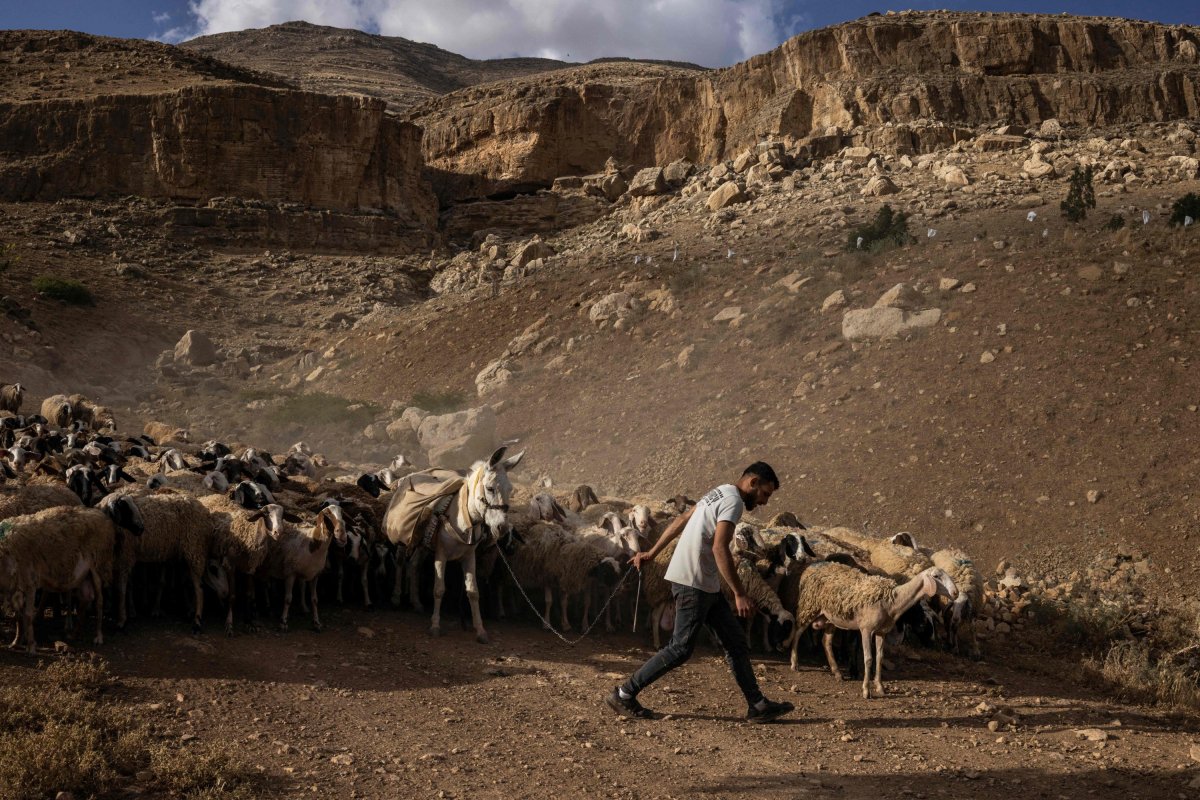
Destruction of Irrigation Infrastructure
The construction of a 22-kilometer military road linking Ein Shibli and Tayasir has severed critical water pipelines that supplied fields and livestock on an agricultural plain near northern Tubas. Bulldozers operating along the route have left damaged irrigation pipes exposed, while an AFP journalist on the scene documented the extent of the physical disruption. The work, which began intensifying in late 2025, has eliminated reliable water flow to crops and animals across hundreds of dunams.
Farmers report that the destruction extends beyond pipes to include barriers that prevent routine maintenance of water systems. The metal barrier installed by Israeli forces restricts movement to the affected plots, compounding the inability to repair or reroute water lines. This infrastructure loss has transformed previously productive land into arid zones where even basic irrigation has become impossible.
The scale of the damage aligns with patterns observed in other Area C projects where military roads intersect agricultural zones. Local accounts indicate that water supplies were cut precisely when construction crews advanced, leaving no alternative sources in the immediate vicinity. The resulting desiccation of fields and thirst among livestock represents a direct consequence of prioritizing the road alignment over existing water networks.
Accounts from Affected Farmers
Saleh Hamdan described the onset of severe shortages beginning in February, noting that irrigation of crops ceased entirely and access to land became sporadic. Displaying dried-up bunches of grapes, he emphasized that without water there are simply no farmers left in the area. His testimony highlights how the combination of destroyed pipes and movement restrictions has halted all agricultural activity on his holdings.
Lofti Bani Odeh focused on the impact to livestock, stating that water supplies to farmers were cut when the army began work on the road. He explained that animals now lack both drinking water and fodder, forcing difficult choices about herd reduction. The absence of alternative supply routes has left his operations in a state of sustained crisis since the construction phase started.
Dirgham Basharat reported that any attempt to reach land results in arrest, assault, or humiliation by Israeli soldiers. He characterized the overall situation as equivalent to living in a prison, where basic farming tasks cannot be performed without confrontation. These accounts collectively illustrate how the road project has dismantled the daily routines that sustained small-scale agriculture in the Tubas plain.
Land Requisition Orders and Project Timeline
In December 2025, Israeli authorities issued military requisition orders covering more than 1,000 dunams, approximately 100 hectares, in the Tubas governorate. The National Bureau for the Defense of Land and Resistance to Settlement Activity, a body affiliated with the Palestine Liberation Organization, documented these orders as part of preparations for the road. The requisition directly overlapped with existing farmland and water infrastructure.
The project, internally designated Scarlet Thread by the Israeli army, faced an interim suspension from Israel's Supreme Court in late January 2026. Construction halted briefly before the court authorized resumption in March 2026 on grounds of urgent security necessity. This sequence allowed the 22-kilometer alignment between Ein Shibli and Tayasir to proceed despite the documented agricultural damage.
The timeline demonstrates how legal pauses failed to prevent long-term alteration of the landscape. Once resumed, the work incorporated the metal barrier and continued pipe destruction, locking in the loss of water access for the affected farmers. The requisition process thus converted temporary security measures into permanent changes to land use and resource availability.
Israeli Security Calculus
Israeli military statements frame the Scarlet Thread road as a response to a clear security necessity in the northern West Bank. Officials argue that improved connectivity between Ein Shibli and Tayasir enhances operational mobility and reduces vulnerabilities along existing routes. This calculus prioritizes rapid troop movement over preservation of civilian agricultural systems in the same corridor.
The decision to resume work after the March 2026 court ruling reflects an assessment that security benefits outweigh the documented humanitarian costs. By installing barriers and restricting access, forces aim to control movement in an area viewed as strategically sensitive. Such measures align with broader efforts to secure corridors that link settlements and military positions across Area C.
Strategic planners within the Israeli defense establishment calculate that incremental infrastructure gains accumulate into durable control over key terrain. The Tubas plain project fits within this pattern, where water disruption is treated as an acceptable byproduct rather than a central concern. This approach sustains operational advantages while deferring questions of long-term resource sustainability for Palestinian communities.
Historical Context of Water Rights
Under the 1995 Interim Agreement associated with the Oslo Accords, water resources in the West Bank were divided with Israel retaining control over the majority of aquifers and extraction points in Area C. The provisions allocated limited quantities to Palestinian use while granting Israeli authorities oversight of infrastructure development. This framework has shaped access patterns that continue to affect farmers near Tubas today.
World Bank and UN OCHA reporting has consistently documented disparities in per capita water availability between Palestinian communities and Israeli settlements in the West Bank. The destruction of irrigation pipes along the Scarlet Thread route extends these historical imbalances by removing functional systems without replacement. Farmers in the Jordan Valley region have long navigated similar constraints rooted in the same interim arrangements.
The current episode illustrates how military infrastructure projects interact with the legacy of water allocation decisions made three decades ago. When pipelines are severed to accommodate roads, the resulting shortages reinforce the structural limits placed on Palestinian agricultural development under the Oslo-era regime. This continuity underscores the enduring influence of those agreements on daily resource access.
Regional Dynamics in the Jordan Valley and Implications for Statehood
The Tubas agricultural plain lies within the broader Jordan Valley zone, where control of water and land remains central to any future territorial arrangement. The 22-kilometer road and associated requisitions reduce the contiguous area available for Palestinian farming, directly affecting viability of economic activity in a region often cited in statehood discussions. Loss of irrigation capacity accelerates the fragmentation of productive zones.
Neighboring communities in the governorate face parallel pressures from movement restrictions and land designations that limit expansion of water networks. The metal barrier and arrest risks reported by Dirgham Basharat exemplify tactics that shrink operational space for farmers. Over time, these constraints erode the agricultural base that could support a viable Palestinian entity in the Jordan Valley corridor.
Regional dynamics reveal how incremental infrastructure decisions accumulate into strategic outcomes. By prioritizing security roads through farmland, Israeli policy narrows the territorial and resource foundation required for independent statehood. The Tubas case demonstrates the tangible effects on water-dependent livelihoods that underpin any realistic two-state framework.
International Law and Diplomatic Dimensions
Article 53 of the Fourth Geneva Convention prohibits destruction of property in occupied territory except where rendered absolutely necessary by military operations. Palestinian farmers and monitoring groups argue that the scale of pipe destruction and land requisition along the Scarlet Thread route exceeds such necessity. The presence of an AFP journalist documenting the damage provides contemporaneous evidence of the physical impact.
Diplomatic actors, including European Union representatives and United Nations agencies, have referenced similar incidents when assessing compliance with international humanitarian law. The PLO-affiliated National Bureau report on the December 2025 requisitions supplies data that informs these evaluations. Continued project advancement after the March 2026 court decision has drawn renewed scrutiny regarding proportionality.
These legal dimensions intersect with ongoing diplomatic efforts to address resource access in the West Bank. When water infrastructure is removed without alternatives, the resulting hardship becomes a recurring point in bilateral and multilateral discussions. The Tubas events thus feed into wider debates over accountability for actions affecting civilian populations under occupation.
Strategic Implications
The Scarlet Thread project and its effects on Tubas farmers illustrate how localized infrastructure choices reshape long-term power balances in the West Bank. Reduced water access accelerates economic contraction in agricultural zones, limiting Palestinian leverage in future negotiations. This pattern suggests that security-driven decisions carry compounding consequences for regional stability.
Over successive years, similar interventions have contributed to a landscape where Palestinian farming viability declines while Israeli operational control expands. The combination of requisition orders, court-authorized resumption, and physical barriers creates durable facts on the ground. Observers note that these developments narrow options for equitable resource sharing essential to any durable political settlement.
By Malik Hassan, Staff WriterThis article was produced with AI-assisted research and editorial support. Reporting is based on sources cited in the article.
What's Your Reaction?
 Like
0
Like
0
 Dislike
0
Dislike
0
 Love
0
Love
0
 Funny
0
Funny
0
 Wow
0
Wow
0
 Sad
0
Sad
0
 Angry
0
Angry
0

Middle East Correspondent at Global1.News. Based in Beirut, covering politics, conflict, energy, and society across the Middle East. Brings context and depth to a region often reduced to headlines.














Comments (0)