
US-Iran Strike War: Ceasefire Collapses as Trump Threatens, Then Cancels, Further Bombing
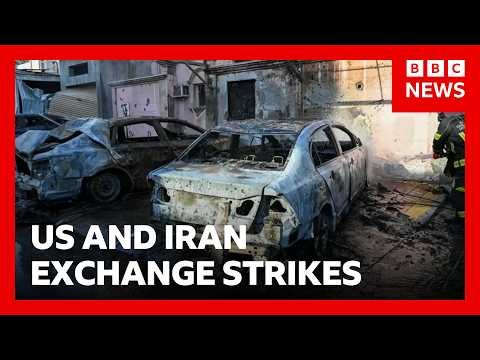
In a recent BBC News report, the exchange of strikes between US and Iranian forces over the past two days has underscored how quickly the fragile April ceasefire unraveled after Iran downed a US military helicopter over the Strait of Hormuz. The footage highlighted Iranian retaliatory actions against American positions in Kuwait, Jordan, and Bahrain, with visible damage reporte
In a recent BBC News report, the exchange of strikes between US and Iranian forces over the past two days has underscored how quickly the fragile April ceasefire unraveled after Iran downed a US military helicopter over the Strait of Hormuz. The footage highlighted Iranian retaliatory actions against American positions in Kuwait, Jordan, and Bahrain, with visible damage reported in Manama. This development has drawn immediate attention from Moscow, where officials monitor the crisis through the lens of energy markets and broader US-Russian competition.
US-Iran Strikes Across the Middle East: Ceasefire Collapses as Trump Threatens, Then Cancels, Further Bombing
Moscow – June 11, 2026 — The fragile ceasefire that had held since early April between the United States and Iran collapsed dramatically this week, plunging the Middle East back into open military confrontation across multiple Gulf states.
The Collapse of the Ceasefire Framework
The fragile ceasefire that had held since early April between the United States and Iran collapsed dramatically this week, plunging the Middle East back into open military confrontation. What began with the downing of a US military helicopter over the strategic Strait of Hormuz has rapidly escalated into a multi-front exchange of strikes that now involves American assets across at least three Gulf states. Iran confirmed it had targeted US military positions in Kuwait, Jordan, and Bahrain, with Bahraini officials reporting damage to their capital, Manama, overnight.
The collapse of the ceasefire comes after months of stalled diplomatic efforts. Initial US-Iran talks hosted in Pakistan in April failed to produce a comprehensive peace deal, and while the ceasefire was extended indefinitely, the underlying tensions never dissipated. The trigger this week exposed the fragility of a truce that had always been more a pause in hostilities than a genuine resolution. Kremlin analysts note that such breakdowns often reflect deeper structural rivalries rather than isolated incidents, and Moscow has watched the deterioration with growing concern over its implications for regional stability.
Russia's Foreign Ministry has consistently criticized unilateral US military action in the region, viewing the current escalation as another example of Washington prioritizing force over sustained negotiation. Moscow maintains diplomatic channels with both Tehran and several Gulf capitals, allowing it to advocate for de-escalation without direct entanglement. The conflict's timing also diverts American resources away from Ukraine, a factor Russian officials privately acknowledge as strategically advantageous for Moscow's broader geopolitical position.
The broader military picture involves not only direct US-Iran exchanges but also the actions of Iran's regional proxies. Hezbollah in Lebanon, Houthi forces in Yemen, and Iraqi Popular Mobilization Forces have all signaled readiness to respond to any escalation. Israeli strikes in southern Lebanon this week that killed 17 people underscore how the confrontation radiates far beyond the immediate US-Iran axis, threatening to draw in multiple actors across the region.
Trump's Escalation and Sudden Reversal
President Donald Trump's response to the escalating crisis has been characteristically dramatic and, in the span of a single day, has swung from threatened annihilation to diplomatic breakthrough. On Thursday afternoon, Trump declared in a Fox News interview that the United States would continue bombing Iran and threatened to seize Kharg Island, the Iranian terminal that handles approximately 90 percent of the country's oil exports. "Yeah, there will be more bombing tonight. It'll be a bigger, bigger, more powerful," Trump said, in remarks that sent oil prices soaring and triggered emergency diplomatic consultations across the Gulf.
Just hours later, in a sharply different tone, Trump announced on social media that he had "cancelled the scheduled strikes and bombings against Iran." He cited discussions that had been approved by "the highest level of Iranian leadership," and named a broad coalition of nations including Israel, Saudi Arabia, the UAE, Qatar, Turkey, Pakistan, Bahrain, Kuwait, Jordan, and Egypt. Trump stated that a "Transaction" was being finalized, with time and place of signing to be announced shortly, though he emphasized that the US naval blockade would remain in full force until a deal is concluded.
From Moscow's perspective, Trump's abrupt reversal illustrates the unpredictable nature of US decision-making in the Middle East. Russian officials have long argued that such volatility undermines any lasting diplomatic framework. The Kremlin's own energy exports stand to gain from sustained price volatility, yet Moscow also fears uncontrolled escalation that could draw in additional actors and destabilize the broader region beyond current calculations.
Iran's Military Response and Regional Fallout
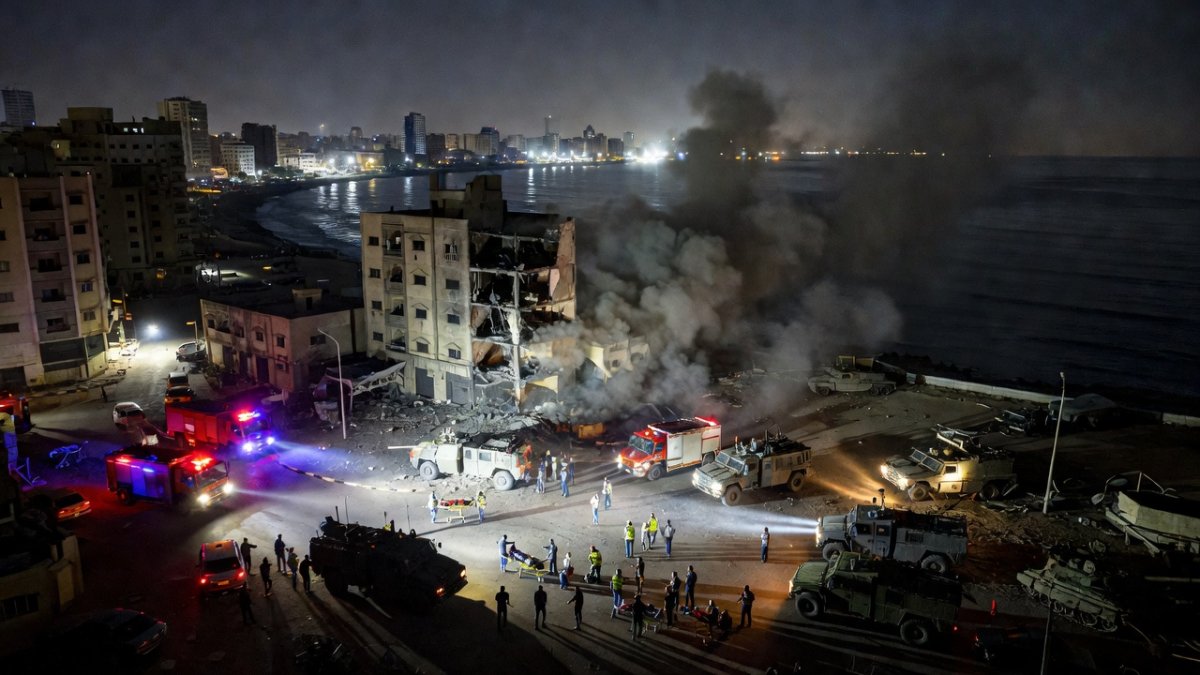
Iran's retaliatory strikes on Thursday night targeted American military assets across the Gulf region, marking a significant expansion of the conflict's geographic scope. Tehran framed the attacks as a defensive response to US strikes that followed the downing of the American helicopter over the Strait of Hormuz. Bahrain, home to the US Navy's Fifth Fleet, reported damage to its capital Manama. Kuwait and Jordan also reported that American positions within their territory had come under fire, though casualty figures remain unclear.
The Iranian military, through IRGC-linked channels, also announced an expanded target list that now includes Elon Musk's business assets in the Middle East, including Starlink ground stations and SpaceX-related infrastructure. Iran's semi-official Fars News Agency, which is linked to the IRGC, reported the decision follows alleged evidence that US and Israeli militaries have utilized Starlink infrastructure. This development introduces a civilian commercial dimension to a conflict already straining regional stability.
Russia has historically partnered with Iran on energy projects and in Syria, giving Moscow a vested interest in preventing further Iranian isolation. While the Kremlin publicly calls for restraint, it recognizes that prolonged confrontation could strengthen Tehran's alignment with other actors wary of US dominance. Gulf states such as Saudi Arabia and the UAE watch these developments closely, balancing their security ties with Washington against the risks of direct involvement.
Global Energy Shock and Economic Implications
The renewed hostilities have sent shockwaves through global energy markets, with the Strait of Hormuz — a chokepoint for approximately one-fifth of the world's oil supply — once again at the center of the crisis. The US naval blockade, which Trump has maintained since the ceasefire's extension, has already constrained Iranian oil exports. The threat to seize Kharg Island, however temporary, underscored the vulnerability of global energy infrastructure to the conflict.
For Russia, the energy dimension carries particular significance. As one of the world's largest oil and gas producers, Moscow benefits from higher energy prices driven by Middle Eastern instability. However, the Kremlin also faces a delicate diplomatic balancing act: maintaining its strategic partnership with Iran while avoiding a direct confrontation with the United States that could further destabilize an already volatile global energy market. Ordinary Russians feel the effects through fluctuating fuel costs and export revenues that fund domestic programs.
China and the EU have both urged restraint, concerned about supply disruptions that could affect their economies. Pakistan and Turkey, named in the multi-nation framework, seek to position themselves as mediators while protecting their own energy interests. The blockade's continuation ensures that any future agreement must address maritime security in the Strait before sanctions relief can be considered.
Diplomatic Chessboard: The Multi-Nation Framework
The breadth of nations Trump named in his cancellation announcement — spanning Gulf monarchies, NATO ally Turkey, South Asian power Pakistan, and Israel — suggests an unusually wide diplomatic framework. The inclusion of Saudi Arabia and the UAE, both of which have historically viewed Iranian regional influence with deep suspicion, signals that Gulf capitals are actively engaged in shaping whatever agreement emerges. Turkey's involvement adds another layer, given Ankara's complex relationship with both Washington and Tehran.
Russia holds a UN Security Council veto on Iran-related resolutions and has used this position to block measures it views as overly punitive. Moscow's preference for multilateral diplomacy aligns with its calls for de-escalation, yet it remains wary of any framework that excludes its input. The involvement of Egypt and Jordan further broadens the coalition, reflecting shared concerns over spillover effects from Hezbollah and Houthi actions tied to the wider conflict.
Israeli strikes in southern Lebanon that killed 17 people this week illustrate how the confrontation extends beyond direct US-Iran exchanges. Iraqi Popular Mobilization Forces have also signaled readiness to respond, complicating efforts to contain the fighting. The multi-nation approach may offer a path forward, but success depends on whether all parties can agree on verifiable limits to military activity.
Analysis and Implications for the Region
The dramatic reversal on Thursday evening leaves the situation in a confusing but potentially promising state. Whether the multi-nation framework Trump described can produce a durable peace agreement remains deeply uncertain. The ceasefire's collapse this week demonstrated how quickly the conflict can reignite, and the expanded geographic scope of the strikes — reaching into Kuwait, Bahrain, and Jordan — suggests that no Gulf state can remain insulated from the fighting.
Three Indian sailors killed in a US strike on a Palau-flagged oil tanker highlight the human cost beyond military targets. Broader involvement of non-state actors such as Hezbollah and the Houthis risks turning localized exchanges into a regional war with unpredictable consequences. Analysts suggest this signals the limits of bilateral US-Iran diplomacy and the necessity of inclusive regional mechanisms.
For Russia, the crisis reinforces the value of maintaining balanced relations across the Middle East. Energy price volatility benefits Russian exporters in the short term, yet prolonged instability threatens the stability Moscow seeks in its southern neighborhood. The coming weeks will test whether the announced "Transaction" can translate into concrete steps that address both security concerns and economic realities for all involved parties.
By Irina Volkov, Staff WriterThis article was produced with AI-assisted research and editorial support. Reporting is based on sources cited in the article.
What's Your Reaction?
 Like
0
Like
0
 Dislike
0
Dislike
0
 Love
0
Love
0
 Funny
0
Funny
0
 Wow
0
Wow
0
 Sad
0
Sad
0
 Angry
0
Angry
0
Russia/Eastern Europe Correspondent at Global1.News. Covering Russian politics, energy, security, and the shifting dynamics of the post-Soviet space. Provides clear-eyed analysis on one of the world's most opaque regions.














Comments (0)