
WEF President Commends China's AI+ Strategy Amid Global Tech Shifts
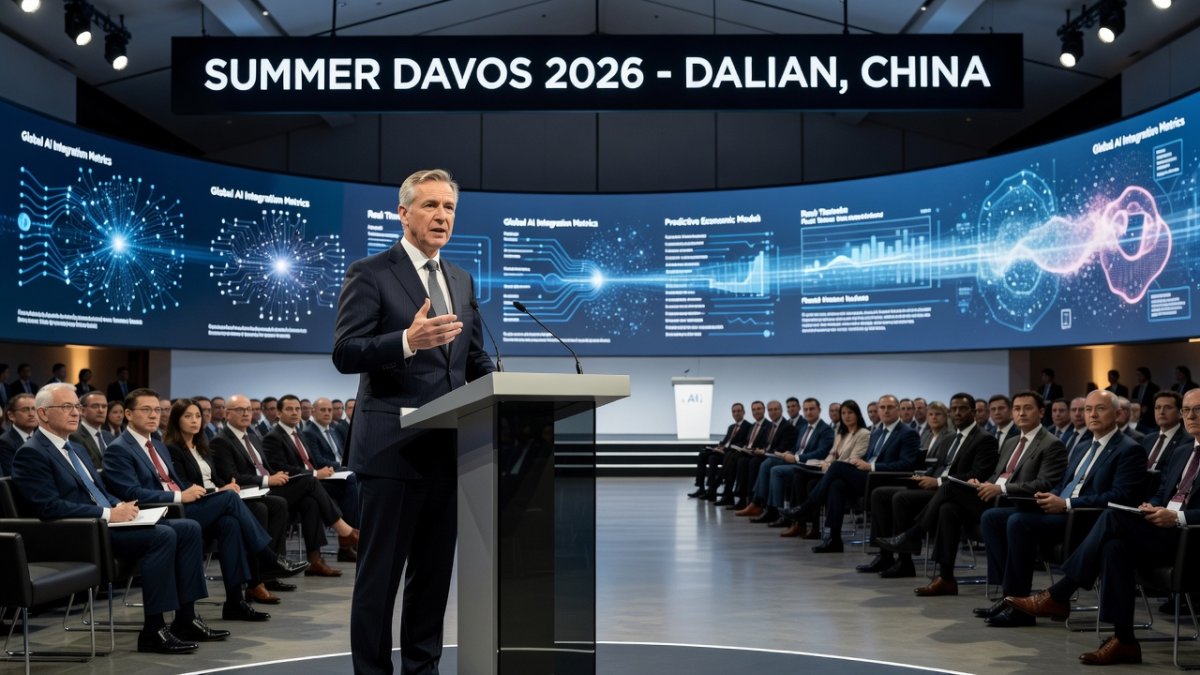
In a recent CGTN report from the 2026 Summer Davos in Dalian, World Economic Forum President Alois Zwinggi discusses how China's "AI-plus" model is advancing innovation in new energy and healthcare sectors as the country's 15th Five-Year Plan begins. His remarks provide a window into Beijing's coordinated push for technological self-sufficiency and its implications for worldwid
China's 15th Five-Year Plan and the AI+ Framework
The 15th Five-Year Plan covering 2026-2030 sets explicit targets for integrating artificial intelligence across core industries. Zwinggi notes that this approach builds on earlier national strategies by embedding AI applications directly into manufacturing, energy systems, and medical services. The plan emphasizes measurable outcomes in efficiency gains and domestic capability building rather than broad declarations.
Under this framework, ministries such as the National Development and Reform Commission coordinate with industry actors to scale AI tools in targeted domains. This methodical rollout aligns with China's long-standing focus on reducing external dependencies in critical technologies.
Technological Self-Sufficiency as Strategic Priority
Beijing's pursuit of AI leadership forms part of a wider effort to achieve technological self-sufficiency. The AI+ model highlighted by Zwinggi supports this goal by fostering indigenous platforms that link data analytics with physical infrastructure in new energy and healthcare. Such integration reduces reliance on foreign supply chains for advanced components and software.
China's approach prioritizes domestic standards and interoperability, which strengthens resilience against external disruptions. This direction reflects core foreign policy objectives of securing technological autonomy while expanding influence through multilateral economic forums like the World Economic Forum.
US-China Tech Competition in Context
The United States maintains export controls and investment restrictions aimed at limiting China's access to advanced semiconductors and AI-related hardware. In response, Chinese policy has accelerated parallel development pathways, including domestic chip fabrication initiatives and alternative algorithmic frameworks.
Zwinggi's comments at Summer Davos underscore how China's AI+ progress in applied sectors creates competitive pressure on global markets. Each side seeks to shape international norms: Washington through alliance-based technology coalitions, and Beijing through participation in existing multilateral bodies and new regional partnerships. Second-order effects include shifts in supply chain configurations affecting ASEAN economies and European manufacturers seeking balanced engagement.
Implications for Global AI Governance
Discussions at the 2026 Summer Davos point to emerging tensions in AI governance. China's model demonstrates rapid deployment in regulated sectors, raising questions about data standards, ethical guidelines, and cross-border interoperability. Zwinggi identifies this period as an opportunity to observe how national priorities translate into global economic trajectories.
Without unified frameworks, divergent regulatory approaches risk fragmenting AI development. China's emphasis on practical applications in energy transition and public health offers concrete examples that could inform future international discussions, though alignment with Western governance models remains limited by differing institutional priorities.
Sectoral Advances in New Energy and Healthcare
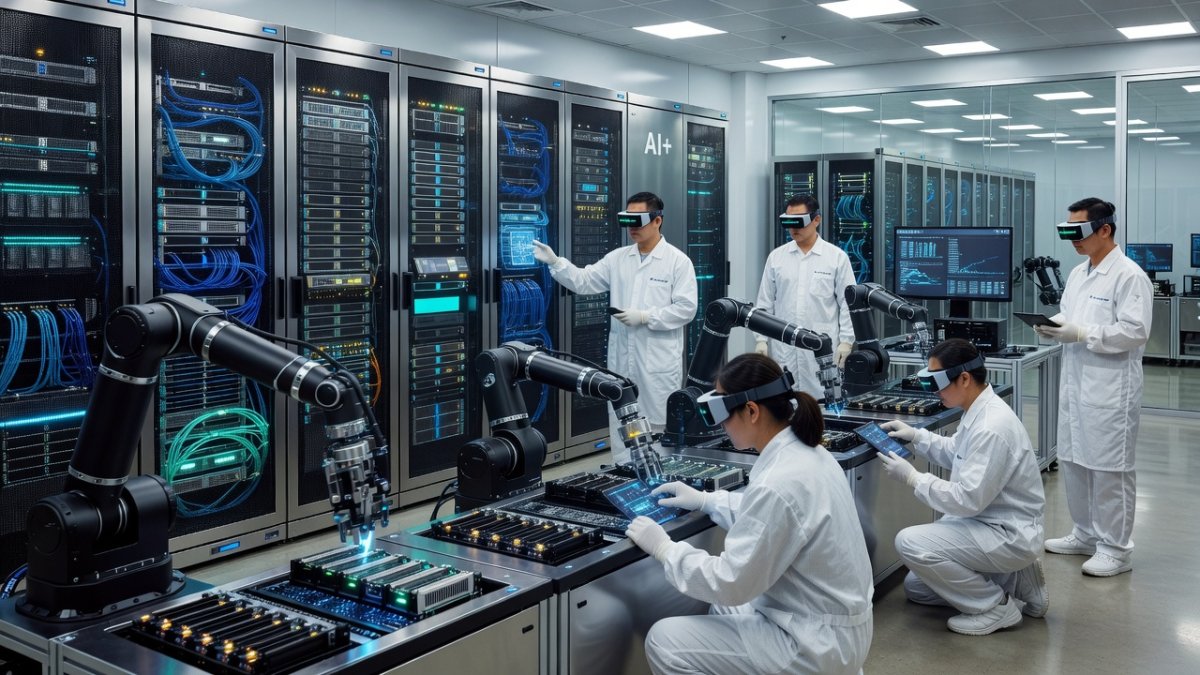
Particular progress under the AI+ model appears in new energy, where AI optimizes grid management and predictive maintenance for renewable installations. In healthcare, applications include diagnostic support systems and resource allocation tools that improve operational outcomes within China's domestic system.
These developments occur within the structured timelines of the 15th Five-Year Plan, allowing phased evaluation of results. Zwinggi notes that such targeted integration provides observable data points for assessing AI's contribution to growth and productivity metrics.
Strategic Implications and Forward Assessment
The interview signals a pivotal moment for understanding China's role in shaping AI-driven economic patterns. As the 15th Five-Year Plan advances, outcomes in self-sufficiency and sectoral applications will influence leverage in global technology negotiations. For the Global South, expanded Chinese AI solutions may offer alternative pathways to infrastructure modernization, while the EU navigates between security concerns and market access opportunities.
Over the coming years, the interplay between national AI strategies and multilateral dialogue will determine whether cooperative standards emerge or parallel systems solidify. Zwinggi's observations from Dalian highlight the value of sustained engagement to track these developments and their broader effects on innovation diffusion and economic stability.
By Prof. Marcus Chen, Staff WriterThis article was produced with AI-assisted research and editorial support. Reporting is based on sources cited in the article.
What's Your Reaction?
 Like
0
Like
0
 Dislike
0
Dislike
0
 Love
0
Love
0
 Funny
0
Funny
0
 Wow
0
Wow
0
 Sad
0
Sad
0
 Angry
0
Angry
0

World Politics Analyst at Global1.News. Based in Beijing, covering US-China relations, global trade, and geopolitical strategy. Brings deep analytical perspective to the power dynamics shaping international affairs.














Comments (0)