
The Atemoya Trap: How China Appetite for Taiwanese Custard Apples Reveals a Coercive Economic Strategy
The Atemoya Trap: How China Appetite for Taiwanese Custard Apples Reveals a Coercive Economic Strategy The strategic context of cross-strait agricultural trade Cross-strait agricultural exchanges have long served as a channel through which Beijing seeks to influence Taiwan's economic orientation and political calculations. Taiwan's fruit sector, including atemoyas known locally
The strategic context of cross-strait agricultural trade
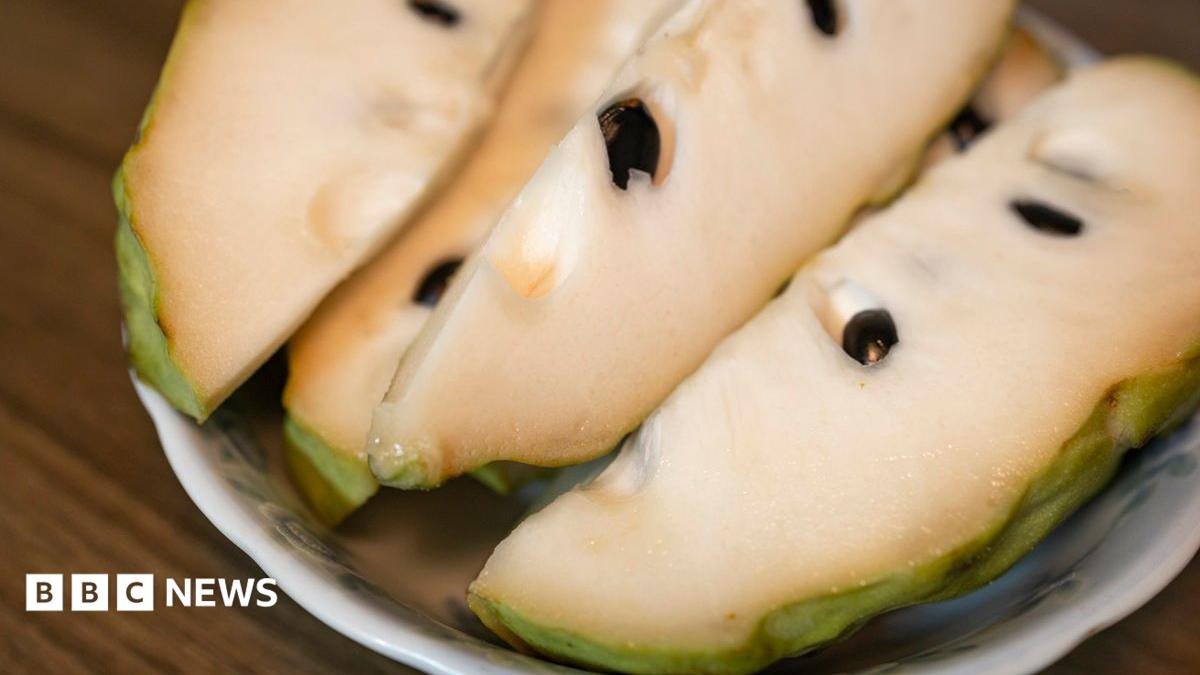
Cross-strait agricultural exchanges have long served as a channel through which Beijing seeks to influence Taiwan's economic orientation and political calculations. Taiwan's fruit sector, including atemoyas known locally as custard apples, represents a niche but symbolically potent export category that ties rural constituencies to mainland markets. Chinese demand for these products aligns with broader efforts to integrate Taiwan into supply chains that reinforce dependence, consistent with the Dual Circulation strategy's emphasis on leveraging domestic consumption to shape external relations.
From Taipei's perspective, such trade flows carry inherent risks when market access becomes conditional on political alignment. The Ministry of Agriculture has highlighted how reliance on a single large buyer creates vulnerabilities that extend beyond immediate revenue losses. This dynamic intersects with China's foreign policy doctrine of using economic statecraft to advance unification objectives without immediate resort to military measures. For Taiwan, maintaining diversified outlets for agricultural goods therefore forms part of a wider resilience agenda that also encompasses technology sectors and financial linkages.
Strategic calculus on both sides reveals asymmetric leverage. Beijing controls the scale of market entry through regulatory and tariff decisions administered by bodies such as the Ministry of Commerce, while Taipei must balance farmer incomes against national security considerations. Second-order effects ripple into ASEAN economies that might absorb redirected Taiwanese produce and into European Union discussions on supply-chain diversification away from concentrated dependencies.
The raise trap kill pattern and its history
The pattern described by Taiwan's agriculture ministry as a classic raise-trap-kill sequence involves initial market opening to stimulate production, followed by sudden restrictions that leave producers exposed. Historical precedent from the 2021 pineapple episode demonstrated how export surges can be reversed through quarantine or quality claims, prompting farmers to expand acreage only to face abrupt barriers. Atemoya trade has followed a comparable trajectory, with suspensions, partial resumptions, and subsequent tariff adjustments creating uncertainty that discourages long-term planning.
This approach allows Beijing to signal goodwill during periods of political outreach while retaining the capacity to apply pressure when cross-strait tensions rise. The strategic intent appears to be cultivation of constituencies within Taiwan that favor closer economic ties, thereby amplifying domestic debates over engagement versus caution. For the Chinese side, the calculus centers on demonstrating that cooperation yields tangible benefits while non-alignment carries costs, without crossing thresholds that might trigger coordinated international responses.
Global South observers have noted similar tactics in other bilateral agricultural relationships, underscoring how concentrated market power can translate into political influence. Taiwan's efforts to mitigate these risks through alternative export promotion and domestic support mechanisms reflect recognition that such patterns are unlikely to disappear absent fundamental shifts in Beijing's unification timetable.
Timeline of atemoya trade restrictions (2021-2026)
Trade in Taiwanese atemoyas experienced suspension in 2021 amid claims of pest concerns, mirroring the pineapple restrictions of the same period. Partial resumption occurred in 2023 under negotiated protocols that required enhanced inspection regimes. By 2024, tariff measures were introduced that raised costs for exporters even as volumes recovered modestly. Renewed pledges of expanded access have surfaced in subsequent discussions, yet the ministry continues to caution against overcommitment to this channel.
These oscillations have not followed a linear path of liberalization. Instead, adjustments appear calibrated to political calendars in Taiwan and broader cross-strait atmospherics. Projections into 2025 and 2026 remain subject to verification, as enforcement timelines for any new protocols are still being clarified through bilateral technical talks. The Ministry of Agriculture has therefore advised growers to treat expanded quotas as provisional rather than guaranteed.
Accurate tracking of these measures requires distinguishing between announced intentions and actual shipment volumes, a distinction that has proven consequential in prior episodes. Without independent verification mechanisms, Taiwanese producers face ongoing information asymmetries that favor the larger market actor.
The Xiamen forum and Taiwan internal divisions
The recent forum held in Xiamen convened business leaders alongside opposition politicians from Taiwan, providing a platform for discussions on agricultural market access. Such gatherings illustrate Beijing's preference for engaging actors outside the ruling administration, thereby accentuating partisan differences within Taiwan. Participants reportedly explored avenues for resuming or expanding atemoya shipments under frameworks that sidestep official Taipei channels.
These events generate domestic friction because they position certain Taiwanese voices as interlocutors with mainland authorities. The resulting narrative in Taiwan portrays the forum as an attempt to bypass elected government structures and cultivate alternative centers of influence. For China, the strategic value lies in demonstrating that economic benefits remain available to those willing to engage pragmatically, regardless of the island's current political leadership.
Effects on ASEAN and EU perceptions include heightened scrutiny of how economic forums can serve political signaling functions. Taiwan's internal divisions risk being instrumentalized, complicating efforts to present a unified position on trade resilience.
Kuomintang vs Mainland Affairs Council responses
The Kuomintang has criticized the agriculture ministry's warnings as overly alarmist, arguing that constructive engagement with mainland markets serves Taiwan's economic interests. Party statements emphasize the potential for stable export growth when political rhetoric is de-escalated. This stance reflects a broader preference for dialogue-oriented approaches that prioritize commercial opportunities over security framing.
In contrast, the Mainland Affairs Council has underscored the need for vigilance, pointing to the documented history of conditional market access. Council statements stress that economic decisions cannot be isolated from the larger context of Beijing's pressure tactics. The divergence highlights competing visions within Taiwan: one that views agricultural trade as a bridge for confidence-building and another that treats it as a potential vector for coercion.
These contrasting positions influence legislative debates over support packages for affected farmers and the allocation of resources toward market diversification. The absence of consensus complicates the formulation of coherent long-term strategies.
Broader implications for Taiwan economic security and resilience
The atemoya episode underscores the challenges Taiwan faces in safeguarding economic security amid asymmetric interdependence. Taipei Mayor's comparison of atemoya exports to the strategic weight of TSMC illustrates how even modest agricultural flows can acquire outsized political significance when weaponized. This linkage elevates the issue from sectoral concern to national resilience test.
China's approach reveals a preference for calibrated economic tools that avoid immediate escalation while steadily eroding Taiwan's autonomy margin. Leverage derives from market size and regulatory discretion, yet second-order consequences include accelerated Taiwanese interest in friend-shoring and regional partnerships. For the Global South, the case offers lessons on managing concentrated export dependencies without compromising sovereignty.
Ultimately, Taiwan's response will hinge on integrating agricultural policy into a comprehensive economic security framework that accounts for both immediate farmer welfare and longer-term strategic autonomy. Sustained analytical attention to these dynamics remains essential as cross-strait relations continue to evolve under shifting geopolitical conditions.
By Prof. Marcus Chen, Staff WriterThis article was produced with AI-assisted research and editorial support. Reporting is based on sources cited in the article.
What's Your Reaction?
 Like
0
Like
0
 Dislike
0
Dislike
0
 Love
0
Love
0
 Funny
0
Funny
0
 Wow
0
Wow
0
 Sad
0
Sad
0
 Angry
0
Angry
0

World Politics Analyst at Global1.News. Based in Beijing, covering US-China relations, global trade, and geopolitical strategy. Brings deep analytical perspective to the power dynamics shaping international affairs.













Comments (0)