
Thai Woman Faces Myanmar Court in Immigration Trial Tied to US Diplomat's Killing
Thai Woman Faces Myanmar Court in Immigration Trial Tied to US Diplomat's Killing Pavinee Supasirivisan, a Thai national, appeared before the Kamayut Township Court in Yangon this week as her trial opened on immigration charges linked to allegations that she killed her ex-husband, a United States diplomat. The case has drawn attention across Thailand and the wider ASEAN region
Thai Woman Faces Myanmar Court in Immigration Trial Tied to US Diplomat's Killing
Pavinee Supasirivisan, a Thai national, appeared before the Kamayut Township Court in Yangon this week as her trial opened on immigration charges linked to allegations that she killed her ex-husband, a United States diplomat. The case has drawn attention across Thailand and the wider ASEAN region because it involves a Thai citizen, a serving US diplomat, and Myanmar's military-run justice system, where transparency remains severely limited.
The Court Appearance and Immigration Charge
The Tuesday hearing took place at Kamayut Township Court in Yangon, marking the second session in Pavinee Supasirivisan's immigration trial. Three prosecution witnesses, including officers from Myanmar's immigration department, provided testimony during the proceedings. These details emerged from an attorney familiar with the case who spoke on condition of anonymity due to potential repercussions from Myanmar's military authorities.
The immigration charge against Pavinee Supasirivisan falls under Myanmar's immigration code that applies to foreign nationals who commit crimes in the country. This violation carries penalties ranging from six months to five years in prison. An official from Kamayut township's immigration and population department confirmed to The Associated Press that witnesses testified but declined to share additional information, citing lack of authorization to speak with the press.
Pavinee Supasirivisan had two legal representatives present in the courtroom during the hearing. The attorney noted that it remained unclear whether she had entered a plea at this stage of the proceedings. For Thai communities with relatives working across the border, such immigration cases highlight the immediate legal hurdles Thai citizens encounter when facing charges in Myanmar's system.
The trial's focus on the immigration charge first reflects the procedural sequence set by Myanmar authorities before addressing the separate murder allegation. Thai families often rely on consular channels to monitor these early stages, as the outcomes directly affect work permits and residency status for citizens employed in Myanmar's business and diplomatic circles.
The Murder Allegation and the Diplomat's Death
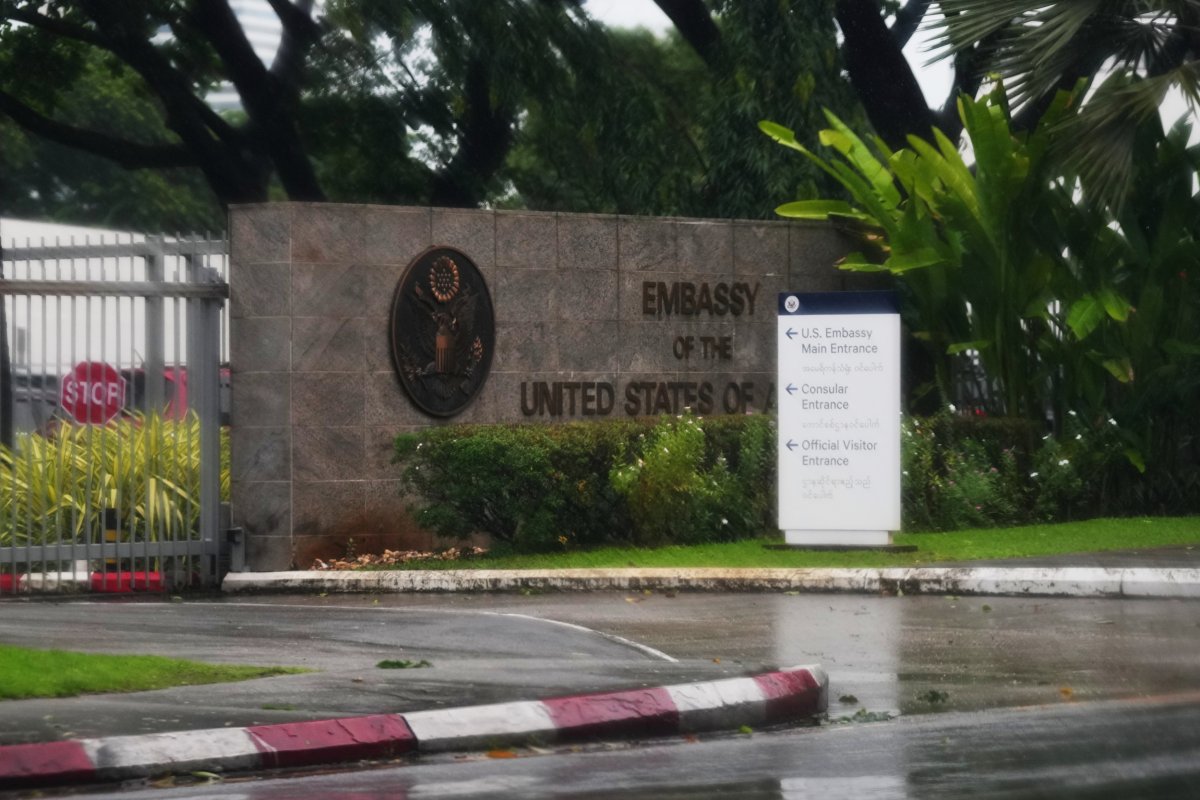
Pavinee Supasirivisan faces a separate murder charge connected to the May killing of her ex-husband, a United States diplomat whose identity the US State Department has not released. The diplomat was found dead with stab wounds to the head and neck on May 11 at the Sakura Residence & Hotel. This facility, located about 1.5 kilometers from the US Embassy in Yangon, serves diplomats, businesspeople, and international visitors.
The murder charge carries a possible sentence ranging from ten years in prison to the death penalty under Myanmar law. Authorities have scheduled the immigration trial ahead of the murder proceedings, meaning the current case at Kamayut Township Court will conclude before the murder trial begins. The US State Department confirmed the death but withheld further details, including the diplomat's name, in line with standard protocols for such incidents.
This sequence of trials matters for Thai citizens because immigration violations often serve as the initial legal entry point in Myanmar's courts when foreign nationals are involved. The Sakura Residence & Hotel location near the US Embassy underscores the case's proximity to diplomatic circles that many Thai professionals in Yangon navigate daily for employment and consular services.
The May 11 date of the incident and the specific injuries reported provide concrete anchors for families following developments through Thai media. Thai communities in Southeast Asia watch these timelines closely, as they influence how quickly consular support can be arranged and how information reaches relatives back home in provinces such as Bangkok and Chiang Mai.
Thailand's Consular Response
Thailand's Ministry of Foreign Affairs confirmed it has provided consular assistance to Pavinee Supasirivisan following standard procedures for Thai citizens facing legal issues abroad. These procedures include notification of arrest, access to legal representation, and regular welfare checks conducted through the Thai embassy in Yangon. The Ministry has maintained a cautious approach by declining to release further details about the case.
Myanmar's specific context requires Thai consular officers to work within restricted communication channels due to the military government's control over information. Thai authorities apply the same framework used for citizens detained in other ASEAN nations, prioritizing direct contact with the individual and coordination with local legal representatives. This measured response reflects Thailand's long-standing practice of supporting nationals without escalating diplomatic tensions.
The importance of these consular services extends to thousands of Thai families who have members employed in Myanmar's hospitality, trade, and diplomatic sectors. When cases involve immigration charges first, the Ministry's early involvement helps families understand immediate sentencing risks ranging from six months to five years before any murder proceedings advance.
Thai government agencies maintain records of such assistance to guide future travelers and workers heading to Myanmar. The Ministry's refusal to provide additional public details protects the privacy of the individual while still fulfilling its duty to confirm support, a balance familiar to Thai communities accustomed to overseas employment challenges.
Myanmar's Military Government and Restricted Justice System
Myanmar's military seized power from democratically elected leader Aung San Suu Kyi in 2021, triggering widespread protests that expanded into ongoing civil war conditions across the country. Under this military-run government, authorities rarely speak with the media, and institutions connected to Pavinee Supasirivisan's case have all refused to comment, including the police, the prison where she is believed to be held, and the Kamayut Township Court.
Journalists are not permitted to enter court proceedings, which severely limits public access to information about the trial. This restriction directly affects the transparency of both the immigration and upcoming murder cases. For Thai observers, these barriers create uncertainty about how evidence from the three prosecution witnesses will be evaluated in a system operating under military oversight.
The limited media access and official silence impact fair trial rights for any foreign national, including Thai citizens. Pavinee Supasirivisan's two legal representatives must navigate these constraints without the usual public scrutiny that might occur in other jurisdictions. Thai communities note that such conditions require extra vigilance from consular staff to ensure basic legal protections remain available.
The 2021 power seizure continues to shape daily legal processes in Myanmar, where civil war has further strained institutional capacity. This environment means Thai families with relatives in the country must prepare for extended periods without detailed updates on court developments, a reality that influences decisions about cross-border work and travel.
Thai-Myanmar Relations and Regional Implications
Thailand shares a 2,400-kilometer border with Myanmar, facilitating extensive cross-border movement particularly between Mae Sot in Thailand and Myawaddy in Myanmar. Thousands of Thai workers, businesspeople, and families reside in Myanmar at any given time, supported by established trade routes and economic ties that predate current political tensions. The current case involving a Thai national in a Myanmar court touches these longstanding connections.
ASEAN principles of non-interference guide Thailand's diplomatic approach to the proceedings, even as the case involves a US diplomat's death and a Thai suspect. Bilateral relations between Thailand and Myanmar remain sensitive because the immigration trial at Kamayut Township Court precedes the murder proceedings that carry potential penalties up to execution. Thai officials balance support for their citizen with the need to maintain functional channels across the border.
The diplomatic sensitivity arises from the combination of a US citizen victim, a Thai defendant, and Myanmar's military justice system. Trade and economic activities between the two nations continue despite these legal developments, with families on both sides of the border relying on stable relations for employment and family visits. The case illustrates how individual legal matters can intersect with these broader regional dynamics.
Thai communities in border provinces monitor such incidents because they affect perceptions of safety for workers who regularly travel between Mae Sot and Myawaddy. The Ministry of Foreign Affairs' consular role helps sustain these ties by providing a reliable point of contact when Thai nationals encounter Myanmar's legal processes.
What Comes Next
The timeline for Pavinee Supasirivisan's immigration trial remains unclear, though proceedings at Kamayut Township Court could conclude within weeks or several months depending on additional witness schedules. Once that case finishes, the separate murder trial will follow, carrying possible sentences from ten years to the death penalty. Thai consular access is expected to continue throughout both phases.
Immigration officers who testified as prosecution witnesses provided the initial evidence in the current trial, and further hearings will determine how the court weighs those statements. The attorney familiar with the case has indicated that details beyond the presence of two legal representatives are limited due to restrictions imposed by Myanmar's military government.
This sequence offers a broader lesson for Thai citizens working abroad about the importance of understanding local immigration rules before any criminal charges arise. Families in Thailand can prepare by maintaining contact with the Ministry of Foreign Affairs, which has already confirmed its assistance in this instance and follows established protocols for citizens in Myanmar.
The path forward for Pavinee Supasirivisan and the families involved depends on the outcomes of both trials and the continued availability of consular support. Thai authorities will track developments through their embassy in Yangon, providing a steady channel of information even as the military government's restrictions limit public transparency in the justice system.
By Ann Srisawat, Staff WriterThis article was produced with AI-assisted research and editorial support. Reporting is based on sources cited in the article.
What's Your Reaction?
 Like
0
Like
0
 Dislike
0
Dislike
0
 Love
0
Love
0
 Funny
0
Funny
0
 Wow
0
Wow
0
 Sad
0
Sad
0
 Angry
0
Angry
0

Southeast Asia Correspondent at Global1.News. Based in Bangkok, covering Thai and Southeast Asian politics, economy, technology, and culture. Deep regional perspective on one of the world's most dynamic regions.













Comments (0)