
Venezuela Signs Historic Power Grid Deal with GE Vernova
Headline: Venezuela's Power Grid Deal with GE Vernova Marks Historic Shift for Latin America On Monday, at a televised event inside Venezuela's presidential palace, interim president Delcy Rodríguez signed an agreement with General Electric Vernova, the local branch of the US energy giant. The deal aims to rebuild the country's long-neglected electricity grid and marks a striki
Headline: Venezuela's Power Grid Deal with GE Vernova Marks Historic Shift for Latin America
On Monday, at a televised event inside Venezuela's presidential palace, interim president Delcy Rodríguez signed an agreement with General Electric Vernova, the local branch of the US energy giant. The deal aims to rebuild the country's long-neglected electricity grid and marks a striking turn toward cooperation with American investors. Rodríguez, who assumed leadership after US forces seized Nicolás Maduro in January, described the signing as a historic step that would restore an essential service for millions.
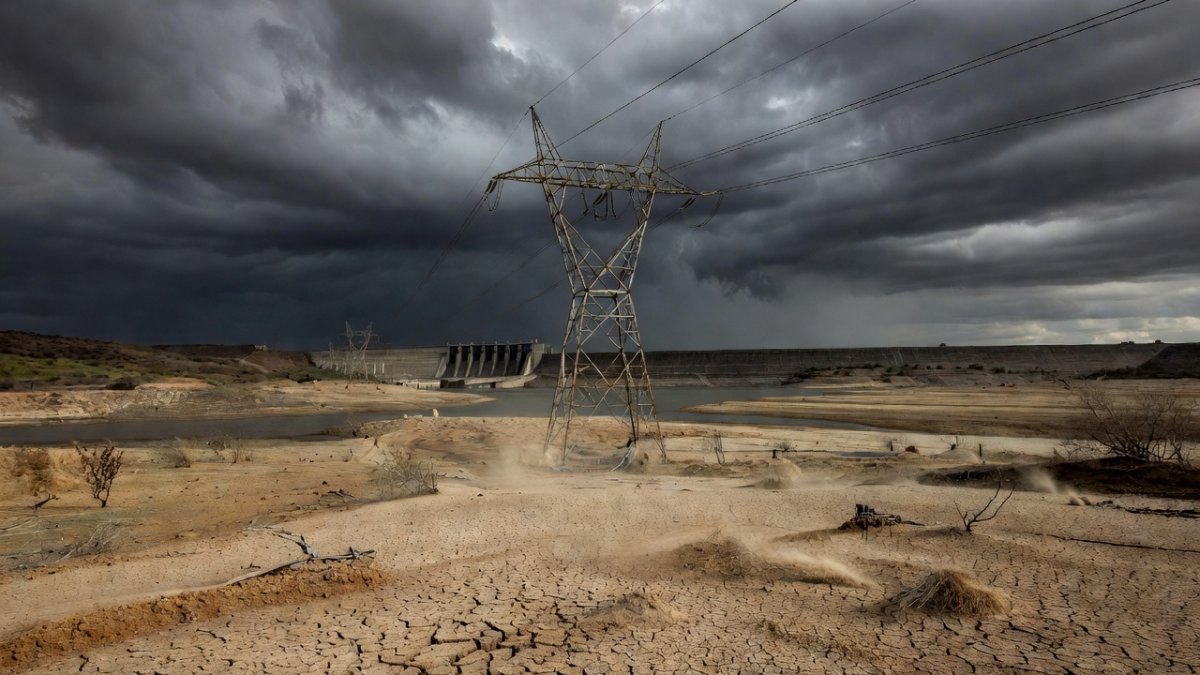
Venezuela's power grid has suffered years of underinvestment and frequent blackouts. (Global 1 News)
This agreement arrives at a moment when Venezuela's power system, nationalized in 2007 under Hugo Chávez, stands in urgent need of repair. Frequent outages lasting ten hours or longer have crippled daily life in Caracas and other major cities. Rodríguez's move signals openness to US capital after years of isolation, yet critics note that key institutions remain under her party's control.
A Grid in Crisis: Blackouts, the Guri Dam, and Climate Vulnerability
Venezuela's electricity network has suffered repeated, prolonged blackouts that disrupt hospitals, schools, and factories across the nation. Power cuts often stretch beyond ten hours, leaving residents without refrigeration, lighting, or reliable communications. The Guri hydroelectric dam, once a symbol of national energy independence, has proven unable to meet demand during periods of drought.
Analysts have pointed out that the crisis stems not only from low rainfall but from years of insufficient investment and maintenance since nationalization in 2007. High consumption patterns have further strained an aging infrastructure. These challenges mirror climate vulnerabilities felt throughout Latin America, where shifting rainfall patterns increasingly threaten hydroelectric reliability and expose communities to energy insecurity.
The human cost is visible in darkened neighborhoods and stalled economic activity. Families in Caracas and beyond plan daily routines around unpredictable supply, while businesses lose productivity. Rodríguez's government now seeks external expertise to address both immediate repairs and longer-term resilience against climate-driven variability in water resources.
The General Electric Vernova Agreement: What Was Signed
The agreement between Venezuela and General Electric Vernova focuses on restoring the national electricity grid through technical upgrades and investment. Rodríguez presented the signing as a historic step that would allow the country to rebuild an essential public service. The deal was negotiated under Energy Minister Rolando Alcalá, who has prioritized engagement with the US company's local operations.
Details released at the presidential palace event emphasize cooperation on grid rehabilitation rather than full privatization. This approach reflects Rodríguez's stated goal of attracting foreign capital while retaining state oversight. Observers note that the partnership could bring specialized equipment and engineering knowledge long absent from Venezuela's energy sector.
By choosing General Electric Vernova, the interim government signals confidence in established US technology providers. The televised ceremony underscored political symbolism as much as technical content, positioning the agreement as evidence of a new economic direction. Regional observers watch closely to see whether implementation follows the public commitments made in Caracas.
Rolando Alcalá: An Engineer at the Helm After Years of Military Leadership
Rolando Alcalá, an electrical engineer, was appointed Energy Minister by Delcy Rodríguez three months ago. His selection ended six years during which senior military figures led the ministry without resolving the grid's deepening problems. Alcalá's technical background offers a different approach focused on engineering solutions rather than security priorities.
Colleagues describe him as pragmatic and detail-oriented, qualities needed to diagnose failures across transmission lines and generation facilities. The shift away from military leadership has been welcomed by technicians who argue that specialized expertise must guide restoration efforts. Alcalá has already overseen initial talks leading to the General Electric Vernova agreement.
His appointment reflects Rodríguez's recognition that restoring power requires professional management. In a region where energy ministries often blend political and technical roles, Venezuela's change may offer lessons for neighbors facing similar infrastructure decay. Sustained progress will depend on whether Alcalá receives consistent political backing and resources.
Delcy Rodríguez and Venezuela's Economic Opening
Delcy Rodríguez, once a vocal critic of US influence, now leads efforts to reopen Venezuela's economy to American companies. Sworn in shortly after Maduro's removal, she has pursued agreements that would have been unthinkable months earlier. The General Electric Vernova deal exemplifies this pragmatic turn toward foreign investment.
Critics caution that while economic controls appear to be loosening, legislative, executive, and judicial institutions remain dominated by her party's loyalists. This continuity raises questions about whether structural reforms will accompany new contracts. Rodríguez has balanced outreach to investors with assertions of national sovereignty over strategic assets.
For Latin American observers, her evolution illustrates how political transitions can reshape economic policy rapidly. Venezuela's move may encourage other nations to reassess relations with US firms, provided governance concerns are addressed. Rodríguez's challenge lies in delivering visible improvements in daily life while navigating internal political constraints.
Security Cooperation: The Tren de Aragua Strike and US-Venezuela Relations
Last week, US forces conducted a military strike that killed the leader of the Tren de Aragua criminal gang operating inside Venezuela. US Secretary of Defence Pete Hegseth stated the operation occurred in full cooperation with Venezuelan security forces. Such coordination would have been impossible under Maduro's government.
The joint action highlights deepening security ties between Caracas and Washington. Rodríguez's administration appears willing to collaborate on transnational crime issues that affect both countries. Yet opposition figures note that few changes have occurred within Venezuela's security apparatus since the leadership transition.
This cooperation could create space for broader economic engagement, including energy projects. Regional analysts see parallels with other Latin American nations that have balanced sovereignty concerns with practical security partnerships. Continued transparency will determine whether these steps build lasting trust or remain limited tactical arrangements.
The Democratic Question: Rubio's Conditions for Long-Term Investment
US Secretary of State Marco Rubio recently told Congress that free and fair elections remain essential for attracting sustained investment to Venezuela. He listed requirements including open media, space for political parties to organize, and reform of the electoral council still dominated by Maduro loyalists. Rubio acknowledged that preparatory work is ongoing but offered no timeline.
His testimony underscores that investors seek predictable political environments alongside infrastructure improvements. Rodríguez's government must therefore address governance questions if the General Electric Vernova agreement is to serve as a model for wider capital inflows. Opposition voices continue pressing for concrete steps toward electoral integrity.
Latin American democracies have learned that energy investments flourish best when paired with transparent institutions. Rubio's conditions reflect this regional pattern. Venezuela's path forward depends on whether political reforms advance at a pace matching technical agreements already signed.
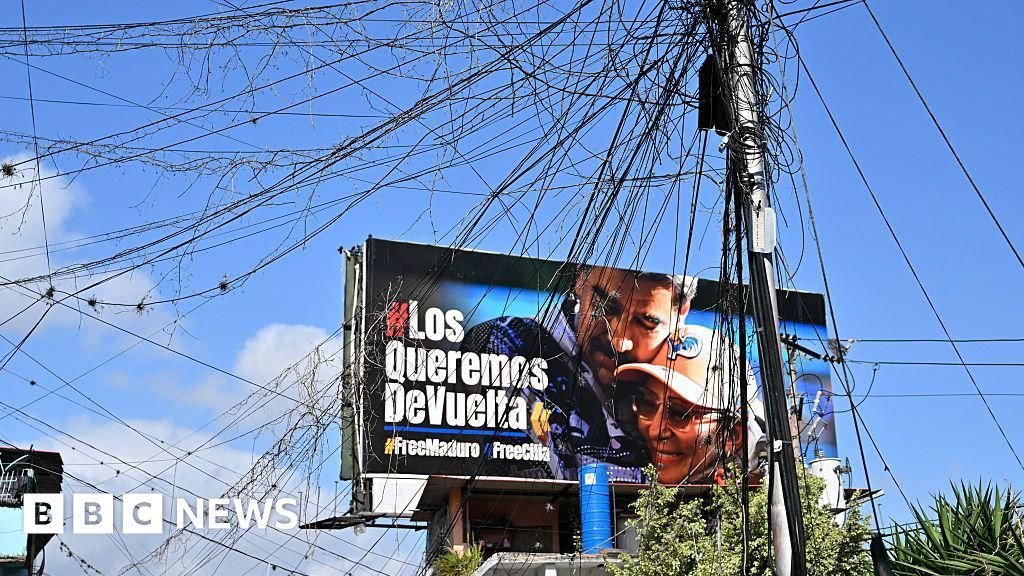
The Guri hydroelectric dam is a primary electricity source, but drought and poor maintenance have crippled output. (BBC News)
Guri Dam, Drought, and Latin America's Hydroelectric Dilemma
The Guri dam remains Venezuela's primary electricity source, yet recurring droughts have repeatedly curtailed its output. Officials previously attributed outages mainly to weather, but analysts emphasize that deferred maintenance and rising demand created vulnerabilities long before recent dry spells. Climate variability now amplifies these pre-existing weaknesses.
Across Latin America, nations reliant on hydroelectric generation face similar pressures as rainfall patterns shift. Brazil, Colombia, and others have experienced comparable strains on dams built decades ago. Venezuela's experience illustrates the risks of depending too heavily on single sources without diversified backup systems.
Repairing Guri and modernizing transmission infrastructure therefore carries regional significance. Successful rehabilitation could demonstrate how countries can adapt aging hydro assets to changing climate conditions. The General Electric Vernova partnership may provide technical models useful beyond Venezuela's borders if implementation proves effective.
Lessons for Brazil: Shared Hydroelectric Vulnerabilities
Brazil's extensive hydroelectric network, including plants such as Itaipu and Belo Monte, faces parallel challenges during prolonged dry seasons. Reduced reservoir levels force reliance on thermal backup generation at higher costs. Venezuela's prolonged crisis offers Brazilian policymakers a cautionary example of what happens when maintenance lags behind demand growth.
Cross-border dialogue on grid modernization could benefit both nations. Technical exchanges around drought forecasting, transmission upgrades, and diversified generation would strengthen regional resilience. Brazil's experience managing large-scale hydro systems positions it to share expertise while learning from Venezuela's recovery efforts.
As a Brazilian journalist, I see clear connections between Caracas's challenges and those facing Amazonian and northeastern states at home. Coordinated approaches to climate adaptation in the energy sector could prevent future blackouts across the continent. The GE Vernova agreement may catalyze such conversations if results materialize.
The Regional Energy Transition: What This Deal Signals
The agreement with General Electric Vernova could improve investor confidence in Latin American energy markets if implementation delivers measurable improvements. Technology transfer in grid management and equipment modernization may accelerate transitions already underway in neighboring countries. Yet governance questions raised by opposition leaders must be resolved to sustain momentum.
Regional governments watch Venezuela closely, recognizing that infrastructure investment succeeds best alongside institutional reforms. The balance between attracting capital and preserving policy autonomy remains delicate across the hemisphere. Successful execution of this deal might encourage similar partnerships elsewhere.
Climate resilience requires both physical upgrades and political stability. Venezuela's experiment with renewed US cooperation offers a test case for how quickly energy systems can recover when technical and diplomatic barriers are lowered. Outcomes will shape perceptions of opportunity throughout Latin America.
Conclusion: A Turning Point or a Temporary Fix?
The General Electric Vernova agreement represents a potential turning point for Venezuela's electricity sector, yet political continuity in key institutions raises doubts about durability. Delcy Rodríguez must translate the signed document into functioning infrastructure while addressing calls for electoral and media reforms. Without those steps, investor enthusiasm may prove short-lived.
For Latin America, the coming months will reveal whether technical partnerships can overcome deeper governance hurdles. Brazil and other neighbors have stakes in Venezuela's success, given shared climate and energy challenges. Sustained progress will require consistent follow-through from all parties involved.
As a Brazilian climate journalist, I remain cautiously hopeful that this deal can ease suffering for Venezuelan families while offering lessons in regional cooperation. The path ahead demands both engineering skill and political courage. Only time will show whether today's signatures mark lasting recovery or another cycle of promises.
By Elena Vasquez, Staff WriterThis article was produced with AI-assisted research and editorial support. Reporting is based on sources cited in the article.
What's Your Reaction?
 Like
0
Like
0
 Dislike
0
Dislike
0
 Love
0
Love
0
 Funny
0
Funny
0
 Wow
0
Wow
0
 Sad
0
Sad
0
 Angry
0
Angry
0

Latin America Correspondent at Global1.News. Based in Mexico City, covering politics, economics, energy, and culture across the region. Brings an on-the-ground perspective to stories spanning from the Rio Grande to Patagonia.












Comments (0)