
Pangilinan Seeks Senate Probe into Ayungin Deal with China
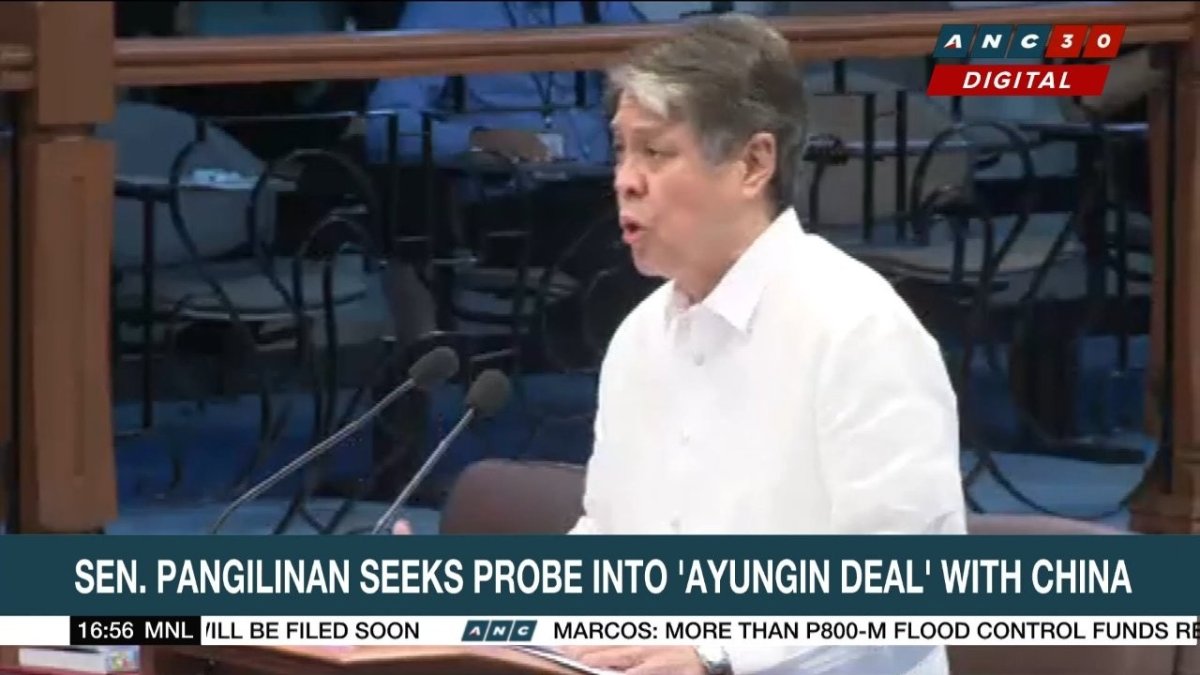
In a recent ANC 24/7 report aired on July 28, 2026, Senator Francis Pangilinan filed a resolution calling for a Senate investigation into the alleged Ayungin Deal with China. The report highlighted growing concerns over the Provisional Understanding that has shaped resupply missions to the BRP Sierra Madre at Ayungin Shoal since July 2024. This development has sparked debate across Manila about how such arrangements affect Philippine sovereignty in the West Philippine Sea.
Senator Pangilinan Seeks Senate Probe into Alleged Ayungin Deal with China Manila, Philippines — Senator Francis "Kiko" Pangilinan has filed a resolution in the Senate seeking a formal investigation into the alleged Ayungin Deal or Provisional Understanding between the Philippine government and China. The move comes amid heightened tensions at Ayungin Shoal, also known as Second Thomas Shoal, where the BRP Sierra Madre has served as a Philippine Navy outpost since 1999.
Senate Investigation into the Ayungin Deal
The resolution targets the Department of Foreign Affairs and other agencies to determine how the Provisional Understanding was reached without broader congressional input. Pangilinan, representing the Senate, wants to examine whether the arrangement compromises the 2016 Arbitral Award that affirmed Philippine rights in the West Philippine Sea under UNCLOS.
Senate hearings could involve testimony from DFA officials and Defense Secretary Gilbert Teodoro, who has denied agreeing to any provisional deal. This probe would connect directly to ongoing discussions in Congress about protecting the exclusive economic zone that includes waters near Palawan and other coastal provinces.
Filipino lawmakers in Quezon City have already begun reviewing related documents, emphasizing the need for transparency in dealings that affect national security. The investigation aims to clarify lines of authority between the DFA and the Department of National Defense.
The probe falls under the Senate Committee on Foreign Relations, chaired by Senator Imee Marcos, which has already scheduled initial hearings for the third week of August. This inquiry dovetails with parallel investigations by the same panel into Chinese maritime militia activities and the stalled joint exploration talks with Beijing, creating a unified legislative push to clarify executive branch accountability on West Philippine Sea policy.
Similar probes date back to 2012 after the Scarborough Shoal standoff and again in 2016 following the arbitral ruling, when the Senate demanded full disclosure of backchannel negotiations. Pangilinan's resolution now seeks a 60-day timeline for DFA and DND document submission, with public hearings expected to run through September before a committee report is filed ahead of the next congressional session.
Details of the Provisional Understanding
The DFA confirmed that since July 2024, a Provisional Understanding has governed rotation and resupply missions to the BRP Sierra Madre, with 13 such missions completed successfully. Officials describe it as a set of principles to avoid misunderstanding, stating it does not require Philippine vessels to seek Chinese permission or allow boarding by Chinese personnel.
Defense Secretary Gilbert Teodoro has publicly distanced the Department of National Defense from the arrangement, creating a visible gap between agencies in Manila. This disconnect raises questions about coordination on West Philippine Sea policy during the Marcos administration.
The understanding emerged after earlier confrontations and was discussed in the context of President Ferdinand Marcos Jr.'s call for a reset in Philippines-China relations during his fifth State of the Nation Address. It directly influences how Philippine Navy personnel from bases in Manila carry out their duties at the shoal.
DFA officials have stated that the provisional understanding covers only "technical arrangements" for rotation and resupply missions, explicitly excluding any recognition of Chinese sovereignty claims or limits on Philippine patrols. They emphasize that the 13 RORE missions conducted since July 2024 operate under existing Philippine sovereign rights affirmed by the 2016 Arbitral Award, which declared Ayungin Shoal part of the country's exclusive economic zone.
The BRP Sierra Madre has served as a stationary Philippine marine detachment since it was deliberately grounded in 1999 to reinforce Manila's claim. ASEAN neighbors such as Vietnam and Indonesia have privately expressed support for the resupply missions while urging restraint, whereas China continues to label the outpost an illegal occupation and insists the understanding validates its own "sovereignty" assertions over the feature.
Justice Carpio's Strong Criticism
Retired Supreme Court Senior Associate Justice Antonio Carpio labeled the Provisional Understanding ridiculous and dumber than dumb, arguing the DFA lacked authority to enter such an agreement. He stated it amounts to giving up sovereign rights over Ayungin Shoal and indicated he may bring the matter before the Supreme Court or Congress.
Carpio's comments have resonated in legal circles in Manila, where the 2016 Arbitral Award remains a cornerstone of Philippine foreign policy. His potential court action could test the limits of executive agreements on territorial issues involving the West Philippine Sea.
Communities in coastal areas such as Palawan watch these developments closely, as any perceived concession affects the daily operations of local fishermen who rely on the same waters for their livelihood.
The July 20 Clash at Ayungin Shoal
On July 20, 2026, China Coast Guard vessel CCG 21560 approached the BRP Sierra Madre, and eight personnel in a rigid-hull inflatable boat allegedly assaulted Filipino troops. One Philippine Navy sailor suffered a serious head injury after being struck with a baton, marking a sharp escalation in tensions at the shoal.
This incident followed months of increasing Chinese Coast Guard activity and occurred under the framework of the Provisional Understanding. Philippine National Police and Navy personnel involved in resupply missions now face heightened risks during operations from ports in Cebu and other southern bases.
Families of affected sailors in Manila and nearby provinces have expressed concern over the safety of their loved ones deployed to maintain the outpost. The event underscores the human cost of unresolved disputes in the West Philippine Sea for ordinary service members and their communities.
During the July 20 incident, Chinese Coast Guard vessels directed high-pressure water cannons at the Philippine resupply boat, injuring a 28-year-old Navy seaman who sustained deep lacerations to his left arm and required immediate medical evacuation to Palawan. The Armed Forces of the Philippines condemned the attack as a "dangerous and reckless" violation of international law, deploying additional escort vessels in subsequent missions to deter further aggression.
Beijing claimed Philippine forces had "collided" with Chinese ships and provoked the response, a narrative rejected by Manila and Washington. This clash fits a documented pattern of at least eight similar confrontations at Ayungin since early 2023, including the March 2024 boarding incident that damaged a Philippine vessel and injured multiple sailors, underscoring China's escalating use of non-lethal but increasingly forceful tactics to assert control.
International Reactions and US Involvement
US Secretary of State Marco Rubio described the Ayungin clash as escalatory and very negative during meetings with Chinese Foreign Minister Wang Yi in Manila amid ASEAN gatherings. Rubio also raised the possibility of US Coast Guard involvement in the region to support Philippine operations.
These statements align with broader US-Philippine defense cooperation that includes joint exercises near the West Philippine Sea. The Marcos administration has balanced these ties while pursuing a reset in relations with China, as stated during recent diplomatic exchanges in the capital.
Regional partners in Cebu and Davao monitor how external involvement might influence trade routes and security for Filipino workers and businesses dependent on stable maritime access.
The ASEAN Foreign Ministers' Meeting scheduled in Manila next month is expected to feature closed-door discussions on the Ayungin situation, with several member states privately urging a unified statement against the use of water cannons. US Secretary of State Marco Rubio's recent meeting with Chinese Foreign Minister Wang Yi in Jakarta highlighted Washington's firm stance that any armed attack on Philippine forces in the West Philippine Sea would invoke the Mutual Defense Treaty.
While Vietnam and Malaysia have voiced quiet solidarity with Manila, Cambodia and Laos have urged bilateral talks to avoid escalation. Philippine diplomats are also exploring a possible UN Security Council briefing later this year, citing repeated violations of the 2016 arbitral ruling as grounds for renewed international attention to the disputed waters.
Impact on Filipino Communities and Daily Life
The Ayungin Shoal situation directly affects fishermen from Palawan and other provinces who navigate the same exclusive economic zone affirmed by the 2016 Arbitral Award. Any arrangement perceived as limiting access disrupts their ability to earn a living and support families back home.
OFWs and their relatives in Manila and Quezon City follow the Senate probe closely, recognizing that sovereignty issues in the West Philippine Sea influence national pride and long-term economic stability. The BRP Sierra Madre outpost, grounded since 1999, symbolizes ongoing efforts to assert presence amid Chinese rejection of the arbitral ruling.
Communities across the country, from sari-sari store owners in coastal barangays to students learning about the dispute in DepEd classrooms, feel the ripple effects through higher fuel costs for fishing boats and uncertainty in regional trade. The Senate investigation offers a path to clarify these arrangements and protect the interests of everyday Filipinos who depend on secure waters for their future.
The resolution filed by Senator Pangilinan highlights the need for accountability in foreign policy decisions that shape daily realities for Philippine families and workers. As hearings proceed, the focus remains on safeguarding the rights upheld in the 2016 award while ensuring the safety of those serving at Ayungin Shoal.
By Bella Reyes, Staff WriterThis article was produced with AI-assisted research and editorial support. Reporting is based on sources cited in the article.
What's Your Reaction?
 Like
0
Like
0
 Dislike
0
Dislike
0
 Love
0
Love
0
 Funny
0
Funny
0
 Wow
0
Wow
0
 Sad
0
Sad
0
 Angry
0
Angry
0

Philippines/Southeast Asia Correspondent at Global1.News. Manila-based journalist covering Philippine politics, environment, maritime security, and social issues. Passionate about marine conservation and the communities protecting the Philippines' natural heritage.















Comments (0)