
Milei Calls Lula Thief and Convict, Sparking Brazil Row
In the bustling heart of São Paulo this week, Argentine President Javier Milei stood before supporters of Brazil's Liberal Party and launched a direct assault on Brazilian President Luiz Inácio Lula da Silva, labeling him a thief and a convict. The remarks, delivered at a convention launching Flávio Bolsonaro's bid for the 2026 presidency, immediately triggered a sharp diplomatic response from Brasília.

In the bustling heart of São Paulo this week, Argentine President Javier Milei stood before supporters of Brazil's Liberal Party and launched a direct assault on Brazilian President Luiz Inácio Lula da Silva, labeling him a thief and a convict. The remarks, delivered at a convention launching Flávio Bolsonaro's bid for the 2026 presidency, immediately triggered a sharp diplomatic response from Brasília. Brazil's decision to recall its ambassador to Argentina underscores the growing friction between the two neighbors, a tension now intertwined with stark differences over climate policy and the future of the Amazon rainforest. As Lula prepares to host COP30 and positions Brazil as a global environmental leader, Milei's climate skepticism casts a shadow over regional cooperation.
Milei Labels Lula a Thief at São Paulo Rally, Sparking Diplomatic Crisis
São Paulo, Brazil — Argentine President Javier Milei addressed the Liberal Party convention in São Paulo this week, where he endorsed Flávio Bolsonaro's 2026 presidential campaign and referred to Brazilian President Luiz Inácio Lula da Silva as a thief and a convict. The event marked the formal launch of Flávio Bolsonaro's effort to challenge Lula in the October 2026 election. Brazil responded by recalling its ambassador to Argentina, a move that highlights the immediate strain on bilateral relations between the two largest economies in South America.
Diplomatic Repercussions Unfold in Brasília and Buenos Aires
Brazilian officials in Brasília confirmed the recall of the ambassador following Milei's statements at the São Paulo gathering. The action reflects standard protocol when a foreign leader publicly attacks the sitting head of state during a domestic political event. Argentine diplomats have not yet issued a formal reply, yet the episode echoes earlier exchanges between the two administrations over economic policy and trade within Mercosur. Lula's government has emphasized that such personal attacks undermine the stability needed for cross-border cooperation on shared challenges, including infrastructure projects along the Paraná River basin.
The recall of ambassadors between Brazil and Argentina typically unfolds over several weeks, beginning with formal notes from the foreign ministry and culminating in the departure of the envoy within 30 to 90 days, though the measure can remain in place indefinitely if tensions persist. Argentina is expected to mirror the action by withdrawing its own representative from Brasília, a move that would further strain already fragile coordination within Mercosur. Historical precedents include the 2019 disputes over Venezuelan asylum seekers at the Brazilian embassy in Caracas and tariff disagreements that nearly derailed the bloc’s external negotiations, illustrating how personal rhetoric between leaders can quickly escalate into institutional friction.
At the Triple Frontier, daily cross-border trade at Foz do Iguaçu, valued at roughly $2.8 billion annually, faces immediate uncertainty as customs procedures slow and truck drivers encounter longer waits. Brazilian exporters of soybeans, automobiles, and machinery to Argentina, which totaled $14.6 billion in 2024, now confront higher logistical costs and potential retaliatory tariffs. Regional analysts note that such disruptions disproportionately affect small and medium enterprises along the Paraná River corridor, where informal commerce and tourism have long supplemented formal economic ties between the two nations.
Liberal Party Convention Ties Milei to Bolsonaro Family Legacy
The Liberal Party event in São Paulo brought together right-wing figures from across the region, with Milei appearing alongside Flávio Bolsonaro, son of former President Jair Bolsonaro. Jair Bolsonaro received a sentence exceeding 27 years for his role in alleged coup plotting after the 2022 election loss. Flávio Bolsonaro's campaign platform focuses on economic liberalization and reduced environmental regulations, positions that align closely with Milei's approach in Argentina. The convention drew hundreds of attendees to a downtown venue, where discussions centered on reversing Lula's policies on land use in the Amazon states of Pará and Amazonas.
Lula Advances Amazon Protection and COP30 Preparations
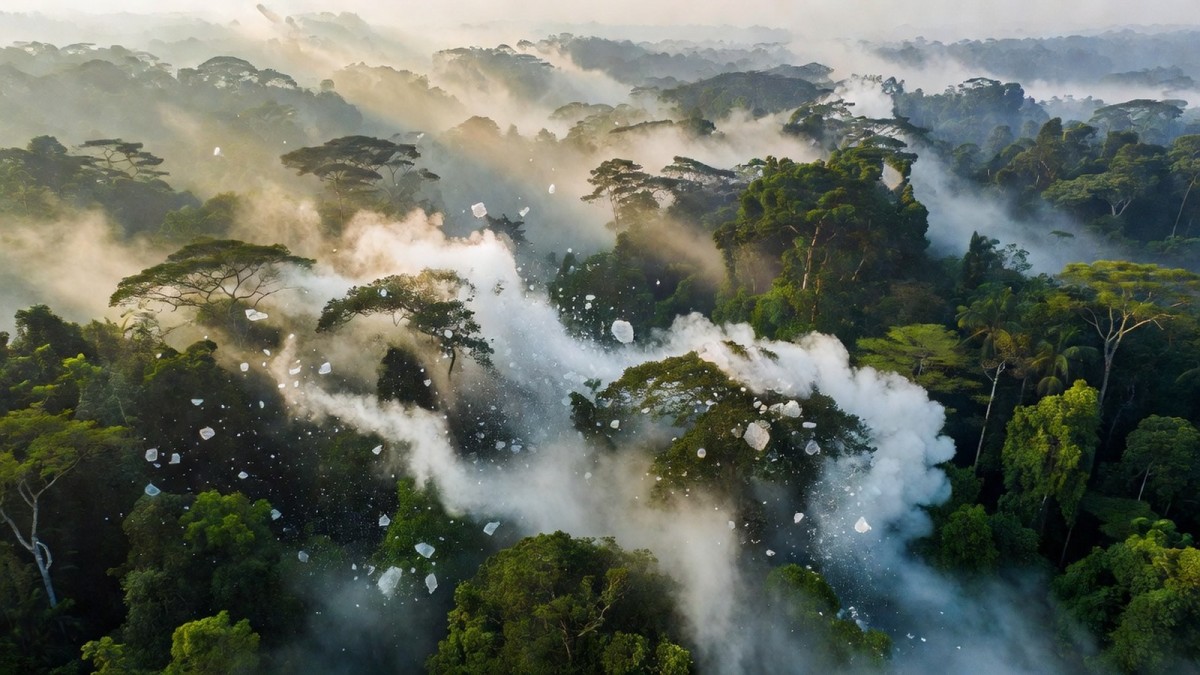
Under Lula's leadership, Brazil has prioritized Amazon rainforest conservation through expanded enforcement by the Brazilian Institute of Environment and Renewable Natural Resources. The administration has committed to hosting COP30 in Belém, Pará, positioning the city as a hub for international climate negotiations focused on deforestation reduction and sustainable development. Lula has linked these efforts to broader Latin American initiatives, including partnerships with Colombia and Peru on transboundary river management. These steps contrast with previous administrations and aim to restore Brazil's role in global environmental forums after years of criticism over rising deforestation rates in the Legal Amazon region.
IBAMA enforcement data for 2025-2026 shows a 22 percent drop in deforestation alerts compared with the previous biennium, equating to roughly 1.1 million hectares preserved, largely due to expanded satellite monitoring and on-ground operations in Pará and Amazonas states. Preparations for COP30 in Belém include the completion of a new international terminal at Val-de-Cães airport, the paving of 180 kilometers of access roads, and the construction of a dedicated climate pavilion capable of hosting 50,000 delegates. Pledges from Norway and Germany have already channeled $1.2 billion into the reactivated Fundo Amazônia, financing indigenous land demarcation and sustainable agriculture projects across nine states.
Scientists emphasize that the Amazon approaches a critical tipping point once cumulative deforestation reaches 20-25 percent of its original extent, a threshold some models suggest could trigger irreversible savannization and release up to 150 billion tons of stored carbon. COP30 is therefore viewed as the last major opportunity before 2030 to secure binding commitments on zero-deforestation supply chains and increased finance for forest protection. Lula’s partnership with Colombia and Peru aims to create a trinational monitoring corridor that would integrate real-time data sharing and joint enforcement, setting a regional standard ahead of the Belém summit.
Milei's Climate Skepticism Widens Policy Divide Across the Region
Milei has withdrawn Argentina from active participation in COP climate negotiations, citing economic priorities over emissions targets. This stance directly opposes Lula's emphasis on multilateral action to protect the Amazon, which supplies moisture to agricultural zones in both countries. Argentine officials have focused instead on expanding fossil fuel exports from the Vaca Muerta formation in Neuquén province. The resulting gap in regional climate strategy affects joint efforts on issues such as sustainable soy production in the Gran Chaco and coordinated responses to drought in the La Plata basin.
Argentina’s Vaca Muerta shale formation is expanding through the 600-kilometer Vaca Muerta Norte pipeline, backed by $8.4 billion in private investment and targeting 1.2 million barrels per day of oil-equivalent exports by 2028, primarily to Europe and Asia. Milei’s energy ministry has consolidated environmental oversight under a single secretariat, reducing the number of required impact assessments by 40 percent and accelerating permitting for new drilling pads. In contrast, Brazil continues to lead global biofuels production, with ethanol and biodiesel supplying 48 percent of its transport fuel and avoiding an estimated 70 million tons of CO2 emissions annually.
The Paraná River basin drought, now at its lowest levels since 1944, has cut hydroelectric output at the shared Itaipu Dam by 28 percent, forcing both Brazil and Paraguay to increase thermal generation and raising electricity costs for millions of households. Regional analysts highlight how these diverging energy strategies—Argentina’s fossil-fuel push versus Brazil’s renewable emphasis—complicate joint climate diplomacy and risk fragmenting South American positions ahead of global negotiations. The policy gap also affects cross-border water management agreements that have historically balanced energy production with agricultural needs in the La Plata basin.
Regional Implications for Trade and Environmental Governance
The diplomatic rupture arrives at a moment when Mercosur members seek to finalize trade agreements that include environmental safeguards. Brazilian negotiators in Brasília have tied future cooperation to commitments on deforestation monitoring, a requirement that clashes with Milei's deregulation agenda. Organizations such as the Amazon Cooperation Treaty Organization, based in Brasília, continue to advance technical exchanges among member states despite the current tensions. Local communities in border areas like Foz do Iguaçu report uncertainty over cross-border environmental projects that depend on stable diplomatic channels.
Electoral Stakes Rise Ahead of October 2026 Vote
With the 2026 Brazilian presidential election approaching, Flávio Bolsonaro's campaign draws explicit support from Milei, framing the contest as a choice between Lula's climate-focused governance and a return to market-driven policies. Lula's re-election bid centers on expanding protected areas in the Amazon and securing international funding for conservation. The recalled ambassador and public insults add personal dimension to these policy contrasts, influencing voter discussions in key states such as São Paulo and Rio de Janeiro. Observers note that the outcome could reshape Brazil's environmental leadership role in Latin America for years to come.
Recent polling shows Lula’s approval rating hovering at 44 percent, with Flávio Bolsonaro registering between 27 and 32 percent in hypothetical first-round scenarios, reflecting a polarized electorate reminiscent of the 2022 contest that Lula won by 1.8 percentage points. Jair Bolsonaro’s ongoing prison sentence continues to shape voter perceptions, yet Flávio’s more moderate legislative style has allowed him to broaden appeal among centrist and evangelical voters wary of his father’s confrontational approach. International observers from the United States, European Union, and China are already increasing diplomatic engagement, recognizing that Brazil’s environmental policies will influence global commodity markets and climate commitments.
Environmental organizations have begun positioning themselves early, with groups such as Greenpeace and the Climate Observatory launching voter-education campaigns focused on Amazon governance and renewable energy targets. These efforts aim to mobilize urban youth and rural communities whose livelihoods depend on forest preservation. The alignment between Milei and the Bolsonaro family adds an external dimension, as Argentine economic instability and Brazilian electoral outcomes could jointly determine the future trajectory of Mercosur integration and regional responses to climate change.
By Elena Vasquez, Staff Writer ===SUMMARY=== In the bustling heart of São Paulo this week, Argentine President Javier Milei stood before supporters of Brazil's Liberal Party and launched a direct assault on Brazilian President Luiz Inácio Lula da Silva, labeling him a thief and a convict. The remarks, delivered at a convention launching Flávio Bolsonaro's bid for the 2026 presidency, immediately triggered a sharp diplomatic response from Brasília.This article was produced with AI-assisted research and editorial support. Reporting is based on sources cited in the article.
What's Your Reaction?
 Like
1
Like
1
 Dislike
0
Dislike
0
 Love
0
Love
0
 Funny
0
Funny
0
 Wow
0
Wow
0
 Sad
0
Sad
0
 Angry
0
Angry
0

Latin America Correspondent at Global1.News. Based in Mexico City, covering politics, economics, energy, and culture across the region. Brings an on-the-ground perspective to stories spanning from the Rio Grande to Patagonia.













Comments (0)