
Gordie Howe Bridge Opens: Boosting Trade Between Canada and US
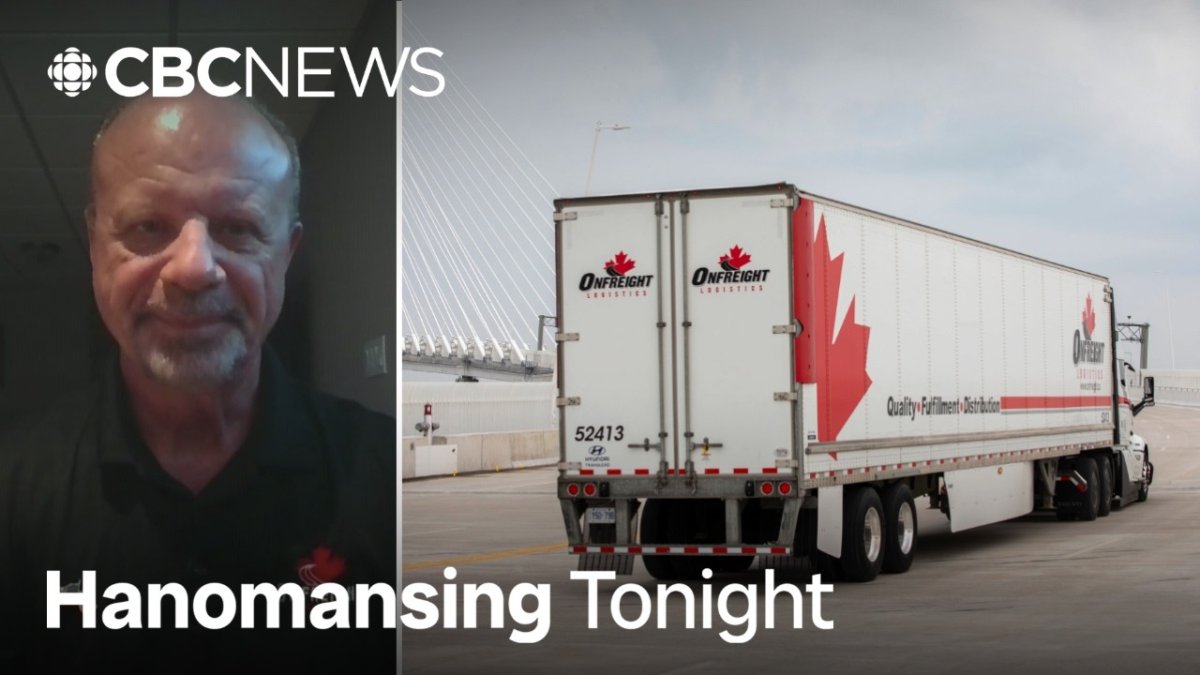
The CBC News video "Meet the first trucker to cross the Gordie Howe Bridge | Hanomansing Tonight" captures Jim Pereira's drive across the new span on Monday, highlighting how the 2.4 km cable-stayed structure now links Ontario's Highway 401 directly to Michigan's Interstate 75. This marks a significant milestone in cross-border infrastructure between Canada and the United States. The opening promises to enhance trade efficiency while navigating recent political tensions.
The CBC News video "Meet the first trucker to cross the Gordie Howe Bridge | Hanomansing Tonight" captures Jim Pereira's drive across the new span on Monday, highlighting how the 2.4 km cable-stayed structure now links Ontario's Highway 401 directly to Michigan's Interstate 75. This marks a significant milestone in cross-border infrastructure between Canada and the United States. The opening promises to enhance trade efficiency while navigating recent political tensions.
Gordie Howe Bridge Opens Boosting Trade
Windsor, Ont. – July 28, 2026 — The $6.4 billion Gordie Howe International Bridge opened to traffic at noon on Monday, July 27, 2026, with Gordie Howe's grandson driving the first passenger car across the six-lane structure named after the Canadian hockey legend who died in 2016.
Jim Pereira, safety manager at Onfreight Logistics in Tecumseh, Ont., became the first truck driver to carry freight across when he hauled auto parts destined for Michigan assembly plants. The bridge features 16 toll lanes and 60 Canada/U.S. inspection lanes that processed the initial commercial vehicles within minutes of the noon opening.
The Story: First Crossings and a Historic Opening
Canadian officials timed the public opening for Monday to allow immediate integration with existing border inspection schedules at the Windsor-Detroit corridor. Observers noted the smooth flow of vehicles as the first commercial trucks passed through the inspection plazas without significant delays, setting a positive tone for future operations. The event drew media attention from both sides of the border, with live coverage emphasising the bridge's role in modernising cross-border travel.
Local dignitaries and transportation experts gathered to witness the milestone, underscoring the collaborative efforts that made the opening possible despite earlier setbacks. This initial success has already prompted discussions about potential expansions to handle growing trade volumes in the years ahead.
A Bridge Decades in the Making
Construction on the Gordie Howe International Bridge began in 2018 after years of bilateral planning between Canadian and U.S. governments to replace the aging Ambassador Bridge as the primary truck route. The COVID-19 pandemic delayed completion by more than two years, pushing the final paving and inspection facility work into 2025 and early 2026.
Engineers designed the 2.4 km cable-stayed bridge with highway-to-highway connections that eliminate the need for local street travel between Ontario's Highway 401 and Michigan's Interstate 75. Canadian federal funding covered the majority of the $6.4 billion cost, with Michigan contributing land and permitting support for the U.S. side inspection plaza.
The 2018 groundbreaking ceremony marked a historic moment in bilateral relations, attended by officials from Ottawa, Washington, and provincial and state governments who highlighted the project's potential to boost economic ties. Federal-provincial coordination proved essential, as Ontario worked closely with Ottawa to secure environmental approvals and manage land acquisitions along the Windsor waterfront.
Technical challenges included navigating the strong currents of the Detroit River and ensuring the cable-stayed design could withstand harsh winter conditions common to the region. Engineers employed innovative anchoring techniques to secure the massive towers, drawing on expertise from similar projects worldwide while adapting to local geological surveys.
These efforts not only addressed immediate construction hurdles but also incorporated sustainability measures, such as reduced emissions during building phases, reflecting broader Canadian commitments to environmentally responsible infrastructure development.
Political Controversy and Cross-Border Tensions
U.S. President Donald Trump demanded compensation from Canada before permitting the bridge to open, falsely claiming the project contained virtually no American content despite Michigan-based contractors supplying steel and labour. Canada agreed to revenue-sharing adjustments to address the U.S. concerns, yet the joint Canada-U.S. opening celebration scheduled for this week was cancelled due to Trump's tariff threats on Canadian goods.
Canada held its own ceremony last week in Windsor, where Prime Minister Mark Carney acknowledged he could have been clearer about the deal terms during earlier negotiations. U.S. Ambassador to Canada Pete Hoekstra welcomed the opening on Monday and stated that the bridge strengthens long-term economic ties despite recent tariff disputes.
Trump's February social media post reignited tensions by questioning the project's fairness and calling for direct payments from Canadian taxpayers, prompting swift diplomatic responses from the Carney government to clarify the mutual benefits. Conservative critics in Canada argued that the revenue-sharing concessions went too far, accusing the federal government of yielding to unnecessary pressure during sensitive trade talks.
The cancellation of the joint celebration highlighted ongoing strains in the relationship, with Canadian officials opting for a unilateral event to focus on national achievements rather than risk further politicisation. Despite these frictions, both nations recognised the bridge's strategic importance for supply chain resilience in the automotive sector.
Analysts suggest that such controversies may influence future cross-border projects, encouraging more transparent negotiations to avoid similar last-minute adjustments that could affect project timelines and public perception.
Economic Impact on Canadian Trade
Over 70 percent of Canada's exports travel to the United States, and the new bridge provides a second major truck route across the Detroit River after nearly a century of reliance on the privately-owned Ambassador Bridge. Goldy Hyder, president of the Business Council of Canada, praised the collaboration between the two countries and noted that the 60 inspection lanes will reduce wait times for auto parts shipments critical to Ontario manufacturing.
The six-lane design and direct Highway 401 to Interstate 75 connection allow freight operators like Onfreight Logistics to bypass downtown Windsor and Detroit congestion that previously affected Ambassador Bridge traffic. Canadian exporters in the automotive sector now have a publicly managed alternative that offers predictable crossing times during peak shipping periods.
With the Ambassador Bridge handling the vast majority of truck traffic for over a hundred years, the Gordie Howe structure introduces much-needed redundancy, potentially cutting average travel times by up to 30 minutes for many haulers during rush hours. Industry data indicates that the new bridge's capacity could accommodate an additional 10,000 trucks daily, easing bottlenecks that have long plagued the corridor.
Business groups, including the Canadian Chamber of Commerce, have emphasised how this development supports just-in-time manufacturing models essential to Ontario's auto plants, where delays can cost millions in lost productivity. Hyder further highlighted that the expanded inspection infrastructure will enhance security without compromising efficiency, fostering greater investor confidence in the region.
Overall, economists project a modest but steady boost to GDP through improved trade flows, with particular gains for small and medium enterprises that rely on timely cross-border deliveries to remain competitive in North American markets.
Local and Community Response
Residents of Windsor and Detroit expressed a mix of excitement and relief as the bridge opened, viewing it as a symbol of renewed connectivity between the twin cities separated by the Detroit River. Many locals gathered along the waterfront to watch the first vehicles cross, sharing stories of how border delays had previously disrupted daily commutes and family visits.
A cyclist on Broadway Street in Windsor paused during his morning ride to observe the inaugural truck crossings, noting the bridge's impressive scale and hoping it would bring new vitality to nearby neighbourhoods. In Detroit, a resident fishing along the riverbank flew small U.S. flags from his tackle box, describing the moment as a personal celebration of cross-border friendship amid broader political uncertainties.
Community forums in both cities have since buzzed with discussions about potential job creation from increased traffic and tourism, though some voiced concerns over noise and environmental impacts near the plazas. Local artists have begun planning murals inspired by the bridge to commemorate the event, reflecting a sense of shared pride in the engineering feat.
These grassroots reactions underscore the human element of the project, as families on both sides anticipate easier access to cultural events and shopping opportunities that were once hindered by lengthy waits at older crossings.
What Happens Next
Canadian and U.S. border agencies will monitor the 60 inspection lanes over the coming months to adjust staffing levels based on actual truck volumes recorded after the Monday opening. Revenue-sharing adjustments negotiated with the Trump administration will take effect in the first quarter of 2027, with Canadian officials tracking toll collections to ensure the terms remain balanced.
Further highway improvements on the Ontario side of Highway 401 are scheduled to begin in 2027 to maximise the capacity created by the Gordie Howe International Bridge's direct connection to Interstate 75. Business groups led by Goldy Hyder continue to advocate for additional border infrastructure projects that build on the lessons learned during the eight-year construction period that started in 2018.
Officials plan to release quarterly performance reports detailing wait times and traffic patterns, allowing for data-driven refinements to operations. These reports will also inform potential upgrades to digital tolling systems aimed at further streamlining crossings for frequent users.
Provincial authorities in Ontario are coordinating with federal partners to integrate the bridge into broader transportation networks, including potential rail links that could enhance multimodal freight movement across the border. Such initiatives aim to position the Windsor-Detroit region as a model for efficient international trade corridors.
Advocacy efforts by business leaders focus on securing funding for complementary projects, ensuring that the Gordie Howe Bridge serves as a foundation for sustained economic growth rather than an isolated achievement.
The bridge stands as a testament to enduring bilateral cooperation, with its success likely shaping future infrastructure initiatives that prioritise efficiency, sustainability and resilience amid evolving trade dynamics.
By Alex Thompson, Staff WriterThis article was produced with AI-assisted research and editorial support. Reporting is based on sources cited in the article.
What's Your Reaction?
 Like
0
Like
0
 Dislike
0
Dislike
0
 Love
0
Love
0
 Funny
0
Funny
0
 Wow
0
Wow
0
 Sad
0
Sad
0
 Angry
0
Angry
0

Canada Correspondent at Global1.News. Based in Toronto, covering Canadian politics, energy, trade, and US-Canada relations. Provides the Canadian perspective on North American and global affairs.















Comments (0)