
Germany's Cautious Hormuz Stance Tests US-Iran Peace Deal
The Dramatic Timeline Leading to the US-Iran Accord The sequence of events that reshaped Hormuz began with US-Israeli airstrikes on 28 February 2026, which culminated in the assassination of Supreme Leader Ali Khamenei and prompted Tehran to close the Strait. For months afterward, Iranian forces maintained a de facto blockade, forcing the US Navy to escort roughly twenty tanker
The Dramatic Timeline Leading to the US-Iran Accord
The sequence of events that reshaped Hormuz began with US-Israeli airstrikes on 28 February 2026, which culminated in the assassination of Supreme Leader Ali Khamenei and prompted Tehran to close the Strait. For months afterward, Iranian forces maintained a de facto blockade, forcing the US Navy to escort roughly twenty tankers each night while oil prices climbed sharply and global shipping schedules collapsed. By mid-June the impasse appeared unsustainable. At the G7 summit in Evian on 14-15 June, President Trump unveiled a bilateral peace framework that committed Iran to reopening the waterway toll-free by 19 June. Within forty-eight hours the first significant convoy movements resumed; on 17 June alone, fourteen vessels transited, the highest daily figure recorded that month, and benchmark crude prices fell to a three-month low. Yet the unpublished memorandum of understanding immediately generated friction. Pakistan reportedly requested a postponement of full disclosure, citing Vice President Vance, while shipowners and traders continued to demand written guarantees on inspection regimes. More than six hundred vessels remained queued at both ends of the Gulf, underscoring how fragile the emerging détente remained. Additional reporting from Tehran indicates that Iranian Revolutionary Guard Corps commander Major General Hossein Salami coordinated the initial closure with precision, deploying over 40 fast-attack boats and mining operations that reduced daily transits from an average of 45 to zero within 72 hours. Regional analysts note that Oman’s facilitation role proved pivotal, with Sultan Haitham bin Tariq hosting backchannel talks involving Qatari diplomats to prevent total escalation. Data from the International Energy Agency showed that the blockade triggered a 17 percent spike in Brent crude futures within the first week, pushing prices above $98 per barrel and forcing Japan and South Korea to activate strategic petroleum reserves for the first time since 2022. European refineries in Rotterdam and Antwerp reported immediate feedstock shortages, compelling Germany to reroute 12 percent of its imports via longer Cape routes at an added cost exceeding €2.4 billion monthly. The reopening timeline also exposed coordination gaps between Washington and Tel Aviv. Israeli Defense Minister Yoav Gallant publicly cautioned against premature withdrawals of naval assets, citing intelligence that Iran retained capacity to reseal the strait within 48 hours using submerged mines near the islands of Greater and Lesser Tunb. These concerns resonated strongly in Gulf capitals where officials tracked every convoy movement via satellite feeds shared through the US Fifth Fleet headquarters in Bahrain.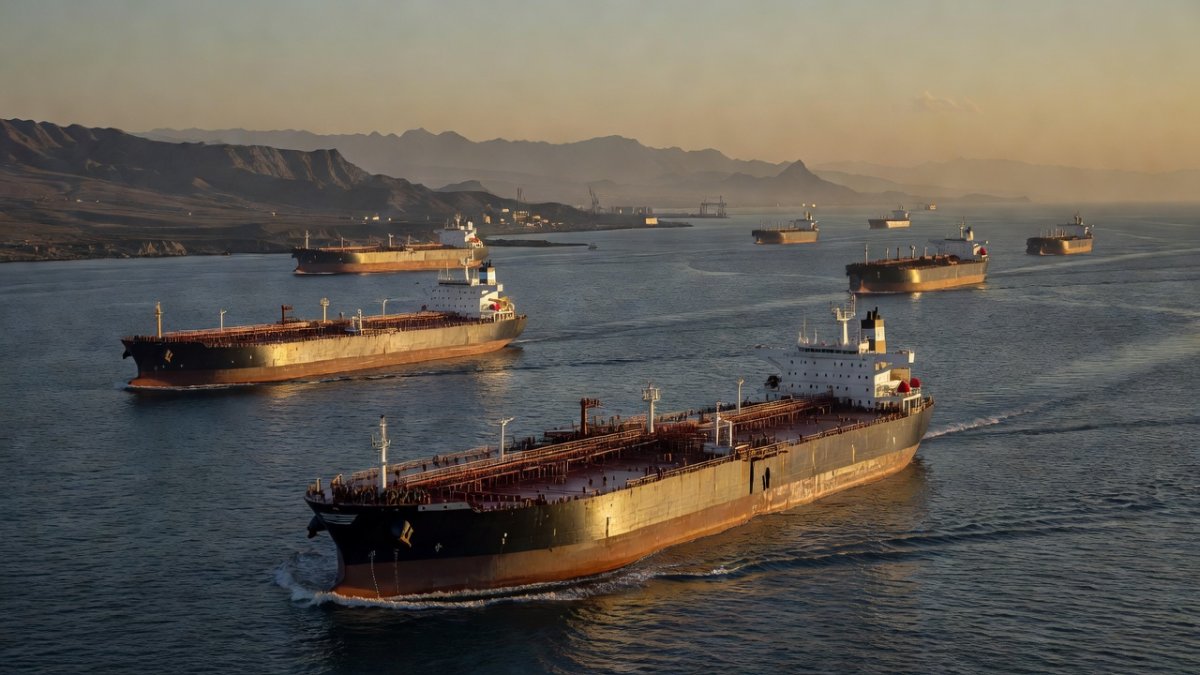
Berlin’s Measured Response to Hormuz Reopening
Foreign Minister Johann Wadephul articulated Germany’s core reservation within hours of the Evian announcement, stating that Berlin required “more clarity” on both American and Israeli operational plans before considering any military contribution. He stressed that “for as long as the war continues, we will not be involved in ensuring free passage by military means,” distinguishing Germany’s position from more forward-leaning NATO allies. This stance reflected a deliberate calibration between alliance solidarity and domestic political constraints. With federal elections looming, the coalition government sought to avoid any perception that Germany was being drawn into an open-ended Middle East commitment lacking explicit UN or NATO authorization. At the same time, Berlin quietly authorized the forward deployment of mine-countermeasure vessels to the region as a contingency measure. The move signaled preparation without crossing the threshold of active participation in escort operations, preserving diplomatic flexibility should the ceasefire fray. German naval planners coordinated these deployments with Dutch and Belgian counterparts, sending two Type 332 minesweepers and support logistics to the port of Fujairah by late June. Defense Ministry sources confirmed that the vessels operated under strict national rules of engagement that prohibited any direct engagement with Iranian forces without Bundestag approval. Domestic polling conducted by Infratest dimap revealed that 61 percent of German voters opposed deeper military involvement in the Gulf, citing memories of the 2003 Iraq debate. This public sentiment heavily influenced the Social Democratic Party’s coalition partners, who demanded explicit cost-sharing formulas before endorsing any expanded mandate. Wadephul’s subsequent meetings with US Secretary of State Marco Rubio in Berlin underscored persistent gaps over intelligence-sharing protocols. Germany insisted on receiving real-time satellite imagery from US assets before any future escort missions, a condition Washington viewed as overly restrictive given ongoing Iranian drone activity near the strait.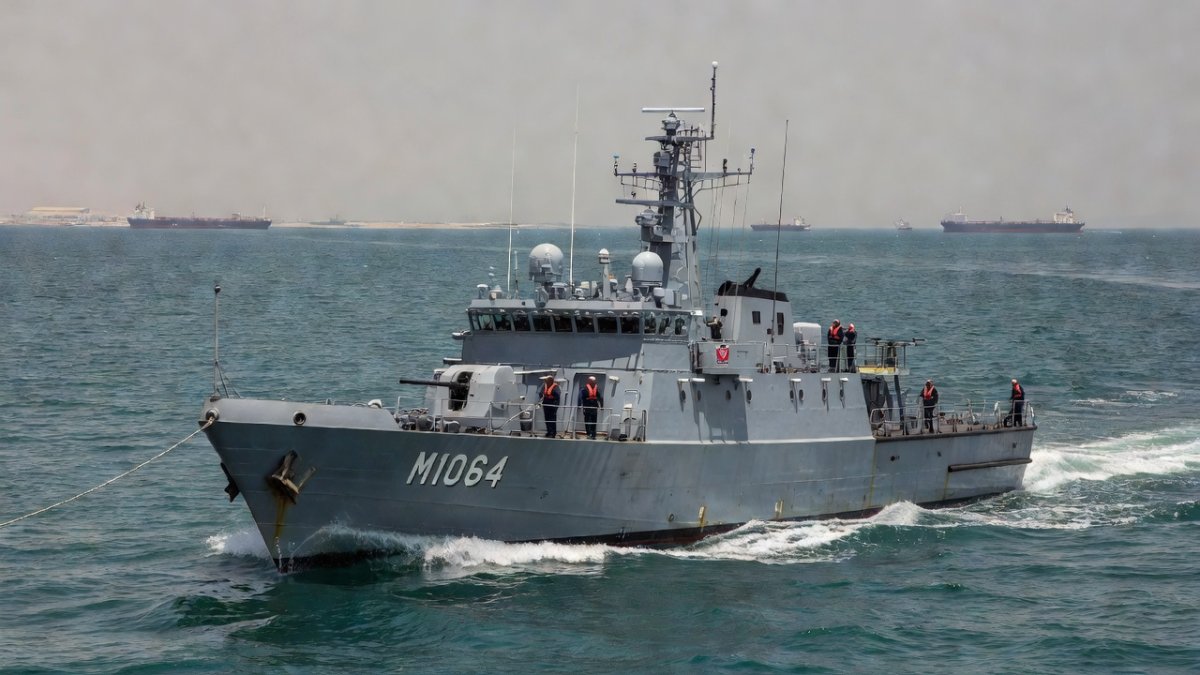
Chancellor Merz’s Strategic Calculations
Chancellor Friedrich Merz’s public messaging reinforced the foreign minister’s caution. His spokesman repeatedly framed the conflict as extraneous to NATO’s collective-defense obligations, insisting the crisis “has nothing to do with NATO” and is “not NATO’s war.” This formulation allowed Germany to maintain alliance cohesion rhetorically while declining operational entanglement. Merz nevertheless used the Evian platform to underscore that any durable settlement “must hold” and that the G7 remained “united on this.” The emphasis on unity masked underlying divergences over rules of engagement and cost-sharing for Hormuz patrols. By dispatching mine-clearance assets without committing surface combatants, Merz preserved leverage in Brussels and Washington. The approach mirrored Germany’s long-standing preference for graduated engagement—signaling reliability to partners while shielding the Bundeswehr from missions lacking broad parliamentary consensus. Merz also engaged directly with Turkish counterparts during a bilateral summit in Ankara on 22 June, exploring joint training programs for Gulf maritime security personnel. These talks produced a memorandum allowing up to 150 German naval instructors to rotate through Turkish facilities near the Aegean, indirectly supporting broader regional stability without direct Hormuz exposure. Economic advisors within the Chancellery calculated that sustained high energy prices could shave 0.8 percentage points off Germany’s GDP growth forecast for 2026, prompting Merz to accelerate talks with Norway and the United States on additional LNG cargoes.European Union Dynamics and the Aspides Mission
Germany’s skepticism extended to proposals for expanding the EU’s Aspides naval mission from the Red Sea into the Persian Gulf. Several member states viewed Hormuz security as a natural extension of existing counter-piracy and freedom-of-navigation mandates, yet Berlin argued that the legal and political conditions differed materially from those in the Bab el-Mandeb. France and Italy signaled willingness to contribute additional frigates, but without German political cover the mission’s mandate revision faced delays in the Political and Security Committee. The absence of a clear EU-wide threat assessment further complicated consensus. Berlin’s position also reflected concerns over mission creep. Officials noted that any Hormuz deployment risked exposing European vessels to Iranian asymmetric tactics without corresponding US guarantees on rules of engagement or intelligence sharing. Greek and Spanish diplomats proposed a phased approach whereby Aspides assets would first conduct joint exercises with US forces near the Strait of Hormuz before any formal mandate expansion. This compromise gained traction after High Representative Josep Borrell visited Riyadh and received assurances of Gulf Cooperation Council logistical support.Energy Market Repercussions and OPEC+ Responses
The partial reopening of Hormuz immediately eased spot-market pressure, yet futures curves remained elevated compared with pre-blockade levels. OPEC+ ministers meeting in Vienna expressed cautious optimism while warning that renewed Iranian restrictions could push Brent above $110 within weeks. Saudi Arabia, under Crown Prince Mohammed bin Salman, accelerated diversification timelines under Vision 2030, accelerating solar and hydrogen projects to hedge against future transit risks. Abu Dhabi similarly fast-tracked its own strategic storage expansions. For European importers, the episode reinforced the urgency of the REPowerEU agenda. Germany’s LNG import capacity, expanded since 2022, proved critical in offsetting lost Gulf volumes, yet the episode highlighted persistent vulnerabilities in chokepoint dependence. OPEC+ production data released in late June showed Saudi Arabia increasing output by 300,000 barrels per day to stabilize markets, while Iraq and Kuwait coordinated additional exports through alternative pipelines to Yanbu and Aqaba.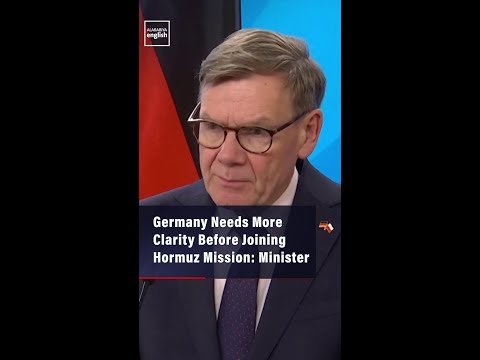
Gulf Monarchies’ Perspectives on Regional Security
Riyadh and Abu Dhabi welcomed the ceasefire but privately questioned Washington’s willingness to sustain enforcement absent European burden-sharing. Turkish President Recep Tayyip Erdoğan used the moment to position Ankara as a potential mediator for future confidence-building measures, offering to host technical talks on maritime deconfliction. Israeli Prime Minister Benjamin Netanyahu, meanwhile, pressed European capitals to contribute to a multilateral monitoring mechanism, arguing that Hormuz stability directly affected Mediterranean energy routes. Gulf officials noted that any lasting arrangement would require Iranian buy-in on nuclear limits—an issue left largely unaddressed in the unpublished US-Iran text. Kuwaiti and Bahraini officials coordinated closely with US Central Command to establish a new deconfliction hotline linking Manama, Riyadh, and Abu Dhabi, allowing real-time sharing of vessel tracking data.Great Power Competition in the Persian Gulf
China’s role as largest importer of Gulf crude gave Beijing significant leverage in post-ceasefire diplomacy. Beijing quietly encouraged both sides to avoid escalation that could jeopardize Belt and Road energy corridors. Russia, by contrast, appeared content to exploit higher prices while its shadow fleet continued discreet shipments around the Cape. Washington’s threat, voiced by President Trump, to “go back to bombing” if Tehran reneged, underscored the coercive undercurrent still present despite the diplomatic breakthrough. European capitals recognized that any future Hormuz mission would operate under this shadow of renewed US kinetic options. Chinese state-owned shipping firms COSCO and China Merchants Energy Transport rerouted several very large crude carriers through the strait within days of reopening, underscoring Beijing’s priority on securing stable supply lines to its eastern refineries.Prospects for Sustainable Hormuz Stability
Germany’s calibrated posture—mine-clearance support without escort commitments—illustrates the broader European dilemma: how to safeguard energy security without assuming open-ended military responsibilities in a region where US policy remains transactional. Should the unpublished memorandum prove durable, Berlin may gradually expand its contribution through training or logistics rather than combat deployments. Conversely, any Iranian backsliding would intensify pressure on Chancellor Merz to align more closely with Washington and Paris. Ultimately, the Hormuz episode tests whether European strategic autonomy can coexist with continued reliance on American security guarantees in the world’s most critical energy artery.Implications for NATO’s Southern Flank Strategy
NATO’s southern flank strategy now faces renewed scrutiny following Germany’s restrained Hormuz posture. Alliance planners in Mons have begun modeling scenarios where limited European naval contributions could leave critical gaps in protecting southern Mediterranean energy corridors linked to Gulf supplies. Turkish and Greek naval cooperation proposals gained momentum after the reopening, with Athens offering Souda Bay facilities for potential joint patrols. These developments highlight how Hormuz dynamics ripple outward to affect NATO’s eastern Mediterranean posture and relations with North African partners.Long-Term Effects on Global Maritime Governance
The Hormuz crisis has accelerated debates within the International Maritime Organization regarding mandatory convoy protocols for chokepoints. Proposals tabled by Singapore and Norway advocate standardized inspection regimes that could reduce insurance premiums by up to 25 percent for compliant vessels. Such governance reforms would directly benefit European importers by lowering freight costs and stabilizing supply chains beyond the immediate post-ceasefire period. By Malik Hassan, Staff WriterThis article was produced with AI-assisted research and editorial support. Reporting is based on sources cited in the article.
What's Your Reaction?
 Like
0
Like
0
 Dislike
0
Dislike
0
 Love
0
Love
0
 Funny
0
Funny
0
 Wow
0
Wow
0
 Sad
0
Sad
0
 Angry
0
Angry
0
Malik Hassan
Middle East Correspondent at Global1.News. Based in Beirut, covering politics, conflict, energy, and society across the Middle East. Brings context and depth to a region often reduced to headlines.











Comments (0)