
South Korea Heatwave Tests 2050 Carbon Neutrality Goals
As South Korea endures another punishing summer, Daegu has shattered records with a scorching 39.3C reading that underscores the intensifying climate pressures across Northeast Asia. This extreme heatwave not only revives the city infamous Daefrica nickname but also tests the resilience of the nation long-term environmental policies. The event arrives at a critical juncture for the Lee Jae-myung administration climate agenda.
As South Korea endures another punishing summer, Daegu has shattered records with a scorching 39.3°C reading that underscores the intensifying climate pressures across Northeast Asia. This extreme heatwave not only revives the city's infamous "Daefrica" nickname but also tests the resilience of the nation's long-term environmental policies. The event arrives at a critical juncture for the Lee Jae-myung administration's climate agenda.
Daegu Heatwave Challenges 2050 Carbon Neutrality Goals
Seoul, South Korea – 28 July 2026 — Article continues...
Daegu Registers the Year's Peak Temperature
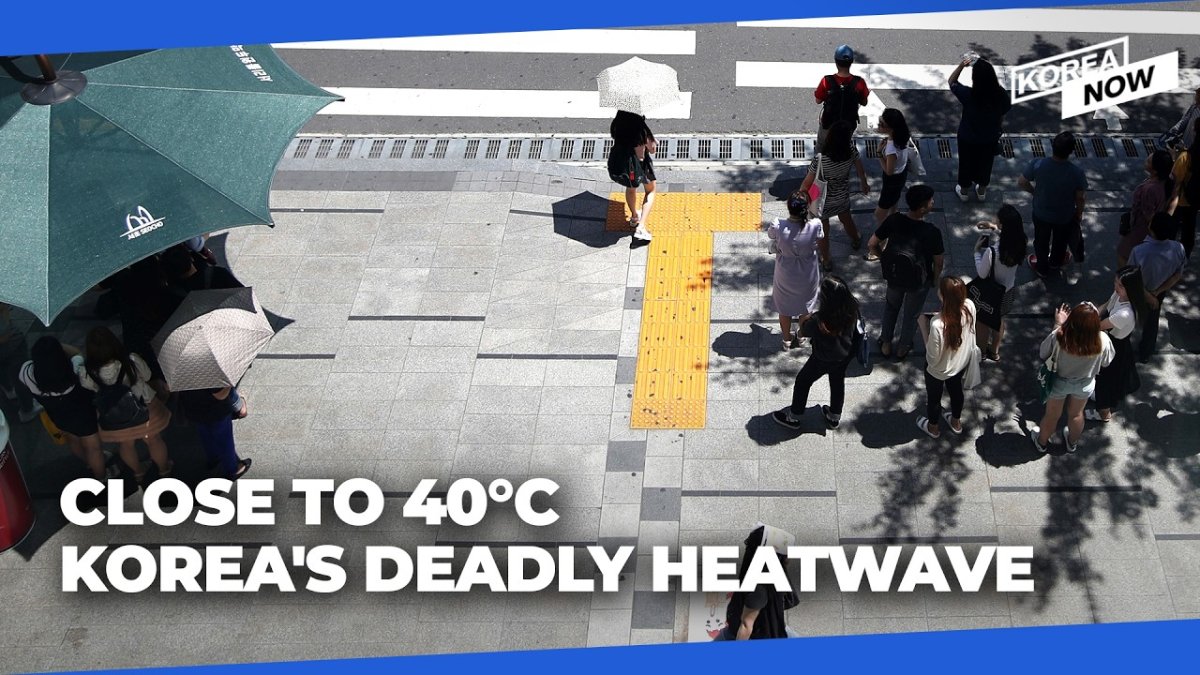
On 26-27 July 2026 the Korea Meteorological Administration recorded 39.3°C in Daegu, the highest national reading of the year. The agency issued its highest-level heat warnings for Daegu, Gyeongsan and Cheongdo, while most of the country remained under heat-wave advisories. The local term "Daefrica," combining Daegu and Africa, has long captured the city's recurrent summer extremes and now frames public discussion of this latest event.
Daegu's meteorological profile stems from its topographic enclosure within the Nakdong River basin, which traps warm air masses and amplifies nocturnal heat retention. KMA records show that the city has exceeded 35°C on an average of 28 days annually since 2000, compared with 12 days in Seoul. The KMA's heatwave warning system issues alerts when the daily maximum is forecast to reach 33°C for two consecutive days or when the heat index surpasses 41°C; Daegu triggered the highest "serious" level 17 times between 2015 and 2024. These thresholds incorporate wet-bulb globe temperature data from 94 automated stations, enabling localized advisories that trigger municipal cooling-center activation and outdoor-work restrictions.
The "Daefrica" meme emerged in 2018 when netizens juxtaposed Daegu's 40.5°C reading with African climate statistics, yet the underlying phenomenon predates social media. During the 2018 national heatwave, Daegu recorded 42 consecutive days above 30°C, contributing to 42 heat-related fatalities nationwide according to KMA mortality statistics. Municipal responses have since included the 2022 Heatwave Adaptation Master Plan, which mandates reflective pavement coatings on 180 km of roadways and subsidies for rooftop gardens covering 1.2 million m². Comparative analysis with 1994 — the previous benchmark year when Daegu logged 38.2°C — reveals a 1.8°C rise in mean summer temperature, consistent with Korea's observed 0.3°C per decade warming trend documented in the National Institute of Meteorological Sciences' 2023 assessment.
Comparable Conditions Emerge Across Northeast Asia
Japan reported temperatures exceeding 40°C in several prefectures during the same period. The parallel episodes illustrate how extreme heat now affects the entire region rather than isolated national territories. South Korea's experience therefore forms part of a broader Northeast Asian pattern driven by shared atmospheric dynamics and urban heat-island effects.
These synchronized heat events across borders underscore the urgency for coordinated policy responses, as isolated national strategies may prove insufficient against shared climatic drivers that link Korean cities like Daegu directly to conditions in neighboring Japan and beyond.
The 2050 Carbon Neutrality Framework Remains in Force
South Korea's statutory commitment to carbon neutrality by 2050 is set out in the 2050 Carbon Neutrality Framework Act on Carbon Neutrality and Green Growth. The Lee Jae-myung administration has reaffirmed this target without altering its scheduled milestones. The legislation, enacted in 2021, codifies Korea's legally binding target of net-zero emissions by 2050 and establishes the 2030 Nationally Determined Contribution of a 40 percent reduction from 2018 levels. The Act created the Carbon Neutrality Committee under the Prime Minister's Office, requiring quinquennial updates to sectoral roadmaps.
In August 2024 the Constitutional Court ruled that the Act's interim 2030 target lacked sufficient specificity for the 2031-2040 period, obligating the government to submit revised quantitative pathways by March 2025. This decision drew on Article 35 of the Constitution, which guarantees the right to a healthy environment, and referenced amicus briefs from the Korea Environmental Law Association. Under President Lee Jae-myung implementation has centered on accelerating renewable deployment to 30 percent of electricity generation by 2030, supported by the Renewable Energy Certificate market expansion and mandatory corporate power-purchase agreements. The coal phase-out schedule targets the closure of 20 of 58 coal-fired units by 2035, with compensation mechanisms financed through the Climate Response Fund.
Industry opposition from POSCO and Hyundai Steel has manifested in legal challenges against the steel-sector emissions cap, arguing that hydrogen-based reduction technologies remain commercially unproven at scale. POSCO's 2023 submission to the Ministry of Trade, Industry and Energy projected a 14 trillion won investment requirement for electric-arc furnaces, prompting the government to introduce a transitional allowance of 8 million tons of free K-ETS permits through 2027.
Pressures on Energy, Health and Agriculture
Peak electricity demand rose sharply as air-conditioning loads increased nationwide. Korea Electric Power Corporation (KEPCO) reported a summer peak demand of 94.5 GW on 2 August 2024, narrowing reserve margins to 9.2 percent — the lowest since 2019. The grid's vulnerability is compounded by the concentration of 38 GW of LNG capacity in the southeast, where transmission bottlenecks limit northward delivery during heat-driven demand spikes. KEPCO's 2024 Long-Term Transmission Plan allocates 12 trillion won for 765 kV line reinforcements, yet local opposition in North Gyeongsang Province has delayed two circuits by 18 months.
Korea Disease Control and Prevention Agency (KDCA) surveillance data indicate 2,847 heat-related emergency visits between 1 June and 31 August 2024, a 31 percent increase over the 2020-2023 average. The 65-and-over cohort accounted for 62 percent of cases, with heatstroke mortality concentrated in urban heat-island zones lacking green infrastructure. Agricultural impacts documented by the Korea Rural Economic Institute (KREI) include a 17 percent decline in apple yields in Daegu and North Gyeongsang orchards due to sunburn and disrupted dormancy, alongside a 12 percent drop in rice quality grades from chalky grain formation. KREI's September 2024 outlook forecasts a 9 percent rise in pear production costs from additional irrigation and shade-net deployment, threatening export competitiveness in the Japanese market.
Regional Climate Policy Coordination Challenges
The Korea-China-Japan Trilateral Environmental Cooperation framework, formalized in 1999, has expanded its mandate to include heatwave early-warning data exchange through the Joint Research Project on Long-Range Transboundary Air Pollutants. While originally focused on particulate matter, the network's 72 monitoring stations now transmit real-time temperature and humidity metrics, enabling joint heat-health alerts across the Yellow Sea region. Northeast Asian dust-monitoring protocols have proven adaptable for heat-data sharing, yet political tensions have limited full integration of China's national meteorological database.
ASEAN+3 climate dialogues have facilitated Korea's engagement with Article 6 of the Paris Agreement, positioning the Korea Emissions Trading Scheme (K-ETS) as a potential hub for international credit transfers. The Ministry of Environment's 2024 pilot with Singapore on Article 6.2 cooperative approaches covers 1.5 million tons of certified emission reductions from Korean offshore wind projects. Inter-Korean environmental cooperation at the DMZ remains constrained by security protocols, although the 2023 joint wetland restoration project has incorporated climate-resilience components, including mangrove-analog buffer zones designed to mitigate future heat stress on migratory bird habitats.
Scholarly Assessment of Policy Continuity
Academic analyses of South Korea's climate governance emphasize institutional stability over episodic response. The 2050 Carbon Neutrality Framework continues to guide investment in renewable capacity and industrial decarbonization regardless of summer temperature anomalies. Observers note that sustained implementation, rather than reactive measures, will determine whether the 2050 target remains attainable under increasingly frequent heat conditions. The interplay between extreme weather events and long-term policy frameworks remains an area of active scholarly debate at institutions including the Korea Development Institute and the Asan Institute for Policy Studies.
By Prof. David Park, Staff Writer
This article was produced with AI-assisted research and editorial support. Reporting is based on sources cited in the article.
What's Your Reaction?
 Like
0
Like
0
 Dislike
0
Dislike
0
 Love
0
Love
0
 Funny
0
Funny
0
 Wow
0
Wow
0
 Sad
0
Sad
0
 Angry
0
Angry
0

East Asia/Technology Correspondent at Global1.News. Seoul-based voice covering Korean politics, technology, business, and culture. Analyzes how technology and geopolitics intersect across East Asia.















Comments (0)