
US Scholar's Arrest in China Signals Heightened Scrutiny of Foreign Researchers in Border Regions
The Confirmed Detention and Official Accusations China's foreign ministry has confirmed the arrest of a US scholar, accusing him of spying and endangering Chinese national security. This development marks an uncommon instance of China detaining a US citizen on such charges, drawing attention to the handling of individuals engaged in research near sensitive border areas. The arr
The Confirmed Detention and Official Accusations
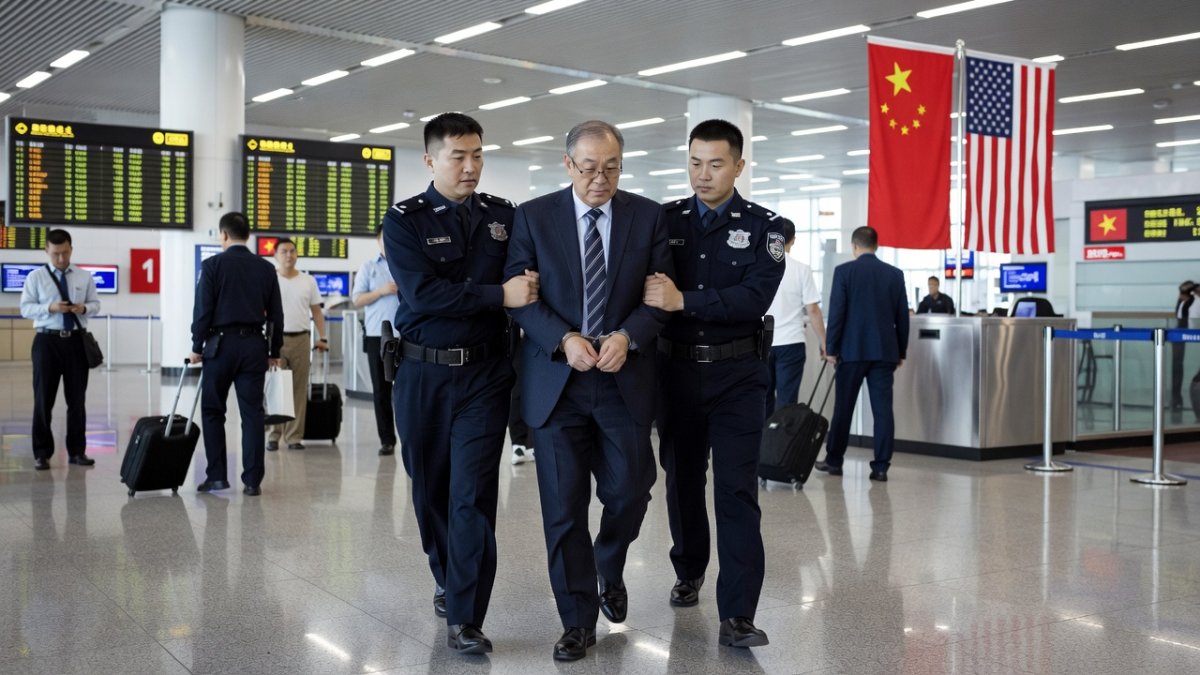
China's foreign ministry has confirmed the arrest of a US scholar, accusing him of spying and endangering Chinese national security. This development marks an uncommon instance of China detaining a US citizen on such charges, drawing attention to the handling of individuals engaged in research near sensitive border areas. The arrest occurred in early June, with the individual reportedly taken into custody at an airport in Kunming, a city that borders Myanmar.
Further details remain limited, yet the confirmation from official channels underscores Beijing's emphasis on protecting national security interests. The case involves U Min Zin, identified as a director at a think tank focused on Myanmar, whose activities reportedly included analysis of regional dynamics. Such detentions, while rare for American nationals, reflect a consistent priority on safeguarding borders and information flows in areas of strategic concern.
Profile and Activities of the Detained Scholar
U Min Zin serves as executive director at the Myanmar Institute for Strategic and Policy Studies, a Thailand-based think tank that examines China's role in Myanmar, including interests, relations, and regional influence. He is also a PhD student at the University of California Berkeley. His background includes participation as a student activist in Myanmar's 1988 pro-democracy movement, after which he fled to Thailand and later studied in the United States before returning to Myanmar in 2010.
Currently residing primarily in Thailand while dividing time between the US and Myanmar, U Min Zin was in Kunming attending a meeting on 3 June when the arrest took place. He had been scheduled to speak at a conference in Kathmandu later in the month. Reports indicate that his family has expressed concern and is coordinating with the US consulate in Guangzhou to seek further information on the matter.
Diplomatic Timing and Bilateral Context
The detention comes just weeks after US President Donald Trump's visit to Beijing, during which he met with Chinese President Xi Jinping and received a grand welcome. This sequence of events occurs against the backdrop of Myanmar's President Min Aung Hlaing preparing to visit Beijing later next week. Beijing maintains a close relationship with Myanmar's junta, the military government that assumed power following the 2021 coup.
These overlapping timelines suggest that the arrest may intersect with ongoing diplomatic engagements involving multiple parties. The proximity to high-level visits indicates that security considerations in border regions can influence the pace and nature of bilateral discussions, even as economic and political ties continue to develop.
China's Strategic Priorities in Myanmar
China's approach to Myanmar aligns with broader objectives of expanding regional influence and ensuring stability along its southwestern frontier. The focus on national security in Kunming, a key gateway to Myanmar, highlights efforts to monitor activities that could affect cross-border relations or information regarding Chinese interests in the country. The think tank's research emphasis on these very topics places its personnel under particular scrutiny when operating near the border.
By maintaining close ties with Myanmar's current leadership, Beijing seeks to advance infrastructure connectivity and resource cooperation under frameworks such as the Dual Circulation strategy. The arrest reinforces the message that foreign researchers examining these linkages must navigate heightened oversight, particularly when their work touches on sensitive geopolitical questions.
Regional and Geopolitical Ramifications
The case carries implications for ASEAN member states, where Myanmar's internal situation already presents challenges to collective diplomacy. Neighbouring countries may observe how China balances security enforcement with the need to sustain economic partnerships across the region. For the EU and Global South actors engaged in Myanmar-related initiatives, the detention serves as a reminder of the leverage Beijing holds through its established channels with the junta.
Second-order effects could include adjustments in how international think tanks and academic institutions plan fieldwork near Chinese borders. Researchers may adopt more cautious approaches to scheduling meetings in cities like Kunming, weighing the risks of national security interpretations against the value of direct engagement. This dynamic illustrates the strategic calculus at play: China prioritises control over narratives and access in areas of influence, while other powers assess their own diplomatic and research footprints accordingly.
Future Outlook for Research and Diplomacy
As the situation develops, the handling of this case will likely inform expectations for similar incidents involving foreign nationals conducting policy-oriented work. The emphasis on endangering national security suggests that activities perceived as intersecting with intelligence concerns will continue to face strict measures. At the same time, the scheduled visit by Myanmar's president indicates that high-level political exchanges are expected to proceed, potentially providing avenues for quiet discussions on consular matters.
Overall, the episode underscores the intersection of domestic security priorities with foreign policy objectives in China's neighbourhood. Stakeholders across think tanks, universities, and governments will need to factor these realities into their planning, recognising that border regions remain zones of particular sensitivity amid expanding regional engagement.
By Prof. Marcus Chen, Staff WriterThis article was produced with AI-assisted research and editorial support. Reporting is based on sources cited in the article.
What's Your Reaction?
 Like
0
Like
0
 Dislike
0
Dislike
0
 Love
0
Love
0
 Funny
0
Funny
0
 Wow
0
Wow
0
 Sad
0
Sad
0
 Angry
0
Angry
0

World Politics Analyst at Global1.News. Based in Beijing, covering US-China relations, global trade, and geopolitical strategy. Brings deep analytical perspective to the power dynamics shaping international affairs.













Comments (0)