
US-Iran Talks Begin at Bürgenstock as Hormuz Stays Closed
In a recent BBC News report, US Vice President JD Vance arrived in Switzerland for high-stakes talks with Iran as Tehran announced the closure of the Strait of Hormuz, accusing Washington of failing to rein in Israeli strikes on Lebanon that violated the terms of a fragile interim peace deal. US-Iran Talks Begin at Bürgenstock as Tehran Keeps Strait of Hormuz Closed Bürgenstock
In a recent BBC News report, US Vice President JD Vance arrived in Switzerland for high-stakes talks with Iran as Tehran announced the closure of the Strait of Hormuz, accusing Washington of failing to rein in Israeli strikes on Lebanon that violated the terms of a fragile interim peace deal.
US-Iran Talks Begin at Bürgenstock as Tehran Keeps Strait of Hormuz Closed
Bürgenstock, Switzerland – 21 June 2026 — US Vice President JD Vance arrived at the Bürgenstock resort on Sunday for high-stakes negotiations with Iran, as Tehran announced the closure of the Strait of Hormuz in protest over what it described as US and Israeli violations of the Islamabad Memorandum of Understanding signed just four days earlier.

Summit at Bürgenstock — A Fragile Diplomatic Moment
The Bürgenstock resort, a Qatari-owned luxury property perched above Lake Lucerne in central Switzerland, has become the unlikely setting for one of the most consequential diplomatic encounters in recent years. On Sunday, June 21, 2026, the Swiss foreign ministry confirmed that the venue had been prepared under tight security protocols to host the US and Iranian delegations. The mountain air, normally associated with alpine retreats, now carries the weight of urgent negotiations over energy routes, regional ceasefires, and nuclear questions. The resort’s isolated location, surrounded by pristine alpine scenery, offers a deliberate contrast to the high-stakes issues at hand, allowing delegations to focus without the distractions of major capitals.
Vice President JD Vance arrived by motorcade from Zurich, accompanied by a small team of State Department officials. He stated that the talks would seek progress on the nuclear issue and a Lebanon ceasefire, adding that he could remain at the resort for a day or two. Iranian Speaker of Parliament Mohammad Bagher Ghalibaf led the opposing delegation, which included the deputy oil minister and the governor of Iran’s central bank. Their presence signaled Tehran’s emphasis on sanctions relief and the restoration of oil revenues rather than purely political discussions. The choice of Ghalibaf, a figure with deep ties to Iran’s legislative and security apparatus, underscores how seriously Tehran views the economic dimensions of any potential agreement.
Pakistan and Qatar served as mediators, with representatives from both countries already on site. This marks the second direct meeting between Vance and Iranian officials since the conflict began; the first occurred in Islamabad. The stakes could not be higher: the future of the interim ceasefire, the reopening of the world’s most important oil chokepoint, and the prevention of a wider regional war. The atmosphere remains tense following Tehran’s announcement of the Strait of Hormuz closure the previous day. Observers interpret the presence of energy and financial specialists on the Iranian side as evidence that Tehran is prioritizing concrete economic deliverables over abstract political gestures.
Ghalibaf’s role as speaker of parliament gives the Iranian side formal legislative weight, while the inclusion of energy and banking officials underscores that any agreement must deliver tangible economic relief. Vance’s decision to add Lebanon to an agenda originally centered on strait reopening, sanctions lifting, and asset unfreezing illustrates how Israel’s ongoing campaign has become inseparable from the broader US-Iran framework. Both sides understand that failure here could collapse the Islamabad MoU signed only four days earlier. The compressed timeline leaves little room for miscalculation, with each delegation acutely aware that domestic constituencies are watching closely.
Strait of Hormuz — The Oil Weapon Returns
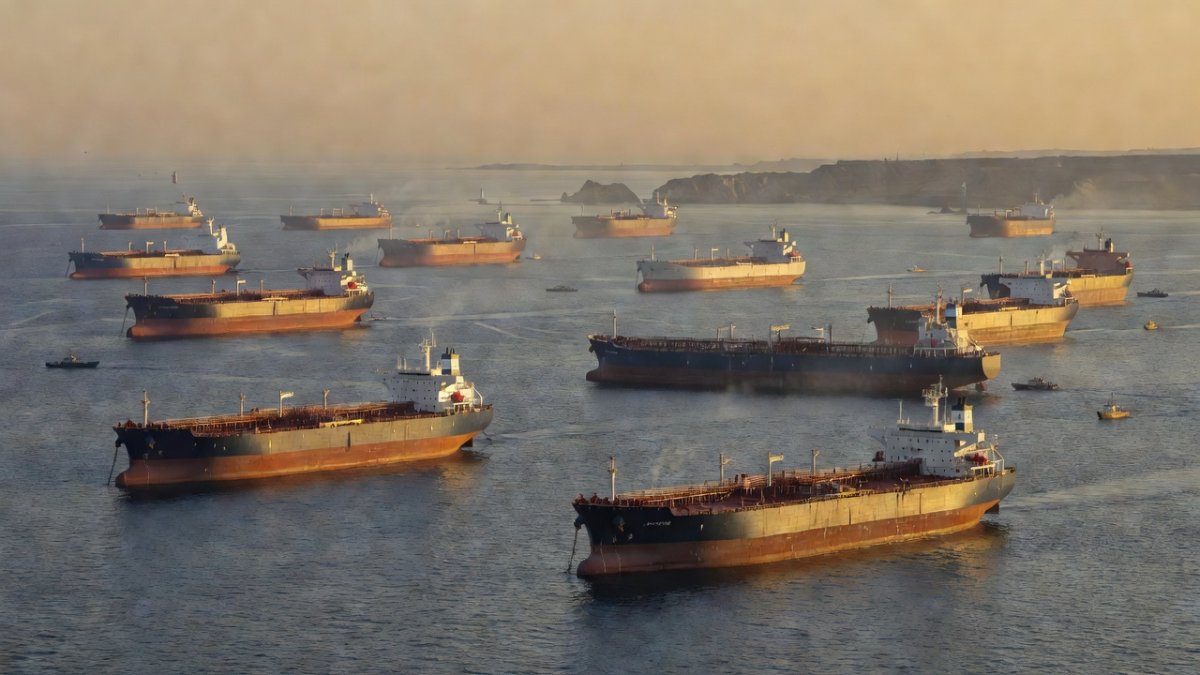
On Saturday, June 20, Iran announced the closure of the Strait of Hormuz to all maritime traffic. The Islamic Revolutionary Guard Corps implemented the measure, citing Israeli airstrikes on Lebanon as a direct violation of the Islamabad MoU. Iranian officials argued that Washington had failed to restrain its ally, thereby nullifying the first clause of the agreement that required a ceasefire on all fronts, including Lebanon. The decision to deploy the Revolutionary Guard rather than regular naval forces signals Tehran’s intent to frame the closure as a defensive measure tied to regional security rather than routine maritime policy.
Under the MoU signed on June 17, the United States had lifted its naval blockade on Iranian oil ports and agreed to the unfreezing of $6 billion in assets held in Qatar. Iran’s re-closure of the strait therefore represents a dramatic reversal of the very concessions that had briefly eased tensions. Twenty percent of global oil supplies pass through this narrow waterway, making any sustained shutdown an immediate shock to energy markets worldwide. The narrow geography of the strait, barely 21 miles wide at its narrowest point, amplifies the leverage any single actor can exert over global energy flows.
Donald Trump warned that the world stood four weeks from running out of sufficient refined oil, predicting a worldwide recession if the strait remained closed. Analysts suggest this signals renewed Iranian leverage over global supply chains, with potential price spikes already appearing in futures markets. The economic consequences extend far beyond the region, affecting importers from Europe to East Asia and raising the prospect of renewed inflationary pressures. European refiners, already navigating the aftermath of earlier supply disruptions, now face the added uncertainty of rerouting tankers around the Cape of Good Hope, a costly and time-consuming alternative.
The US-Iran diplomatic framework now faces its first major test. While the MoU had envisioned a phased reopening tied to sanctions relief, Iran’s move demonstrates that enforcement remains fragile. Observers note that any prolonged disruption could shift bargaining power back toward Tehran, complicating efforts to stabilize both energy prices and the Lebanon front. The episode also highlights how quickly initial confidence in the Islamabad agreement has given way to renewed skepticism about its durability.
Tehran's Political Crisis — Khamenei vs. the Negotiations
Inside Iran, the Bürgenstock talks have exposed sharp divisions at the highest levels. Mahmoud Nabavian, a prominent critic of the negotiations, appeared on state television to claim that the current discussions are “fundamentally different” from the conditions approved by Supreme Leader Mojtaba Khamenei. His broadcast was abruptly cut short, and reports indicate that legal action has been threatened against him. A senior Islamic Republic of Iran Broadcasting official reportedly resigned in the aftermath. The abrupt interruption of the broadcast itself became a talking point among Iranian political observers, illustrating the sensitivity surrounding any perceived challenge to the Supreme Leader’s authority.
Supreme Leader Khamenei published a letter stating that he opposed the talks but permitted them out of deference to President Masoud Pezeshkian, provided that the interests of the axis of resistance, including Hezbollah, remained protected. Nabavian further claimed that Khamenei had sent correspondence three times to limit the scope of negotiations, emphasizing Iran’s monopoly on Strait of Hormuz management and the right to collect tolls from vessels. These public references to private correspondence reveal the extent to which internal debates are spilling into the open, an unusual development in a system that normally prizes unity.
This public breach of discipline is extraordinary in Iranian politics, where such disputes are normally confined to closed sessions. It reveals deep fractures between the negotiation faction aligned with Pezeshkian and hardline elements who view any concession as a threat to Iran’s strategic posture. The episode underscores the narrow political space available to Iranian negotiators at Bürgenstock. Even limited progress on sanctions relief risks being portrayed domestically as a surrender of core principles.
Foreign Ministry spokesperson Esmail Baghaei confirmed that Iran would meet the mediators in the morning before holding a four-way session with the United States in the afternoon. The internal turmoil, however, raises questions about whether any agreement reached in Switzerland can survive domestic scrutiny in Tehran. The resignation of the broadcasting official further illustrates how even mid-level functionaries are being drawn into the political crossfire.
Pezeshkian Defends the Deal
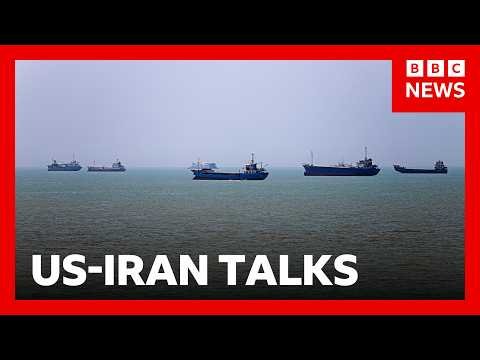
President Masoud Pezeshkian has moved quickly to defend the Islamabad MoU, declaring that “all provisions of the memorandum are in our favour.” He highlighted the return of $6 billion in frozen assets from Qatar and asserted that Donald Trump’s language had shifted “180 degrees” from earlier threats to a recognition of Iranian rights. Pezeshkian also noted that Benjamin Netanyahu was the first to express dissatisfaction with the negotiations, presenting Israeli opposition as evidence of the deal’s value to Iran. By framing the agreement in terms of tangible financial returns and diplomatic validation, Pezeshkian seeks to build a domestic constituency that sees the talks as a net gain rather than a retreat.
The president’s public stance reflects the delicate balancing act required to maintain momentum while the Supreme Leader’s office signals conditional tolerance. By emphasizing economic gains and the protection of Hezbollah interests, Pezeshkian seeks to frame the talks as consistent with Khamenei’s red lines. Yet the presence of Nabavian’s challenge on state media demonstrates that this framing remains contested within Iran’s power structures. The president’s repeated references to Netanyahu’s displeasure serve as a rhetorical device to rally nationalist sentiment around the negotiations.
Tehran’s delegation at Bürgenstock, led by Mohammad Bagher Ghalibaf and supported by energy and banking officials, is therefore operating under intense domestic pressure. Any outcome must demonstrably advance sanctions relief without appearing to compromise core strategic positions. The inclusion of the central bank governor in the delegation suggests that technical discussions on asset transfers and banking channels will occupy significant time alongside higher-level political exchanges.
What Comes Next — Nuclear, Lebanon, and the 60-Day Clock
The MoU established a 60-day window for comprehensive negotiations on Iran’s nuclear program. JD Vance expressed hope that the Bürgenstock meetings would produce progress on this issue, with the International Atomic Energy Agency expected to play a monitoring role. At the same time, the Lebanon dimension remains unresolved, as Israeli strikes continue and Hezbollah forces respond in kind. The 60-day clock creates a sense of urgency that both sides are attempting to leverage, though interpretations of what constitutes meaningful progress differ sharply.
The central question is whether the United States can deliver on its implicit commitment to restrain Israel. Iranian officials have made clear that the first clause of the MoU, requiring a ceasefire on all fronts, must be honored before further steps on sanctions or asset releases can advance. Failure to achieve this linkage risks collapsing the entire framework. The interplay between the nuclear file and the Lebanon ceasefire has become the central test of whether the Islamabad agreement can evolve beyond its initial, limited scope.
Russia has been watching these developments closely. Any resolution that affects Iranian oil exports directly influences Moscow’s own energy leverage in global markets, particularly as European buyers seek alternatives to Russian supplies. The Kremlin’s position as an informal observer adds another layer of complexity to the already crowded diplomatic table. European diplomats have privately noted that any sustained closure of the strait would force difficult choices between maintaining sanctions on Russia and securing alternative energy supplies.
The implications for the broader international order are significant. Success at Bürgenstock could stabilize energy flows and prevent wider conflict, while failure could trigger an energy crisis, renewed regional escalation, and the collapse of the first structured US-Iran diplomatic channel in years. The next 48 hours will be decisive in determining whether the fragile diplomatic opening can withstand the accumulated pressures from multiple fronts.
The Bürgenstock talks represent a critical juncture. If JD Vance and Mohammad Bagher Ghalibaf can secure concrete steps on the Lebanon ceasefire and sanctions relief, the fragile ceasefire could hold and the Strait of Hormuz could reopen. If not, the world faces an energy crisis, potential regional war escalation, and the collapse of the first US-Iran diplomatic framework in decades. The next 48 hours will be decisive.
By Irina Volkov, Staff Writer
This article was produced with AI-assisted research and editorial support. Reporting is based on sources cited in the article.
What's Your Reaction?
 Like
0
Like
0
 Dislike
0
Dislike
0
 Love
0
Love
0
 Funny
0
Funny
0
 Wow
0
Wow
0
 Sad
0
Sad
0
 Angry
0
Angry
0
Russia/Eastern Europe Correspondent at Global1.News. Covering Russian politics, energy, security, and the shifting dynamics of the post-Soviet space. Provides clear-eyed analysis on one of the world's most opaque regions.













Comments (0)