
Ukraine Strikes Crimean Titan Chemical Plant — Russia's Explosive Trap Exposed
The Night Ukraine Took Out Crimea's Chemical Giant In the early hours of June 13, 2026, Ukraine's Unmanned Systems Forces carried out a precision drone operation against the Crimean Titan chemical plant in Armiansk, occupied Crimea. The strike unfolded over the night of June 12-13 and delivered 23 confirmed hits across the facility, according to reports from Ukrinform and the K
The Night Ukraine Took Out Crimea's Chemical Giant
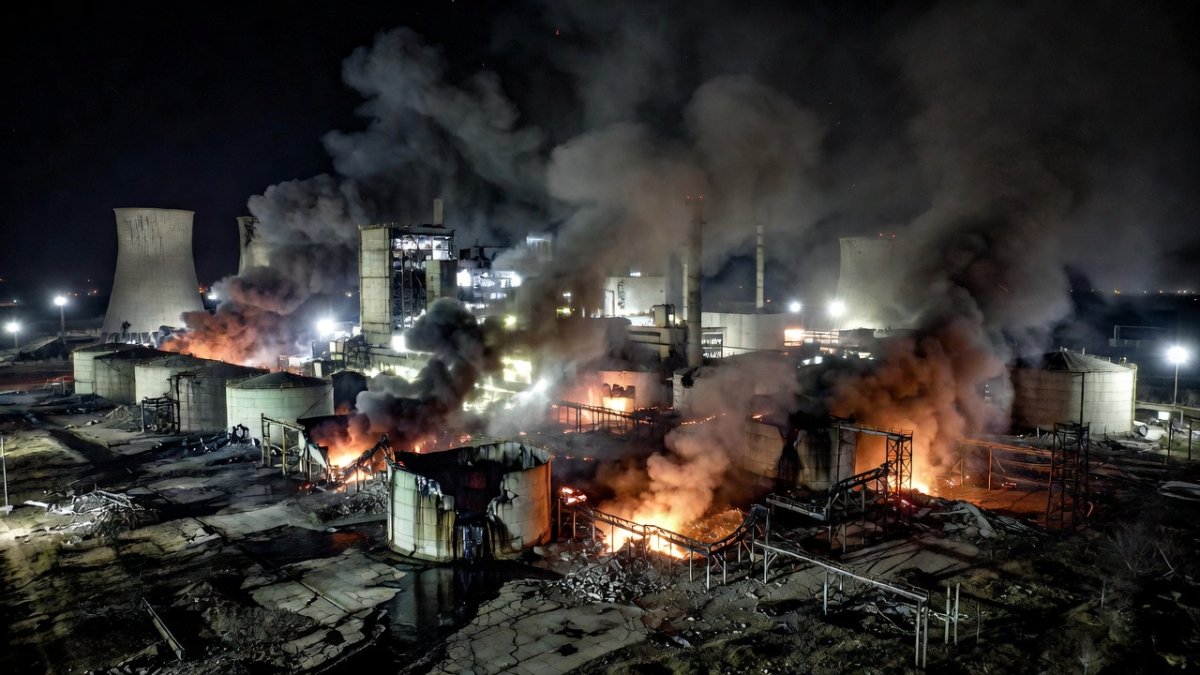
In the early hours of June 13, 2026, Ukraine's Unmanned Systems Forces carried out a precision drone operation against the Crimean Titan chemical plant in Armiansk, occupied Crimea. The strike unfolded over the night of June 12-13 and delivered 23 confirmed hits across the facility, according to reports from Ukrinform and the Kyiv Independent. Production at the site had already been partially halted in the days before the attack, limiting immediate output but not removing the strategic value of the target.
Official statements from Ukrainian military sources describe the operation as a coordinated effort by drone units under the Unmanned Systems Forces. Madyar, commander of one of the USF drone units, released footage of the strikes shortly afterward. The video shows multiple impacts on storage tanks, processing buildings, and rail infrastructure inside the perimeter. Analysts reviewing the material noted consistent patterns of damage consistent with loitering munitions and heavier strike drones.
The Largest Chemical Plant in Eastern Europe
Crimean Titan stands as the largest chemical facility in Eastern Europe. It produces titanium dioxide, sulfuric acid, and mineral fertilizers, with an annual sulfuric acid capacity listed at 532 tons in operational records cited by Nasha Niva and Militarnyi.com. The plant draws on local raw materials and has long served industrial supply chains across the region. Its location in Armiansk places it roughly 100 kilometers from the administrative border with mainland Ukraine, making it a deep target for long-range unmanned systems.
Before the June strike, the facility operated under Russian control since 2014. Production volumes fluctuated with sanctions and logistics constraints, yet the plant retained its role as a key node in chemical manufacturing. Ukrainian intelligence assessments, referenced in Kyiv Post coverage, indicated that output included materials with both civilian and potential dual-use applications.
Russia's Explosive Trap: A Chernobyl in Waiting
Ukrainian officials have repeatedly warned that Russian forces rigged sections of the Crimean Titan plant with explosives. Briefings from the General Staff, echoed in Newsweek reporting, stated that detonation of those charges could release toxic plumes of sulfuric compounds and other chemicals, creating an environmental incident exceeding the scale of Chernobyl in affected territory. The warnings centered on the risk to civilian populations in northern Crimea and southern Ukraine depending on wind patterns.
Independent monitoring groups tracked the placement of explosive devices at key storage and reaction units over the preceding months. Production slowdowns observed in May and early June aligned with these reports, suggesting deliberate preparation rather than routine maintenance. The June 12-13 strike occurred against this backdrop, with Ukrainian planners citing the need to neutralize both the industrial capacity and the immediate explosive threat.
Drone Footage That Leaves No Room for Denial
Madyar, the Unmanned Systems Forces drone-unit commander, published the strike footage on official channels within hours of the operation. The clips document sequential hits on the main production halls and adjacent tank farms. Frame-by-frame analysis by open-source researchers confirmed the sequence and ruled out earlier claims of staged material. The release included timestamps and geolocation data that matched satellite imagery released later by commercial providers.
Multiple outlets, including the Kyiv Independent and Militarnyi.com, cross-verified the video against thermal signatures and structural changes visible in subsequent commercial satellite passes. No contradictory evidence has emerged from Russian state media channels, which have so far limited commentary to general statements about air-defense activity.
Why This Strike Changes the Equation in Crimea
The destruction of Crimean Titan removes a major industrial asset from Russian logistics in occupied Crimea. With 23 confirmed impacts and the entire plant reported destroyed, the facility can no longer contribute to chemical supply chains or serve as a potential environmental hazard under Russian control. Ukrainian sources emphasize that the operation followed standard targeting protocols focused on military-industrial nodes.
Regional analysts note that the strike extends the reach of Ukraine's unmanned systems deeper into occupied territory than previous operations. The involvement of the Unmanned Systems Forces, rather than conventional aviation, underscores the growing role of specialized drone formations in long-range strikes. Continued monitoring by outlets such as Ukrinform and Nasha Niva will track any secondary effects on local industry and environmental conditions in the weeks ahead.
The Environmental Time Bomb Russia Planted
That plant sat like a loaded gun pointed straight at the Black Sea. Twenty-three confirmed hits from Ukrainian drones turned the entire facility into twisted metal and burning residue. But the real danger was never just the strike itself. Russian forces had wired the site with explosives in advance, a deliberate trap meant to trigger a chemical catastrophe if Ukrainian forces advanced. Think Chernobyl-level fallout, only this time the poison would be sulfuric acid clouds and titanium dioxide dust raining across Crimea and beyond.
Madyar, the commander of the Unmanned Systems Forces, dropped the drone footage that proved it. The video shows secondary explosions ripping through storage tanks long after the initial attack. Production of those critical chemicals has been partially halted, yet the rigged charges remain a ticking threat. One spark, one miscalculation, and the environmental damage could poison farmland, fisheries, and drinking water for generations. This was never a clean military target. It was a calculated ecological minefield left behind by retreating occupiers.
Supply Chain Warfare: Cutting Off Russia's Industrial Lifelines
Destroying Eastern Europe's largest chemical plant does more than crater buildings. It severs a vital artery in Russia's war machine. Titanium dioxide feeds everything from aircraft coatings to missile components. Sulfuric acid underpins fertilizer production and industrial explosives. With the facility offline, Moscow's ability to sustain prolonged operations takes a direct hit. Supply lines that once flowed smoothly from occupied territory now face shortages that ripple through their defense factories.
This is modern warfare stripped to its economic core. Ukraine isn't just hitting tanks and troops. They're dismantling the hidden infrastructure that keeps Russian industry humming. Partial production halts already reported mean delays in everything from paint for naval vessels to chemicals for artillery shells. The strike forces Russia to reroute scarce resources, exposing vulnerabilities in a system already strained by sanctions. Every drone that found its mark tightens the noose around the Kremlin's industrial backbone.
The Kremlin's Silence Speaks Volumes
Listen to the quiet. After the footage went public, Russian state media offered almost nothing. No triumphant claims of rapid repairs. No loud denials of the explosive rigging. Just awkward silence. That absence tells its own story. Admitting the plant was booby-trapped would confirm they were willing to poison their own claimed territory. Denying it risks looking weak as evidence piles up from independent sources like UKRINFORM and the Kyiv Independent.
The lack of response reveals calculation. Moscow knows the world is watching the drone evidence released by Madyar. They understand that any acknowledgment could trigger international outrage over environmental terrorism. So they stay mute, hoping the story fades before the full scope of the trap becomes undeniable. That silence is an admission in itself.
What This Means for the War Going Forward
Crimea just became even more precarious for Russian forces. With the chemical plant neutralized, their logistical edge in the south erodes further. Ukrainian strikes like this one shift the tempo, proving that deep strikes can dismantle not only military assets but the civilian infrastructure propping up the occupation. Expect more pressure on supply routes and a growing reluctance from Russian commanders to hold exposed positions.
The broader message is clear. Ukraine's unmanned systems are rewriting the rules of engagement. Each successful operation like this one compounds the cost of aggression, forcing Russia to choose between defending static assets or abandoning them. The war is moving into a phase where industrial targets carry the same weight as battlefield victories. Momentum builds with every verified hit.
What You Can Do: Don't Let This Story Fade
Share the drone footage. Push the verified reports from the Kyiv Post and Newsweek into every feed you control. Contact your representatives and demand continued support for Ukraine's defensive capabilities. These strikes succeed because the world pays attention. When attention wanes, the environmental risks and supply chain damage get buried under the next headline.
Stay engaged. Follow updates from Nasha Niva and other independent outlets tracking the aftermath. The plant may be destroyed, but the rigged explosives and halted production remain active threats. Your voice keeps pressure on those who would rather this story disappear. The fight continues one informed conversation at a time.
By Jessica Ali, Lead Anchor — Global 1 News
This article was produced with AI-assisted research and editorial support. Reporting is based on sources cited in the article.
What's Your Reaction?
 Like
0
Like
0
 Dislike
0
Dislike
0
 Love
0
Love
0
 Funny
0
Funny
0
 Wow
0
Wow
0
 Sad
0
Sad
0
 Angry
0
Angry
0

Editor-in-Chief at Global1.News. Atlanta-based journalist who cuts through the BS and tells it like it is. Lead anchor, host, and the voice you hear when the spin stops and the truth starts.













Comments (0)