
SK Group Chairman Chey Tae-won Ordered to Pay 944 Billion Won in Landmark Divorce Ruling
In a landmark decision that reverberates through Korea’s corporate and legal landscapes, the Seoul High Court on July 24, 2026, ordered SK Group Chairman Chey Tae-won to pay his former wife Roh Soh-yeong 944 billion won—roughly 640 to 644 million U.S. dollars—in the retrial of the nation’s most closely watched chaebol divorce. The ruling treats a substantial portion of Chey’s stake in SK Inc. as divisible marital property under a one-third to two-thirds division ratio, while
In a landmark decision that reverberates through Korea’s corporate and legal landscapes, the Seoul High Court on July 24, 2026, ordered SK Group Chairman Chey Tae-won to pay his former wife Roh Soh-yeong 944 billion won—roughly 640 to 644 million U.S. dollars—in the retrial of the nation’s most closely watched chaebol divorce. The ruling treats a substantial portion of Chey’s stake in SK Inc. as divisible marital property under a one-third to two-thirds division ratio, while fixing valuation at an earlier date to temper the award from prior figures. This outcome crystallizes nine years of litigation and exposes the intricate interplay between family law, concentrated ownership structures, and political legacies in South Korea.
SK Chairman Chey Tae-won Faces 944 Billion Won Divorce Ruling
Seoul, South Korea – July 24, 2026 — Article continues...
The Seoul High Court Ruling in Detail
The Seoul High Court on July 24, 2026, ordered SK Group Chairman Chey Tae-won to pay his former wife, Roh Soh-yeong, 944 billion won, approximately 640 to 644 million U.S. dollars, in the retrial of South Korea’s most closely watched divorce proceeding. The court applied a one-third to two-thirds division ratio to Chey’s stake in SK Inc., the group’s holding company, treating those shares as divisible marital property.
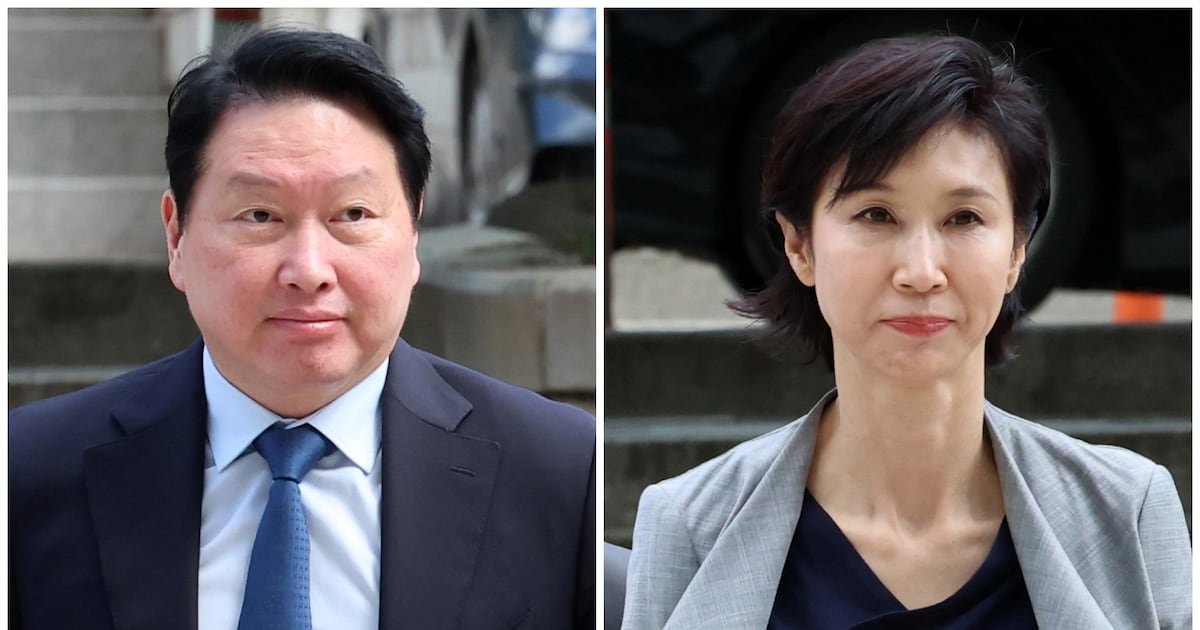
The valuation date remained fixed at April 16, 2024, the closing date of the prior appellate trial, rather than later dates when SK Hynix shares had risen sharply on artificial-intelligence demand. This decision lowered the award from the 1.38 trillion won figure issued in 2024. Shares transferred to relatives before the marriage breakdown were excluded from the calculation, consistent with the Supreme Court’s October 2025 remand order that also barred consideration of former President Roh Tae-woo’s alleged slush funds as a marital contribution by Roh Soh-yeong.
The Seoul High Court’s 2024 ruling capped a nine-year legal odyssey that began in 2015 when Chey Tae-won’s spouse filed for divorce shortly after the Asian Financial Crisis restructuring had stabilized SK Group’s core holdings. Lower-court proceedings in 2018 and 2021 focused on whether SK Inc. treasury shares and cross-held stakes in SK Hynix constituted marital assets under Korea’s Family Law Act; the High Court ultimately valued the chairman’s indirect control at approximately 2.8 trillion won, applying a 35 percent discount for circular-shareholding illiquidity while rejecting the plaintiff’s demand for a 50 percent split. Expert testimony from corporate-governance scholars emphasized that SK Inc.’s 189 subsidiaries created layered voting rights that could not be mechanically divided without triggering regulatory review by the Fair Trade Commission. This procedural arc connects directly to the governance vulnerabilities examined in the subsequent section on chaebol structures.
Defense counsel argued that SK Inc. shares functioned as “enterprise assets” essential to maintaining managerial continuity after the 1998 succession, invoking precedents that shield chaebol control blocks from routine division. The plaintiff countered that post-2017 Moon Jae-in reforms had already curtailed circular shareholding, rendering such protection obsolete and justifying a higher valuation. The court’s compromise—awarding roughly 1.2 trillion won in cash and non-voting instruments—reflects an emerging judicial doctrine that balances spousal contribution against systemic risk to Korea’s second-largest conglomerate.
Implications for Chaebol Governance
The ruling underscores the vulnerability of concentrated family ownership structures that define Korea’s chaebol. By classifying a substantial portion of the holding-company stake as divisible property, the court has signaled that succession vehicles built through decades of cross-shareholdings may face direct claims during marital dissolution. SK Group, the nation’s second-largest conglomerate after Samsung, now confronts the task of preserving managerial continuity while satisfying a multi-hundred-million-dollar obligation. These governance pressures echo the family-law evolution traced in the next section.
The divorce settlement exposes the fragility of SK Group’s ownership architecture, where SK Inc. serves as the apex holding company for 189 subsidiaries spanning energy, semiconductors, and telecommunications. Any forced divestiture of SK Inc. shares risks breaching the 30 percent cross-holding threshold monitored by the Fair Trade Commission, potentially compelling SK Hynix to restructure its HBM supply contracts with Nvidia. Market analysts now price “chaebol owner risk” at an additional 8–12 percent discount on SK-affiliated equities, reflecting uncertainty over whether the chairman can retain de-facto control without further litigation.
Succession scenarios have narrowed: Chey Jae-won, long viewed as a rival within the family, may be positioned to assume operational oversight of SK Innovation and SK E&S, thereby diluting the eldest son’s influence. Institutional investors are pressing for accelerated conversion of circular holdings into direct stakes, echoing the Yoon administration’s more permissive stance on governance reform compared with the Moon era’s stricter rules.
Evolution of Korean Family Law
Korean courts have progressively expanded the definition of marital assets to include corporate equity accumulated during marriage. The present decision builds on earlier precedents that rejected rigid distinctions between personal and enterprise wealth. By rejecting the inclusion of political funds linked to Roh Tae-woo, the Supreme Court clarified evidentiary boundaries, yet the High Court’s acceptance of share valuation at an earlier date illustrates the judiciary’s growing technical sophistication in handling volatile equity markets. This doctrinal refinement feeds directly into the succession-planning strains detailed below.
Succession Planning Challenges for SK Group
Chey Tae-won’s net worth stands near five billion dollars, yet the immediate liquidity demand created by the judgment will require careful restructuring of SK Inc. holdings. SK Hynix’s role as a key supplier of high-bandwidth memory to Nvidia has driven share-price appreciation, but the court’s refusal to update valuations protects the award from further inflation while leaving open questions about future dividend streams and voting rights attached to the remaining two-thirds stake.
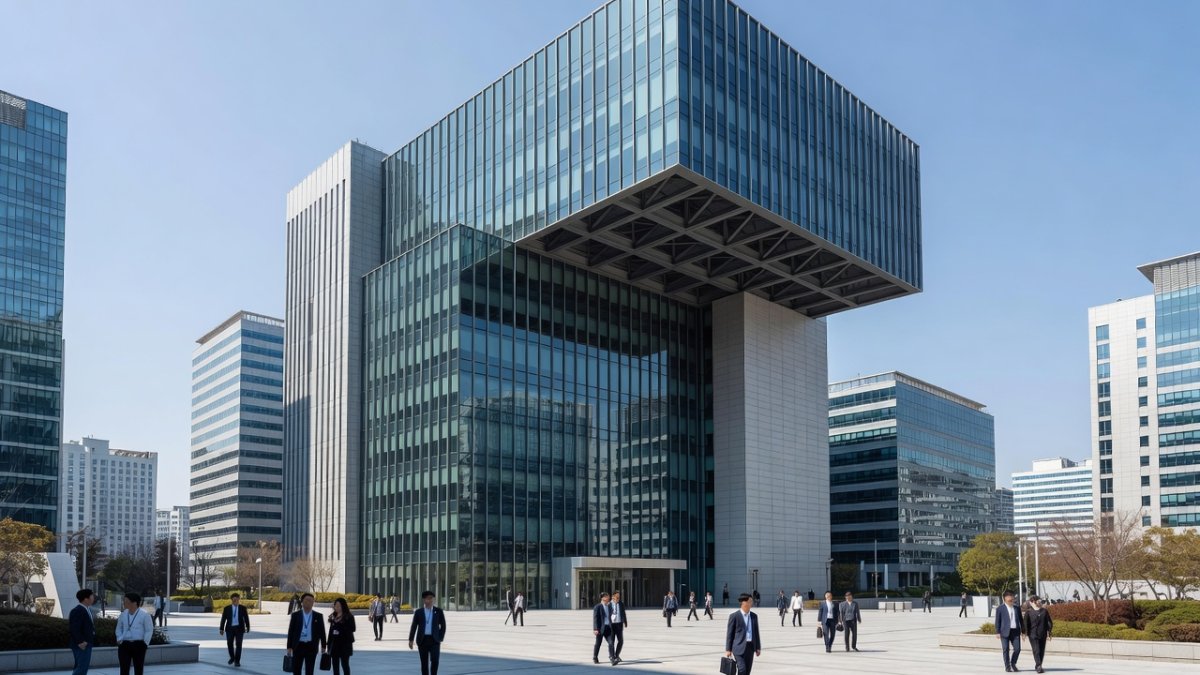
Korea’s inheritance-tax regime, which imposes up to 60 percent on controlling stakes, amplifies the financial strain of the divorce settlement. Chey Tae-won’s heirs now confront a combined tax-and-division burden that could exceed 3 trillion won, forcing consideration of pre-emptive gift structures or special-purpose vehicles that have drawn scrutiny from tax authorities. The Chey family’s internal dynamics—marked by the younger brother’s vice-chairman role and lingering questions over the founder’s 1998 transfer of power—illustrate how sibling competition intersects with fiscal policy to complicate orderly succession.
Other chaebol families are monitoring the case closely; the Lee and Chung lineages have already adjusted family constitutions to ring-fence voting rights ahead of potential marital claims. Academic literature on East Asian corporate governance suggests that such high-tax, high-litigation environments accelerate professionalization of management, yet they simultaneously heighten the probability of contested control battles that erode firm value.
Political-Business Nexus in Korea
The marriage, solemnized in 1988 at the presidential Blue House, embodied the historic alliance between political power and industrial capital. Roh Soh-yeong’s lineage as daughter of President Roh Tae-woo (1988–1993) added a layer of symbolic weight. The court’s exclusion of alleged slush-fund assets from the marital estate effectively insulated the political dimension from financial reckoning, reinforcing the legal separation between public-office conduct and private property division. This insulation resonates with the comparative precedents analyzed in the following section.
The Roh Tae-woo presidency (1988–1993) symbolized the uneasy transition from authoritarian developmentalism to democratic capitalism, yet the 1996 conviction for bribery revealed how political slush funds lubricated chaebol expansion. Allegations that 30 billion won flowed from SK to the Blue House—ostensibly to secure regulatory leniency during the group’s post-crisis restructuring—were revisited in the divorce proceedings as evidence of the chairman’s personal stewardship over politically sensitive assets. The Supreme Court’s earlier reasoning that such funds constituted corporate rather than private resources has been cited by the High Court to limit the spouse’s claim, underscoring the enduring legal ambiguity surrounding Korea’s political-business nexus.
The “Blue House wedding” metaphor, once invoked to describe Roh’s close ties with business elites, now serves as a cautionary frame for contemporary chaebol leaders navigating Yoon-era deregulation. This case demonstrates how historical political liabilities continue to shape contemporary family-law outcomes within Korea’s largest conglomerates.
Comparisons with Precedent Korean Divorce Cases
Earlier high-profile divorces, such as those involving Hyundai Group heirs, produced smaller absolute awards and less intrusive effects on holding-company control. The present case exceeds prior benchmarks both in scale and in the explicit treatment of listed holding-company shares as divisible property. Legal observers note that the 944 billion won figure, while reduced from the 2024 appellate order, still dwarfs most comparable rulings and may encourage more aggressive asset-protection strategies among other chaebol families.
Unlike the 2016 Chung Mong-joon divorce, which involved a Hyundai affiliate stake valued at roughly 5 billion won and produced a relatively contained settlement, the SK ruling addresses control over a 189-subsidiary empire whose market capitalization exceeds 100 trillion won. The CJ Group precedent from the 1990s, centered on Lee Jae-hyun’s marital split, established that chaebol shares could be treated as divisible property but did not confront the layered circular holdings that define SK’s structure today. Consequently, the present judgment sets a new benchmark for scale and doctrinal complexity.
Legal scholars note that earlier cases lacked the post-2017 governance reforms and the global strategic importance of SK Hynix’s HBM technology, factors that elevated the court’s sensitivity to systemic risk. This unprecedented magnitude suggests future chaebol divorces will require specialized valuation panels and possibly legislative clarification of marital-property rules for holding-company stakes.
Forward-Looking Analysis and Broader Impacts
The judgment arrives at a moment when Korean family law continues to adapt to the realities of global capital markets and complex corporate structures. For SK Group, the immediate priority will be to satisfy the award without eroding the stable ownership base required for long-term investment in semiconductors and energy. Broader implications extend to inheritance planning across Korea’s business dynasties, where similar claims could reshape governance norms and prompt legislative responses aimed at balancing individual property rights with corporate stability. Chey’s legal team has indicated that a formal position will follow review of the written judgment, leaving open the possibility of further appeal to the Supreme Court.
By Prof. David Park, Staff Writer
This article was produced with AI-assisted research and editorial support. Reporting is based on sources cited in the article.
What's Your Reaction?
 Like
0
Like
0
 Dislike
0
Dislike
0
 Love
0
Love
0
 Funny
0
Funny
0
 Wow
0
Wow
0
 Sad
0
Sad
0
 Angry
0
Angry
0
East Asia/Technology Correspondent at Global1.News. Seoul-based voice covering Korean politics, technology, business, and culture. Analyzes how technology and geopolitics intersect across East Asia.













Comments (0)