
Putin Admits Economic Harm From Ukraine Drone Strikes
Putin Admits Economic Damage From Ukrainian Drone Strikes, Vows to Bolster Air Defenses in Russia Day Address The Russia Day Address in Context The Russia Day address delivered by President Vladimir Putin on June 12 took place amid notably scaled-back national celebrations across the country. Traditional elements such as large-scale concerts, air shows, and military parades wer
Putin Admits Economic Damage From Ukrainian Drone Strikes, Vows to Bolster Air Defenses in Russia Day Address
The Russia Day Address in Context
The Russia Day address delivered by President Vladimir Putin on June 12 took place amid notably scaled-back national celebrations across the country. Traditional elements such as large-scale concerts, air shows, and military parades were absent this year according to reports from RFE/RL. This subdued atmosphere reflected ongoing security concerns and the broader context of the conflict with Ukraine. The address coincided with the St. Petersburg International Economic Forum known as SPIEF which was also underway during the same week. Officials emphasized continuity in state messaging despite these adjustments to public events. The overall security environment remained heightened with authorities prioritizing protection of key infrastructure sites. Observers noted that the combination of reduced festivities and the timing of SPIEF created a distinct backdrop for Putin's remarks on the war effort.
Security measures were particularly visible in major cities where additional checkpoints and surveillance were implemented in the days leading up to the holiday. This approach aligned with the government's focus on preventing disruptions during national observances. The absence of festive displays did not diminish the official narrative presented in the address itself. Instead it underscored the serious tone adopted by leadership regarding external threats. SPIEF provided an additional platform for economic discussions that intersected with the themes raised on Russia Day. Analysts pointed out that the scaled-back events signaled a shift in priorities toward wartime resilience rather than celebration. The security atmosphere permeated public life and influenced how the address was received domestically.
Putin's speech addressed both domestic audiences and international observers through its emphasis on national unity and defense capabilities. The context of ongoing drone activity shaped the urgency conveyed in his statements. RFE/RL coverage highlighted how the lack of traditional spectacles contrasted with previous years' observances. This change occurred as SPIEF brought together business leaders and officials to discuss sanctions and trade issues. Heightened security protocols extended to transportation hubs and energy facilities nationwide. The overall environment suggested a leadership intent on projecting stability amid external pressures. Such conditions framed the address as a strategic communication effort rather than a purely ceremonial one.
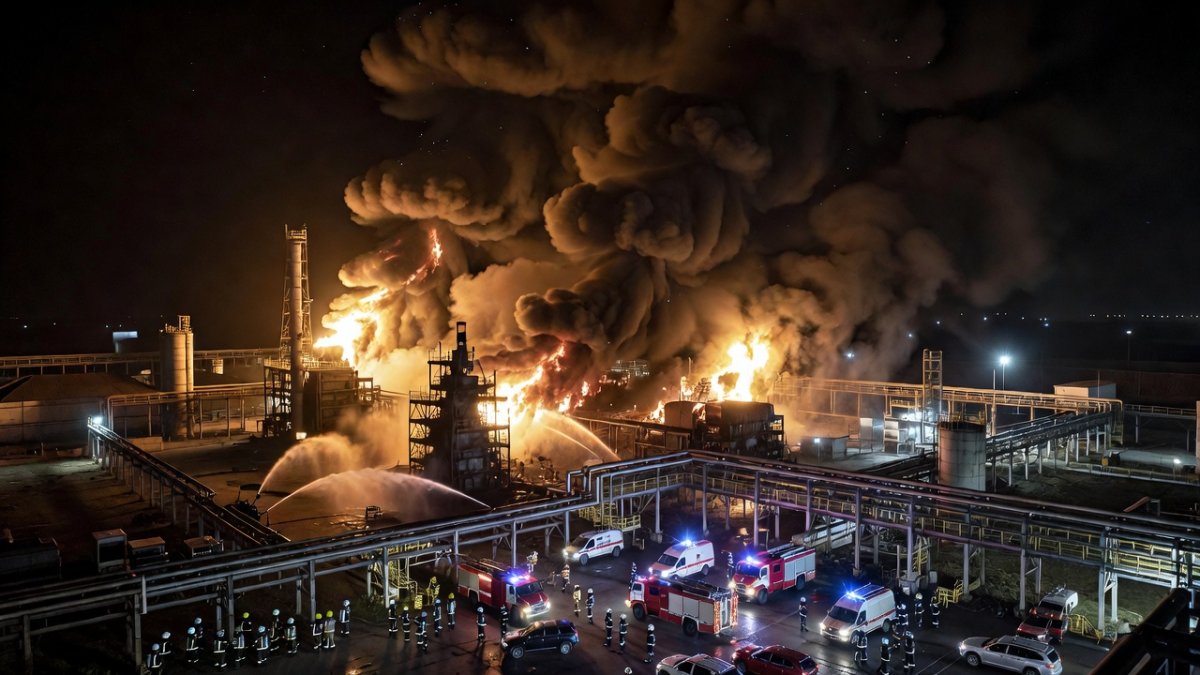
Illustrative image: emergency response at a Russian oil refinery following a drone strike (Global 1 News)
Putin's Unusual Admission of Economic Damage
In his Russia Day address President Putin made an unusual direct reference to the economic impact of Ukrainian drone strikes on Russian territory. He stated that the attacks were intended to sow confusion among the population and damage the national economy. This acknowledgment stood out because it came from a leader who has typically minimized such effects in public statements. Putin specifically mentioned a strike on an oil refinery located approximately one thousand kilometers from the front lines. He conceded that economic damage had occurred but quickly added that everything was restored in short order. The phrasing suggested an attempt to balance transparency with reassurance about state responsiveness. Observers viewed this admission as notable given the pattern of downplaying infrastructure vulnerabilities in prior communications.
The oil refinery strike highlighted the extended reach of Ukrainian drone operations deep into Russian territory. Putin framed these actions as deliberate efforts to disrupt economic stability rather than purely military targets. His claim that restoration happened rapidly aimed to counter perceptions of prolonged disruption. Yet the very mention of damage represented a departure from earlier messaging that focused solely on successful interceptions. This approach may have been intended to prepare the public for continued challenges in the energy sector. The quote about sowing confusion directly addressed the psychological dimension of the strikes alongside their material consequences. Such details provided insight into how leadership sought to contextualize recent events during the address.
Restoration efforts were presented as evidence of effective crisis management by Russian authorities. Putin contrasted the intent behind the strikes with the actual outcomes to emphasize resilience. The admission occurred against the backdrop of multiple similar incidents reported in preceding weeks. By including this element in the Russia Day speech the president signaled awareness of public concerns over fuel supplies and industrial output. The balance between acknowledging harm and asserting quick recovery formed a central thread in that portion of the remarks. This unusual candor invited scrutiny regarding the true scale of economic effects. Overall the statements reflected a calculated effort to maintain credibility while addressing tangible impacts.
The Human Toll: Temryuk Port Strike
A drone strike in the Temryuk district of Krasnodar region on June 13 resulted in one death and three injuries according to local reports. The incident occurred at a maritime terminal near the Sea of Azov close to the Kerch Strait. Governor Veniamin Kondratyev confirmed the casualties and described the activation of emergency response protocols. The attack targeted infrastructure in southern Russia underscoring the vulnerability of port facilities in the area. Ninety-six firefighters were deployed to combat the resulting blaze at the terminal site. This response highlighted the scale of resources required to manage such incidents. The human cost added a personal dimension to the broader pattern of drone activity reported in the region.
Governor Kondratyev's statements emphasized the rapid mobilization of emergency services following the strike. The fire at the maritime terminal posed significant challenges for containment efforts over an extended period. Local authorities coordinated with federal agencies to address both the immediate damage and potential environmental risks. The proximity to the Kerch Strait raised additional concerns about regional transportation routes. Three wounded individuals received medical attention while investigations into the drone's origin proceeded. The single fatality marked a tragic outcome that resonated in official communications. Such events illustrated the direct effects on civilian and operational personnel in affected zones.
Russian air defenses reported shooting down one hundred seventy-seven drones during the overnight period surrounding the Temryuk incident. This figure encompassed multiple regions and demonstrated the intensity of the aerial activity. The strike on the port facility occurred amid this larger wave of attempted incursions. Kondratyev's updates provided ongoing details about firefighting operations and damage assessments. The deployment of nearly one hundred personnel underscored the labor-intensive nature of the response. Communities in Krasnodar region faced disruptions as a result of the security measures implemented afterward. The combination of casualties and infrastructure damage contributed to a somber assessment of the strike's consequences.
Air Defense Failures and the Second Call for Improvement
President Putin issued a second call within a single month for improvements to Russia's air defense systems during the Russia Day address. This repeated emphasis pointed to persistent challenges in countering drone threats effectively. An earlier appeal had been noted in coverage by NPR on June 5 indicating a pattern of official concern. The timing suggested that recent strikes had exposed gaps in existing defensive capabilities. Systemic issues such as coverage of remote energy sites and response times appeared to factor into the need for upgrades. Putin framed the requirement as essential for protecting critical infrastructure nationwide. The recurrence of this directive within weeks highlighted the urgency attributed to the matter by leadership.
The NPR report from early June documented Putin's initial public request for enhanced air defenses amid rising drone incidents. By the time of the Russia Day speech the issue had not been resolved to the satisfaction of authorities. This second mention served to reinforce priorities for military and industrial planners. Challenges included the vast territory requiring protection and the evolving tactics employed by Ukrainian forces. Officials acknowledged that current systems faced difficulties in intercepting all incoming threats. The call for improvement extended beyond immediate fixes to longer-term modernization efforts. Such statements reflected an internal recognition of vulnerabilities that required sustained attention.
Systemic challenges in air defense operations were evident from the frequency and reach of recent strikes. Putin linked the need for better systems directly to economic security in his address. The interval between the two calls indicated that progress had not kept pace with the threat level. Military analysts noted that resource allocation and technological adaptation remained key hurdles. The emphasis on this topic during a national holiday address elevated its visibility within domestic discourse. Improvements were positioned as a strategic necessity rather than an optional enhancement. Overall the repeated directive underscored ongoing difficulties in achieving comprehensive protection against aerial attacks.
Historical Comparisons and Propaganda Framing
During the Russia Day address President Putin drew comparisons between the current Western stance and historical figures such as Napoleon and Hitler. These references were intended to frame the conflict as part of a long-standing pattern of external aggression against Russia. The historical analogies served to rally domestic support by invoking familiar narratives of resilience. Putin also claimed that Russian forces numbered seven hundred thousand personnel engaged in the Ukraine operation. This figure was presented as evidence of sustained military commitment despite international pressures. The domestic messaging aimed to portray the war effort as both defensive and historically justified. Such framing aligned with longstanding propaganda themes used throughout the conflict.
The comparison to Napoleon and Hitler positioned the West as repeating past mistakes in confronting Russian interests. Putin used these examples to underscore the perceived inevitability of Russian victory in prolonged struggles. The troop claim of seven hundred thousand reinforced the narrative of overwhelming force and determination. Domestic audiences received these elements as part of a cohesive message about national strength. The address integrated historical references with contemporary assessments of the military situation. This approach sought to maintain public morale amid reports of infrastructure attacks. Observers noted that the propaganda elements were calibrated to address both internal and external perceptions.
Domestic messaging throughout the speech emphasized continuity with Russia's historical experiences of repelling invasions. The seven hundred thousand personnel statistic was cited without detailed breakdown of deployment or losses. Such claims contributed to the overall portrayal of a robust defense posture. The historical comparisons helped contextualize current challenges within a broader timeline of national endurance. Putin avoided direct discussion of setbacks by focusing on these larger themes. The strategy reflected standard practices in wartime communication by Russian leadership. Overall the framing reinforced the official line that external forces were engaged in familiar patterns of hostility.
Fuel Crisis and Impact on Ordinary Russians
Analysis from the Atlantic Council indicated that Ukrainian strikes on energy infrastructure were contributing to a developing fuel crisis within Russia. Facilities operated by major companies such as Gazprom and Rosneft had been affected by repeated drone activity. Regional shortages began to emerge in several areas as supply chains faced disruptions. Ordinary Russians encountered higher prices and limited availability at local stations as a result. The Atlantic Council assessment linked these outcomes directly to the cumulative effect of targeted attacks. Government responses focused on rerouting supplies and prioritizing certain sectors. The impact extended beyond industry to everyday mobility and economic activity for citizens.
Gazprom and Rosneft facilities represented key nodes in the national energy network that came under pressure from strikes. Shortages reported in various regions highlighted the uneven distribution of effects across the country. Ordinary Russians experienced these developments through longer waits and increased costs for fuel. The Atlantic Council noted that the crisis could intensify if defensive measures did not improve. Officials attempted to mitigate public concern by emphasizing restoration efforts similar to those mentioned by Putin. Regional variations in shortage severity depended on proximity to affected sites and transportation options. The situation illustrated how infrastructure damage translated into tangible hardships for the population.
The fuel crisis intersected with broader economic pressures stemming from sanctions and wartime conditions. Atlantic Council experts pointed to the vulnerability of refining capacity as a central factor. Gazprom and Rosneft worked to stabilize output following incidents but faced ongoing risks. Ordinary citizens in affected regions adapted by conserving fuel or seeking alternative sources. The analysis suggested that sustained strikes could lead to more widespread disruptions in the coming period. Government messaging sought to downplay long-term consequences while acknowledging immediate challenges. This dynamic revealed the connection between military actions and domestic economic realities for average Russians.
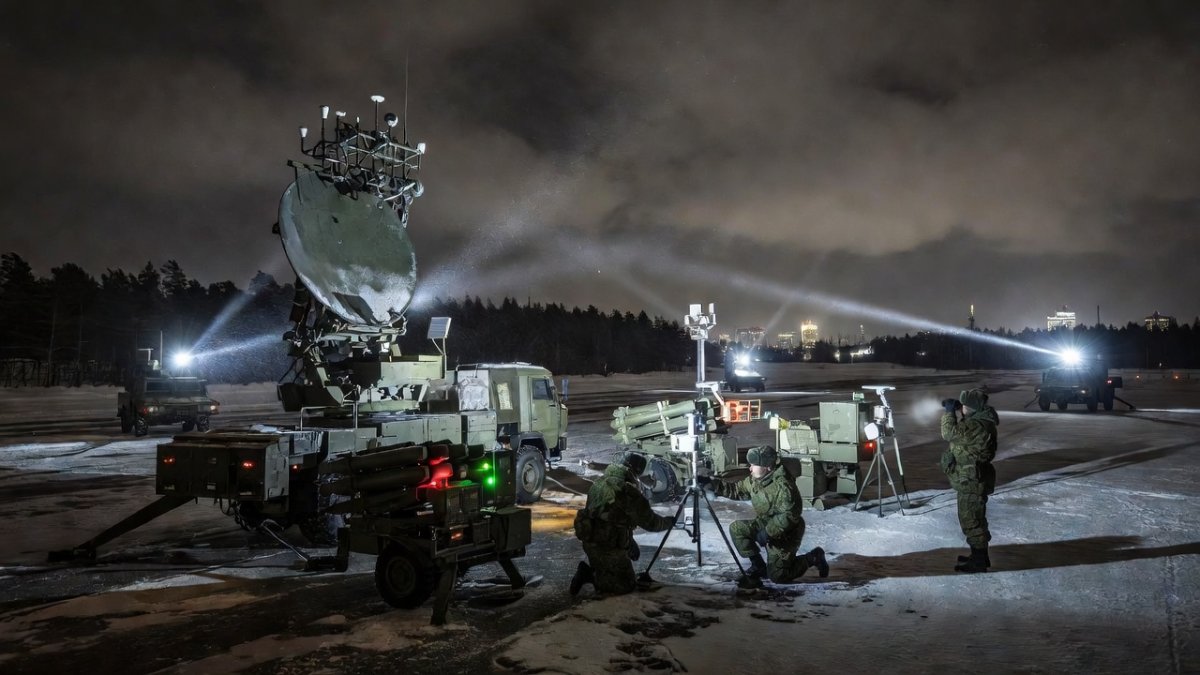
Illustrative image: Russian air defense systems (Global 1 News)
The Zelensky Talks Rejection and Diplomatic Stalemate
President Putin rejected any prospect of talks with Ukrainian President Volodymyr Zelensky during the Russia Day address. This stance came after more than four years of active conflict with no resolution in sight. The rejection reinforced the diplomatic stalemate that has characterized relations between the two countries. Putin presented the position as consistent with Russia's security requirements and territorial objectives. The absence of negotiation pathways left the military situation as the primary arena for developments. International observers viewed the statement as further evidence of entrenched positions on both sides. The prolonged duration of the war added weight to the implications of this diplomatic closure.
The four-plus years of war provided the backdrop against which Putin's rejection of talks was delivered. No immediate end appeared likely given the mutual unwillingness to compromise on core issues. The stalemate extended to multiple international forums where mediation attempts had previously faltered. Putin's remarks emphasized that negotiations would only occur under conditions favorable to Russian interests. This approach sustained the focus on battlefield outcomes rather than diplomatic engagement. The rejection aligned with earlier statements from Moscow regarding the legitimacy of the current Ukrainian leadership. Observers noted that such positions contributed to the overall sense of impasse in resolving the conflict.
With talks off the table the conflict entered another phase of attrition without clear diplomatic off-ramps. The more than four years of fighting had already produced significant casualties and economic strain on all parties. Putin's dismissal of Zelensky as a negotiating partner closed one potential avenue for de-escalation. The stalemate persisted amid continued military operations and infrastructure attacks. Domestic audiences in Russia received the message as a firm commitment to prevailing through strength. International efforts to broker discussions faced repeated setbacks under these conditions. The overall situation pointed to an extended period of confrontation without resolution on the horizon.
The Wider Axis: North Korea and Chechnya
North Korea issued a strong denunciation of a joint statement by Seoul and the European Union regarding Russia's ties with Pyongyang. The statement was described as a clear infringement on North Korean sovereignty according to official responses. This development occurred as Kim Jong Un continued to provide troops and munitions in support of Russian operations. The alliance between the two countries formed part of a wider network assisting Moscow in the conflict. Timing of these statements coincided with the Russia Day period and related security developments. The support from North Korea added an international dimension to Russia's military posture. Such partnerships illustrated the expanding scope of involvement beyond the immediate region.
Adam Kadyrov the eighteen-year-old son of Chechen leader Ramzan Kadyrov received his second Hero of Chechnya medal on June 12. The first medal had been awarded at age fifteen for an incident involving a Quran-burning suspect. The timing of the second honor aligned with the Russia Day address and national observances. This recognition highlighted the role of Chechen forces within the broader Russian military structure. Kadyrov family prominence in supporting the war effort received further official endorsement through the award. The event contributed to narratives of loyalty and contribution from regional allies. Such developments reinforced the internal support network available to the central government.
The combination of North Korean material assistance and Chechen personnel involvement created a multifaceted support structure for Russian efforts. Kim's provision of troops and munitions complemented other forms of international backing. The Kadyrov medal presentation served as a domestic signal of unity among key allies. North Korea's response to external criticism defended the bilateral relationship with Russia as sovereign affairs. These elements together demonstrated the wider axis of cooperation sustaining the conflict. Regional and international partners played distinct but complementary roles in the overall strategy. The developments during this period underscored the interconnected nature of these alliances.
Analysis and Implications
The Russia Day address and surrounding events pointed to several implications for Russia's position in the ongoing conflict. Putin's admission of economic damage alongside calls for air defense improvements suggested recognition of vulnerabilities that could affect long-term sustainability. The fuel crisis analyzed by the Atlantic Council indicated mounting pressure on domestic resources and public tolerance. Rejection of talks with Zelensky implied that military developments would continue to drive the trajectory without diplomatic intervention. These factors combined to create a picture of a leadership managing multiple fronts simultaneously.
Economic pressures from strikes on energy infrastructure raised questions about the durability of current strategies. The repeated emphasis on air defense enhancements reflected systemic challenges that required substantial investment and time. Regional shortages affecting ordinary Russians could influence internal stability if they persisted or worsened. The involvement of partners such as North Korea and Chechen forces provided short-term support but also introduced dependencies. Historical framing in the address aimed to maintain cohesion but faced tests from tangible impacts on daily life. The overall situation suggested that economic and defensive strains would shape future decision-making.
Going forward the sustainability of Russia's approach depended on addressing the identified gaps in protection and supply chains. Continued drone activity could exacerbate fuel issues and infrastructure damage according to available analyses. The diplomatic stalemate left few alternatives to prolonged engagement on current terms. Support networks involving North Korea and regional allies offered reinforcement yet carried their own complexities. Economic pressure on ordinary citizens represented a potential constraint on indefinite continuation of the conflict. Observers anticipated that leadership would prioritize defensive upgrades while navigating these interconnected challenges. The developments around Russia Day provided indicators of the difficulties ahead in maintaining the present course.
By Irina Volkov, Staff Writer
This article was produced with AI-assisted research and editorial support. Reporting is based on sources cited in the article.
What's Your Reaction?
 Like
0
Like
0
 Dislike
0
Dislike
0
 Love
0
Love
0
 Funny
0
Funny
0
 Wow
0
Wow
0
 Sad
0
Sad
0
 Angry
0
Angry
0
Russia/Eastern Europe Correspondent at Global1.News. Covering Russian politics, energy, security, and the shifting dynamics of the post-Soviet space. Provides clear-eyed analysis on one of the world's most opaque regions.











Comments (0)