
UK Unemployment Falls to 4.9% Amid Weakening Labour Market
**Keywords:** UK unemployment, ONS labour market, job vacancies, wage growth, Bank of England, Pat McFadden, Andrew Bailey, private sector pay, economic stability, youth unemployment, Resolution Foundation Surprise Drop in Unemployment Rate Bucks Forecasts The Office for National Statistics reported that the UK unemployment rate fell to 4.9% in the three months to April 2026, d
Surprise Drop in Unemployment Rate Bucks Forecasts
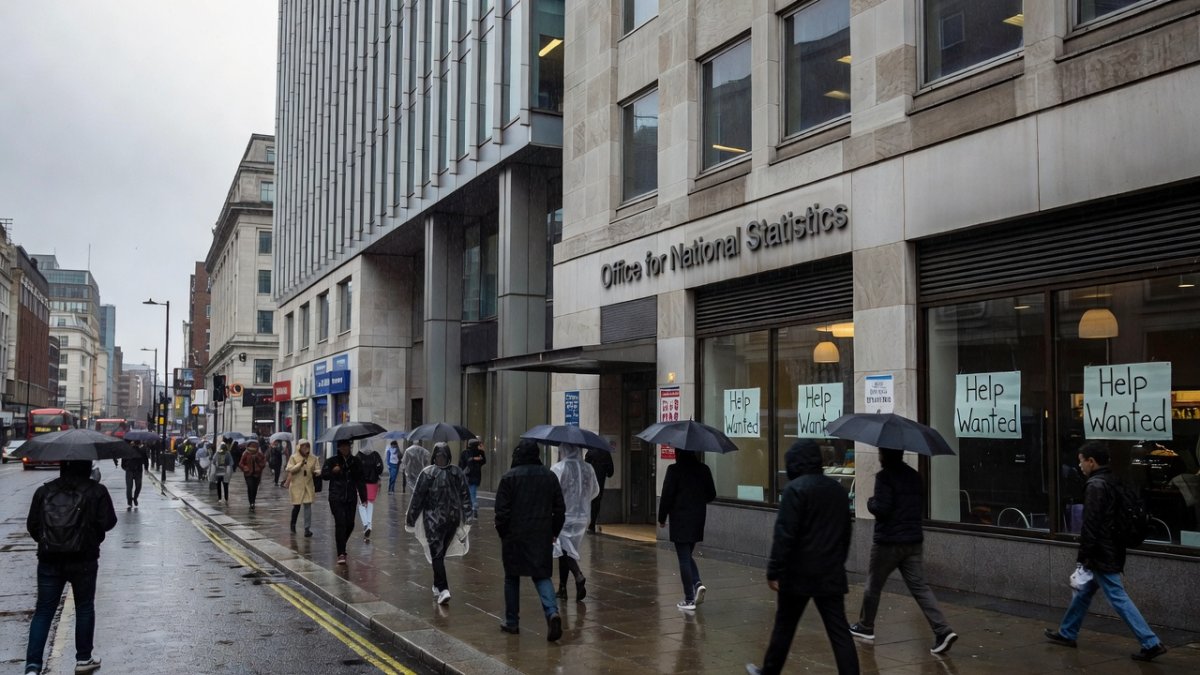
The Office for National Statistics reported that the UK unemployment rate fell to 4.9% in the three months to April 2026, down from 5% in the previous period. Economists had widely expected the figure to hold steady at 5%, making the decline a notable surprise. This development comes as the labour market shows clear signs of cooling across multiple indicators.
(Global 1 News)
PAYE payroll employment rose by just 2,000 in May, following a sharp 53,000 fall in April. New hires dropped to just under 540,000 in April, the lowest monthly total since March 2021. These figures highlight a marked slowdown in recruitment activity that is now affecting both professional services and consumer-facing sectors.
The professional services sector recorded the largest fall in vacancies, while retail and hospitality also experienced significant reductions. Such trends point to employers across the economy becoming increasingly selective about expanding their workforces. The data underscores how the post-pandemic recovery in employment has lost momentum.
Job Vacancies Sink to Five-Year Low
Job vacancies fell to 707,000 in the March to May 2026 period, marking a five-year low and the weakest reading since February to April 2021 during the height of the pandemic. The total was 19,000 lower than the previous three-month period. ONS director Liz McKeown stated that firms are “becoming more cautious about taking on new staff”.
This sustained decline in vacancies reflects broader hesitancy among businesses facing elevated costs and uncertain demand. The drop has been particularly pronounced in sectors that previously drove post-pandemic hiring. Employers appear to be prioritising retention over expansion.
Low response rates in the Labour Force Survey have drawn criticism regarding data quality, yet the consistent direction across multiple ONS measures supports the picture of a cooling market. The economy also shrank slightly in April as the impact of the war in Iran began to filter through.
Wage Growth Diverges Between Public and Private Sectors
Average weekly earnings excluding bonuses rose 3.4% in the latest period, unchanged from March. Including bonuses, the figure stood at 4.4%, flat on the previous month after an upward revision from 4.1%. Public sector pay growth reached 5.1%, while private sector regular pay growth slowed to 2.9%, the lowest rate in five and a half years according to Liz McKeown.
James Smith of ING noted that the private sector annual rate has now fallen below 3%, with the three-month annualised rate even lower. Real wages for private sector workers have been falling since last October, and analysts expect the squeeze to continue in the months ahead.
Resolution Foundation senior economist Louise Murphy highlighted rising irregular work, including self-employment and zero-hours contracts, alongside higher youth unemployment. These patterns suggest that the labour market is weaker than it has been in recent years, with many workers reluctant to push for higher pay amid economic uncertainty.
Bank of England Holds Interest Rates at 3.75%
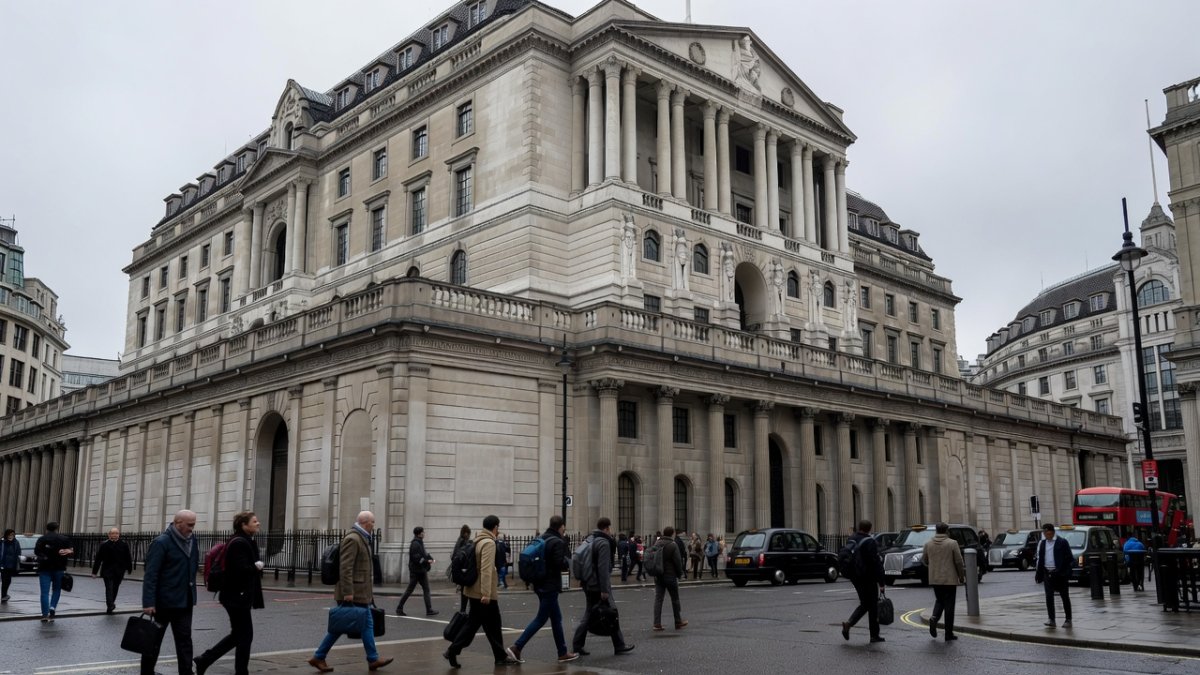
On the same day the ONS released its labour market statistics, the Bank of England kept interest rates unchanged at 3.75%. Governor Andrew Bailey cited steady CPI inflation at 2.8% in May, still above the 2% target. The ongoing war in Iran has weighed on both business and consumer confidence, though oil prices have fallen following hopes of a US-Iran peace deal.
Bailey described the oil price decline as “encouraging” while warning that “inflationary pressure in the pipeline” remains. Ashley Webb of Capital Economics observed that the labour market is still very weak and likely to weaken further. James Smith of ING added that the Bank “cannot totally ignore” public sector pay but remains more focused on private sector trends.
The decision reflects the Bank’s cautious approach as it balances persistent inflation against clear signs of labour market softening. Markets will now watch closely for any further deterioration in employment data that could influence future rate decisions.
(Global 1 News)
Government Insists Economic Plan Remains on Track
Work and Pensions Secretary Pat McFadden welcomed the fact that 400,000 more people are in work than this time last year. He acknowledged ongoing instability in the Middle East is causing uncertainty but maintained that the government has “the right economic plan for growth and stability in a volatile world”.
Ministers have pointed to the unemployment rate falling below 5% as evidence that their approach is delivering results. However, the sharp slowdown in private sector hiring and the continued weakness in vacancies present a more mixed picture for the months ahead.
The government faces pressure to address rising youth unemployment and the growth of insecure work. With the next set of ONS figures due in July, ministers will be keen to demonstrate that the labour market can stabilise despite global headwinds.
Analysts and Workers Highlight Growing Pressures
Yael Selfin of KPMG UK noted that the labour market is “not proving a major contributor to inflation”, with workers increasingly reluctant to push for higher pay. Shazia Ejaz of the Recruitment and Employment Confederation warned that global pressures and domestic political uncertainty are making employers hesitant to commit to hiring.
Jamie Younger, who owns a pub in south London, explained that minimum wage rises combined with increased National Insurance contributions have made hiring more difficult. His establishment now only recruits experienced staff, limiting opportunities for young people entering their first jobs.
Student worker Sasha Swann described feeling “extremely fearful” about entering the workforce after university. These personal accounts illustrate how the national statistics translate into real challenges for individuals and communities across the UK, particularly in sectors reliant on entry-level recruitment.
By Erica Thornton, Staff WriterThis article was produced with AI-assisted research and editorial support. Reporting is based on sources cited in the article.
What's Your Reaction?
 Like
0
Like
0
 Dislike
0
Dislike
0
 Love
0
Love
0
 Funny
0
Funny
0
 Wow
0
Wow
0
 Sad
0
Sad
0
 Angry
0
Angry
0

US Politics and Policy Correspondent at Global1.News. Based in Washington DC, covering American politics, policy, elections, and the courts. Knows how the system works and tells you what it actually means.















Comments (0)