
Tariff Deadline Looms: Can Sheinbaum Avert Trump's 30% Before Friday?
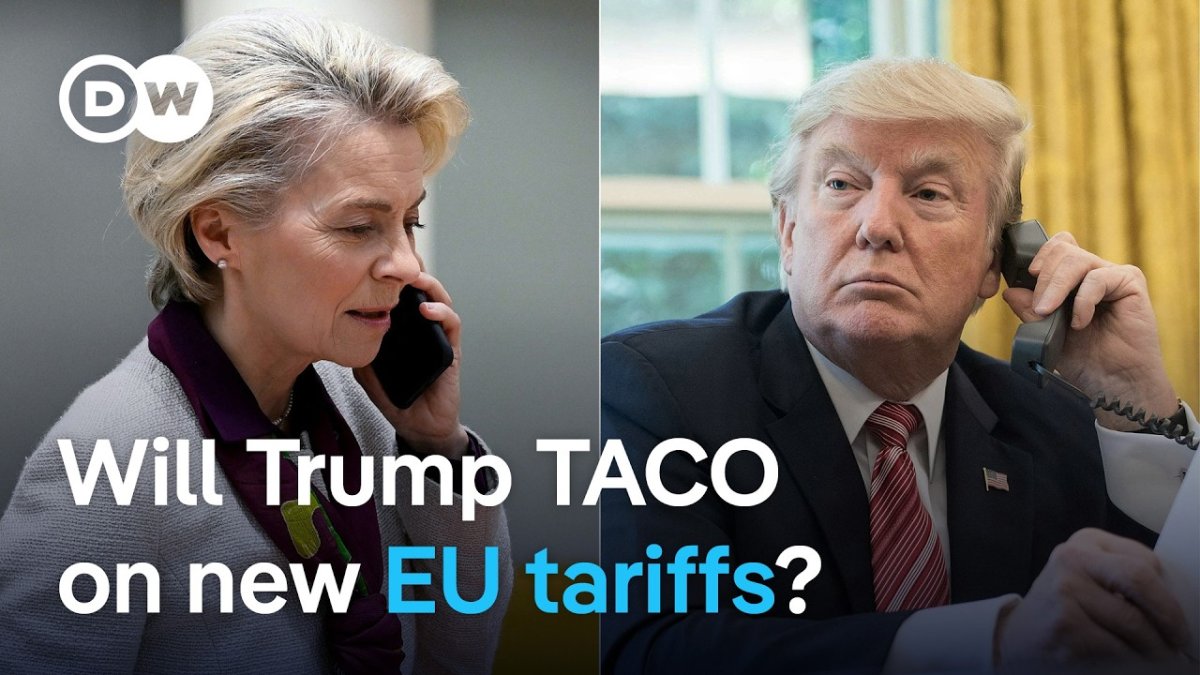
As the DW News YouTube video titled "How might the EU respond to Trump's 30% tariff threat?" outlines the escalating global trade tensions, Mexican families in states like Nuevo León and Baja California watch the August 1, 2026 deadline with growing concern. President Claudia Sheinbaum has until Friday to secure an agreement that prevents 30 percent tariffs on Mexican exports to the United States.
As the DW News YouTube video titled "How might the EU respond to Trump's 30% tariff threat?" outlines the escalating global trade tensions, Mexican families in states like Nuevo León and Baja California watch the August 1, 2026 deadline with growing concern. President Claudia Sheinbaum has until Friday to secure an agreement that prevents 30 percent tariffs on Mexican exports to the United States. These tariffs, tied to fentanyl trafficking and immigration concerns, directly threaten household incomes that rely on maquiladora jobs and cross-border commerce.
Tariff Deadline Looms: Can Sheinbaum Avert Trump's 30% Before Friday?
Mexico City, Mexico — President Claudia Sheinbaum faces a Friday, August 1, 2026 deadline to prevent 30 percent tariffs on Mexican goods entering the United States. White House officials have stated no further extensions will be granted after multiple delays since the original August 1, 2025 announcement. The peso currently trades at 17.44 per U.S. dollar, and exports to the United States represent approximately 80 percent of Mexico's total exports.
The Countdown to August 1
U.S. Commerce Secretary Howard Lutnick declared on July 26, 2026 that no extensions or grace periods would apply to trade partners after the latest deadline expires. The tariffs were first announced by President Donald Trump on August 1, 2025, citing fentanyl trafficking and immigration issues. Mexican officials have tracked seven prior extensions, each shifting the effective date forward by weeks or months.
Sheinbaum stated on July 27, 2026 during her morning press conference that an agreement could be reached this week. The White House position leaves little room for additional postponements. Mexican exporters in the automotive and electronics sectors have already begun adjusting supply contracts in anticipation of higher costs.
The timeline of extensions reveals a pattern of repeated delays since the original August 1, 2025 announcement. Mexican officials have documented seven prior postponements, each granted after bilateral talks that addressed fentanyl and migration metrics but failed to produce a permanent accord. These shifts moved the effective date from late 2025 into mid-2026, allowing exporters brief windows to adjust contracts. U.S. Commerce Secretary Howard Lutnick has repeatedly signaled that further grace periods are off the table, emphasizing enforcement of the 30 percent rate tied to security concerns.
Products most exposed include automobiles, electronics, and agricultural goods. Automotive exports, valued at over $120 billion annually, face immediate cost spikes that could disrupt just-in-time supply chains for U.S. assembly plants. Electronics components from maquiladoras in Baja California and agricultural shipments such as avocados and tomatoes from Michoacán and Sinaloa would encounter similar barriers. If no deal materializes by Friday, August 1, 2026, tariffs activate automatically, triggering higher consumer prices in the United States and potential job losses exceeding 500,000 in Mexico within months.
Sheinbaum's Strategy: Diplomacy and Leverage
Sheinbaum has maintained direct dialogue with Trump and senior U.S. officials, describing the relationship as respectful and constructive. Her administration has focused on presenting data showing Mexican cooperation on border security and fentanyl interdiction at ports of entry in Tijuana and Ciudad Juárez. Mexican negotiators have also highlighted the 2026 USMCA review scheduled for later this year as an opportunity to address U.S. concerns within existing frameworks.
During her July 27 mañanera, Sheinbaum expressed optimism that technical teams could finalize terms before the Friday cutoff. Mexican diplomats have coordinated positions with European counterparts who face identical 30 percent tariff threats. This joint approach aims to present a united front on trade diversification and regulatory alignment.
The EU-Mexico Trade Deal: A Strategic Hedge
Mexico and the European Union signed the Modernised Global Agreement in May 2026, covering commerce, political cooperation, sustainable development, and anti-corruption measures. The pact reduces tariffs on Mexican agricultural products and manufactured goods entering European markets while easing European investment rules in Mexico. Officials in Mexico City view the agreement as a concrete step toward reducing reliance on the U.S. market that absorbs 80 percent of Mexican exports.
The deal includes new chapters on labor rights and environmental standards that align with USMCA provisions. Mexican exporters of avocados, tequila, and automotive parts have already begun exploring European distribution channels. Government data shows early increases in shipments to Germany and Spain since the May signing.
The signing ceremony at Palacio Nacional in May 2026 featured President Claudia Sheinbaum and European Commission President Ursula von der Leyen exchanging documents amid formal addresses on shared values. The event highlighted commitments to sustainable development and anti-corruption, with Mexican and EU flags flanking the stage. Attendees included trade ministers from Germany, Spain, and France, underscoring the pact’s broad scope covering commerce, political dialogue, and labor standards aligned with USMCA rules.
Specific products benefiting include avocados, tequila, and automotive parts, which now enter European markets with reduced tariffs. European business reactions have been positive, with firms like Volkswagen and Airbus expressing interest in expanded Mexican operations. This agreement helps Mexico reduce U.S. dependence by opening distribution channels to Germany and Spain, where early shipment data shows a 12 percent rise since May. Diversification efforts aim to lower the current 80 percent export concentration to the United States, fostering resilience against future tariff threats.

Forced Labor Tariffs: A New Legal Frontier
The Trump administration has added Section 307 of the Tariff Act as a separate legal basis for tariffs, imposing a 10 percent rate on Mexican goods suspected of forced labor connections. This measure operates alongside the proposed 30 percent tariff and targets specific manufacturing sectors in northern Mexico. U.S. Customs and Border Protection has already detained shipments from several maquiladoras in Tamaulipas under existing forced labor orders.
Mexican labor inspectors report that factories in Monterrey and Saltillo have increased documentation requirements to demonstrate compliance. The dual tariff structure creates layered cost pressures for companies that supply both U.S. and European markets. Industry analysts calculate that combined rates could reach 40 percent on certain electronics components if both measures take effect simultaneously.
Section 307 of the Tariff Act provides a distinct mechanism for imposing duties on goods linked to forced labor, operating independently from the proposed 30 percent tariffs. Unlike broad trade measures, it requires specific evidence of labor violations and allows targeted detentions by U.S. Customs and Border Protection. This approach creates layered compliance burdens, with a 10 percent rate applied to suspect shipments alongside potential 30 percent duties.
Sectors targeted include manufacturing in northern Mexico, particularly electronics and automotive components from Tamaulipas and Nuevo León. U.S. authorities have already detained shipments from several maquiladoras under existing orders. The Mexican government response involves increased labor inspections in Monterrey and Saltillo, mandating enhanced documentation to prove compliance. Officials have coordinated with industry groups to align standards with USMCA provisions, aiming to mitigate combined tariff impacts that could reach 40 percent on certain goods.
What's at Stake for Mexican Families
Workers at maquiladoras in Ciudad Juárez and Tijuana face potential layoffs if orders decline after August 1. Remittances from these jobs support extended families across Zacatecas, Michoacán, and Oaxaca, where local economies depend on steady cross-border income. Higher prices at tianguis markets in Mexico City and Guadalajara would follow any sustained peso depreciation triggered by tariff uncertainty.
Small business owners who import U.S. components for assembly operations report already delaying equipment purchases. The 80 percent export concentration means tariff impacts would spread quickly through supply chains that employ more than 3 million Mexicans. Community organizations in border states have begun organizing information sessions on unemployment support programs.
Economic data underscores the vulnerability of Mexican households. Remittances reached $65 billion in 2025, with a significant portion originating from maquiladora wages in border states. Job figures indicate over 3 million workers in export-oriented sectors, while inflation data from INEGI shows a projected 4.8 percent rise if tariffs trigger peso depreciation. These pressures would compound existing cost-of-living challenges for families reliant on cross-border income.
Stories from border cities like Ciudad Juárez and Tijuana illustrate daily realities. Workers at electronics plants report anxiety over impending layoffs, with one family in Nuevo León describing how a single maquiladora salary supports extended relatives in rural Zacatecas. Small businesses importing U.S. components for local assembly have already delayed equipment purchases, fearing 30 percent cost increases. Community organizations now host weekly sessions on unemployment programs, highlighting how tariff uncertainty ripples through supply chains and local markets in Guadalajara and Mexico City.
Reactions and Responses
The Mexican business confederation CONCAMIN called for immediate bilateral talks focused on verifiable security metrics. COPARMEX warned that prolonged uncertainty could reduce foreign direct investment by 15 percent in the second half of 2026. Opposition parties in Congress have demanded weekly briefings from the Foreign Ministry on negotiation progress.
U.S. automakers with plants in Mexico have urged the White House to consider supply chain disruptions before implementing the full 30 percent rate. Agricultural exporters in Sinaloa and Sonora have contacted U.S. buyers to discuss price adjustments that would absorb part of any tariff increase.
What to Watch For
Negotiators are expected to release a joint statement by Thursday evening if progress occurs. The 2026 USMCA review process, set to begin formal consultations in September, could provide additional leverage for Mexico to address U.S. concerns on labor and migration. European officials have indicated they will coordinate any response with Mexican counterparts to maximize pressure on Washington.
Sheinbaum's administration continues to emphasize data on fentanyl seizures at the border and cooperation with U.S. authorities. Mexican families will monitor the peso exchange rate and factory shift schedules in the coming days for early signs of the outcome.
By Rosa Martinez, Staff Writer
This article was produced with AI-assisted research and editorial support. Reporting is based on sources cited in the article.
What's Your Reaction?
 Like
0
Like
0
 Dislike
0
Dislike
0
 Love
0
Love
0
 Funny
0
Funny
0
 Wow
0
Wow
0
 Sad
0
Sad
0
 Angry
0
Angry
0

Latin America/Andes Correspondent at Global1.News. Based in Bogota, covering politics, environment, energy, and social movements across the Andean region. Passionate about environmental journalism and communities protecting their land.














Comments (0)