
UK Royal Marines Board Russian Shadow Fleet Oil Tanker
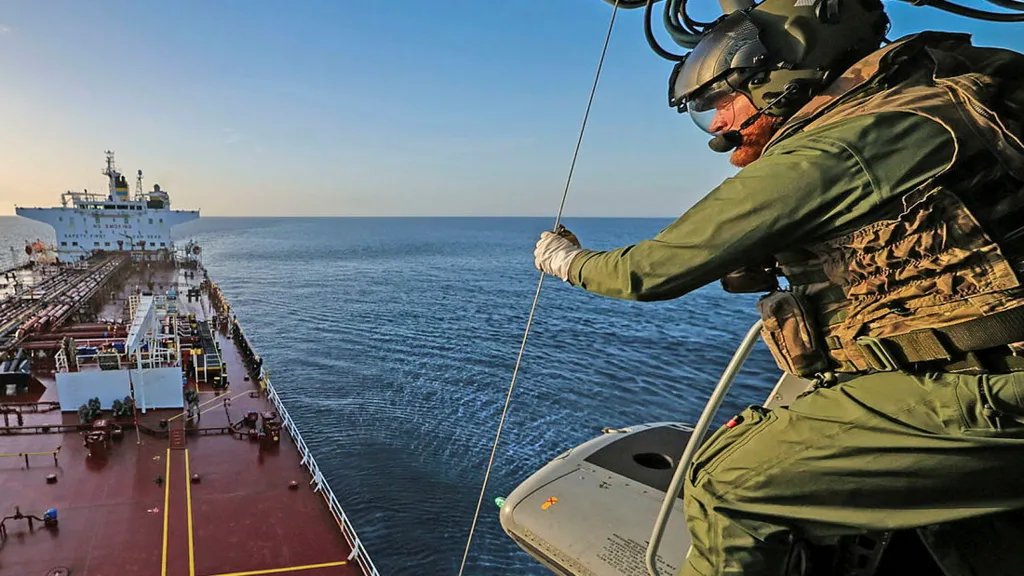
In a recent BBC News report, viewers witnessed the extraordinary moment Royal Marine Commandos fast-roped from an RAF helicopter onto the deck of the Russian shadow fleet oil tanker SMYRTOS in the English Channel — the first operation of its kind by British armed forces and a landmark escalation in the West's campaign to disrupt the revenue streams funding Moscow's war in Ukrai
In a recent BBC News report, viewers witnessed the extraordinary moment Royal Marine Commandos fast-roped from an RAF helicopter onto the deck of the Russian shadow fleet oil tanker SMYRTOS in the English Channel — the first operation of its kind by British armed forces and a landmark escalation in the West's campaign to disrupt the revenue streams funding Moscow's war in Ukraine.
Royal Marines Board Russian Shadow Fleet Oil Tanker SMYRTOS in English Channel
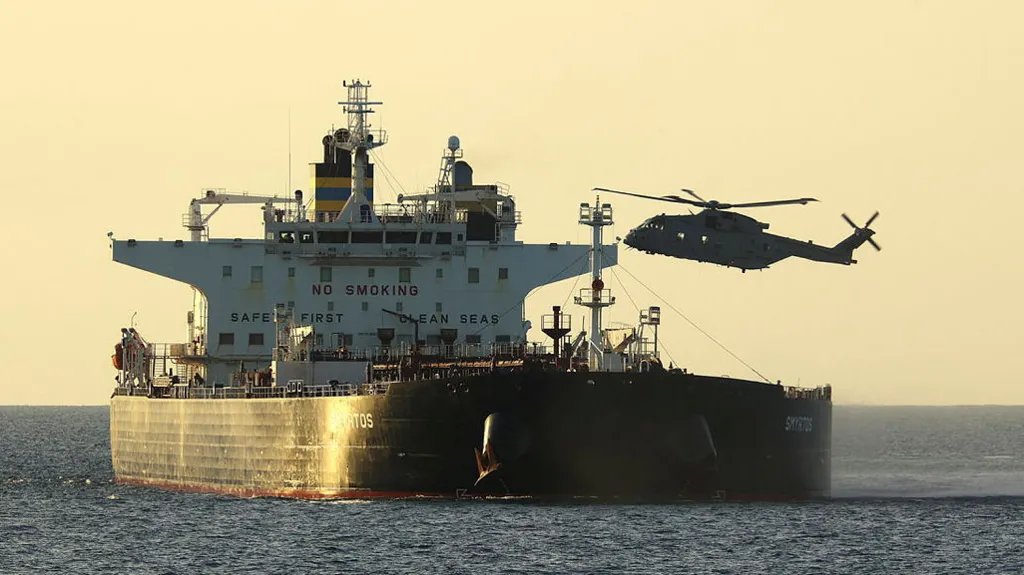
London, United Kingdom – Sunday, June 14, 2026 — In a six-hour combined military and law enforcement operation, Royal Marine Commandos supported by the RAF boarded and detained the sanctioned Russian shadow fleet oil tanker SMYRTOS in the English Channel. The vessel, which sails under a Cameroon flag and is currently at anchor off the coast of Weymouth, began its journey on 5 June from Russia's Ust-Luga oil terminal near St Petersburg. Prime Minister Sir Keir Starmer said the operation delivers "yet another blow to Russia" and reminds those "fuelling Putin's war in Ukraine that we will not let them hide."
The Vessel and the Shadow Fleet Network
The SMYRTOS — originally named Myrtos before sanctions forced a rebranding — was sanctioned by the UK government in July 2025. Since then it has changed its name once and the flag it sails under twice, a pattern that the Ministry of Defence says is characteristic of Russia's shadow fleet operations. These vessels employ a range of evasion tactics: re-registering under flags of convenience, transferring cargo between ships at sea, and disabling automatic identification systems to avoid detection.
The MoD estimates that Russia's shadow fleet now comprises more than 700 vessels, responsible for transporting approximately 75 percent of Russia's sanctioned oil exports. This parallel shipping infrastructure has become a critical lifeline for the Kremlin, allowing Moscow to maintain oil revenues — which fund approximately one-third of Russia's federal budget — despite the most comprehensive sanctions regime ever imposed on a major economy. The UK alone has sanctioned more than 500 vessels connected to this network.
Al Carns, who resigned as armed forces minister just days before the operation, told the BBC that the boarding would have involved personnel "flying low level over the sea, rearing up before the ship, fast roping onto the ship, securing it and then taking it into our territorial waters." He added that now the UK had demonstrated its capability, "we're probably going to see more, should the opportunities present themselves." The operation was supported by aircraft from the Maritime Air Group, an RAF P-8 surveillance aircraft, as well as HMS Sutherland and HMS Ledbury.
Political Fallout: Defence Spending Crisis
The dramatic interception came against a backdrop of deep political turmoil within the British government over defence spending. John Healey resigned as defence secretary on Thursday, warning Prime Minister Starmer that the proposed level of military investment "falls well short" of what is needed to protect the United Kingdom. Al Carns followed suit, telling the prime minister that the Defence Investment Plan was "neither transformative enough nor sufficiently funded."
The resignations have exposed a growing rift within Starmer's government over how to balance defence commitments against other spending priorities. Shadow defence secretary James Cartlidge has called for as much as £28 billion in additional funding over the next several years, arguing that cutting welfare spending must be "a big part of it." Culture Secretary Lisa Nandy defended the government's approach, telling the BBC's Sunday with Laura Kuenssberg programme that the prime minister "had been clear" with cabinet that they "had to find more money for defence," while stressing the need to "transform the way we do defence spending, so that what we're spending is fit for the threats we face now and in the future."
The Defence Investment Plan, delayed for months, is now expected to be published before the NATO summit next month — a deadline that looms large as allies pressure the UK to demonstrate its commitment to collective defence at a time when the shadow fleet operation has demonstrated both the capability and the limits of British military reach. Former ministers have privately expressed concern that without sustained increases, future operations against the shadow fleet risk becoming isolated demonstrations rather than part of a coherent strategy. The resignations of John Healey and Al Carns underscore tensions between immediate operational needs and long-term fiscal planning inside Number 10.
James Cartlidge has repeatedly highlighted that current spending trajectories leave the UK exposed in the English Channel and beyond. He argues that the six-hour boarding of the SMYRTOS proves capability exists but cannot be maintained without the extra £28 billion he advocates. Lisa Nandy's comments on the BBC programme reflect the government's attempt to frame the issue as one of efficiency rather than raw totals, yet critics inside and outside the cabinet note that efficiency alone will not cover the costs of sustained maritime enforcement.
Starmer's Strategy: A New Maritime Doctrine
Prime Minister Starmer announced in March that British armed forces were "now able to board sanctioned vessels that are passing through our waters" — a policy shift that this weekend's operation has now turned into operational reality. The legal framework for the boarding appears to rest on a combination of UK sanctions legislation and maritime law, allowing British forces to intercept vessels within UK territorial waters and the contiguous zone.
The prime minister's statement following the operation was pointedly direct: "This successful operation delivers yet another blow to Russia and reminds those fuelling Putin's war in Ukraine that we will not let them hide." The message was aimed not only at Moscow but at the network of intermediaries, insurers, and flag states that enable the shadow fleet's operations. The sanctions regime already in place prohibits British firms and individuals from providing financial, insurance, or brokerage services to ships that supply or deliver Russian oil, meaning that any vessel caught operating in UK waters now faces both legal consequences and the practical disruption of having its operations exposed and documented.
Starmer's doctrine also signals to European partners that the UK intends to act unilaterally when necessary. The involvement of the National Crime Agency alongside Royal Marines indicates a hybrid approach blending military projection with law-enforcement documentation, creating a template that could be replicated by other nations. Officials in London have emphasised that the sanctions ban on UK port access and financial services remains the primary lever, with boarding serving as the enforcement mechanism when vessels enter reachable waters.
The operation's timing, just weeks before the NATO summit, allows Starmer to present concrete action rather than pledges. Yet the resignations of John Healey and Al Carns reveal that domestic political capital for sustained funding remains fragile. Without the Defence Investment Plan delivering measurable increases, future boardings may depend on ad-hoc resource allocation rather than a standing maritime enforcement posture.
Russian Response and Geopolitical Implications
The Kremlin has not yet issued an official response to the interception, though the operation represents a significant challenge to Russia's maritime logistics. The shadow fleet has been Moscow's primary workaround for Western oil sanctions, and any credible threat to its operations — particularly in the busy shipping lanes of the English Channel and the North Sea — could force Russia to seek alternative, more costly routes for its oil exports.
For Moscow, the broader significance of the operation may extend beyond economics. The sight of British commandos boarding a Russian-linked vessel in international waters carries symbolic weight in a conflict that has largely been fought through proxies, sanctions, and diplomatic manoeuvring rather than direct military confrontation between nuclear-armed powers. Russia's Foreign Ministry has previously warned that any interference with its commercial shipping would be met with retaliation, though the precise form such retaliation might take remains unclear.
Vladimir Putin has framed Western sanctions as an existential attack on Russia's economy, and the boarding of the SMYRTOS will likely be portrayed domestically as further evidence of NATO aggression against legitimate Russian commerce. Kremlin officials have long maintained that the shadow fleet consists of independent commercial actors rather than state-directed entities, a claim that allows Moscow to distance itself from individual vessel operations while still benefiting from the revenue they generate.
The journey of the SMYRTOS from Ust-Luga near St Petersburg illustrates how ordinary Russian energy infrastructure remains tied to the war economy. Ust-Luga serves as a key export hub for crude that ultimately funds federal spending priorities, including military procurement. Any sustained Western pressure on these routes could eventually translate into tighter budget constraints felt by Russian households through higher domestic fuel prices or reduced social spending.
Analysis and Implications — A Turning Point in Sanctions Enforcement?
This operation represents a qualitative shift in how Western nations enforce sanctions against Russia. For two years, the shadow fleet has operated with relative impunity, exploiting gaps in international maritime law and the reluctance of flag states to police vessels they have registered. The UK's willingness to board and detain a sanctioned vessel sets a precedent that other NATO members — particularly Denmark, Norway, and the Netherlands, who control chokepoints along Russia's Arctic and Baltic export routes — could follow.
The European Union, too, has been moving in this direction. On 9 June, the European Commission proposed a fresh round of sanctions specifically targeting the shadow fleet, including measures against individual vessels, insurers, and intermediaries. The UK's unilateral action on Sunday may accelerate discussions within the EU about adopting similar enforcement mechanisms, particularly in the Baltic Sea where Russian oil exports to non-Western buyers transit near NATO member states' waters.
However, the operation also exposes the limits of Western power. With more than 700 vessels in the shadow fleet and Russia's oil exports continuing to generate tens of billions of dollars annually, a few high-profile boardings — no matter how dramatic — will not single-handedly cripple Moscow's war finances. The real test will be whether the UK and its allies can sustain this enforcement posture, expand it to cover more vessels, and convince flag states like Cameroon to cooperate in revoking the registrations of sanctioned ships.
For ordinary Russians, the direct impact may be minimal in the short term. The shadow fleet exists primarily to serve foreign buyers — China, India, Turkey, and other nations that have continued purchasing Russian crude despite Western sanctions. But if the UK's enforcement campaign succeeds in raising the cost and risk of transporting Russian oil, the resulting price pressure could eventually feed back into Russia's budget calculations, with consequences for the ruble, inflation, and the Kremlin's ability to sustain its military spending.
What is clear is that the era of the shadow fleet operating with impunity has ended — at least in waters the UK can reach. As Al Carns put it, the Sunday operation was a proof of concept. Whether it becomes a sustained campaign or a symbolic one-off depends on the political will and the financial resources that a divided British government has yet to fully commit to its own defence.
By Irina Volkov, Staff Writer
This article was produced with AI-assisted research and editorial support. Reporting is based on sources cited in the article.
What's Your Reaction?
 Like
0
Like
0
 Dislike
0
Dislike
0
 Love
0
Love
0
 Funny
0
Funny
0
 Wow
0
Wow
0
 Sad
0
Sad
0
 Angry
0
Angry
0
Russia/Eastern Europe Correspondent at Global1.News. Covering Russian politics, energy, security, and the shifting dynamics of the post-Soviet space. Provides clear-eyed analysis on one of the world's most opaque regions.












Comments (0)