
UK PM Keir Starmer Resigns Leaving Legacy of Failed Palestine Policy
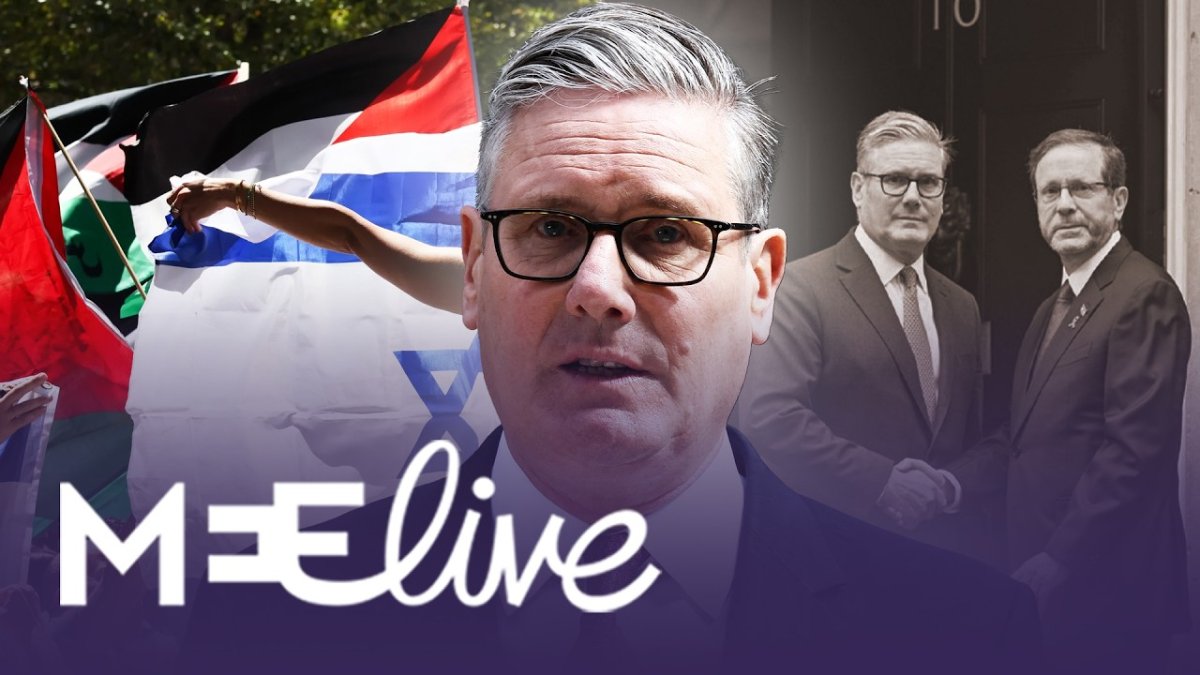
In a recent Middle East Eye investigation published alongside the video report "How Keir Starmer failed Palestine," the former UK prime minister's record on Gaza and Palestinian rights is laid out in damning detail. Starmer resigned on June 22, 2026, after just 23 months in office, leaving behind a legacy that Palestinian communities, British Muslim voters, and human rights org
In a recent Middle East Eye investigation published alongside the video report "How Keir Starmer failed Palestine," the former UK prime minister's record on Gaza and Palestinian rights is laid out in damning detail. Starmer resigned on June 22, 2026, after just 23 months in office, leaving behind a legacy that Palestinian communities, British Muslim voters, and human rights organizations describe as defined by repeated alignment with Israeli positions — from his early endorsement of collective punishment to a partial arms ban that still allowed millions in exports to continue.
UK PM Keir Starmer Resigns Leaving Legacy of Failed Palestine Policy
London, United Kingdom — June 23, 2026
Resignation Context
Keir Starmer announced his resignation on 22 June 2026, ending a premiership that began in July 2024. The immediate trigger was the scale of Labour’s defeat in the May local elections, where the party lost more than 500 council seats across England. Reform UK gained ground in traditional Labour areas of the North and Midlands, securing majorities in councils such as Oldham and parts of Rotherham, while independent candidates backed by Muslim communities took seats in constituencies such as Birmingham Sparkbrook and Bradford West. The losses represented the worst local election performance for a governing party in over four decades.
Internal party analysis circulated after the elections showed that more than half of voters who left Labour between 2024 and 2026 cited the government’s stance on Gaza as their primary reason. Starmer’s refusal to impose a full arms embargo or to describe Israel’s military campaign as genocide left many activists and community organisations unwilling to campaign for Labour candidates. The resulting vacuum allowed Reform UK to present itself as the only party willing to challenge both major parties on foreign policy, drawing in disaffected voters from both left and right.
The tipping point came with the Manchester Central by-election on 18 June 2026, where Andy Burnham secured a decisive victory that exposed Starmer’s weakened position within the party. Burnham’s campaign highlighted the need for a reset on Middle East policy, attracting former Labour supporters who had abstained in previous votes. Starmer’s subsequent resignation statement acknowledged the electoral damage but offered no detailed reflection on the Gaza-related policy decisions that had accelerated the party’s decline.
The October 2023 LBC Interview
On 11 October 2023, four days after the Hamas attacks, Starmer told LBC radio that Israel had “the right” to withhold water and electricity from Gaza. The remark was made while he was still leader of the opposition. Within forty-eight hours, more than seventy Labour councillors resigned their positions, citing the statement as incompatible with international humanitarian law. Among them were councillors in London boroughs such as Tower Hamlets and Camden, who publicly condemned the comments as endorsing collective punishment.
The interview set the tone for Starmer’s subsequent positions. Muslim voters who had supported Labour in 2019 and 2024 began to organise locally. Groups such as the Muslim Association of Britain and the Palestinian Solidarity Campaign documented a steady rise in abstention and support for independent candidates. By the 2024 general election, several seats with large Muslim electorates recorded swings away from Labour that exceeded national averages, including a 12-point drop in turnout in Birmingham Hodge Hill.
The fallout damaged Labour’s reputation among human-rights advocates and diaspora communities. The Muslim Council of Britain issued a formal statement distancing itself from the party, while local branches reported a sharp decline in membership applications from British-Palestinian families. The episode established a pattern of prioritising alignment with Israeli policy over domestic consensus, eroding trust that would later manifest in repeated electoral setbacks.
Arms Sales Record
In September 2024 the government announced a partial suspension of thirty arms export licences to Israel. The measure was presented as a response to concerns over the conduct of operations in Gaza. However, official figures later showed that 108 new or renewed licences were granted between October 2023 and May 2024, with approvals continuing after the supposed suspension. These included licences for components used in drone targeting systems and artillery shells.
Middle East Eye reporting documented £169 million in new approvals in the months following the partial ban. Components for F-35 aircraft and targeting systems remained eligible under exemptions for “existing contracts,” allowing deliveries to continue through joint UK-US production lines. Campaigners from Campaign Against Arms Trade noted that the gap between public statements and licensing data undermined the credibility of the government’s claim to be applying rigorous scrutiny, with several licences approved despite documented use of similar equipment in civilian areas.
Further disclosures revealed that the Department for Business and Trade had fast-tracked renewals for Elbit Systems-related exports even after the partial suspension. Parliamentary questions tabled by independent MPs highlighted that at least 22 of the post-suspension licences involved dual-use technology with direct applications in Gaza operations. The discrepancy between rhetoric and record became a central point of criticism in subsequent inquiries by the Commons Foreign Affairs Committee.
Palestine Action Ban and the Elbit 4
In July 2025 the Home Office proscribed Palestine Action as a terrorist organisation under the Terrorism Act 2000. The decision criminalised membership, support and the expression of support for the group’s tactics of direct action against arms factories. On 12 June 2026 four activists known as the Elbit 4 received sentences of twenty years or more for their involvement in protests at Elbit Systems facilities in Bristol and Oldham. The sentences marked the first use of terrorism legislation against environmental-style direct-action protesters in recent decades.
Legal observers described the use of terrorism legislation against non-violent property damage as unprecedented in recent British history. The High Court appeal lodged by the Elbit 4 in May 2026 was rejected on narrow procedural grounds, prompting criticism from senior barristers who argued that the threshold for proscription had been lowered without adequate parliamentary oversight. Human-rights organisations, including Liberty and the Campaign for Nuclear Disarmament, argued that the sentences would deter lawful protest and set a dangerous precedent for future activism.
Families of the convicted activists spoke of the long-term impact on children and elderly relatives left without primary carers. One activist’s mother described how her grandchildren had been placed in temporary foster care following the sentencing. The Campaign for Nuclear Disarmament organised solidarity vigils outside prisons, highlighting the disproportionate nature of the penalties compared with historical cases involving similar property damage.
Recognition of Palestinian Statehood
In September 2025 the United Kingdom formally recognised the State of Palestine. The announcement was made at the United Nations General Assembly and was welcomed by the Palestinian Authority. However, the recognition contained no accompanying sanctions on Israeli officials or restrictions on settlement goods. The move followed similar recognitions by Spain, Ireland and Norway but lacked the enforcement mechanisms those countries had attached.
Palestinian civil-society groups in the West Bank described the move as largely symbolic. Without enforcement mechanisms or accountability measures, they argued, recognition did not alter the daily realities of movement restrictions or military operations. Organisations such as Al-Haq and the Palestinian Centre for Human Rights issued statements noting that settlement expansion had continued unabated in the months after the announcement.
UK-based advocacy networks noted that the timing, after more than twenty months of sustained military activity, limited its practical effect. The absence of any review of arms licensing or trade agreements with settlement-linked companies meant the recognition remained a diplomatic gesture rather than a substantive policy shift. Palestinian families in the Jordan Valley reported no change in access to land or water resources following the announcement.
Impact on British Muslims and Labour’s Electoral Collapse
Post-election surveys conducted by the Muslim Council of Britain indicated that over 50 percent of former Labour voters who switched allegiance listed Gaza policy as the decisive factor. In July 2024, Labour lost seats including Leicester South and Dewsbury to independent candidates who campaigned explicitly on Palestine. Internal party reports warned that the divisions would persist unless substantive policy changes were introduced, with turnout among Muslim voters falling by an average of 18 percentage points in key wards.
By the 2026 local elections the pattern had intensified. Reform UK secured council majorities in several former Labour strongholds where Muslim turnout for Labour had fallen sharply, including in Blackburn and parts of Manchester. Community leaders described a lasting erosion of trust that extended beyond single-issue voting to broader questions of representation within the party. The Muslim Council of Britain’s post-election analysis showed that 67 percent of respondents in surveyed constituencies felt Labour no longer represented their values.
Constituency-level data revealed particularly stark swings in areas with high concentrations of British-Palestinian residents. In Birmingham Sparkbrook, independent candidates backed by local mosques achieved a 22-point swing against Labour. Similar patterns emerged in Bradford West and Rochdale, where community organisations had coordinated voter-registration drives focused on foreign-policy accountability. The cumulative effect left Labour facing a structural challenge in retaining its traditional urban base.
Successor Andy Burnham
Andy Burnham is widely expected to become the next Labour leader and prime minister. While he called for a ceasefire in late 2023, he has declined to characterise events in Gaza as genocide. Burnham remains a member of Labour Friends of Israel and has indicated that he will retain Home Secretary Shabana Mahmood, who oversaw the proscription of Palestine Action. His record as Mayor of Greater Manchester included continued trade partnerships with Israeli firms despite local protests.
Activists from the Palestine Solidarity Campaign and Jewish Voice for Labour have expressed scepticism that Burnham’s leadership will produce a decisive break with Starmer’s approach. They point to the absence of commitments on arms sales or accountability for past licensing decisions as evidence of continuity rather than change. Burnham’s public statements have emphasised “pragmatic engagement” with Israel rather than any reversal of existing export policies.
Retention of Shabana Mahmood as Home Secretary has drawn particular criticism from human-rights groups. Mahmood’s role in the Palestine Action proscription and the subsequent Elbit 4 sentencing has been cited as evidence that the party’s internal culture on protest rights remains unchanged. Jewish Voice for Labour members have warned that without a clear break from these policies, the party risks further alienation of its progressive and minority voter base.
Human Cost
Palestinian families in Gaza and the West Bank continued to experience military operations supported in part by components licensed in the United Kingdom. Medical organisations operating in Gaza reported persistent shortages of equipment and medicines linked to disrupted supply chains. UK-based solidarity groups documented cases in which relatives of British-Palestinian citizens were among those killed or displaced, including the family of a Manchester resident whose cousin was killed in an airstrike on Jabalia camp in early 2025.
Civil-society organisations in both countries have called for independent inquiries into the licensing decisions and the use of terrorism legislation against protesters. They argue that accountability mechanisms are necessary to prevent similar policy failures in future administrations. The legacy of Starmer’s premiership, they maintain, will be measured not only in electoral results but in the lived consequences for civilians whose protection was repeatedly subordinated to other considerations.
Concrete accounts from Gaza hospitals illustrate the human impact. Staff at Al-Shifa Hospital described treating children with shrapnel injuries consistent with munitions containing UK-licensed components, while supply shortages forced the reuse of basic surgical equipment. British-Palestinian families in the UK reported ongoing trauma from the inability to repatriate relatives or secure visas for medical treatment, compounding the sense that domestic policy had directly contributed to prolonged suffering abroad.
This article was produced with AI-assisted research and editorial support. Reporting is based on sources cited in the article.
What's Your Reaction?
 Like
0
Like
0
 Dislike
0
Dislike
0
 Love
0
Love
0
 Funny
0
Funny
0
 Wow
0
Wow
0
 Sad
0
Sad
0
 Angry
0
Angry
0

Gulf/MENA Correspondent at Global1.News. Based in Doha, covering Gulf politics, energy markets, diplomacy, and development across the Middle East and North Africa. Tracks the economic transformation of the Gulf states.












Comments (0)