
The Billion-Shekel Industry: How IDF Service Became a Financial Burden on Israeli Families
The old and holy Israeli equation of the people's army has undergone a quiet privatization. Even before the average pre-army youth manages to don B-uniforms at the induction center, they already become a captive customer in a breached, competitive, and aggressive market, where every step on the way to the IDF has a clear price tag. Families across Jerusalem, Tel Aviv, and the northern periphery now confront a system in which motivation alone no longer guarantees equal footing. Parents who once v

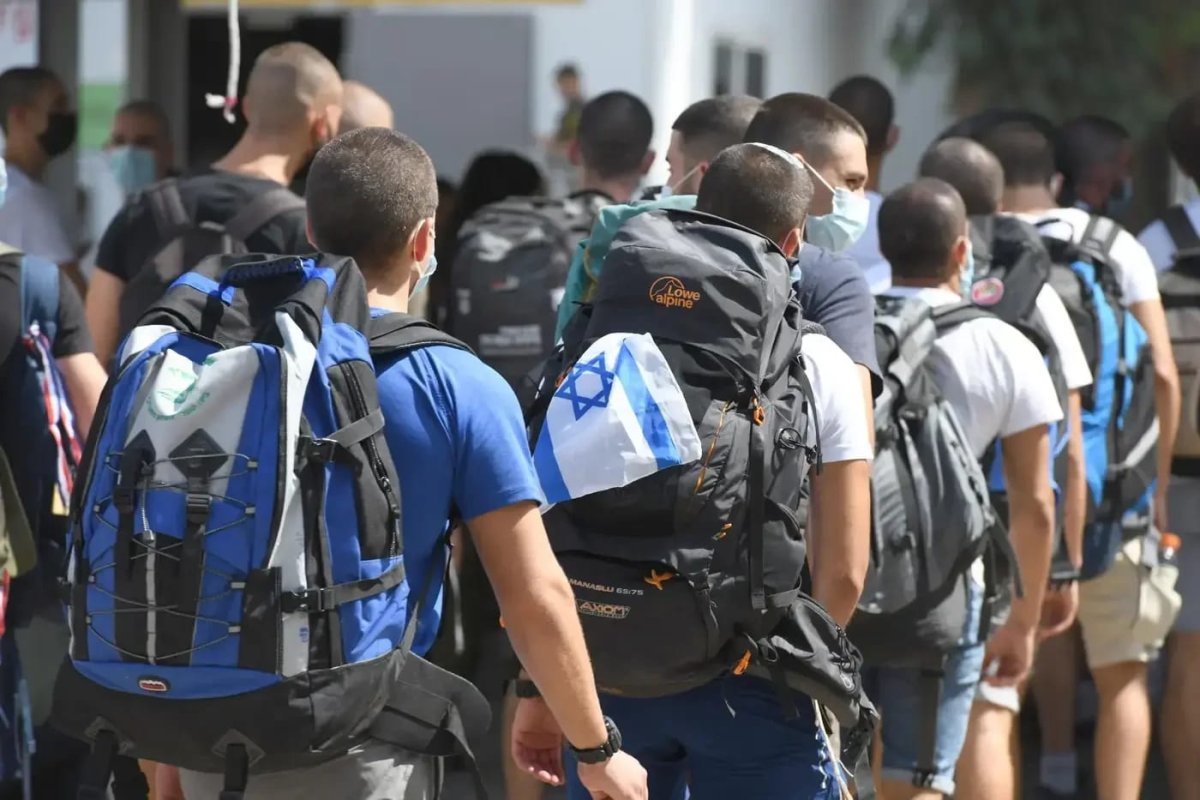
The DAPAR Test and the Rise of Prep Courses
The first expense arrives around the DAPAR test, the psychotechnical exam of the first notice. The score, between 10 and 90, is determined in comparison to the rest of the examinees, and affects placement, invitations to intelligence selections, and entering officer training, which requires at least 60. The veteran KABA score was canceled, and its place was taken by new suitability data, including a dedicated score for officer training and the Yom Meah assessment which boys also undergo nowadays.
The IDF provides a free practice software on the Mitgaysim website, but that did not stop the institutes. A digital kit is sold starting from NIS 39, a simulation with personal guidance costs about NIS 500, and a package of private lessons reaches NIS 1,500. The score on the test is relative. Anyone who practices beyond the IDF software gains an advantage that others do not have. A private psychodidactic diagnosis costs between NIS 1,500 and NIS 4,500. In practice this means families in central Israel with steady incomes can purchase repeated simulations while households in development towns weigh whether one session is worth the monthly grocery budget.
This gap matters because placements feed directly into future opportunities. Higher DAPAR scores open doors to intelligence units and officer tracks that later translate into civilian careers. The result is a feedback loop in which economic advantage at age 17 shapes professional trajectories long after discharge. Regional commanders and Foreign Ministry spokespeople have long described the IDF as a national integrator, yet the current preparation market quietly erodes that claim.
Vision Correction and Combat Profiles
The elite units require a profile of 97. A pre-army youth who wears glasses with a prescription up to 7 receives a 97 with a vision clause, which allows broad combat service but closes units like the Navy. The solution that the IDF recognizes is laser surgery. Whoever underwent it is eligible to defer enlistment until three months have passed from the surgery, and then the profile is redetermined, sometimes a clean 97. This is an increase of dozens of percent in recent years in the number of pre-enlistment youth undergoing this procedure.
The procedure itself carries medical and financial considerations that fall unevenly. Families able to cover the cost and the waiting period can unlock additional combat options, while others accept the vision clause and narrower choices. The decision often surfaces during high-school years when parents in Jerusalem suburbs compare notes with relatives in the south. The IDF medical system has streamlined approvals, yet the upfront expense remains a private matter that shapes who ultimately stands in the selection lines for Shayetet 13 or Shaldag.
Preparing for Elite Units and Selection Trials
Shayetet 13, Sayeret Matkal, Shaldag, Unit 669, and the pilots course attract thousands of boys every year. The path goes through the Commando Day, and from there to selection trials that sometimes last up to five days. Around this moment, dozens of training frameworks arose. An online training program is sold for NIS 350 to NIS 395, and group guidance throughout high school accumulates to thousands of shekels.
The personality suitability is tested in selection trials by evaluators and unit psychologists, and therefore an industry of preparation for the interview and selection status was born. A preparation meeting is priced at NIS 300 to NIS 500. These sessions focus on how candidates present themselves under pressure, a skill that evaluators explicitly assess. Teenagers from homes where such coaching is routine enter the process with practiced answers, while others rely on raw performance. The disparity does not alter the units' ultimate standards, but it does alter who reaches the final stages with greater composure.
Security officials continue to emphasize that operational needs drive selection, yet the surrounding market introduces an economic filter that was absent in earlier decades. Parents in the Tel Aviv area often coordinate car pools to training sites, while families farther from the center absorb additional travel costs on top of tuition.
Pre-Military Academies and Technological Tracks
A teenager aiming for Unit 8200, Mamram, or Shchakim can start with a practice kit of a few hundred shekels. Dedicated courses operated by alumni of the units include a youth course by John Bryce College for about NIS 20,000. Technological pre-military academies surged in demand in recent years. Tracks of 6 to 10 months combine cyber, software, leadership, and fitness, with tuition of NIS 9,000 to NIS 12,000 a year.
These programs sit at the intersection of military preparation and future employment. Graduates often receive priority consideration for high-demand technological roles that later ease entry into Israel's tech sector. The academies therefore function as both service accelerators and career bridges. Communities with higher average incomes can more readily enroll multiple children, widening the advantage over time. IDF spokespeople note that the military itself benefits from better-prepared recruits, yet the tuition barrier remains outside official channels.
Equipment Costs and the Final Stretch
Finally, after the expenses on institutes and training, the equipment basket ranges between NIS 700 and NIS 1,200, an average of about NIS 950, with combat soldiers and winter enlistments at the expensive end. The IDF softens the blow through a digital Stars Card, providing an initial budget for purchasing equipment alongside a discount of at least 25 percent.
Even with this assistance, the outlay arrives after months of prior spending. Winter gear, quality boots, and additional personal items push totals higher for those heading to field units. Families already stretched by earlier preparation courses absorb the difference more easily than those who entered the process with minimal outlay. The Stars Card mitigates but does not erase the cumulative effect.
The Wider Social Consequences
The cumulative picture reveals a quiet shift in how Israeli society prepares its sons and daughters for national service. The IDF remains essential to security along the Gaza border, in the West Bank, and across northern fronts, yet the path to meaningful roles now carries private costs that vary sharply by household income. This reality challenges the founding premise that service equalizes opportunity across regions and economic strata.
Discussions in the Prime Minister's Office and among Knesset committees have touched on support mechanisms, but the preparation market operates largely beyond direct oversight. The result is a two-tier experience: one in which resources buy repeated practice and medical corrections, and another in which motivation alone must suffice. Over time this pattern risks eroding the broad social consensus that has sustained the people's army through successive conflicts. Israeli families continue to send their children to induction centers with pride, yet the financial calculations that precede those moments now shape who can realistically aim for the most demanding and rewarding paths.
By Hannah Berg, Staff WriterWhat's Your Reaction?
 Like
0
Like
0
 Dislike
0
Dislike
0
 Love
0
Love
0
 Funny
0
Funny
0
 Wow
0
Wow
0
 Sad
0
Sad
0
 Angry
0
Angry
0








Comments (0)