
Essam Al-Nabih: Gaza Toddler Fighting for Life as Israeli Border Restrictions Block Treatment
A video published by Middle East Eye on July 13, 2026, documents the case of 1.5-year-old Essam Al-Nabih, who weighs just 5 kilograms while fighting severe malnutrition and hydrocephalus in Gaza. The footage shows the toddler in a hospital setting, his small frame highlighting the physical toll of prolonged food shortages that began after his birth during Israel's war on Gaza.
A video published by Middle East Eye on July 13, 2026, documents the case of 1.5-year-old Essam Al-Nabih, who weighs just 5 kilograms while fighting severe malnutrition and hydrocephalus in Gaza. The footage shows the toddler in a hospital setting, his small frame highlighting the physical toll of prolonged food shortages that began after his birth during Israel's war on Gaza. His mother, unable to breastfeed due to her own malnutrition, describes the daily challenges of keeping him alive amid limited medical supplies in a territory where basic necessities have become scarce.
Essam Al-Nabih: Gaza Toddler Fighting for Life as Israeli Border Restrictions Block Treatment
Gaza City, Palestine – July 13, 2026 — The case of 1.5-year-old Essam Al-Nabih captures the human toll of Gaza restricted medical access, where a toddler weighing just 5 kilograms battles severe malnutrition and hydrocephalus while awaiting treatment that doctors have approved but cannot deliver.
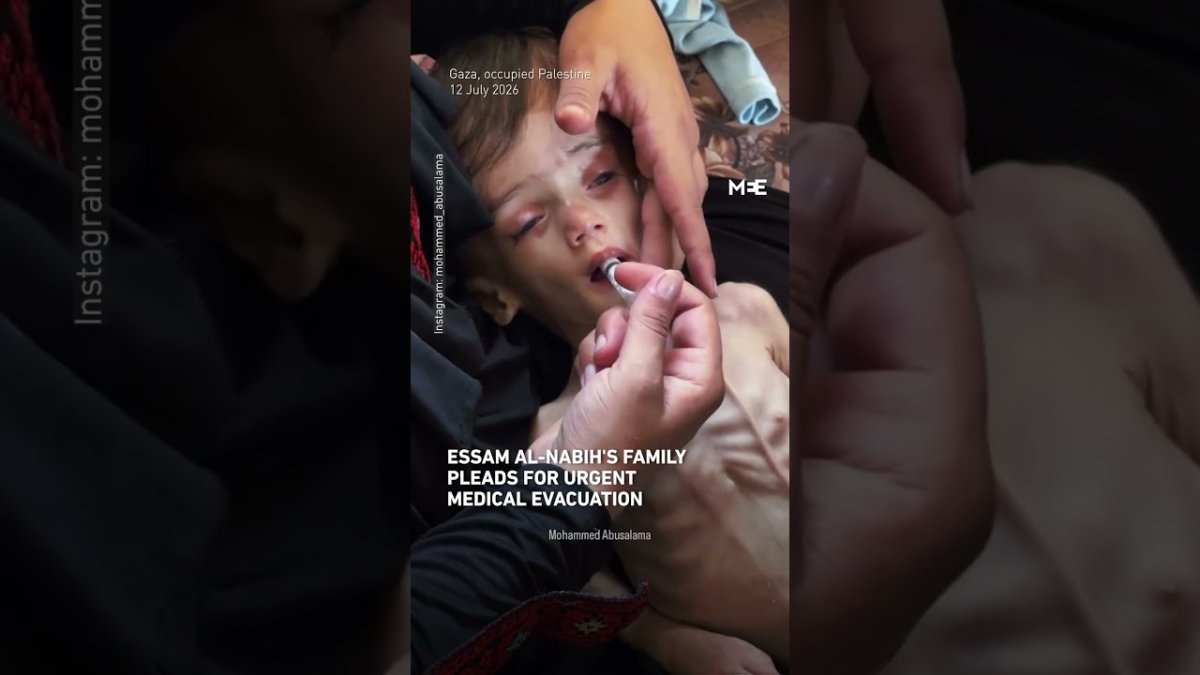
The video serves as an entry point into the wider reality faced by families in Gaza, where individual medical emergencies intersect with systemic barriers to care. Essam's condition developed after his mother could not provide adequate nutrition, leading to rapid weight loss and fluid accumulation on the brain. Doctors inserted a shunt to manage the hydrocephalus, yet the intervention remains insufficient without further specialized treatment unavailable inside the territory.
Family members in the footage appeal directly to international organizations, emphasizing that Essam's survival depends on evacuation for advanced care. The story illustrates how malnutrition compounds other health issues, turning treatable conditions into life-threatening ones when borders remain closed. This case reflects patterns seen across Gaza, where children bear the brunt of restricted access to food and medicine.
Details of Essam Al-Nabih's Medical Condition
Essam Al-Nabih, also referred to as Issam Al-Nabih, was born at a normal weight before the escalation of hostilities in Gaza. Within months, his mother's malnutrition prevented breastfeeding, resulting in severe weight loss that left him at 5 kilograms by 18 months of age. Medical staff diagnosed hydrocephalus, a condition involving excess fluid on the brain that required surgical insertion of a shunt to drain the buildup and stabilize pressure.
Despite the shunt procedure, doctors have stated that Essam's survival chances remain extremely slim without additional intervention outside Gaza. The referral for treatment abroad received approval from local health authorities, yet Israeli restrictions on border crossings have prevented his departure. Family members continue to seek assistance from groups capable of facilitating medical evacuations, documenting his deteriorating state through repeated hospital visits.
Healthcare workers treating Essam note that his case combines acute malnutrition with neurological complications, a combination that demands resources beyond those available in partially functioning facilities. The absence of specialized pediatric equipment and consistent nutrition support has prolonged his suffering. His mother recounts the progression from initial feeding difficulties to the current critical state, underscoring the direct link between household food insecurity and individual health decline.
Local physicians have warned that delays compound the risks associated with hydrocephalus, including potential brain damage and organ failure. Essam's family maintains daily vigils at his bedside, hoping for an opening at one of the limited border points. This situation highlights how even approved medical cases can stall when movement controls remain in place.
The Broader Medical Evacuation Crisis in Gaza
More than 20,000 patients in Gaza currently await medical evacuation according to records from the Gaza Health Ministry. Since October 2023, over 1,500 individuals have died while waiting for permission to leave for treatment elsewhere. These figures encompass a range of conditions, from cancer to trauma injuries, all requiring care that local hospitals can no longer provide due to infrastructure damage and supply shortages.
Only 18 of 36 hospitals in Gaza remain partially functioning, as reported by the World Health Organization. This reduction stems from repeated strikes on medical facilities and restrictions on fuel, medicines, and spare parts. Patients like Essam, whose cases involve both chronic and acute needs, face compounded obstacles when evacuation corridors stay closed or operate at minimal capacity.
Israel's controls on the Rafah crossing and other exit points have limited the number of approved departures to a fraction of those referred. Medical organizations including Médecins Sans Frontières, the World Health Organization, and UNICEF have repeatedly called for dedicated evacuation corridors to move critical cases. These appeals cite the need for predictable access rather than ad hoc approvals that often arrive too late.
The backlog affects thousands of children and adults alike, with waiting lists growing as new injuries and illnesses emerge. Families describe repeated submissions of paperwork only to receive no response or outright denial. The resulting deaths while awaiting transfer underscore the human cost of these procedural barriers.
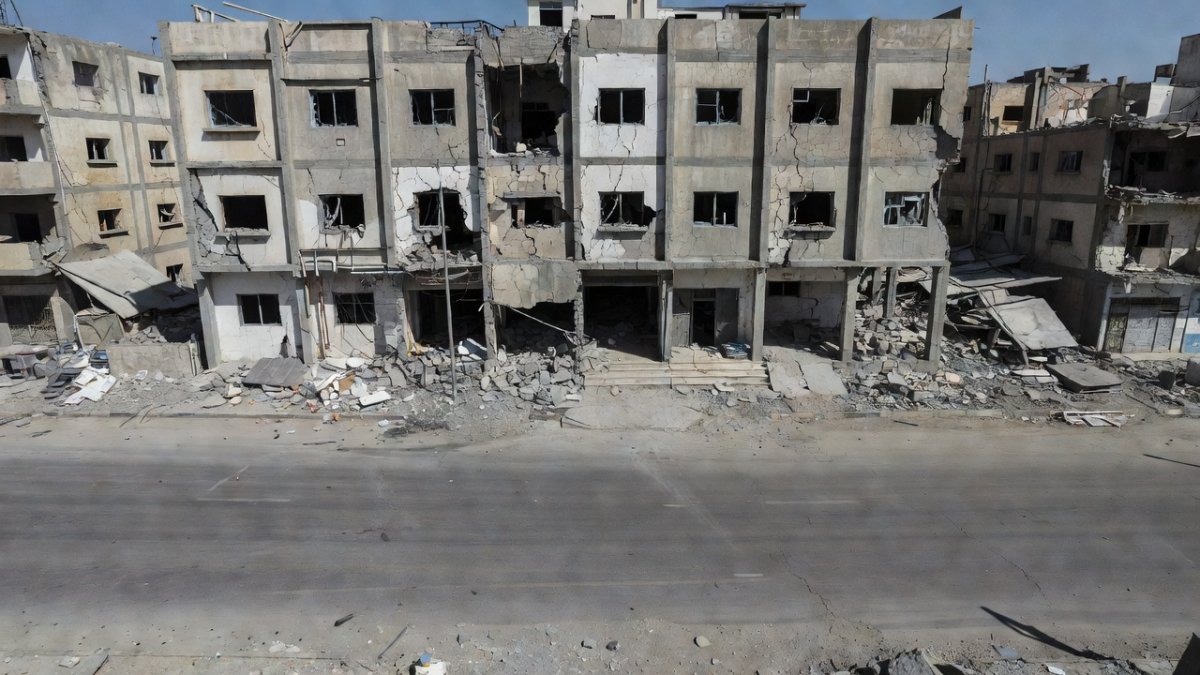
Collapse of Healthcare Amid Widespread Malnutrition
Almost 13,000 children were admitted for acute malnutrition treatment in a single month, according to health ministry data. United Nations agencies have documented famine conditions in parts of Gaza, where access to basic food items remains severely constrained. This environment directly contributes to cases like Essam's, where infants and toddlers cannot maintain healthy growth trajectories.
The health system collapse leaves few options for managing complications such as hydrocephalus once malnutrition sets in. With hospitals operating at reduced capacity, routine monitoring and follow-up care become impossible. Over 21,000 children are counted among the more than 71,000 Palestinians killed since October 2023, a toll that includes those who succumbed to preventable conditions after medical referrals were denied.
Local health workers report that malnutrition weakens immune responses, turning minor infections into fatal events. Essam's development of hydrocephalus followed months of inadequate caloric intake, illustrating how nutritional deficits accelerate other diseases. Families in affected areas describe foraging for whatever food remains available, often without success in meeting children's needs.
Economic disruption from the conflict has eliminated traditional sources of income, further limiting household ability to purchase supplements or specialized formulas. Clinics that once distributed nutritional aid now operate with depleted stocks. The combination of these factors creates a cycle where early intervention becomes unavailable, and later-stage cases overwhelm remaining facilities.
International Response and Shortcomings
The United Kingdom has pledged to receive some Gaza children for treatment, while Spain has accepted a number of cases in recent months. These commitments represent limited openings amid broader restrictions. However, the scale of need far exceeds the slots provided, leaving most referred patients, including toddlers like Essam, without concrete departure dates.
Calls from MSF, WHO, and UNICEF for systematic medical evacuation corridors have produced statements of concern but few operational changes at border crossings. International organizations continue to document the gap between approved referrals and actual transfers, attributing delays to security protocols that apply uniformly regardless of medical urgency.
Some governments have facilitated small numbers of evacuations through diplomatic channels, yet these efforts remain sporadic. Families in Gaza monitor announcements from these countries while submitting additional documentation through local health coordinators. The absence of a coordinated regional mechanism means that even cleared cases can wait indefinitely.
Advocacy groups note that existing pledges cover only a fraction of the 20,000-patient backlog. Without expanded commitments and reliable crossing procedures, the mortality rate among those awaiting evacuation is expected to rise. Essam's family, like others, tracks these developments while caring for him in the interim.
Analysis and What Comes Next
Essam Al-Nabih's situation connects individual medical need to the structural limits imposed on Gaza's population. The combination of malnutrition, restricted movement, and reduced hospital capacity creates conditions where approved treatments cannot be accessed. Historical patterns of border management in the region show that such restrictions persist across multiple conflict phases, affecting successive generations of children.
Local political dynamics in Gaza, including governance challenges and economic isolation, intersect with external controls to shape daily health outcomes. Cultural emphasis on family caregiving means relatives remain at bedsides even when supplies run low, providing emotional support amid clinical uncertainty. Economic analyses from regional observers link prolonged closures to rising rates of preventable illness across age groups.
Future developments depend on whether additional governments expand reception programs and whether crossing authorities adjust approval processes for pediatric cases. Health ministry officials continue to prioritize referrals based on survival projections, yet without corresponding increases in exit permissions, the lists grow longer. Community networks in Gaza share information on any new evacuation windows as they arise.
Essam's case remains under review by several international bodies, with his family maintaining contact through hospital social workers. The outcome will depend on whether policy adjustments at border points align with the documented medical urgency. Broader improvements in food access and hospital functionality would reduce the number of similar emergencies emerging in the coming months.
By Fatima Al-Rashid, Staff WriterThis article was produced with AI-assisted research and editorial support. Reporting is based on sources cited in the article.
What's Your Reaction?
 Like
0
Like
0
 Dislike
0
Dislike
0
 Love
0
Love
0
 Funny
0
Funny
0
 Wow
0
Wow
0
 Sad
0
Sad
0
 Angry
0
Angry
0
Middle East Correspondent at Global1.News. Based in Beirut, covering politics, conflict, energy, and society across the Middle East. Brings context and depth to a region often reduced to headlines.











Comments (0)