
Dr Nagham Nawzat: The Yazidi Doctor Restoring Hope to Survivors of IS Captivity
The Yazidi Genocide and Its Enduring Scars In August 2014 Islamic State militants seized large areas of northern Iraq including Sinjar where the Yazidi religious minority had lived for generations. The United Nations later described the systematic targeting of Yazidis as an ongoing genocide. At least 12,000 Yazidis were killed or kidnapped during that period. For those who surv
The Yazidi Genocide and Its Enduring Scars
In August 2014 Islamic State militants seized large areas of northern Iraq including Sinjar where the Yazidi religious minority had lived for generations. The United Nations later described the systematic targeting of Yazidis as an ongoing genocide. At least 12,000 Yazidis were killed or kidnapped during that period. For those who survived captivity the return to ordinary life has required sustained medical psychological and social support that remains limited in scope even today.
The events of 2014 displaced thousands of families across the Sinjar region and into the Kurdish areas of northern Iraq. Many survivors reached the city of Duhok where basic services were already stretched by the broader conflict. The scale of gender-based violence documented during the Islamic State campaign created an immediate need for specialised care that few facilities in Iraq were equipped to provide at the time.
Dr. Nagham Nawzat: A Lifeline for Survivors
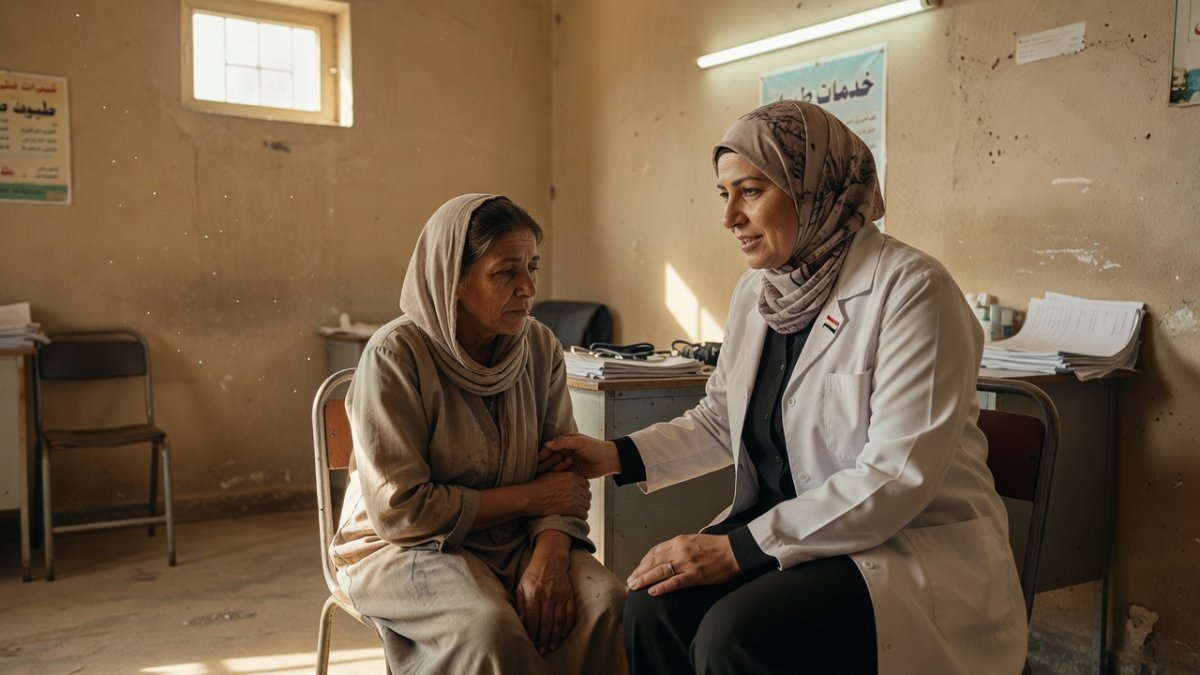
Dr. Nagham Nawzat a Yazidi gynaecologist born in Mosul in 1976 has become a central figure in the medical response to these events. She graduated from Mosul's Medical College in 2002 and has since focused her practice on the long-term health needs of women who endured captivity. As of the most recent available figures she has provided care to more than 1,200 of the 2,023 Yazidi women liberated from Islamic State territories.
Her approach combines physical examination with emotional support in a post-traumatic medical framework. At the Duhok Survivors' Centre she works to establish trust so that survivors can speak about experiences they often keep hidden. She has described her role as similar to that of a big sister offering a safe space within a clinical setting. The centre itself is the only facility in Iraq specialising in gender-based violence and receives funding from the United Nations Population Fund.
In 2016 Dr. Nawzat received the International Women of Courage Award from then-US Secretary of State John Kerry. The recognition highlighted the personal risks she has taken to continue her work amid ongoing instability in the region.
Stories of Survival: Shireen's Journey
Shireen was preparing for a high school examination at her home in Sinjar on 3 August 2014 when Islamic State militants entered the town and took her captive. At the age of 19 she was sold as a sex slave to a militant in Tal Afar and later resold as a wife to another fighter in Mosul. Over more than two years she faced repeated rape forced domestic labour and attempts at forced conversion.
She was freed in 2016 during the military campaign to retake Mosul. Upon her release she sought care from Dr. Nawzat at the Duhok Survivors' Centre. Like many others Shireen had lost multiple family members. Her uncle and several friends were killed during the initial attacks. Her father and one sister remain missing since 2014. She has spoken of the skeletons of her uncle and friends remaining under the ground as a lasting reminder of the violence.
Survivors such as Shireen often arrive at the centre carrying both physical injuries and profound psychological trauma. The loss of entire family networks has left many without traditional support structures making the specialised services at Duhok even more essential.
The Duhok Survivors' Centre and Humanitarian Response
The Duhok Survivors' Centre operates under the direction of the Kurdistan Regional Government and focuses exclusively on cases of gender-based violence linked to the 2014 conflict. Hussein al-Qaidi director of the Kidnapped Affairs department in Duhok confirmed that 2,023 Yazidi women had been liberated from Islamic State territories as of July 2018. Dr. Nawzat has assisted more than half of those women through her volunteer work at the centre.
The facility provides a combination of gynaecological care counselling and referral services that address both immediate health concerns and longer-term recovery needs. Funding from the United Nations Population Fund has allowed the centre to maintain operations despite limited resources across the wider Iraqi health system. Staff members work with survivors to document experiences that may later support legal or humanitarian claims.
Access to such specialised care remains uneven across the Kurdish region. Many survivors live in camps or informal settlements where transportation to Duhok can be difficult. The centre therefore represents one of the few consistent points of contact for women seeking confidential medical attention.
Regional Context in Iraq's Kurdish Region
The Kurdistan Regional Government has coordinated much of the immediate humanitarian response in Duhok and surrounding areas since 2014. The influx of displaced Yazidis placed additional pressure on local infrastructure already managing the consequences of Islamic State control over nearly a third of Iraq at its peak. Daily life in the region continues to reflect the after-effects of displacement with many families still separated and communities struggling to rebuild.
Sinjar and the surrounding districts remain marked by destroyed villages and unresolved questions about missing persons. The political environment in northern Iraq involves coordination between Kurdish authorities Iraqi federal institutions and international organisations. These overlapping responsibilities have sometimes slowed the delivery of services to survivors.
Dr. Nawzat's own background as a Yazidi from Mosul gives her work an additional layer of cultural understanding within the communities she serves. Her continued presence at the centre illustrates the role of local medical professionals in sustaining care when external support fluctuates.
International Recognition and the Path Forward
The United Nations description of the Yazidi experience as an ongoing genocide underscores the need for sustained attention beyond immediate rescue operations. Awards such as the one given to Dr. Nawzat in 2016 have drawn global notice to the medical and psychological dimensions of recovery. Yet the number of survivors still requiring specialised care exceeds the capacity of existing facilities in the Kurdish region.
Efforts to locate missing family members and to secure long-term housing and education for survivors continue through government departments and humanitarian partners. The work at the Duhok Survivors' Centre demonstrates how targeted medical intervention can address both physical and emotional consequences of captivity. As more women come forward the demand for similar services is expected to remain high in the years ahead.
Dr. Nawzat's practice continues to focus on creating conditions in which survivors can speak about their experiences without fear of stigma. Her approach has provided a model for integrating gynaecological care with psychological support in a setting shaped by conflict and displacement.
By Fatima Al-Rashid, Staff WriterThis article was produced with AI-assisted research and editorial support. Reporting is based on sources cited in the article.
What's Your Reaction?
 Like
0
Like
0
 Dislike
0
Dislike
0
 Love
0
Love
0
 Funny
0
Funny
0
 Wow
0
Wow
0
 Sad
0
Sad
0
 Angry
0
Angry
0
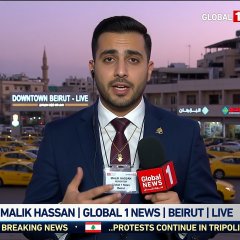
Middle East Correspondent at Global1.News. Based in Beirut, covering politics, conflict, energy, and society across the Middle East. Brings context and depth to a region often reduced to headlines.










Comments (0)