
Seoul Subway Zero Deaths: Platform Screen Doors Set Global Safety Benchmark
The Historical Trajectory of Seoul’s Subway System The Seoul subway network, which opened its first line in 1974, has grown into one of the world’s busiest urban rail systems, serving approximately seven million passengers daily. Over five decades, successive municipal administrations expanded the network while confronting persistent safety challenges, particularly incidents in
The Historical Trajectory of Seoul’s Subway System
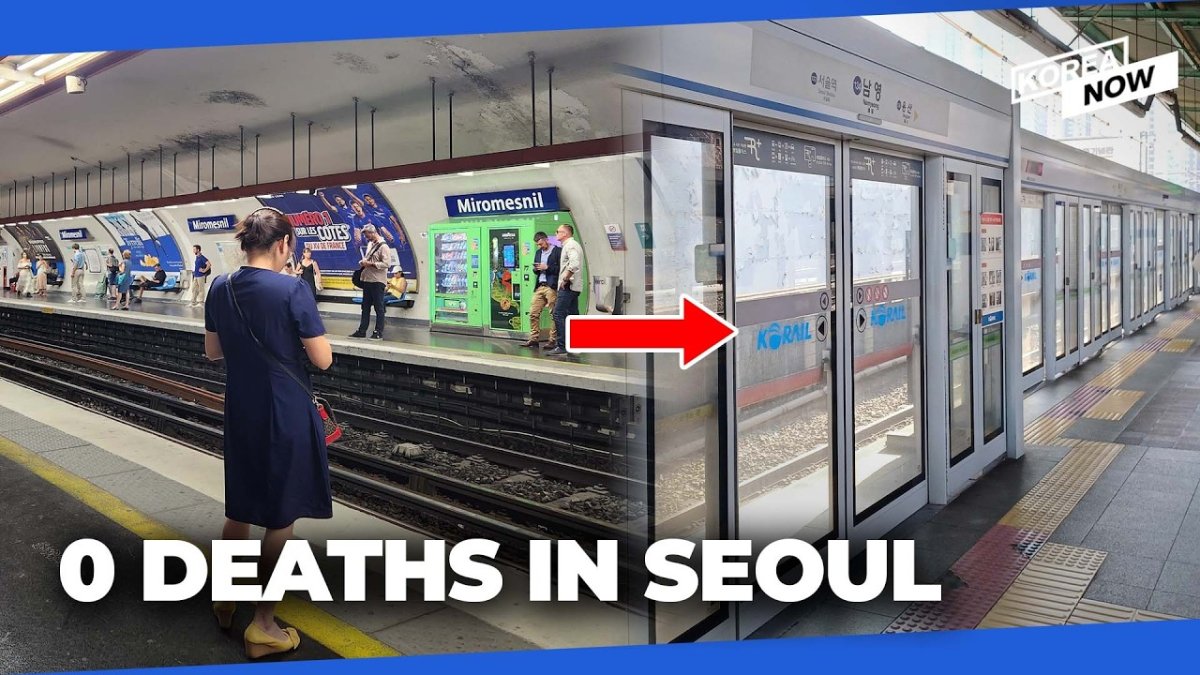
The Seoul subway network, which opened its first line in 1974, has grown into one of the world’s busiest urban rail systems, serving approximately seven million passengers daily. Over five decades, successive municipal administrations expanded the network while confronting persistent safety challenges, particularly incidents involving passengers falling onto tracks. Data compiled by the Seoul Metropolitan Government reveal that between 2001 and 2009 the system recorded an annual average of 37.1 passenger deaths. These figures prompted a decisive policy shift toward systematic installation of platform screen doors, beginning in 2006 and reaching completion on the core Lines 1–8 by 2009.
This timeline reflects a deliberate, phased approach rather than instantaneous enforcement. The Seoul Metropolitan Government coordinated with multiple operating entities to retrofit stations progressively, ensuring that engineering standards kept pace with ridership growth. The achievement of zero passenger deaths in 2025, reported by Song Seung-hyun in The Korea Herald, marks the first such year in the system’s history and underscores the cumulative effect of sustained infrastructure investment.
Quantifying the Impact of Platform Screen Doors
Official Seoul Metropolitan Government statistics demonstrate a dramatic reduction in fatalities following full deployment. From 2010 through 2024 the annual average fell to 0.4 deaths, a decline exceeding 98 percent from the pre-installation baseline. By 2009 all 262 stations on Lines 1–8 had received platform screen doors; the current total stands at 345 stations when Line 9 and several light-rail extensions are included. These numbers are not estimates but derive directly from municipal operational records.
The policy’s success stems from uniform application across high-traffic corridors rather than selective pilot projects. Installation was completed under successive mayoral administrations, illustrating continuity in urban safety priorities irrespective of political cycles. While the 2025 zero-fatality outcome is notable, authorities continue to monitor edge cases at newer stations where doors were added after 2009.
Policy Framework Underpinning the Achievement
The Seoul Metropolitan Government adopted an integrated safety mandate that linked platform screen door installation to broader station modernization budgets. Rather than treating the technology as an optional upgrade, planners embedded it within mandatory accessibility and environmental standards. This approach avoided fragmented implementation and ensured that every station renovation included barrier systems meeting uniform technical specifications.
Inter-agency coordination between the metropolitan authority, Korea Railroad Corporation, and private operators facilitated consistent enforcement. Budget allocations prioritized stations with historically elevated incident rates, creating a data-driven rollout sequence. The resulting infrastructure now functions as a baseline expectation for any future line extensions, including those currently under planning for the metropolitan region.
Additional Environmental and Operational Benefits
Beyond fatality prevention, platform screen doors have delivered measurable secondary gains. Seoul Metropolitan Government monitoring indicates an approximate 20 percent reduction in fine dust concentrations within station environments, alongside lower noise levels and decreased energy expenditure for climate control. These outcomes arise because the barriers limit air exchange between tunnels and platforms, allowing ventilation systems to operate more efficiently.
Such co-benefits reinforce the case for viewing platform screen doors as multi-functional infrastructure rather than single-purpose safety devices. Korean urban planners increasingly cite these ancillary advantages when justifying similar investments in other transit modes, including bus rapid transit terminals and intermodal hubs.
Comparative Perspectives with Global Subway Networks
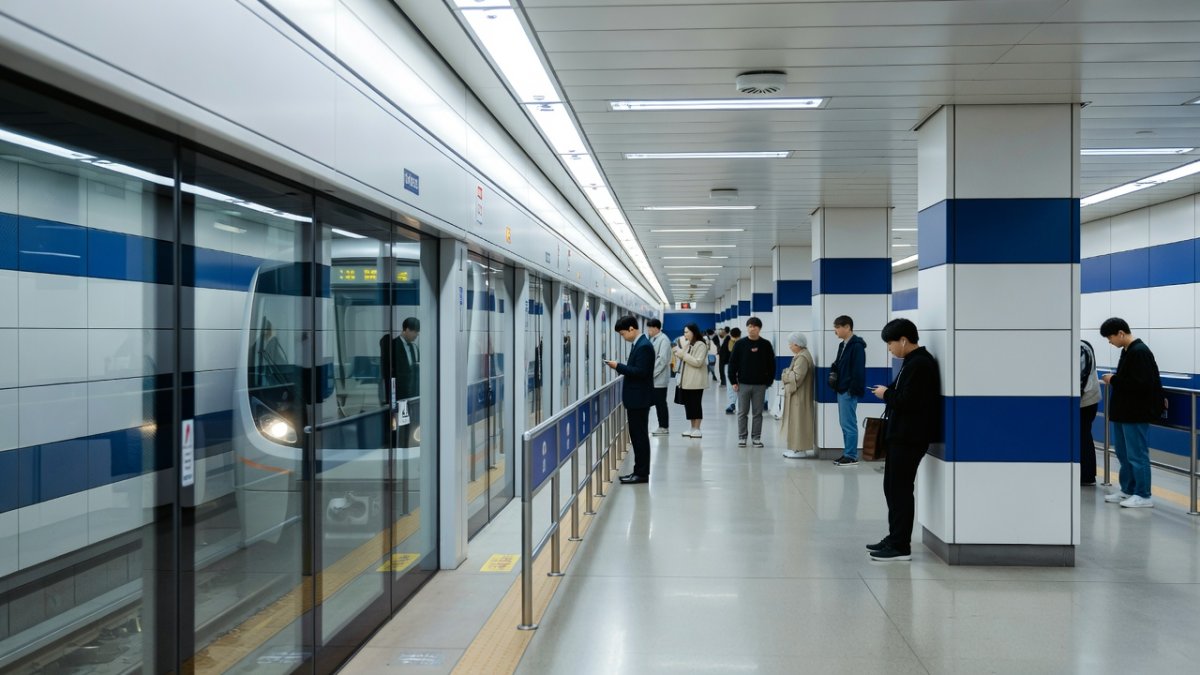
International subway systems have pursued divergent safety strategies, yielding uneven results. Cities such as London and New York have introduced platform edge markings and automated announcements but retain open platforms at most stations. Reported track-intrusion incidents in those networks remain higher than Seoul’s post-2010 average, although direct statistical comparisons require caution due to differing reporting methodologies.
Seoul’s comprehensive retrofit offers a reference point for dense Asian megacities facing comparable ridership pressures. Hong Kong and Singapore have adopted similar door systems on newer lines, yet their networks are smaller and were constructed later, reducing the scale of retrofitting challenges. Seoul’s experience demonstrates that legacy networks can achieve comparable safety levels when political commitment and funding continuity are sustained over multiple electoral cycles.
Relevance to Korean Foreign Policy and Infrastructure Diplomacy
The platform screen door program illustrates how domestic urban governance successes can translate into instruments of soft power. Korean engineering firms have begun exporting barrier technology and installation expertise to Southeast Asian and Middle Eastern transit projects, often under government-to-government memoranda of understanding. These arrangements position Korea as a reliable partner in urban safety modernization, complementing traditional diplomatic channels focused on security and trade.
Within multilateral forums such as the OECD and various urban development working groups, Seoul’s zero-fatality milestone supplies concrete evidence for policy recommendations on public transport risk mitigation. Korean officials have referenced the program in bilateral discussions with cities seeking to upgrade aging infrastructure, thereby extending the reach of Korean technical standards beyond the peninsula. This linkage between municipal achievement and international engagement exemplifies how infrastructure policy can serve broader foreign policy objectives without direct state-to-state negotiation.
Future Considerations for Sustained Safety Performance
Maintaining the zero-death record will require ongoing attention to system expansion and technological upgrades. New lines and extensions must incorporate the same door specifications from the design stage, while older installations undergo periodic sensor and mechanical refurbishment. The Seoul Metropolitan Government has signaled continued investment in predictive maintenance analytics to identify potential failures before they affect passenger safety.
Public education campaigns remain essential, as passenger behavior at platform edges continues to evolve with changing demographics and smartphone usage patterns. The 2025 outcome validates the original policy choice, yet authorities recognize that infrastructure alone cannot eliminate all risk categories. Continued vigilance, supported by transparent data publication, will determine whether the current record becomes a durable norm rather than an exceptional year.
By Prof. David Park, Staff Writer
This article was produced with AI-assisted research and editorial support. Reporting is based on sources cited in the article.
What's Your Reaction?
 Like
0
Like
0
 Dislike
0
Dislike
0
 Love
0
Love
0
 Funny
0
Funny
0
 Wow
0
Wow
0
 Sad
0
Sad
0
 Angry
0
Angry
0

East Asia/Technology Correspondent at Global1.News. Seoul-based voice covering Korean politics, technology, business, and culture. Analyzes how technology and geopolitics intersect across East Asia.















Comments (0)