
Egypt Unveils World's Largest Military Headquarters 'The Octagon'
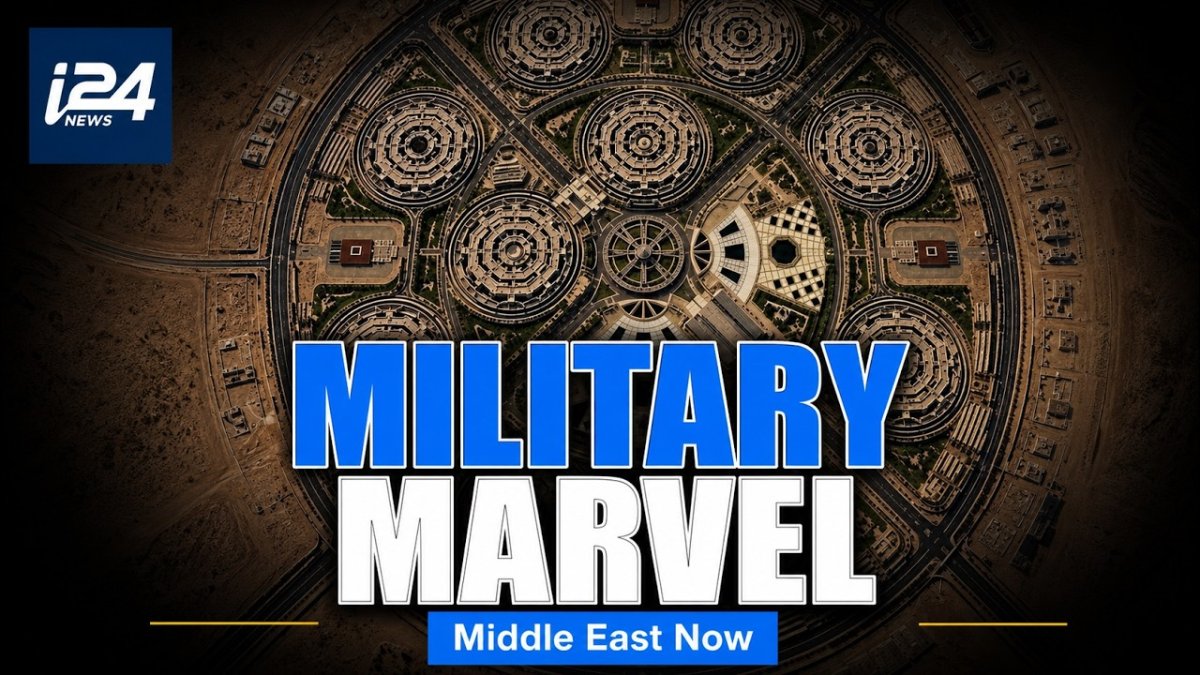
Introduction The i24NEWS English broadcast from July 12 featured exclusive footage of Egypt unveiling what officials describe as the world's largest military headquarters known as The Octagon. The ceremony took place on July 4 in the New Administrative Capital located 45 kilometers east of Cairo. President Abdel Fattah el-Sisi appeared in military uniform for the first time in more than a decade and received an 11-gun salute followed by an Egyptian air force flyover. This development holds d

Introduction
The i24NEWS English broadcast from July 12 featured exclusive footage of Egypt unveiling what officials describe as the world's largest military headquarters known as The Octagon. The ceremony took place on July 4 in the New Administrative Capital located 45 kilometers east of Cairo. President Abdel Fattah el-Sisi appeared in military uniform for the first time in more than a decade and received an 11-gun salute followed by an Egyptian air force flyover. This development holds direct relevance for Israeli readers because Egypt remains a critical partner under the 1979 Camp David Accords and serves as the primary mediator between Israel and Hamas in Gaza-related negotiations.
Israeli security officials have monitored the project closely since construction began several years ago. The New Administrative Capital itself represents a major relocation of government functions away from the Nile Valley. Egyptian authorities presented the headquarters as a symbol of national self-reliance and technological advancement. For Israel the timing coincides with ongoing discussions about Gaza ceasefire terms and border security arrangements along the Philadelphi Corridor.
Regional analysts note that Egypt's military modernization occurs against the backdrop of persistent threats from ISIS affiliates in the Sinai Peninsula. Joint operations between Egyptian forces and the Israel Defense Forces have continued since 2015 with regular coordination meetings. The Octagon inauguration therefore signals both capability and intent on Cairo's part. Israeli policymakers must assess how this infrastructure affects long-standing intelligence-sharing channels.
President el-Sisi's decision to wear his uniform underscored the military's central role in Egyptian governance. The event drew senior commanders from across the armed forces and highlighted the country's 450,000 active-duty personnel. Such displays carry weight in a region where military strength often translates into political leverage. Israeli readers should consider how these symbols influence Egypt's approach to Rafah crossing management and hostage-release talks.
The broadcast also placed the headquarters within the broader context of Egyptian foreign policy. Cairo continues to receive 1.3 billion dollars in annual United States military assistance tied to the peace treaty with Israel. This aid framework remains unchanged despite the new facility. Observers in Jerusalem therefore view the Octagon as an internal Egyptian matter that nevertheless requires careful diplomatic calibration.
The Octagon
The facility spans 22,000 acres making it vastly larger than the United States Pentagon which covers 583 acres. Eight octagonal buildings form the core of the complex and house command centers equipped with artificial-intelligence-powered C4ISR systems. These technologies enable real-time coordination across air land and naval domains. Egyptian engineers completed the entire project using only domestic firms without foreign contractors.
Fiber-optic networks link every building to massive underground data centers designed for secure information processing. Cybersecurity measures include multiple redundant layers intended to protect against external intrusion. The infrastructure centralizes command functions for Egypt's entire 450,000-strong active force. Such consolidation allows faster decision-making during operations in the Sinai Peninsula or along the Suez Canal.
Officials emphasize that the headquarters improves Egypt's ability to secure vital maritime routes. The Suez Canal remains a critical artery for global trade and any disruption would affect energy supplies reaching Europe and Asia. Israeli shipping interests therefore share a stake in stable Egyptian control of the waterway. The Octagon's location in the New Administrative Capital places it at a safe distance from potential coastal threats.
Construction details reveal an emphasis on self-sufficiency in defense production. Egyptian companies supplied materials and installed the advanced communications equipment. This approach reduces reliance on external suppliers and aligns with broader national industrialization goals. Israeli defense analysts note that similar self-reliance efforts could influence future arms-procurement patterns in the region.
The scale of the project also reflects Egypt's determination to project strength amid shifting regional alliances. Commanders can now oversee joint Sinai operations against ISIS remnants from a single integrated location. This capability matters for Israel because cross-border coordination has helped contain militant activity near the border. Continued stability in the peninsula supports the overall security environment envisioned by the Camp David framework.
Israel's Perspective
The Jerusalem Post recently asked whether Israel should fear Egypt's new Octagon headquarters. Israeli defense officials have responded with measured assessments rather than alarm. Recent meetings between IDF officers and their Egyptian counterparts in Cairo focused on Gaza-related coordination. These discussions occurred within the established mechanisms of the Camp David Accords and produced no public signs of friction.
The disparity in United States military aid remains a point of quiet comparison. Israel receives 3.8 billion dollars annually while Egypt receives 1.3 billion dollars. Both amounts are linked to the same peace treaty obligations. Israeli strategists argue that the aid levels reflect different threat environments and do not indicate diminished American commitment to either partner.
Intelligence-sharing arrangements between the two countries have continued uninterrupted. Egyptian authorities provide advance notice of major Sinai operations that could affect Israeli border communities. The Octagon's advanced C4ISR systems could in principle enhance the quality of such information if Cairo chooses to share it. Israeli assessments from Tel Aviv and Jerusalem therefore treat the facility as a potential asset rather than an inherent risk.
Jerusalem maintains that the Camp David framework provides sufficient safeguards against misuse of Egyptian military capabilities. Regular liaison channels allow rapid clarification of any ambiguous developments. Israeli planners continue to track Egyptian force deployments near the border but have not altered readiness postures in response to the inauguration. This continuity reflects confidence in existing bilateral mechanisms.
Public commentary in Israel has remained restrained. Security correspondents emphasize that Egypt's military modernization occurs within a treaty-bound relationship that has endured for more than four decades. The Octagon does not alter the fundamental strategic calculation that a stable Egypt serves Israeli interests. Policymakers therefore focus on practical cooperation rather than hypothetical scenarios.
Regional Dynamics
Egypt's role as mediator between Israel and Hamas in Gaza relies on secure and efficient command structures. The Octagon could streamline internal Egyptian decision-making during sensitive negotiations involving hostage releases or ceasefire terms. Israeli officials value Cairo's unique access to Hamas leadership and therefore welcome any improvement in Egyptian operational capacity. The New Administrative Capital's location further insulates these functions from potential disruptions in older urban centers.
Joint operations in the Sinai Peninsula have reduced ISIS presence since 2015. Coordinated patrols and intelligence exchanges have prevented militant groups from establishing permanent footholds near the Israeli border. The centralized command offered by the Octagon may accelerate response times during future incidents. Both countries share an interest in preventing the peninsula from becoming a launchpad for attacks.
Red Sea and Suez Canal security concerns extend beyond bilateral relations. Disruptions caused by Houthi activity or Iranian proxies affect global shipping lanes that Israel also depends upon. Egyptian control of these routes remains essential for regional economic stability. The Octagon's data centers and surveillance capabilities could contribute to monitoring efforts in these maritime zones.
The Philadelphi Corridor and Rafah crossing continue to feature in Israeli-Egyptian discussions. Any enhancement of Egyptian border-management infrastructure indirectly supports Israeli efforts to prevent weapons smuggling into Gaza. Cairo has demonstrated willingness to address these issues through existing security protocols. The new headquarters does not change that operational reality.
Concerns about Hezbollah and Iran factor into Israeli calculations regarding Egyptian military developments. Cairo shares Jerusalem's interest in limiting Iranian influence across the region. Strengthened Egyptian command capabilities could deter adventurism by Tehran-backed actors near the Suez Canal. Israeli diplomats therefore view the Octagon within a wider strategic context that includes Saudi Arabia and other Gulf states.

International Reactions
The United States has maintained its 1.3 billion dollar annual military assistance package to Egypt without modification. Washington views the aid as essential to preserving the Camp David framework and supporting counterterrorism cooperation. American officials have not linked the assistance to the Octagon project. This continuity reassures Israeli partners that core treaty commitments remain intact.
China has monitored developments around the Red Sea and Suez Canal with particular attention to trade-route implications. Beijing's interest stems from its own commercial shipping volumes rather than direct military rivalry. Egyptian authorities have kept the project open to international observation while emphasizing domestic construction. No formal Chinese statements have addressed the headquarters inauguration.
European Union representatives have expressed general support for Egyptian stability and economic development. Brussels maintains development programs in the New Administrative Capital and values Egypt's role in managing migration flows across the Mediterranean. The Octagon itself has not prompted specific EU commentary. European diplomats continue to engage Cairo on regional security matters including Gaza mediation.
The Palestinian Authority welcomed the inauguration as a sign of Egyptian strength that could benefit Palestinian interests. Hamas issued no public reaction. Hezbollah remained silent on the matter consistent with its pattern of avoiding direct commentary on Egyptian military affairs. These varied responses reflect the complex web of regional alignments surrounding the project.
Foreign ministries in Jerusalem and Cairo have handled the issue through routine diplomatic channels. Both sides have reaffirmed their commitment to the peace treaty and ongoing security coordination. No special consultations were required following the July 4 ceremony. This low-key approach aligns with the long-standing preference for quiet diplomacy between the two capitals.
Analysis
The Octagon represents a long-term investment in Egyptian military self-reliance that could gradually shift regional power dynamics. Israeli security planners must consider how centralized command structures affect Egypt's ability to respond to crises along shared borders. Over time the facility may enable more independent Egyptian decision-making even within the Camp David framework. Policymakers in Jerusalem therefore emphasize the importance of sustained dialogue to prevent misperceptions.
Gaza mediation channels stand to benefit from improved Egyptian operational efficiency. Faster internal coordination within Cairo could shorten response times during hostage negotiations or ceasefire implementation. Israel has every incentive to support Egyptian capabilities that facilitate these talks. The headquarters does not alter the fundamental reliance on Egyptian good offices.
Egyptian military self-reliance carries implications for future arms acquisitions and technology transfers. Reduced dependence on foreign contractors may encourage similar trends among other regional actors. Israeli defense industries should monitor these developments for potential cooperation opportunities in non-sensitive areas. The overall balance of power with Iran Turkey and Saudi Arabia will evolve gradually rather than dramatically.
The Camp David framework has proven resilient through multiple regional upheavals. The Octagon does not challenge the treaty's core provisions regarding force limitations and mutual recognition. Israeli assessments therefore treat the facility as consistent with Egypt's sovereign right to modernize its armed forces. Continued adherence to treaty mechanisms remains the best guarantee of stability.
Forward-looking Israeli policy should prioritize intelligence cooperation and regular high-level contacts. The New Administrative Capital's strategic positioning offers new venues for such engagement. Regional power balances will continue to shift but the bilateral relationship built over four decades provides a stable foundation. Israeli readers can view the Octagon as one element within a broader and still cooperative security environment.
By Hannah Berg, Staff WriterWhat's Your Reaction?
 Like
0
Like
0
 Dislike
0
Dislike
0
 Love
0
Love
0
 Funny
0
Funny
0
 Wow
0
Wow
0
 Sad
0
Sad
0
 Angry
0
Angry
0







Comments (0)