
US and Iran Trade Strikes Across the Middle East as Fragile Ceasefire Collapses
The BBC News report details how the fragile ceasefire between the United States and Iran has unravelled into open exchanges of fire, with both sides launching strikes across the Middle East this week. The US military confirmed it hit 90 Iranian targets along the coastline, including air defence systems and military logistics infrastructure, while Iran retaliated against America
The BBC News report details how the fragile ceasefire between the United States and Iran has unravelled into open exchanges of fire, with both sides launching strikes across the Middle East this week. The US military confirmed it hit 90 Iranian targets along the coastline, including air defence systems and military logistics infrastructure, while Iran retaliated against American assets in Kuwait, Bahrain and Qatar. The escalation, which follows weeks of relative calm after the 17 June memorandum of understanding, has already triggered a dramatic drop in commercial shipping through the Strait of Hormuz — a vital artery for global energy supplies. Observers report that daily vessel traffic has fallen from a pre-war average of 130 ships to just 30, with the southern route now seeing only single-figure transits.
US and Iran Trade Strikes Across the Middle East as Fragile Ceasefire Collapses
Moscow – 10 July 2026 — The BBC News report details how the fragile ceasefire between the United States and Iran has unravelled into open exchanges of fire this week. The US military confirmed it hit 90 Iranian targets along the coastline, including air defence systems and military logistics infrastructure, while Iran retaliated against American assets in Kuwait, Bahrain and Qatar. Observers report that daily vessel traffic through the Strait of Hormuz has collapsed from 130 ships to just 30.
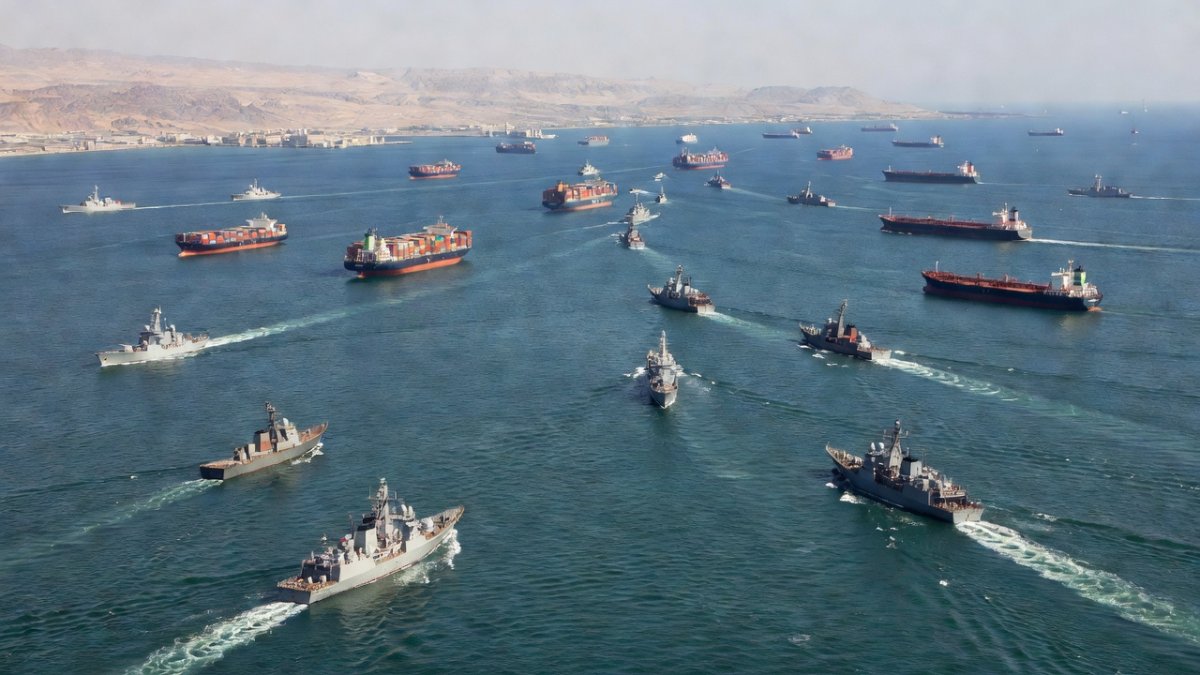
Escalation as Ceasefire Collapses — US and Iran Trade Strikes Across the Middle East
The timing is especially significant, coming as Iran buries its late Supreme Leader Ayatollah Ali Khamenei, who was killed during the opening hours of US and Israeli strikes on 28 February. Hundreds of thousands packed the streets of Mashhad for the funeral on Thursday, and the convergence of the burial with renewed military hostilities has intensified an already volatile atmosphere. President Donald Trump declared the ceasefire agreement "over" on Wednesday, describing Iranian leadership as "scum" and questioning whether Tehran was worthy of further negotiations. The 60-day negotiating window established by the MoU technically remains open, but Trump's language suggests the administration sees little value in continuing the diplomatic track.
Further exchanges continued into Thursday as Iran launched additional strikes on sites in Kuwait, Jordan and Iraq according to state-linked media reports. CENTCOM stated that the initial US operation targeted 90 military sites including air defense systems and logistics infrastructure. Iran's foreign ministry denounced these actions as a "grave war crime" and labelled the US administration "evil and psychopathic." Bridges and the railway route connecting Tehran to Mashhad suffered damage during the strikes, according to the foreign ministry. These developments underscore how quickly the 17 June agreement has deteriorated despite its provisions for safe passage and sanctions relief.
The Strategic Dimensions — Strait of Hormuz and Energy Security
Phil Belcher, marine director at Intertanko, the international organisation for independent tanker owners, told BBC Radio 4's Today programme that shipping through the Strait has declined so severely that the southern route — closer to Oman and considered safer — now sees only single-figure transits daily. The overall number of approximately 30 vessels represents a collapse from 70 just a week ago and is a fraction of the 130 ships that normally traverse this chokepoint each day. Belcher described an "exuberance of optimism" that had briefly followed the signing of the MoU in June, when shipowners had hoped the ceasefire would hold. That optimism has now evaporated. "This cycle of violence, this cycle of up-and-down, positive-negative news, it's having an enormous impact both on business and on the seafarers themselves," he said.
The Strait of Hormuz carries roughly 20 percent of the world's oil supply, and any sustained disruption has immediate consequences for global energy prices, insurance premiums for Gulf shipping, and the economies of both consuming and producing nations. Iran's parliamentary speaker Mohammad Bagher Ghalibaf — who also serves as Tehran's chief negotiator with Washington — issued a stark warning on X, declaring that the waterway "will only open under Iranian arrangements — not American threats." His statement crystallises the fundamental post-MoU tension: the agreement's provision for safe passage through the Strait has effectively collapsed, and neither side appears ready to back down. Analysts suggest this signals a deliberate Iranian strategy to leverage energy routes amid leadership transition.
Khamenei's Funeral and Iran's Internal Dynamics
The funeral of Ayatollah Ali Khamenei, which concluded in Mashhad on Thursday after six days of ceremonies across Iran and Iraq, has become a stage for the Islamic Republic's dual message of grief and defiance. Crowds massed in the streets of the holy city waving Iranian flags, while some carried signs bearing death threats directed at President Trump, according to BBC reporting. The funeral's scale — some 3,000 kilometres of processions from Tehran through Karbala to Mashhad — was unprecedented even by Iranian standards, reflecting both the genuine religious reverence for the late Supreme Leader and the regime's determination to project national unity at a moment of acute military crisis. Iran's foreign ministry used the burial day to denounce the latest US strikes as a "grave war crime," describing the American administration in terms rarely used in formal diplomatic language: "evil and psychopathic."
Who succeeds Khamenei remains an open question with profound implications for Iran's trajectory and the broader Middle East. The regime has not yet announced a successor, and the intersection of a leadership transition with active hostilities creates a uniquely dangerous moment. Iran's response to the US strikes — hitting American assets in three Gulf states and then expanding to Kuwait, Jordan and Iraq — demonstrates that the decision-making structure in Tehran remains operational and coordinated, even amidst the ritual mourning for the man who dominated Iranian politics for thirty-six years. Bridges and a railway route connecting Tehran to Mashhad were also damaged in the strikes, a detail that the foreign ministry emphasised as evidence of the war's reach into civilian infrastructure. This could indicate internal resilience despite external pressure.
Regional Fallout and Gulf State Responses
Iran's strikes against US assets in Kuwait, Bahrain and Qatar drew these Gulf states into the conflict directly. Explosions were heard in Bahrain's capital Manama, Kuwait confirmed it intercepted incoming missiles and drones, and Qatar issued a security alert across its territory. For these nations, which host major US military facilities, the exchanges of fire represent an unwelcome escalation on their soil — a reminder that when Washington and Tehran trade blows, the Gulf monarchies absorb the consequences. The strikes also extended to Jordan and Iraq later on Thursday, widening the geographical scope of the confrontation beyond the Gulf itself. Gulf nations reported Iranian attacks through official channels while maintaining cautious public statements.
Each of these countries faces difficult calculations. Kuwait and Bahrain are critical to US force posture in the region but maintain their own tenuous relationships with Iran. Qatar, which has historically positioned itself as a diplomatic intermediary, now finds itself a target. The security alert issued by Doha signals an acknowledgement that the traditional mediation channels have collapsed. Meanwhile, the UAE's disputed island of Abu Musa — struck by two projectiles — adds a long-simmering territorial grievance to the current crisis. For Moscow and Beijing, watching from the sidelines, the escalation validates their narrative that US military engagement in the Middle East produces instability rather than security. This dynamic may reshape regional alliances in coming weeks.
Human Toll and Humanitarian Concerns
Iran's health ministry reported 14 civilians killed and 78 wounded across five provinces, figures that represent only the Iranian side of the ledger. The US has not released any casualty figures for its forces or for the personnel at the targeted facilities in Kuwait, Bahrain or Qatar. Beyond the immediate casualties, the humanitarian consequences are mounting: power cuts have been reported in the port city of Chabahar, a fire broke out at an IRGC barracks in Bushehr, and verified videos circulating on social media show damage to a marine control tower in Chabahar's port area. For ordinary Iranians, already grappling with years of sanctions and economic hardship, the return of active hostilities adds a new layer of uncertainty to daily life. Iran's foreign ministry highlighted damage to civilian infrastructure in its statements.
Iranian state media also reported that targets near the Bushehr nuclear power plant were hit, citing the deputy governor of the province. The US has not commented on these reports, but any proximity to a nuclear facility raises obvious alarm — both for environmental safety and for the broader message it sends about targeting. The International Atomic Energy Agency has not issued a statement at the time of writing, but such incidents inevitably complicate the already fraught question of Iran's nuclear programme and its relationship with international inspectors. Meanwhile, in Konarak, a local official told Iran's official news agency that a navy site was attacked by an "enemy" — though a US defence official separately told the BBC it had not carried out strikes in Iran in recent hours. These reports underscore the challenges in verifying claims amid ongoing exchanges.
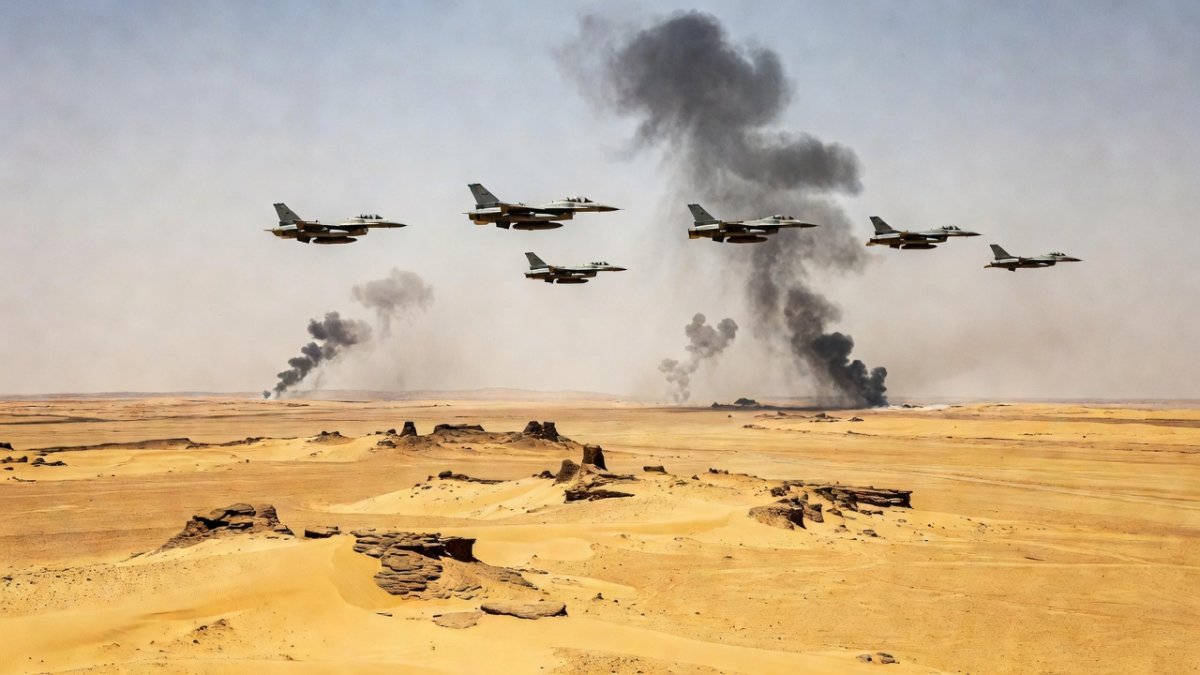
Analysis — What Comes Next for the US-Iran Confrontation
The collapse of the 17 June MoU raises the question of what diplomatic off-ramp remains. Trump has made clear he sees further talks as "a waste of time," but his admission that Iran "called wanting to make a deal so badly" suggests the back-channels remain open even as the public rhetoric hardens. For Tehran, the calculus is equally complex: the new leadership must consolidate internally while projecting strength externally, and the funeral of Khamenei has demonstrated both the regime's mobilising power and the depth of anti-American sentiment among the population. The 60-day negotiating window specified in the MoU has not yet expired, but the practical basis for those negotiations — a functioning ceasefire — has evaporated. Analysts suggest this signals potential for prolonged low-level conflict rather than immediate resolution.
For the global community, the implications are stark. Every day the Strait of Hormuz operates at a fraction of its normal capacity, the cost is measured in higher energy prices, disrupted supply chains, and increased insurance risk for any vessel operating in the Gulf. European capitals, which had cautiously welcomed the June ceasefire as a step toward regional stability, now face renewed pressure to choose between the US security umbrella and their own economic interests. Moscow and Beijing, meanwhile, watch with strategic patience: a prolonged US-Iran confrontation drains American resources and attention from both the European and Indo-Pacific theatres. Whether the current exchange of strikes burns itself out or escalates into a wider regional war will depend on decisions made in Washington, Tehran, and the Gulf capitals caught between them.
Conclusion — A Ceasefire in Name Only
The 17 June memorandum of understanding was always a fragile construct, a 14-point framework that committed both sides to de-escalation without addressing the fundamental antagonism between Washington and Tehran. This week's exchanges of fire have exposed that fragility in the most dramatic terms possible. With the Strait of Hormuz effectively paralysed, Khamenei being buried, and both sides describing each other in terms that preclude easy reconciliation, the Middle East finds itself once again on the edge of a broader conflagration. The question is no longer whether the ceasefire can hold — it has already broken — but whether the parties can find a new framework before the region's most vital waterway becomes a permanent battlefield.
By Irina Volkov, Staff Writer
This article was produced with AI-assisted research and editorial support. Reporting is based on sources cited in the article.
What's Your Reaction?
 Like
0
Like
0
 Dislike
0
Dislike
0
 Love
0
Love
0
 Funny
0
Funny
0
 Wow
0
Wow
0
 Sad
0
Sad
0
 Angry
0
Angry
0

Russia/Eastern Europe Correspondent at Global1.News. Covering Russian politics, energy, security, and the shifting dynamics of the post-Soviet space. Provides clear-eyed analysis on one of the world's most opaque regions.












Comments (0)