
Trump’s Gaza ‘Board of Peace’ in collapse as fund receives ‘zero dollars’ from donors
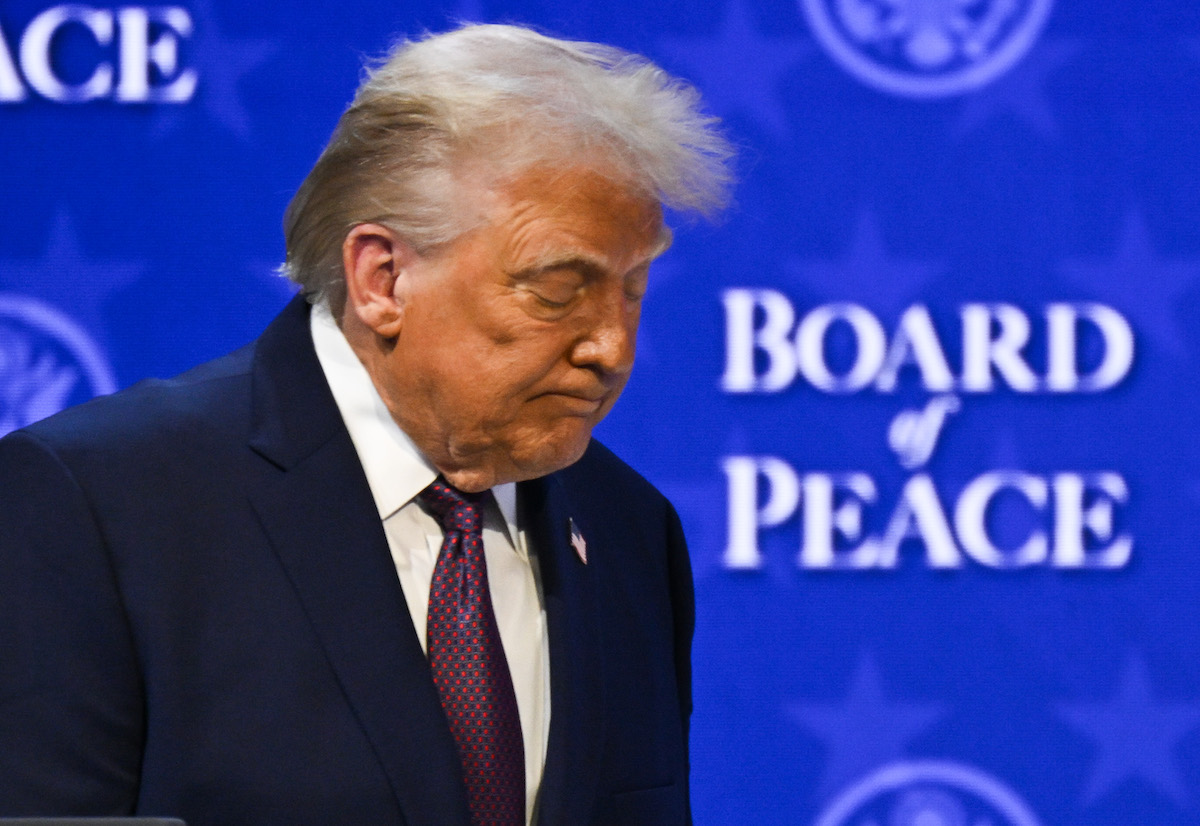
Trump’s Gaza ‘Board of Peace’ in collapse as fund receives ‘zero dollars’ from donors
The Unraveling of a Political Promise
Donald Trump’s self-styled Board of Peace for Gaza is facing a deepening crisis after its official reconstruction fund failed to receive any donor money, despite $17 billion in pledged support. The absence of even a single dollar transferred to the fund has exposed the initiative as little more than a hollow political project, leaving Palestinian communities in Gaza to confront yet another cycle of unfulfilled international commitments. As reconstruction needs soar following years of devastating conflict, the zero-dollar reality underscores a stark disconnect between rhetoric and action.
Internal documents obtained by Global1 News reveal that the Board, announced with fanfare during Trump’s previous term and revived in recent months, set an ambitious target of $17 billion for immediate infrastructure repair, housing, and humanitarian corridors. Yet financial records from the fund’s managing entity, a Washington-based nonprofit tied to U.S. State Department advisors, show zero inflows since its formal launch six months ago. Pledges from Gulf states, European donors, and private foundations have remained frozen amid concerns over governance, transparency, and the Board’s lack of Palestinian representation.
Background: From Ceasefire Rhetoric to Institutional Vacuum
The Board of Peace emerged from Trump-era diplomacy that emphasized economic incentives over political negotiations. Proponents argued it would bypass traditional aid mechanisms, which they claimed were inefficient. However, Palestinian analysts have long warned that such structures sideline local voices. Gaza’s reconstruction has historically required an estimated $40 billion over a decade, according to World Bank assessments from 2023, yet actual disbursements rarely exceed 15 percent of pledged totals due to political conditions and access restrictions.
Current needs are acute. With over 60 percent of Gaza’s housing stock damaged or destroyed and 1.8 million residents facing acute food insecurity per UNRWA data, the Board’s failure compounds existing humanitarian strain. Israeli-imposed restrictions on construction materials continue to limit imports, while the absence of funding leaves rubble clearance and temporary shelter projects stalled.
Expert Perspectives on the Funding Collapse
Dr. Leila Mansour, a Ramallah-based economist specializing in post-conflict recovery, described the situation as predictable. “Pledges without enforceable mechanisms or Palestinian oversight inevitably evaporate,” she stated. “The Board was structured as a top-down entity with decision-making concentrated in U.S. and Israeli-linked circles, offering no accountability to the people whose lives are at stake.”
International observers echo this assessment. A senior UN official, speaking on condition of anonymity, noted that similar funds established after previous Gaza conflicts attracted initial headlines but delivered minimal results. “When governance excludes those most affected, donor confidence collapses,” the official said. Private sector contributors cited the same issue, with one European foundation withdrawing its $500 million commitment after learning the Board lacked an independent audit process.
Human Impact: Lives Suspended in Uncertainty
For families in Gaza, the collapse translates into immediate suffering. Ahmed al-Haj, a father of four whose home in Khan Younis was leveled last year, had hoped the Board would accelerate temporary housing. “We were told international money would come quickly,” he said in a phone interview. “Now winter approaches, and children sleep under plastic sheets.” Such accounts are widespread, with displacement camps overcrowded and medical facilities operating at 30 percent capacity due to equipment shortages.
Women and children bear disproportionate burdens. Reports from local NGOs document rising malnutrition rates among infants and limited access to psychosocial support for trauma survivors. The zero-dollar fund means projects addressing these gaps remain conceptual rather than operational.
Political Implications and Regional Repercussions
The Board’s troubles reflect broader shifts in U.S. policy credibility. Arab states that initially signaled support have grown wary, citing the absence of a political horizon for Palestinian statehood. Egypt and Jordan, key regional players, have privately communicated concerns that the initiative risks destabilizing already fragile ceasefires by raising expectations without delivery mechanisms.
Analysts argue this episode damages prospects for future multilateral efforts. “Trust, once eroded, requires years to rebuild,” observed Dr. Mansour. The lack of funds also strengthens narratives among Palestinian factions that external initiatives serve external interests rather than local needs, potentially complicating internal reconciliation talks.
Looking Ahead: Pathways Beyond Hollow Structures
Palestinian civil society groups are calling for alternative models centered on local governance and unconditional humanitarian access. Proposals include channeling resources through established UN agencies with verified track records and conditioning future pledges on measurable milestones tied to Palestinian priorities. Without such reforms, experts warn, Gaza’s reconstruction will remain aspirational.
The Board of Peace’s current state serves as a cautionary tale about the limits of externally imposed frameworks. As Gaza’s residents continue to endure the consequences, the demand for principled, accountable engagement grows louder.
This is Fatima Al-Rashid for Global1 News, reporting from Ramallah. 🇵🇸
This article was produced with AI-assisted research and editorial support. Reporting is based on sources cited in the article.
What's Your Reaction?
 Like
0
Like
0
 Dislike
0
Dislike
0
 Love
0
Love
0
 Funny
0
Funny
0
 Wow
0
Wow
0
 Sad
0
Sad
0
 Angry
0
Angry
0
Gulf/MENA Correspondent at Global1.News. Based in Doha, covering Gulf politics, energy markets, diplomacy, and development across the Middle East and North Africa. Tracks the economic transformation of the Gulf states.










Comments (0)