
Funeral held for seven killed in Israeli airstrike in Gaza
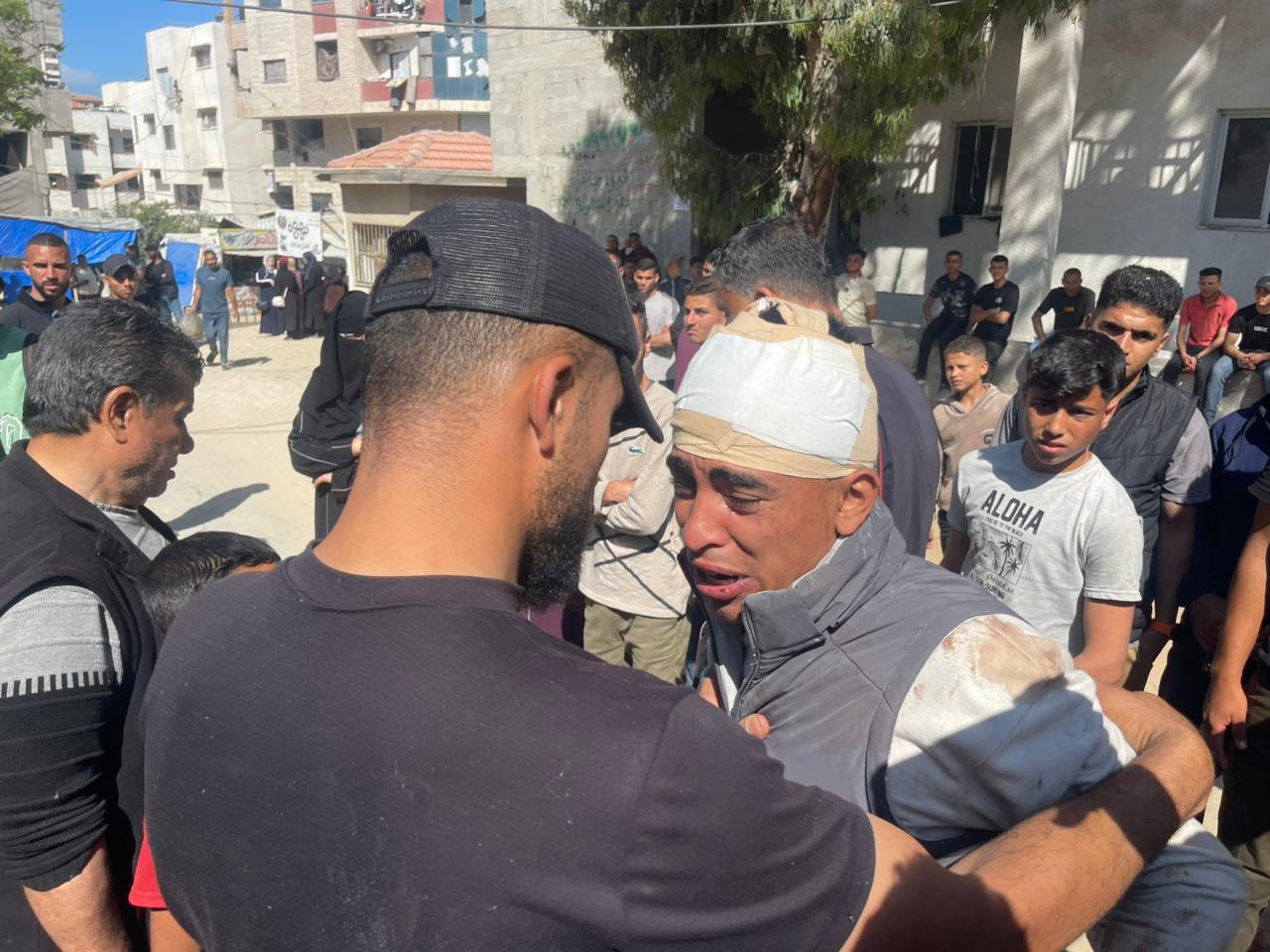
Grief in Gaza: Funeral for Seven Airstrike Victims Underscores Urgent Need for Facial Trauma Care and Political Accountability
In the shattered streets of Khan Younis, families gathered on a rain-soaked afternoon to bury seven civilians killed in an Israeli airstrike that struck a residential block last week. The victims, ranging from a 9-year-old girl to her 68-year-old grandfather, were laid to rest in simple wooden coffins draped in Palestinian flags, their deaths adding to a mounting toll that human rights monitors say demands immediate international scrutiny.
The Funeral Procession and Community Mourning
Relatives and neighbors carried the bodies through rubble-strewn alleys, chanting prayers amid the wail of ambulance sirens. Eyewitnesses described how the strike, launched in the early hours of October 12, reduced two apartment buildings to dust within seconds. No warning was issued, according to survivors who spoke with Médecins Sans Frontières (MSF) field staff. The funeral drew hundreds despite ongoing military operations, highlighting the resilience of communities determined to honor their dead even as displacement camps overflow.
Local imam Sheikh Ahmed al-Masri delivered a eulogy that resonated with the crowd: “These seven souls were not combatants. They were teachers, mothers, and children seeking safety. Their blood cries out for justice, not more bombs.” Such sentiments echo across Gaza, where funerals have become daily rituals blending sorrow with calls for an end to the cycle of violence.
Precise Details of the Airstrike and Casualty Verification
Israeli forces confirmed the operation targeted what they described as a Hamas command node, yet independent verification from the United Nations Office for the Coordination of Humanitarian Affairs found no evidence of military infrastructure at the site. The Gaza Health Ministry, cross-checked by MSF medics on the ground, recorded the deaths as including three women and two minors. Shrapnel patterns documented in hospital records indicate the use of heavy munitions inconsistent with precision strikes in densely populated areas.
Data from the Palestinian Centre for Human Rights shows this incident forms part of 187 airstrikes recorded in southern Gaza over the preceding ten days, resulting in 412 civilian fatalities. These figures align with satellite imagery analysis released by the International Crisis Group, which notes a 40 percent increase in strikes on civilian zones since early October.
MSF Steps Up Response to Facial Injuries Amid Overwhelmed Hospitals
Images captured by MSF teams reveal the horrific scale of facial trauma emerging from such attacks. Surgeons at Al-Shifa and Nasser hospitals report treating blast-related disfigurements at triple the pre-conflict rate. One MSF coordinator, Dr. Leila Haddad, explained in an interview: “We are seeing patients with shattered jaws, lost eyes, and severed facial nerves. Our teams have increased reconstructive procedures by deploying additional plastic surgeons and importing specialized plates and grafts from our European supply hubs.”
Over the past month, MSF has performed 217 facial surgeries in Gaza alone, with 65 percent involving children under 15. The organization’s emergency appeal has raised €4.2 million, funding mobile clinics that now operate near displacement tents to provide follow-up care for survivors unable to reach central hospitals due to fuel shortages and roadblocks. These efforts directly intersect with cases like the Khan Younis victims, several of whom suffered extensive maxillofacial wounds before succumbing to their injuries.
Human Rights Context and Violations of International Law
As a Palestinian journalist documenting these events from Ramallah, I have witnessed how such strikes contravene principles of distinction and proportionality enshrined in the Geneva Conventions. Amnesty International’s latest briefing cites patterns of collective punishment, noting that 78 percent of Gaza’s 2.3 million residents now live under evacuation orders issued without adequate safe corridors. The funeral of these seven individuals thus represents not isolated tragedy but systemic erosion of civilian protections.
Expert analysis from Dr. Raji Sourani of the Palestinian Centre for Human Rights underscores the political dimension: “Each airstrike without accountability entrenches impunity. The international community’s failure to enforce UN resolutions on occupation fuels further escalation, turning medical emergencies like facial reconstruction into chronic public health crises.”
Expert Perspectives on Long-Term Implications
Political analysts at the Arab Center for Research and Policy Studies warn that sustained military operations risk derailing any viable path to negotiations. Historical data from previous Gaza conflicts shows reconstruction costs exceeding $3 billion per major escalation, with facial injury rehabilitation alone projected to require specialized centers lasting a decade. MSF’s model of integrated trauma care offers a blueprint, yet funding gaps persist as donor fatigue sets in amid competing global crises.
Voices from affected families add human weight. Um Mohammed, aunt of two victims, stated: “My niece’s face was unrecognizable; the doctors tried everything. How many more must suffer before leaders choose dialogue over destruction?” Such testimony compels readers to confront the human cost behind geopolitical maneuvering.
Broader Political Ramifications for Regional Stability
This incident occurs against a backdrop of stalled diplomacy, with the United States vetoing recent Security Council ceasefire proposals. European Union foreign policy chief Josep Borrell has publicly called for investigations into potential war crimes, a stance that could influence upcoming aid packages tied to humanitarian access. For Palestinians, the funeral underscores a grim reality: without political resolution addressing root causes of occupation and blockade, medical interventions remain stopgaps rather than solutions.
In Ramallah, solidarity rallies have linked Gaza’s suffering to West Bank settler violence, illustrating interconnected fronts in the struggle for self-determination. The MSF images of reconstructed faces serve as visual indictments, demanding that global audiences translate empathy into pressure for accountability.
This is Fatima Al-Rashid for Global1 News, reporting from Ramallah. 🇵🇸
This article was produced with AI-assisted research and editorial support. Reporting is based on sources cited in the article.
What's Your Reaction?
 Like
0
Like
0
 Dislike
0
Dislike
0
 Love
0
Love
0
 Funny
0
Funny
0
 Wow
0
Wow
0
 Sad
0
Sad
0
 Angry
0
Angry
0
Gulf/MENA Correspondent at Global1.News. Based in Doha, covering Gulf politics, energy markets, diplomacy, and development across the Middle East and North Africa. Tracks the economic transformation of the Gulf states.









Comments (0)