
Trump Tells BBC Netanyahu Follows My Orders as Iran Ceasefire Holds
In a BBC News report presented by Reeta Chakrabarti, with contributions from North America Editor Sarah Smith, chief international correspondent Wyre Davies and veteran Middle East analyst Jeremy Bowen, President Donald Trump told the BBC this week that Israeli Prime Minister Benjamin Netanyahu did not defy his orders during the weekend's missile exchange between Iran and Israe
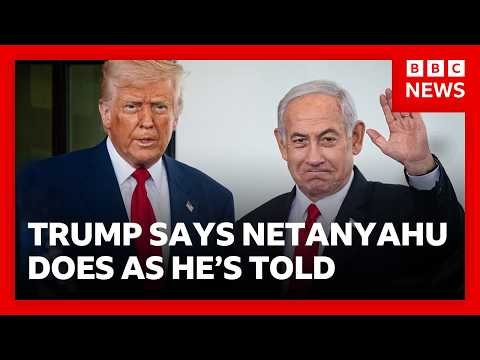
In a BBC News report presented by Reeta Chakrabarti, with contributions from North America Editor Sarah Smith, chief international correspondent Wyre Davies and veteran Middle East analyst Jeremy Bowen, President Donald Trump told the BBC this week that Israeli Prime Minister Benjamin Netanyahu did not defy his orders during the weekend's missile exchange between Iran and Israel — the first direct military confrontation between the two countries since the fragile April ceasefire was negotiated. Trump insisted that the Israeli strike on Iranian military sites had already been launched by the time he spoke with Netanyahu by phone, and that the Israeli leader ultimately complied with his demand to halt further operations. "If I tell him to do something, he does it," Trump said in the interview, a statement that carries significant weight as Washington and Tehran pursue what the president described as the "final throes" of negotiations on a comprehensive nuclear agreement. The BBC report, which aired on BBC News at Ten, also featured analysis from US State Department correspondent Tom Bateman, who examined the deeper implications of a crisis that has laid bare the tensions between Washington and its closest Middle Eastern ally.
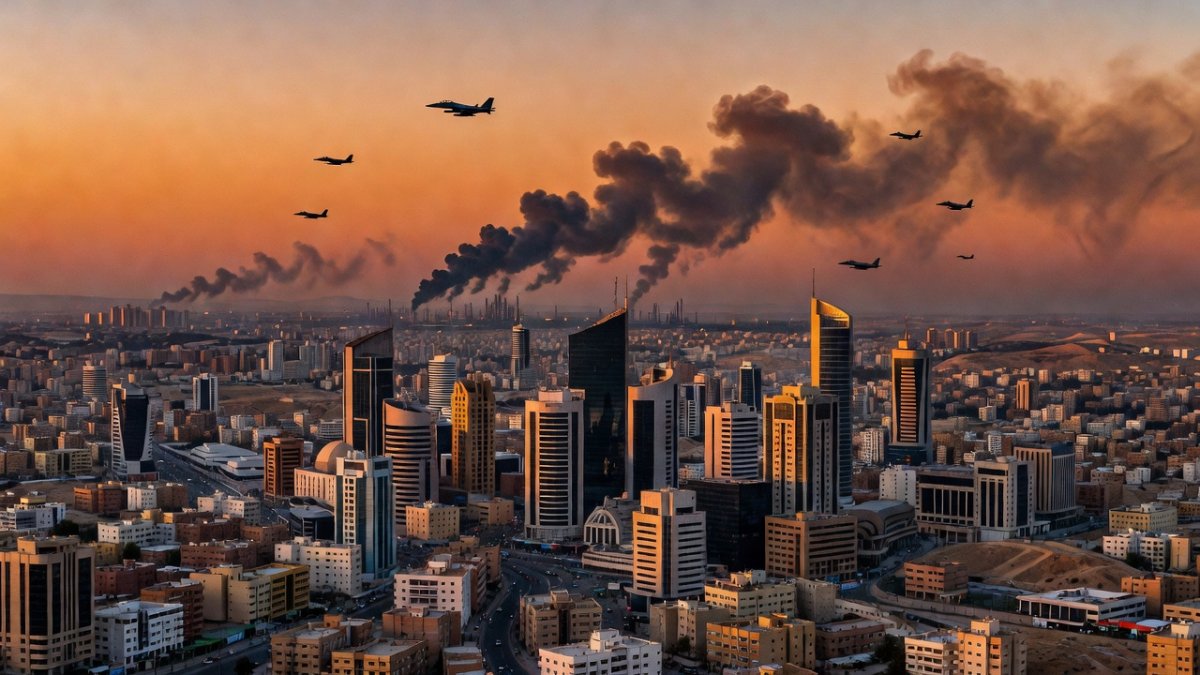
The sequence of events unfolded rapidly. On Sunday, Iran launched a barrage of missiles toward Israel, with Tehran officials stating the attack was retaliation for Israeli strikes on Hezbollah targets in the Lebanese capital, Beirut. Trump reacted by telling journalists he would call Netanyahu immediately and order restraint. Hours later, however, Israeli aircraft struck Iranian territory — targeting what the Israel Defence Forces described as military sites including a petrochemical complex near the southwestern city of Mahshahr. An Israeli military official said the facility produced chemicals used in the manufacture of ballistic missiles, making it a legitimate military target under international law. Iran's Emergency Organisation chief, Jafar Miadfar, told the Tasnim news agency that the strikes injured 14 people in Mahshahr and one in Tehran. The following morning, Iran launched additional missiles toward Jerusalem and central and southern Israel before announcing it had concluded its military operations, having delivered what it called a "painful response" to the Israeli attack — while simultaneously pledging "more severe and crushing measures" should Israel resume its strikes, particularly against Iranian assets in Lebanon.
Trump's BBC Interview: Assessing Control and Credibility
Trump's telephone interview with the BBC's North America Editor Sarah Smith was remarkable for its directness. When asked whether Netanyahu had defied his express wishes by launching the attack on Iran, the president did not hesitate. "No, no. They had already gone. They had already gone. They were already on their way," Trump said, offering a timeline suggesting the Israeli operation had been set in motion before any intervention from Washington was possible. The White House subsequently confirmed that Trump had indeed called Netanyahu to discuss the unfolding crisis, and an Israeli official confirmed that Israel had halted its strikes at the president's request — though only after the initial wave had been completed. Trump elaborated on how he had persuaded Netanyahu to refrain from further escalation, telling the BBC: "All I did is say, 'We have to use sense. We're very close to signing a very powerful deal, a very good deal.'" He then added, referencing the prospective nuclear agreement: "No nuclear weapons, no nothing. You know, we have to use a lot of common sense. It was fine."
The tension between Trump and Netanyahu has been building for weeks. Last week, Trump reportedly called Netanyahu "crazy" for wanting to attack Beirut during an expletive-laden rant reported by the New York Post. The president expressed irritation that Netanyahu was "constantly fighting with Lebanon," which Trump saw as threatening his negotiations with Iran. In an interview with Axios, Trump revealed he had warned the Israeli prime minister: "Bibi, you better be careful, or you will be on your own very soon." Yet on Monday, Trump publicly insisted that the relationship remained under his control. The contradiction between private frustration and public reassurance illuminates the delicate diplomatic dance both leaders are performing — Trump eager to claim a foreign policy victory before the end of his term, and Netanyahu balancing domestic security demands against the need to maintain Washington's support. For Moscow, which has long cultivated channels to both Jerusalem and Tehran, this friction between the United States and its closest regional ally represents an opportunity to expand Russian influence in the Middle East at America's expense. US officials have confirmed the largest military buildup in the region since the Iraq invasion, with hundreds of personnel coordinating airspace and intelligence alongside Israeli forces. This presence underscores Washington's stake in preventing uncontrolled escalation while pursuing the 2025-26 nuclear talks. Iranian officials in Tehran have watched these developments closely, viewing any perceived US hesitation as leverage in upcoming negotiations.
Netanyahu's Calculus: Defiance or Coordination?
Netanyahu's televised statement on Monday was carefully calibrated to preserve maximum flexibility. He announced that Israel would hold fire "at the moment" but stressed that the struggle against Iran and the Iran-backed Hezbollah militia in Lebanon was "not finished." He told Trump that "Israel has a full right to self-defence, and we are exercising it as required." The question of whether Netanyahu defied Trump is more complex than the president's public narrative suggests. Veteran US negotiator Aaron David Miller, speaking to the BBC, offered a precise framework: Trump gave Netanyahu a "blinking yellow light" — not a clear veto but also not outright approval. The distinction matters because, as Miller noted, Israel could not have conducted strikes on Iranian territory without at least tacit American approval. The United States currently has its largest military buildup in the region since the invasion of Iraq, with hundreds of US military personnel in Israel working alongside the IDF. Any Israeli operation of this scale would necessarily involve coordination with American assets in the region, including airspace management and intelligence sharing.
Iran's military announced it had concluded its operations after what it described as delivering a painful response to Israeli aggression, but the language from Tehran was unmistakably conditional. The Iranian military warned of more severe and crushing measures should Israel carry out further strikes, particularly those targeting Iranian positions in Lebanon. Hezbollah, Iran's most powerful regional proxy, entered the fray by firing rockets at Israeli army vehicles and soldiers positioned in southern Lebanon on Monday morning, demonstrating the militia's readiness to open a second front. The human cost of the escalation was already mounting. The Lebanese health ministry reported that an Israeli strike on the southern city of Tyre killed five people and wounded eight others, with the Red Cross confirming that four of its rescuers were among the injured — a development that will likely draw condemnation from humanitarian organisations. The multi-front nature of the conflict — Iran, Lebanon, and the ongoing operations in Gaza — stretches Israeli military resources and complicates any ceasefire framework. Meanwhile, the US Army confirmed that an AH-64 Apache helicopter crashed in the Strait of Hormuz while patrolling regional waters, though both crew members were rescued approximately two hours later, according to US Central Command. The cause of the crash is under investigation, but its occurrence alongside the broader regional crisis underscores the elevated risk environment across the Middle East.
The Nuclear Deal: 'Final Throes' or Wishful Thinking?
Trump's insistence that a nuclear agreement with Iran is imminent — "We're in the final throes of what will be a very, very good deal," he told journalists, suggesting it could take "two or three days" — must be weighed against the assessment of analysts who view the situation with more scepticism. BBC US State Department correspondent Tom Bateman argues that the weekend's escalation has, if anything, strengthened Tehran's negotiating position. Bateman identifies three key dynamics: Trump cannot or will not fully contain his Israeli ally — a point not lost on Iranian negotiators; Iran has demonstrated it is prepared to risk retaliation against its own territory to maintain the linkage between the US-Iran war and the Israel-Hezbollah conflict; and the nuclear deal itself is not as close as Trump suggests, because Iran senses that the president's appetite for risk is low and is seeking to extract maximum concessions from Washington at the negotiating table.
The background to the current negotiations is essential context. Trump withdrew the United States from the Obama-era Joint Comprehensive Plan of Action during his first term, describing it as a disastrous deal that gave Iran too much relief from sanctions for too little constraint on its nuclear activities. He reinstated sweeping sanctions that severely strained Iran's economy, but the military confrontation that erupted in 2025 fundamentally altered the strategic landscape. Talks between Washington and Tehran restarted last year, with Trump setting a 60-day deadline for progress through a letter addressed to Supreme Leader Ali Khamenei. The framework that emerged from those talks includes provisions for the reopening of the Strait of Hormuz — a critical chokepoint for global oil supplies — in exchange for commitments on Iran's nuclear enrichment activities. Iran's position has been materially strengthened by the weekend's events. By forcing Trump to publicly rein in Netanyahu, Tehran has exposed the limits of Washington's control over its ally, creating leverage that Iranian negotiators will certainly exploit in the coming days.
Moscow's Perspective: Strategic Patience in a Shifting Landscape
For the Kremlin, the Iran-Israel confrontation presents a complex calculus. Russia maintains strategic partnerships with both Iran — particularly their cooperation in Syria — and Israel, where a significant Russian-speaking population resides and where Moscow has maintained working diplomatic channels throughout the Ukraine conflict. The escalation between Tehran and Tel Aviv directly affects Russian interests across multiple domains. In the South Caucasus and Caspian region, Iran is a key partner for Russia on energy transit and security coordination. A destabilised Iran creates risks for Russian energy exports through the Caspian corridor. At the same time, Russia views any framework that reduces the US military footprint in the Middle East as strategically favourable. A US-Iran nuclear deal that leads to the reopening of the Strait of Hormuz and a reduction in American naval presence would benefit Russian energy exports and diminish Washington's capacity to project power in regions adjacent to Russian borders. However, a comprehensive US-Iran rapprochement would also reduce Moscow's value as an alternative diplomatic channel for Tehran, potentially diminishing Russia's influence in the region. The Kremlin's foreign ministry has issued calls for restraint from all parties, positioning Russia as a potential mediator — though Moscow's capacity to play this role is constrained by its focus on the Ukraine conflict.
Analysis and Geopolitical Implications
The Iran-Israel pause, while currently holding, rests on the thinnest of foundations. Both sides have explicitly reserved the right to retaliate if the ceasefire is breached. Netanyahu's statement that the "struggle is not finished" and Iran's pledge of "more severe measures" represent reciprocal threats that could unravel the truce at any moment. Trump's personal diplomacy with Netanyahu — oscillating between the private frustration reported by the New York Post and the public assertion of control delivered to the BBC — reflects a fundamental tension in US strategy: the president wants a diplomatic victory with Iran, but his closest regional ally's security doctrine is incompatible with a deal that leaves Tehran's military infrastructure and proxy network intact. Aaron David Miller's "blinking yellow light" characterisation may prove the most accurate assessment of where things stand. For Moscow, the situation offers both opportunity and risk. A successful US-Iran deal would reshape the Middle East energy landscape and potentially reduce America's military presence, outcomes favourable to Russian strategic interests. But it would also sideline Russia as a power broker and diminish its influence in a region where it has invested heavily. The Kremlin's measured response reflects its prioritisation of the Ukraine front and a realistic assessment of Russian capacity in the current geopolitical environment. The coming days will determine whether Trump's optimism is justified or whether the Middle East is headed for another round of confrontation. Either way, the trajectory of the Iran crisis will have profound implications for global energy markets, the future of US power projection in the region, and Moscow's evolving role in a multipolar world order.
By Irina Volkov, Staff Writer
This article was produced with AI-assisted research and editorial support. Reporting is based on sources cited in the article.
What's Your Reaction?
 Like
0
Like
0
 Dislike
0
Dislike
0
 Love
0
Love
0
 Funny
0
Funny
0
 Wow
0
Wow
0
 Sad
0
Sad
0
 Angry
0
Angry
0
Russia/Eastern Europe Correspondent at Global1.News. Covering Russian politics, energy, security, and the shifting dynamics of the post-Soviet space. Provides clear-eyed analysis on one of the world's most opaque regions.











Comments (0)