
Trump and Iran Issue Conflicting Statements About New Nuclear Talks
Trump and Iran Issue Conflicting Statements About New Nuclear Talks The Conflicting Statements Administration officials have signaled openness to renewed nuclear discussions with Iran while keeping maximum pressure sanctions in place. Iranian officials have responded with mixed signals that leave the status of any actual engagement unclear. This pattern of contradictory messagi
The Conflicting Statements
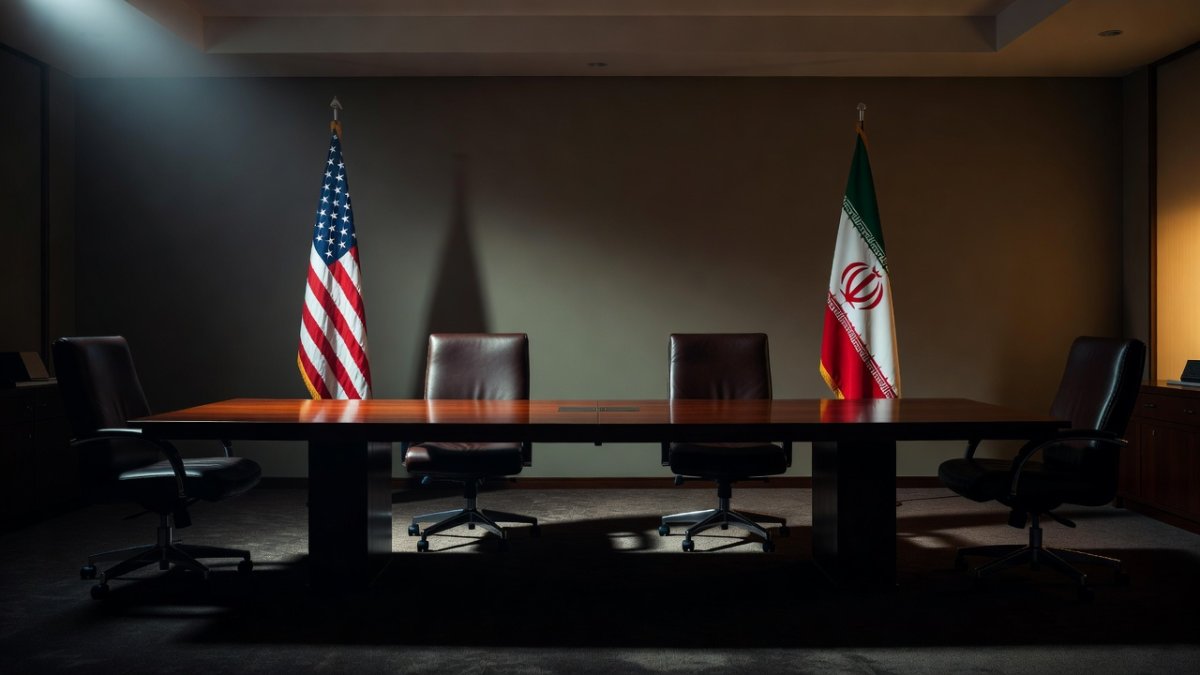
Administration officials have signaled openness to renewed nuclear discussions with Iran while keeping maximum pressure sanctions in place. Iranian officials have responded with mixed signals that leave the status of any actual engagement unclear. This pattern of contradictory messaging has generated confusion over whether substantive diplomatic progress is underway or whether both sides are simply managing domestic and international perceptions.
The core tension lies in the gap between public posture and private intent. One side emphasizes continued sanctions enforcement as non-negotiable, while the other highlights internal debates about whether engagement serves national interests. Observers note that such mixed messaging often precedes either quiet progress or renewed escalation, yet concrete evidence of meetings remains absent in recent days.
Without named officials providing on-the-record confirmation of direct contacts, the statements function more as trial balloons than firm policy shifts. The absence of verifiable details forces analysts to weigh rhetoric against the unchanged sanctions architecture that continues to constrain Iran's economy.
What's at Stake
Iran's nuclear program remains the central issue, with enrichment levels and inspection access serving as the primary points of contention. Any renewed talks would need to address these technical thresholds while navigating the broader sanctions regime that the current administration has shown little inclination to ease unilaterally.
The stakes extend beyond bilateral relations to global nonproliferation norms. A breakdown in even exploratory discussions could accelerate Iran's nuclear timeline, while successful engagement might temporarily stabilize oil markets and reduce regional flashpoints. However, the lack of named intermediaries or documented proposals makes it difficult to assess how close either side is to concrete concessions.
Regional security calculations also hang in the balance. Neighbors watch for signs that Washington might prioritize diplomacy over confrontation, which could alter their own defense postures and alliance strategies in the coming months.
The Domestic Political Calculus
Within the United States, the administration faces pressure from hardline factions that view any softening on sanctions as weakness. At the same time, voices favoring de-escalation argue that sustained maximum pressure has not produced the desired Iranian capitulation. This internal divide shapes the cautious language used in public statements this week.
On the Iranian side, competing centers of power complicate unified messaging. Elements favoring negotiation must contend with those who see talks as a trap designed to extract concessions without meaningful sanctions relief. The resulting mixed signals reflect these domestic constraints rather than a coherent negotiating strategy.
Both leaderships appear to be calibrating statements for internal audiences as much as for each other. This dynamic reduces the likelihood of rapid breakthroughs and increases the chance that public posturing will continue to outpace any private diplomacy.
Regional Reactions
Allied governments in the Middle East have responded with measured skepticism to the conflicting signals. They continue to press Washington for clarity on whether sanctions enforcement will remain consistent regardless of diplomatic overtures.
Adversaries and proxies interpret the mixed messages as potential openings to test boundaries. The absence of clear red lines in recent statements has prompted some actors to probe for shifts in enforcement patterns without committing to formal negotiations.
European partners, meanwhile, have urged restraint and information sharing. Their interest lies in preventing a return to the 2018-style rupture that left them caught between American sanctions and Iranian nuclear advances, yet they lack independent confirmation that meaningful talks are occurring.
The Backchannel Question
Persistent questions surround whether unofficial channels are operating beneath the public contradictions. History shows that serious nuclear diplomacy often begins through intermediaries before surfacing in official statements, but no concrete evidence of such activity has emerged in recent days.
The administration's insistence on maintaining sanctions pressure while signaling openness creates a narrow lane for any backchannel work. Iranian officials face similar constraints, needing to demonstrate that engagement does not equate to surrender on core enrichment issues.
Without named facilitators or documented exchanges, the backchannel remains speculative. Analysts caution against assuming hidden progress simply because public statements appear contradictory; sometimes conflicting rhetoric simply reflects unresolved internal debates rather than secret diplomacy.
What Comes Next
The immediate period will likely feature continued testing of positions through public statements rather than formal meetings. Both sides have incentives to keep options open while avoiding commitments that could be portrayed as concessions at home.
Technical experts on both sides may explore limited confidence-building measures, such as information exchanges on enrichment levels, but these would require political cover that remains elusive given the current mixed messaging.
Absent a clear decision by senior leadership to authorize structured talks, the pattern of conflicting statements is expected to persist. This leaves the core question—whether genuine negotiations are underway—unanswered for the foreseeable future.
The Bottom Line
The available evidence points to deliberate ambiguity rather than active diplomacy. Maximum pressure sanctions remain the dominant policy instrument, and Iranian responses have not yet crossed the threshold into unambiguous engagement.
Until named officials provide verifiable details of meetings or proposals, the safest assessment is that both sides are managing narratives while the underlying standoff continues. The confusion generated by recent statements serves political purposes but does little to clarify whether talks are actually occurring.
Substantive progress would require alignment between public signals and private actions that has not yet materialized. Observers should therefore treat optimistic interpretations with caution until concrete steps replace contradictory rhetoric.
By Jessica Ali, Staff WriterThis article was produced with AI-assisted research and editorial support. Reporting is based on sources cited in the article.
What's Your Reaction?
 Like
0
Like
0
 Dislike
0
Dislike
0
 Love
0
Love
0
 Funny
0
Funny
0
 Wow
0
Wow
0
 Sad
0
Sad
0
 Angry
0
Angry
0

Editor-in-Chief at Global1.News. Atlanta-based journalist who cuts through the BS and tells it like it is. Lead anchor, host, and the voice you hear when the spin stops and the truth starts.











Comments (0)