
Brazil's Ferrogrão Railway Sparks Amazon Indigenous Fight
The May 2026 Supreme Federal Court decision on the Ferrogrão railway has intensified a continent-wide clash between commodity infrastructure and Indigenous territorial rights. In Brazil, the 933-kilometer project threatens the Tapajós basin while Munduruku leaders like Alessandra Korap Munduruku mobilize against it. Similar tensions pit agribusiness corridors against forest com
The May 2026 Supreme Federal Court decision on the Ferrogrão railway has intensified a continent-wide clash between commodity infrastructure and Indigenous territorial rights. In Brazil, the 933-kilometer project threatens the Tapajós basin while Munduruku leaders like Alessandra Korap Munduruku mobilize against it. Similar tensions pit agribusiness corridors against forest communities in Bolivia, Peru, Colombia, and Ecuador.
Ferrogrão Railway Divides Brazil as Munduruku Resistance Grows
Brasília, Brazil – June 2026 — A Supreme Federal Court ruling has cleared one legal hurdle for the Ferrogrão grain railway, yet Indigenous protests continue to block its path through the Amazon.
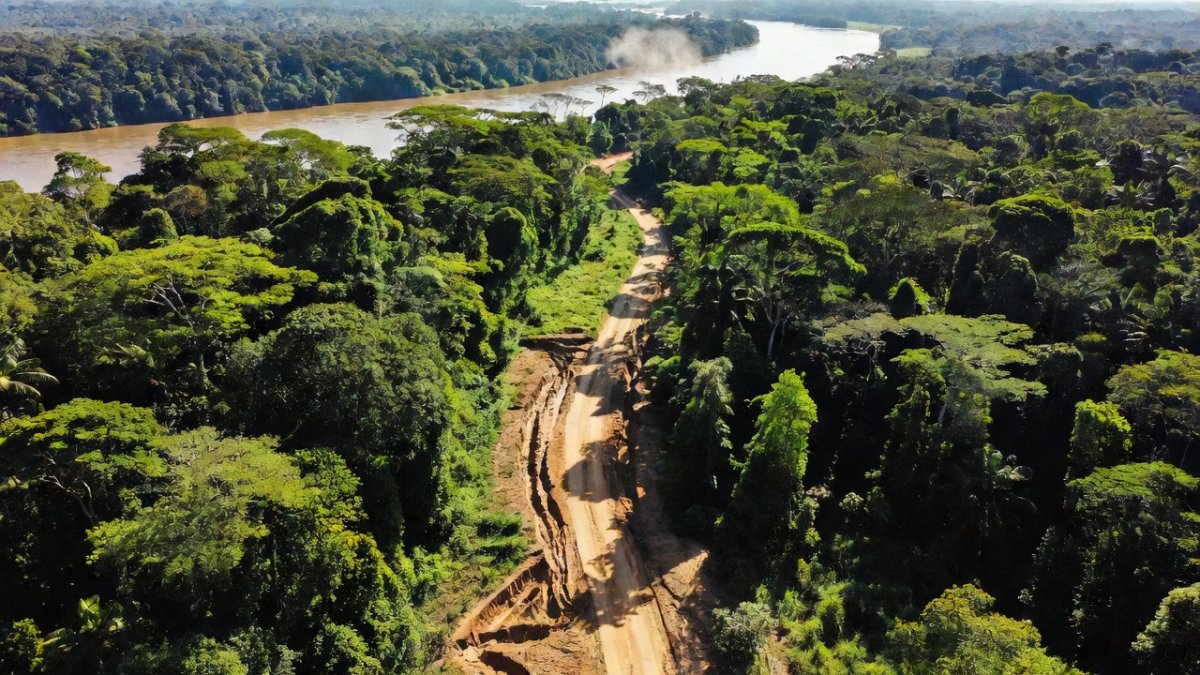
The Battle for Brazil's Grain Railway
The Ferrogrão railway, officially designated EF-170, stretches between 933 and 993 kilometers from Sinop in Mato Grosso to the ports of Itaituba and Miritituba in Pará state. Its core purpose is to move soy, corn, and other grains from central Brazil's agricultural heartland to Tapajós River ports, where barges would carry the cargo onward to Atlantic export terminals. Estimated at R$25 billion, roughly 4.6 billion USD, the line promises to slash transport costs by up to 40 percent for major traders. Cargill, Bunge, and Dreyfus have backed the project alongside the ruralist congressional bench, viewing it as essential infrastructure for expanding Brazil's global grain dominance. Yet the proposal has remained mired in debate and legal challenges for more than twelve years, reflecting deep divisions over development models. On May 21, 2026, the Supreme Federal Court issued an 8-1 ruling in ADI 6.553/DF that upheld the constitutionality of reducing Jamanxim National Park by approximately 862 hectares to accommodate the route. Rapporteur Minister Alexandre de Moraes conditioned approval on full environmental licensing from IBAMA and compliance with all legal obligations, including Indigenous consultation. The case, originally filed by PSOL in 2020, leaves significant remaining barriers: IBAMA licensing, FUNAI impact assessments for nineteen communities, and questions of long-term economic viability. Across Latin America, comparable grain corridors in Bolivia's eastern lowlands and Peru's Amazonian regions have triggered parallel disputes between export ambitions and territorial integrity.
The 'Train of Death': What Ferrogrão Means for the Amazon
Environmental analysts warn that Ferrogrão would trigger indirect deforestation exceeding 230,000 hectares through accelerated soy expansion into previously inaccessible forest frontiers. The Tapajós River faces direct threats from planned dredging operations that would enable larger barges, alongside pesticide runoff that endangers fish stocks and riverine livelihoods. In 2025 alone, Amazon deforestation reached 736,484 hectares according to MAAP data, with 55 percent occurring inside Brazil. While INPE recorded a 61.4 percent drop in deforestation alerts in June 2026 compared with May 2025, the cumulative pressure remains severe. Scientists identify the Amazon tipping point at roughly 17 percent total deforestation, beyond which crossing the 20-25 percent threshold risks triggering widespread savanna dieback and irreversible carbon release. The railway would intensify soy-driven conversion precisely in the Tapajós basin, one of the Amazon's most biodiverse and hydrologically sensitive zones. Similar infrastructure proposals in Colombia's Orinoquía and Ecuador's northern Amazon have produced comparable indirect deforestation patterns, underscoring how transport corridors function as catalysts rather than neutral conduits. FUNAI and IBAMA assessments must therefore evaluate not only the narrow right-of-way but the full landscape transformation that would follow construction. Without rigorous enforcement, Ferrogrão risks accelerating the very deforestation trends that recent INPE data suggest are finally moderating.
Voices from the Tapajós: Munduruku Resistance
Resistance is led by the Munduruku people and Goldman Environmental Prize winner Alessandra Korap Munduruku from Terra Indígena Sawré Muybu in the Tapajós region. She has labeled the project "the train of death" and "the train of deforestation," emphasizing its threat to territorial integrity and cultural survival. Protest actions have escalated since 2024, including urucum paint demonstrations at public hearings, a blockade of the COP30 climate summit entrance in Belém in November 2025, and a thirty-plus-day occupation of Cargill's soy barge facility in Santarém that began in February 2026. The Santarém occupation directly contributed to the government's revocation of Decree 12.600, which would have authorized Tapajós dredging for larger vessels — a concrete policy victory. In April 2026, the Acampamento Terra Livre in Brasília drew approximately 7,000 Indigenous participants from more than 200 tribes, who demanded land demarcation and rejected Ferrogrão. Participating groups include the Munduruku, Kayapó, Panará, and riverine communities of the Baixo Tapajós. Their central demand remains Free, Prior, and Informed Consent under ILO Convention 169. These actions mirror Indigenous mobilizations against similar extractive corridors in Bolivia's TIPNIS region and Peru's Camisea gas pipeline expansion, where territorial defense has repeatedly forced project redesigns or cancellations. The Munduruku strategy combines direct occupation, legal advocacy, and international visibility to shift the balance of power.
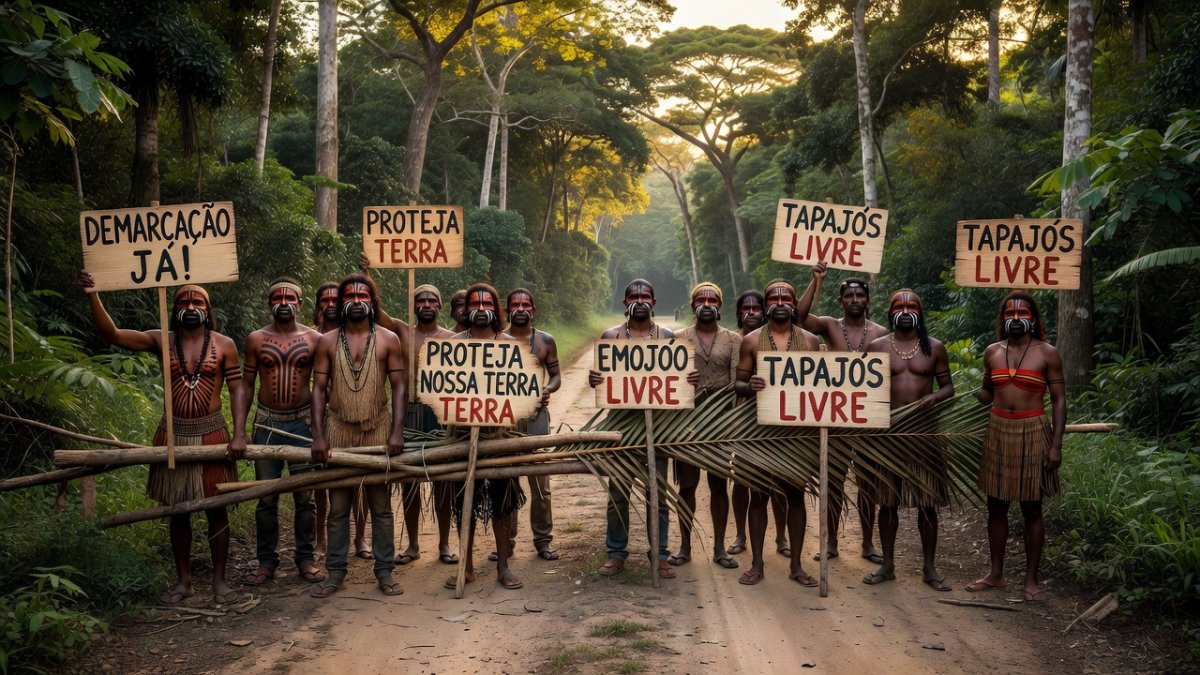
May 2026: The STF Ruling and Its Limits
The Supreme Federal Court's 8-1 decision on May 21, 2026, marked a partial victory for project proponents by affirming the constitutionality of the Jamanxim National Park reduction. Minister Alexandre de Moraes's opinion explicitly tied any construction to complete IBAMA environmental licensing and adherence to all statutory requirements, including Indigenous consultation processes. The ruling rejected PSOL's 2020 challenge but preserved multiple procedural checkpoints that could still halt or reshape the railway. Remaining obstacles include IBAMA's full licensing review, FUNAI's mandatory impact assessments covering nineteen affected communities, and TCU scrutiny of economic viability. These conditions reflect judicial recognition that constitutional compliance extends beyond the narrow park-boundary question. In practice, the decision shifts the battlefield from constitutional interpretation to administrative and technical arenas where Indigenous groups retain leverage. Comparable court rulings in Peru and Colombia have similarly upheld project legality while imposing consultation mandates that ultimately delayed or modified infrastructure plans. The STF outcome therefore neither green-lights immediate construction nor resolves underlying conflicts; it merely relocates them to licensing tables where Munduruku demands for FPIC will confront agribusiness pressure. Observers note that enforcement of these conditions will determine whether the ruling functions as genuine safeguard or procedural formality.
Brazil's Amazon at a Crossroads
Under President Lula, Amazon deforestation alerts fell 61.4 percent in June 2026 relative to the previous year, demonstrating that enforcement can produce rapid results. Yet Ferrogrão embodies the persistent tension between export-led growth and forest preservation that defines contemporary Brazilian policy. Indigenous territories have repeatedly proven effective shields against deforestation, with rates inside demarcated lands significantly lower than surrounding areas. FUNAI and IBAMA therefore hold decisive authority over whether the railway's cumulative impacts receive honest evaluation. Across Latin America, governments in Bolivia, Peru, and Ecuador face analogous choices between expanding soy, mineral, and energy corridors and honoring territorial rights recognized under ILO Convention 169. The Munduruku occupation that forced revocation of Decree 12.600 illustrates how sustained resistance can alter policy outcomes even against powerful economic interests. Cargill, Bunge, and Dreyfus continue to advocate for the project, arguing that lower transport costs will enhance Brazil's competitiveness. However, the 230,000-hectare indirect deforestation risk and threats to Tapajós fisheries suggest that short-term export gains may generate long-term ecological liabilities. The current moment offers Brazil an opportunity to align infrastructure planning with the deforestation reductions already achieved, provided licensing processes incorporate genuine Indigenous consent rather than treating it as an afterthought.
The Bottom Line — A Railway That Divides a Nation
Ferrogrão crystallizes a fundamental choice between commodity export expansion and the preservation of the Amazon's remaining ecological integrity. The project's supporters emphasize cost reductions of up to 40 percent and integration of Mato Grosso's grain production with global markets, yet the environmental and social externalities remain substantial. Indigenous resistance, anchored by Alessandra Korap Munduruku and the Munduruku people, has already secured measurable victories including the revocation of dredging authorization. The May 2026 STF ruling imposes licensing conditions that could still prevent construction if IBAMA and FUNAI fulfill their mandates. Broader Latin American experience shows that similar infrastructure proposals frequently generate protracted conflict when Free, Prior, and Informed Consent is bypassed. With the Amazon approaching critical deforestation thresholds, the stakes extend beyond Brazil to global climate stability. Whether Ferrogrão advances or stalls will signal whether Brazil prioritizes short-term agribusiness gains or long-term forest resilience. The Munduruku and allied communities have demonstrated that organized territorial defense can reshape national development trajectories, offering a model for communities facing comparable pressures from Bolivia to Ecuador. The railway remains contested terrain where legal rulings, administrative decisions, and on-the-ground mobilization will determine the Amazon's future.
By Elena Vasquez, Staff Writer
This article was produced with AI-assisted research and editorial support. Reporting is based on sources cited in the article.
What's Your Reaction?
 Like
0
Like
0
 Dislike
0
Dislike
0
 Love
0
Love
0
 Funny
0
Funny
0
 Wow
0
Wow
0
 Sad
0
Sad
0
 Angry
0
Angry
0

Latin America Correspondent at Global1.News. Based in Mexico City, covering politics, economics, energy, and culture across the region. Brings an on-the-ground perspective to stories spanning from the Rio Grande to Patagonia.















Comments (0)