
The ceasefire framework is exposing Lebanon’s institutional collapse
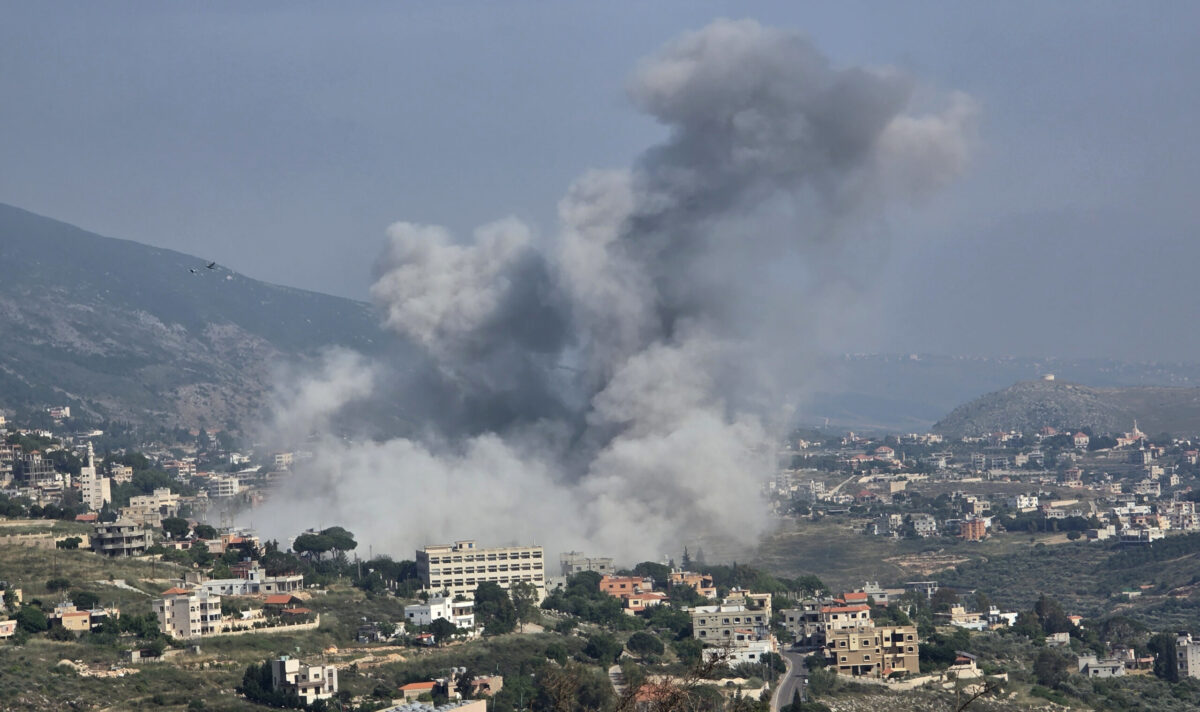
The Ceasefire Framework Exposes Lebanon’s Institutional Collapse
Announced in Washington, Ignored on the Ground
On 16 April, the United States State Department declared a cessation of hostilities between Israel and Lebanon. The announcement came after weeks of shuttle diplomacy involving French and Qatari mediators. Within hours, artillery exchanges resumed along the Blue Line. By the following morning, Israeli drones struck targets near Marjayoun while Hezbollah units fired rockets toward northern Israeli settlements. The framework existed only on paper, signed in rooms where Lebanese state representatives held no authority to enforce it.
Lebanon has operated without a sitting president since October 2022. Parliament has failed more than a dozen times to elect a successor. This vacuum means no single institution can order Hezbollah to stand down or guarantee that Israeli forces will respect agreed coordinates. The ceasefire text required both parties to withdraw heavy weapons five kilometres from the border. No Lebanese army unit possesses the mandate or equipment to verify compliance in areas long administered by Hezbollah’s parallel security structures.
Six Weeks of Unchecked Violations
Over the subsequent six weeks, UNIFIL recorded 187 incidents of cross-border fire. Lebanese health authorities documented 64 civilian deaths in southern villages, including 19 children. Displacement figures released by the Lebanese Red Cross reached 87,000 people by late May. These numbers mirror the pattern seen after the 2006 war, yet the state response has been markedly weaker because ministries lack both funds and leadership.
Electricity supply in border districts averages four hours daily. Hospitals in Tyre and Nabatieh rely on private generators whose fuel costs have risen 340 percent since the local currency collapsed in 2019. The World Bank estimates Lebanon’s GDP contracted by 38 percent between 2019 and 2023. Public-sector salaries, when paid, cover less than one-fifth of 2019 purchasing power. Under these conditions, the army cannot sustain extended deployments without external financing that the caretaker government cannot secure.
Human Cost in Villages Left to Fend for Themselves
In the village of Aitaroun, resident Fatima Khalil described watching her neighbour’s house reduced to rubble on 22 April. “We received no warning from any ministry,” she said. “The army liaison officer told us to contact UNIFIL. UNIFIL told us to contact the municipality. The municipality has not functioned since the last municipal elections were postponed.”
Similar accounts emerge from Bint Jbeil and Khiam. Families sleep in school basements that lack running water. The Ministry of Social Affairs has distributed fewer than 2,000 emergency kits nationwide since the latest escalation began. International NGOs fill gaps, yet their access depends on informal coordination with Hezbollah security committees because official clearance procedures no longer operate.
Why the Framework Could Never Bind
The text required Lebanon to implement UN Security Council Resolution 1701 in full. That resolution, adopted in 2006, calls for the Lebanese army to be the sole armed force south of the Litani River. Sixteen years later, the army’s troop strength in the region remains below 4,000 soldiers, while Hezbollah maintains an estimated 20,000 fighters and an extensive tunnel network. No Lebanese government has attempted to alter this balance because any attempt would trigger immediate political paralysis or worse.
International mediators privately acknowledged the mismatch. One European diplomat, speaking on condition of anonymity, noted that the framework’s verification mechanism relied on “Lebanese sovereign institutions that have not existed in any functional sense for five years.” The United States continued to list Hezbollah as a terrorist organisation while simultaneously expecting the same group to respect lines drawn by a state it does not recognise as legitimate.
Regional Ripple Effects and Palestinian Parallels
The absence of a functioning Lebanese state affects more than the south. Palestinian refugee camps in Beirut and the Bekaa face renewed pressure as aid flows are diverted to emergency border relief. UNRWA, already underfunded, reports a 22 percent drop in contributions since the start of 2024. Families who fled Gaza in previous decades now share classrooms with newly displaced Lebanese children in Sidon.
The pattern echoes the institutional erosion witnessed in the occupied Palestinian territories, where successive agreements collapsed because one side negotiated with authorities lacking real control on the ground. In both cases, civilian populations bear the physical and psychological cost while external powers issue frameworks that ignore the underlying power vacuum.
Outlook Without Institutional Repair
Lebanon’s caretaker prime minister has appealed for renewed international support. Pledges remain conditional on political reforms that require a president and a functioning parliament. Without those reforms, the next framework will face the same enforcement deficit. The people of southern Lebanon, already living through the country’s worst economic crisis in modern history, continue to absorb the consequences of agreements signed in their name but never implemented by a state that no longer functions.
This is Fatima Al-Rashid for Global1 News, reporting from Ramallah. 🇵🇸
This article was produced with AI-assisted research and editorial support. Reporting is based on sources cited in the article.
What's Your Reaction?
 Like
0
Like
0
 Dislike
0
Dislike
0
 Love
0
Love
0
 Funny
0
Funny
0
 Wow
0
Wow
0
 Sad
0
Sad
0
 Angry
0
Angry
0
Gulf/MENA Correspondent at Global1.News. Based in Doha, covering Gulf politics, energy markets, diplomacy, and development across the Middle East and North Africa. Tracks the economic transformation of the Gulf states.









Comments (0)