
Teaching Humanoid Robots New Skills: Japan's Robotics Push
Japan's Humanoid Robotics Research Landscape Japan has maintained decades of leadership in humanoid robotics through sustained investment in fundamental research and hardware development. The University of Tokyo's JSK Robotics Laboratory has pioneered dynamic locomotion and whole-body control systems that enable stable bipedal movement in unstructured environments. AIST's Human
Japan's Humanoid Robotics Research Landscape
Japan has maintained decades of leadership in humanoid robotics through sustained investment in fundamental research and hardware development. The University of Tokyo's JSK Robotics Laboratory has pioneered dynamic locomotion and whole-body control systems that enable stable bipedal movement in unstructured environments. AIST's Humanoid Research Group continues to advance sensor integration and force control algorithms essential for safe human-robot interaction. RIKEN's Guardian project focuses on collaborative robots capable of assisting in disaster response scenarios while Waseda University contributes longstanding expertise in actuator design and biomimetic mechanisms.
Key companies have translated academic breakthroughs into practical platforms. Toyota's T-HR3 humanoid serves as a testbed for remote operation and skill transfer technologies developed in partnership with academic labs. SoftBank Robotics expanded the ecosystem with Pepper and NAO platforms that emphasize social interaction capabilities. Honda built upon the ASIMO legacy by refining balance control and energy efficiency in successive generations of research prototypes. These efforts reflect a tightly coordinated government-university-industry collaboration that has characterized Japan's robotics strategy since the 1990s.
The ecosystem evolved through successive national projects that aligned hardware advances with emerging software paradigms. Early emphasis on mechanical precision gave way to integrated AI approaches that address adaptability in real-world settings. Institutions such as the University of Tokyo and AIST maintain open-source simulation environments that accelerate iteration across the community. This collaborative infrastructure positions Japan to address demographic pressures through robotics while exporting both technology and methodological frameworks.
Teaching Robots New Skills: Technical Approaches
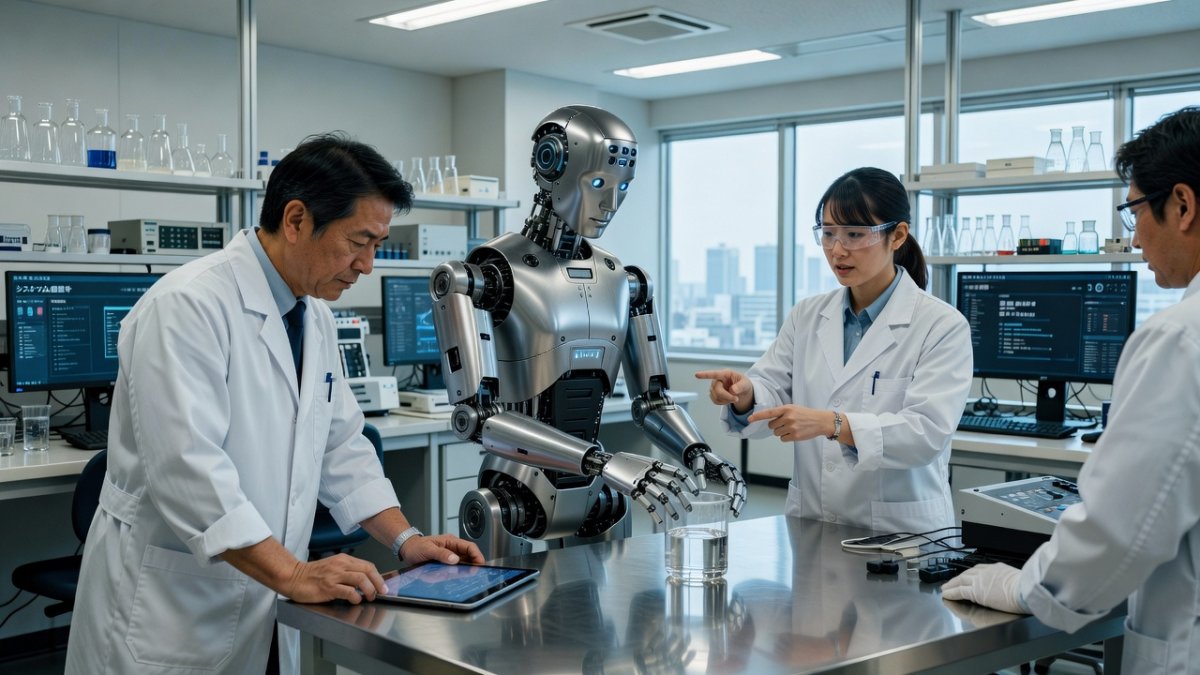
Reinforcement learning enables humanoid robots to acquire manipulation skills through extended trial-and-error cycles within controlled environments. Researchers at AIST and the University of Tokyo deploy these methods to teach precise grasping sequences and tool usage that adapt to object variations. Imitation learning complements this approach by allowing robots to extract movement primitives from human demonstration videos captured in laboratory settings. The NHK WORLD-JAPAN NEWS video on teaching humanoid robots new skills highlights how these combined techniques accelerate skill acquisition for tasks previously requiring extensive manual programming.
Simulation-to-reality transfer remains a central challenge as models trained in virtual environments encounter friction, sensor noise, and material deformation in physical tests. Japanese teams address this gap through domain randomization and progressive fine-tuning on hardware platforms such as Toyota's T-HR3. Recent advances in dexterous manipulation now permit robots to handle delicate electronics components and operate standard factory tools without specialized end-effectors. Safety constraints require layered monitoring systems that halt operations upon detecting unexpected force thresholds during real-world validation.
These technical approaches directly support Society 5.0 goals by enabling robots to function alongside human workers in shared spaces. Integration of vision-language models further enhances generalization across novel objects and instructions. Continued refinement of sample-efficient algorithms reduces the data volume needed for reliable skill transfer. Japanese laboratories maintain rigorous benchmarking protocols that compare simulation performance against physical outcomes to guide iterative improvements.
Government Policy and Strategic Support
Japan's Society 5.0 initiative explicitly integrates AI and robotics to create human-centered cyber-physical systems that address social challenges. METI's New Robot Strategy allocates targeted funding for humanoid platforms capable of operating in existing infrastructure without extensive retrofitting. The Digital Agency establishes data standards and interoperability frameworks that facilitate secure sharing of robot training datasets across institutions. These policies align with broader national priorities including semiconductor self-sufficiency and GX green transformation objectives that emphasize energy-efficient robotic systems.
Government funding programs prioritize projects demonstrating measurable progress toward labor augmentation in manufacturing and care sectors. METI coordinates multi-year roadmaps that link academic milestones to industrial pilot deployments. Demographic pressures from Japan's shrinking workforce amplify the urgency of these investments, positioning robotics as a core component of economic resilience planning. International standards development receives parallel support to ensure Japanese platforms remain competitive in global markets.
Policy instruments also encourage small and medium enterprises to adopt robotic solutions through subsidized leasing and training programs. The strategic linkage between robotics policy and semiconductor initiatives ensures domestic supply chains for advanced processors required by onboard AI systems. GX considerations drive research into low-power actuators and recyclable materials for next-generation humanoids. This comprehensive policy architecture sustains Japan's position at the forefront of practical humanoid deployment.
Applications in Manufacturing and Industry
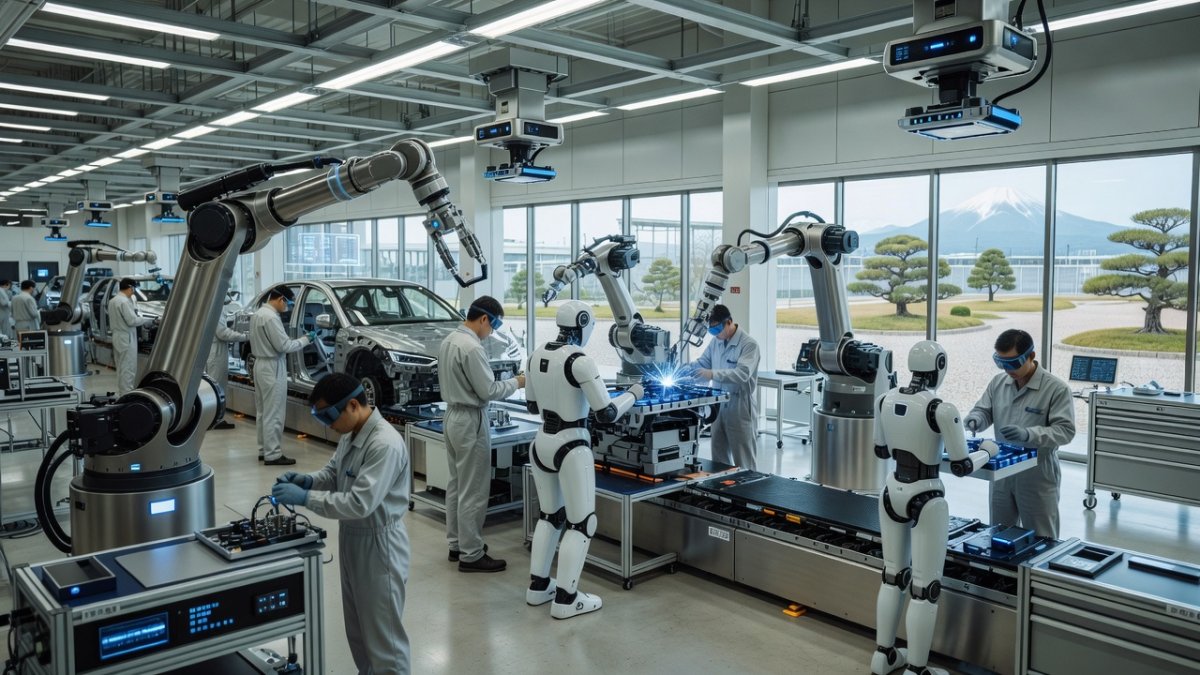
Humanoid robots offer the potential to operate in factories designed for human workers, eliminating the need for costly facility retooling that conventional industrial robots often require. In Japan's automotive sector, platforms such as Toyota's T-HR3 undergo testing for precision assembly tasks including bolt fastening and component insertion in confined spaces. Electronics manufacturing benefits from the robots' ability to handle delicate circuit boards while adapting to frequent product changeovers typical of high-mix production lines. Current pilot programs at major Japanese manufacturers remain focused on controlled validation rather than full-scale deployment.
The timeline for widespread adoption extends over multiple years as reliability benchmarks and safety certifications are completed. Japanese manufacturing expertise in lean production and quality control informs the integration strategies being developed for these systems. Reinforcement learning techniques demonstrated in the NHK video enable robots to master sequences that vary slightly between production batches. This flexibility addresses the limitations of traditional fixed automation in responding to supply chain fluctuations.
Industry roadmaps emphasize gradual introduction beginning with repetitive material handling before progressing to complex assembly operations. Collaboration between METI, AIST, and private firms accelerates the translation of laboratory results into factory environments. Sensor fusion advances developed at Waseda University enhance the robots' ability to detect and correct positioning errors during live operations. These developments leverage Japan's established strengths in precision hardware to create competitive advantages in industrial humanoid applications.
Healthcare and Elderly Care Applications
Japan's record low birth rates and rapidly aging population create acute labor shortages in nursing homes and hospitals that humanoid robots could help mitigate. Potential applications include lifting patients from beds, delivering medications and meals, and assisting with guided rehabilitation exercises under therapist supervision. The caregiver shortage crisis has prompted METI and the Ministry of Health, Labour and Welfare to prioritize robotic solutions that maintain care quality while reducing physical burden on human staff. Trial programs at selected facilities test reliability under real operational conditions with strict safety oversight.
Safety and reliability requirements for care robots exceed those in industrial settings due to direct physical contact with vulnerable individuals. Regulatory pathways established by Japanese authorities mandate extensive clinical validation and risk assessment before commercial approval. Current research at RIKEN and University of Tokyo labs focuses on compliant control strategies that prevent excessive force during patient interaction. These efforts align with Society 5.0 objectives to extend healthy life expectancy through technological support.
Integration of imitation learning allows robots to acquire gentle handling techniques by observing experienced caregivers. Battery and sensor innovations from Japanese firms improve operational duration and environmental awareness in cluttered care environments. Policy support includes dedicated funding streams for ethical guidelines and data privacy frameworks specific to healthcare robotics. The combination of demographic necessity and technical progress positions Japan to lead in deploying humanoid systems for elderly care applications.
Global Competition and Cooperation
International competition in humanoid robotics has intensified with significant programs in the United States including Boston Dynamics, Tesla Optimus, and Figure AI advancing dynamic locomotion and general-purpose manipulation. China has launched large-scale national initiatives aimed at rapid commercialization of humanoid platforms for both domestic and export markets. European research initiatives emphasize collaborative robotics and ethical frameworks that influence global standards development. Japan's competitive advantages lie in precision hardware manufacturing, high-resolution sensor technology, and advanced battery systems developed through decades of automotive and electronics leadership.
Academic conferences and joint research projects facilitate knowledge exchange while protecting core intellectual property. Japanese institutions participate actively in IEEE and ISO working groups shaping safety and interoperability standards for humanoid systems. Collaboration with international partners on simulation environments accelerates progress on sim-to-real transfer challenges common across all programs. These cooperative mechanisms complement domestic strengths without compromising strategic positioning.
Precision engineering traditions at companies such as Honda and Toyota provide hardware reliability that remains difficult for newer entrants to replicate. Sensor fusion techniques refined at AIST and JSK Lab enhance perception capabilities critical for operating in human-centric spaces. International standards development receives sustained Japanese engagement to ensure compatibility with global supply chains. This balanced approach of competition and selective cooperation sustains Japan's influence in the evolving humanoid robotics landscape.
Economic and Workforce Implications
Humanoid robotics deployment offers potential to offset Japan's projected labor shortages across manufacturing, logistics, and care sectors over the coming decades. METI projections indicate that widespread adoption could stabilize workforce participation rates while maintaining output levels despite demographic decline. New job categories will emerge in robot maintenance, AI training dataset curation, and system integration services that require specialized technical skills. Reskilling programs supported by METI emphasize continuous education pathways for existing workers transitioning into these roles.
Gradual integration strategies prioritize augmentation of human capabilities rather than outright displacement in most industrial settings. Cost considerations remain significant for small and medium enterprises, prompting government subsidies and leasing models that lower initial barriers. Economic analyses conducted by Japanese research institutes project that productivity gains will unfold over extended timelines rather than immediate transformation. These measured expectations inform realistic policy targets and investment planning.
The economic timeline anticipates phased effects beginning with pilot deployments in large corporations before diffusion to smaller firms. Workforce implications include both job creation in technical support fields and the need for updated vocational curricula at technical colleges. Japan's experience with previous automation waves provides institutional knowledge for managing transition frictions. Sustained policy attention to equitable distribution of benefits supports broader societal acceptance of humanoid technologies.
What to Watch For
Key milestones include upcoming research demonstrations at AIST and University of Tokyo laboratories scheduled for late 2025 that will showcase enhanced dexterous manipulation capabilities. METI targets outlined in the New Robot Strategy call for measurable progress on safety certification frameworks by 2026. Industry roadmaps from Toyota and other partners project expanded pilot programs in automotive assembly within the same timeframe. Regulatory developments concerning care robot approvals will determine the pace of healthcare sector adoption.
International competition dynamics merit close observation as U.S. and Chinese programs release updated performance benchmarks. Standards development through ISO committees will influence market access for Japanese platforms. Technology benchmarks focusing on energy efficiency and long-duration operation will highlight Japan's hardware advantages. Continued refinement of reinforcement and imitation learning methods, as featured in recent NHK reporting, will drive further skill acquisition improvements.
Where Japan's humanoid robotics field is heading depends on sustained coordination between government funding, academic research, and industrial validation. METI deadlines for Society 5.0 integration milestones provide clear reference points for progress assessment. Monitoring these developments offers insight into how Japan translates its robotics heritage into practical solutions for demographic and economic challenges. The coming years will reveal the extent to which current technical and policy investments yield deployable systems.
By Kenji Tanaka, Staff Writer
This article was produced with AI-assisted research and editorial support. Reporting is based on sources cited in the article.
What's Your Reaction?
 Like
0
Like
0
 Dislike
0
Dislike
0
 Love
0
Love
0
 Funny
0
Funny
0
 Wow
0
Wow
0
 Sad
0
Sad
0
 Angry
0
Angry
0

Japan Correspondent at Global1.News. Tokyo-based voice covering Japanese politics, technology, economy, and culture. Tracks the intersection of tradition and innovation in one of the world's most dynamic societies.















Comments (0)