
Starbucks Korea Tank Day Controversy and Historical Memory
**Meta Title:** Starbucks Korea Tank Day Controversy and Historical Memory **Meta Description:** Starbucks Korea's Tank Day promotion evoked the 1980 Gwangju Uprising, triggering CEO dismissal, police probes and debate on historical memory in corporate Korea. **Keywords:** Starbucks Korea, Tank Day controversy, May 18 Gwangju Uprising, Shinsegae Group, chaebol governance, Natio
The Starbucks Korea "Tank Day" controversy that erupted in late May 2026 illustrates how unresolved historical trauma continues to intersect with corporate decision-making, foreign investment, and political governance in South Korea. A promotional campaign for oversized "Tank Series" tumblers triggered immediate public condemnation because its chosen terminology directly referenced the armored vehicles deployed against civilians during the 1980 Gwangju Uprising. This episode demonstrates the persistent political weight of that event within contemporary Korean society and the institutional mechanisms that enforce accountability on both domestic conglomerates and international brands operating in the Republic of Korea.
The "Tank Day" Promotion and Immediate Public Reaction
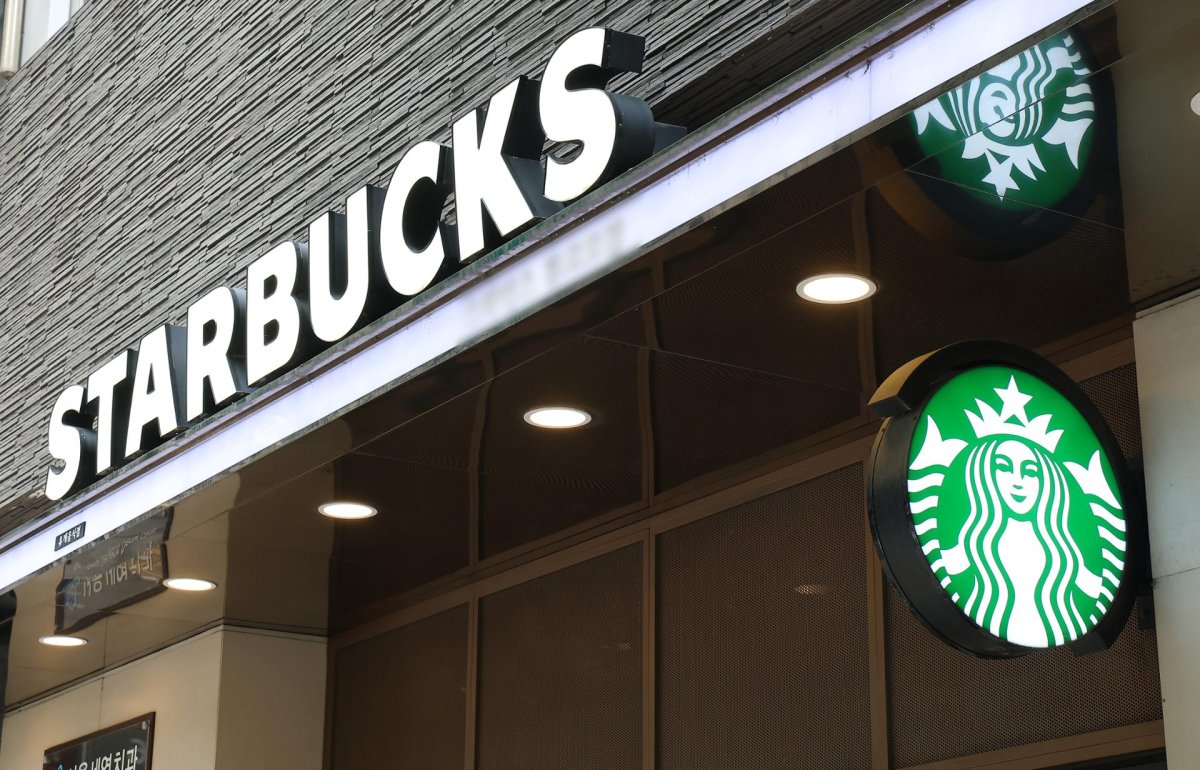
In late May 2026, Starbucks Korea introduced a marketing initiative titled "Tank Day" to promote its large-capacity "Tank Series" tumblers. The terminology immediately evoked the military vehicles used to suppress pro-democracy demonstrators during the May 18 Gwangju Uprising. Within hours, social media commentary and statements from civic organizations linked the campaign to the 1980 events and to the 1987 torture death of student activist Park Jong-chul, whose case helped galvanize the broader democratization movement. Online petitions gathered tens of thousands of signatures within forty-eight hours of the campaign's launch.
The speed and breadth of the reaction underscored the continuing salience of these historical dates in Korean public consciousness. Starbucks Korea, operating as a joint venture in which Emart holds the largest stake under the Shinsegae Group, faced coordinated calls for clarification from the May 18 Foundation and three associations representing victims of the Gwangju Uprising. Because the promotion coincided with the annual period of national reflection on the uprising, the temporal overlap amplified perceptions of insensitivity and transformed what might have been a routine product launch into a full-fledged political incident with implications reaching the presidential office.
The Enduring Political Significance of the Gwangju Uprising
The May 18 Gwangju Uprising remains a foundational reference point in South Korean political discourse. In May 1980, citizens of Gwangju mobilized against the military regime headed by Chun Doo-hwan, who had seized power through a coup the previous December. Security forces responded with tanks and live ammunition, resulting in hundreds of civilian deaths according to official investigations that later confirmed systematic use of excessive force against students and ordinary residents. The event became a foundational narrative for Korea's democratization movement, directly contributing to the June Democratic Struggle of 1987 and the eventual establishment of the Sixth Republic.
Successive democratic governments have institutionalized remembrance through legislation, museums, and annual ceremonies. The May 18 Foundation, established by victims' families and formally recognized by statute, holds authority to protect the historical record and challenge perceived distortions in public discourse. Contemporary political culture treats references to military hardware in commercial contexts as potential trivializations of state violence. This sensitivity extends beyond Gwangju to other episodes of authoritarian repression, shaping regulatory and normative expectations for both domestic chaebols and foreign firms operating in Korea. Political parties across the spectrum routinely invoke Gwangju when debating civil-military relations and transitional justice.
Corporate Responses: CEO Dismissal and Nationwide History Training
Following sustained criticism, Shinsegae Group Chairman Chung Yong-jin issued a public apology acknowledging that the campaign had caused deep pain to Gwangju victims and their families. Starbucks Korea subsequently dismissed its chief executive officer on 3 June 2026. Starbucks headquarters in the United States separately conveyed a formal apology through the May 18 Foundation, describing the episode as "an unacceptable marketing incident" and stating: "We understand the deep pain and offense this has caused, particularly for those who honor the victims, their families, and all who contributed to Korea's democratization."
All approximately 1,900 Starbucks outlets across South Korea closed two hours early on designated days to conduct mandatory staff training sessions on modern Korean history. These sessions covered the Gwangju Uprising, the 1987 June Democratic Struggle, the torture death of Park Jong-chul, and the legal framework protecting historical memory. Attendance records were submitted to the May 18 Foundation for verification. These measures reflected an effort to demonstrate institutional learning rather than mere public relations, and observers noted that similar training requirements have been imposed on other foreign retailers following cultural missteps in Korea, indicating an emerging pattern of compelled historical education as a remedial governance tool.

The Shinsegae-Chaebol Dimension and Corporate Governance
Starbucks Korea operates as a joint venture in which Emart, the retail arm of Shinsegae Group, holds the largest share. The episode therefore intersected directly with ongoing debates about chaebol accountability for subsidiary decisions. Critics argued that the centralized family control typical of Korean conglomerates had failed to institute adequate cultural-risk assessment procedures. The Shinsegae Group's ownership structure exemplifies the concentrated control that distinguishes Korean chaebol governance from more dispersed shareholder models prevalent in Western markets.
Chairman Chung Yong-jin's public apology marked a rare instance of a chaebol chairman directly addressing historical memory issues in a televised format. Governance analysts suggested the response was calibrated to preempt broader regulatory scrutiny of Shinsegae's compliance structures. Because chaebol affiliates frequently maintain cross-shareholdings, reputational damage to one unit can affect financing, regulatory treatment, and public perception across the entire group. Policy specialists emphasized that chaebol governance reforms since 2017 have focused primarily on financial transparency, while cultural and political risk management remains comparatively underdeveloped, leaving conglomerates exposed to reputational shocks that can affect unrelated business lines including defense-related exports.
The National Pension Service and Shareholder Activism in Korea
The National Pension Service, South Korea's largest institutional investor, received public calls from the May 18 Foundation on 29 May 2026 to examine possible shareholder remedies against Emart. Although the NPS has historically exercised caution in corporate governance interventions, recent regulatory guidance has encouraged consideration of environmental, social, and governance factors. The Tank Day episode supplied a concrete test case for applying historical-sensitivity criteria to investment stewardship in the Korean context.
Previous NPS interventions have centered primarily on dividend policy and board independence. Extending scrutiny to marketing decisions represents an expansion of the "social value" criteria introduced in the fund's 2021 stewardship code. Legal scholars have noted that such activism could face challenges under fiduciary-duty standards if returns are demonstrably harmed. Nevertheless, the NPS move illustrated how state-linked capital can amplify civic pressure on chaebols, and market participants anticipated that future proxy seasons might feature similar resolutions targeting firms perceived to have mishandled politically charged historical issues. This development aligns with broader trends toward incorporating political and cultural risk into institutional investment frameworks across East Asia.
Police Investigation and Presidential Office Attention
Law enforcement authorities initiated inquiries into the internal approval process for the Tank Day campaign. The investigation reached an unusual stage when three Starbucks Korea employees declined to surrender their mobile devices during evidence collection, raising procedural questions about corporate cooperation with criminal investigations. Police indicated that compulsory investigative measures, including search and seizure warrants, could be pursued if necessary. The matter's elevation to the presidential office further illustrated how a commercial misjudgment had fused with state-level political concern in the Korean system.
Presidential attention typically occurs in South Korea when an incident threatens to affect the nation's international image or domestic social cohesion. In this instance, the involvement of a prominent foreign brand operating through a major chaebol joint venture created both diplomatic and electoral sensitivities. The episode demonstrated how historical memory functions as a form of soft regulation in Korea, where corporate decisions are evaluated not merely for commercial viability but for compatibility with the normative framework established after democratization.
Implications for Multinationals and Korea's International Business Environment
The controversy carries potential consequences beyond the immediate marketing failure. For Korea's defense export ambitions, notably the KF-21 Boramae fighter program which received its initial type certification in June 2026 after passing 745 airworthiness inspection items across 14 categories, the episode underscores how domestic political sensitivities can affect perceptions of Korea as a reliable industrial partner. Foreign governments evaluating long-term cooperation with Korean defense contractors may scrutinize the stability of the domestic political environment when assessing contractual and reputational risk.
Multinational corporations are likely to strengthen pre-launch cultural review processes for Korean campaigns. Legal advisers increasingly recommend early consultation with the May 18 Foundation and other memory institutions. Such practices may become de facto requirements for market entry, functioning as a form of soft regulation that operates alongside formal legal compliance. Companies that institutionalize consultation with recognized custodians of historical memory can reduce exposure to similar controversies, while those that treat historical memory as a peripheral public relations concern rather than a core political risk factor are likely to encounter recurring operational disruptions in the South Korean environment.
Looking Ahead: Historical Memory as a Governance Force
Over the longer term, the Starbucks Korea Tank Day episode underscores South Korea's distinctive fusion of historical consciousness and corporate governance. The controversy extended from a marketing department oversight to encompass CEO dismissal, nationwide store closures, police investigations, National Pension Service engagement, and presidential attention. This cascading pattern demonstrates that in Korea, commercial decisions are evaluated through a framework shaped by the nation's democratization journey and the institutional memory preserved by organizations such as the May 18 Foundation.
Firms that treat commemoration as peripheral risk both domestic legitimacy and international credibility, particularly in sectors where state support remains decisive for market access. The episode serves as a cautionary precedent for the approximately 1,900 Starbucks stores across Korea and for the broader ecosystem of foreign-invested enterprises operating in one of Asia's most historically conscious societies. For scholars of Korean politics and international business, the Tank Day controversy offers a case study in how the legacies of authoritarian rule continue to shape the parameters of acceptable conduct in the contemporary Republic of Korea.
By Prof. David Park, Staff Writer
This article was produced with AI-assisted research and editorial support. Reporting is based on sources cited in the article.
What's Your Reaction?
 Like
0
Like
0
 Dislike
0
Dislike
0
 Love
0
Love
0
 Funny
0
Funny
0
 Wow
0
Wow
0
 Sad
0
Sad
0
 Angry
0
Angry
0

East Asia/Technology Correspondent at Global1.News. Seoul-based voice covering Korean politics, technology, business, and culture. Analyzes how technology and geopolitics intersect across East Asia.













Comments (0)