
US-Iran Escalation: Strikes, Retaliation, and a Ceasefire in Ruins
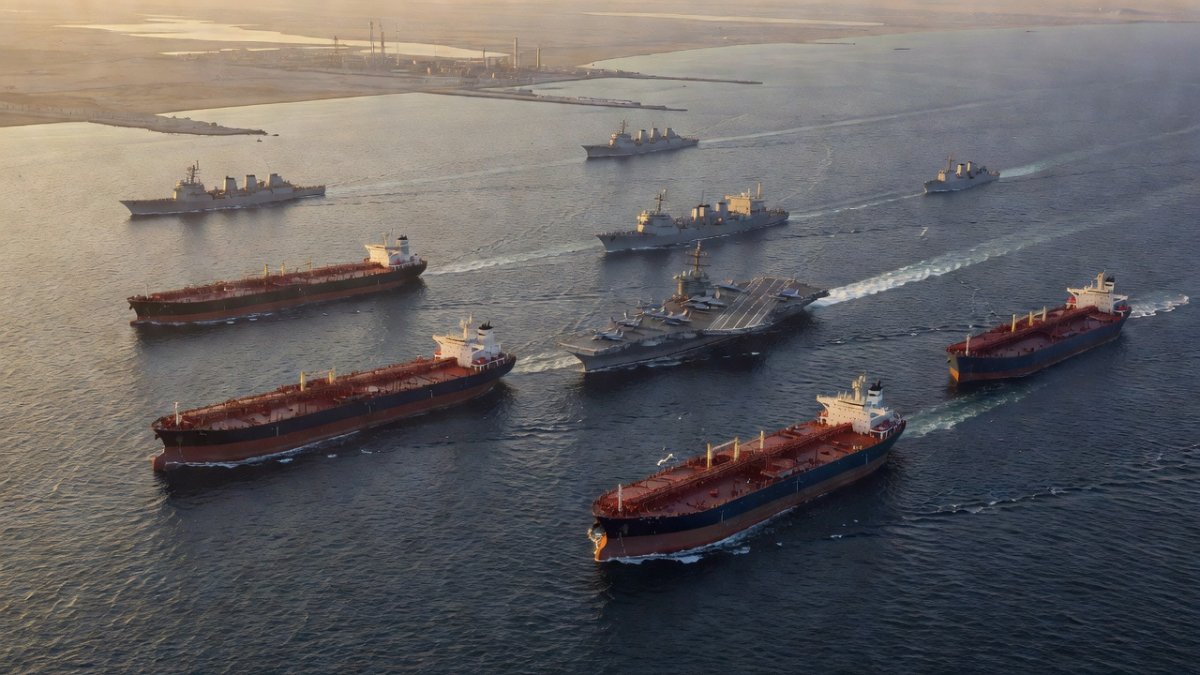
The Trigger: A Drone Hits the Strait of Hormuz Folks, let's talk about what's happening right now in the Middle East, because this isn't some distant conflict you can afford to ignore. According to a BBC News report published June 28, an Iranian one-way attack drone struck the Panama-flagged tanker MT Kiku in the Strait of Hormuz on June 25. That's a direct hit on a commercial
The Trigger: A Drone Hits the Strait of Hormuz
Folks, let's talk about what's happening right now in the Middle East, because this isn't some distant conflict you can afford to ignore. According to a BBC News report published June 28, an Iranian one-way attack drone struck the Panama-flagged tanker MT Kiku in the Strait of Hormuz on June 25. That's a direct hit on a commercial vessel in the most strategically vital waterway on the planet. Reuters and The Guardian are both carrying the same story — this is verified, multiple-source reporting.
The timing is significant. Just ten days earlier, on June 17, Washington and Tehran signed a 14-point Memorandum of Understanding aimed at ending hostilities and keeping the Strait open. The deal required Iran to use its "best efforts for the safe passage of commercial vessels with no charge for 60 days," per the text of the agreement. Instead, within a week, a drone was tearing through a tanker's hull. That's not de-escalation — that's a ceasefire collapsing in real time.
And this wasn't an isolated event. The BBC reports that just two days before the MT Kiku attack, a Singapore-flagged cargo ship called the MV Ever Lovely was also hit by a drone in the same waterway. Tehran told Reuters the cargo ship was attacked because it was using an unauthorized route to transit through the Gulf. The US says Iran violated the ceasefire by attacking commercial shipping. Either way, the Strait of Hormuz is no longer safe for the vessels that carry roughly one-fifth of the world's oil.
US Central Command Responds: 10 Iranian Targets Struck
US Central Command didn't hesitate. In a statement carried by multiple outlets, Centcom confirmed that American fighter jets struck ten Iranian military targets at multiple locations in and near the Strait of Hormuz. The targets included military equipment, communication systems, air defense sites, and drone storage facilities. Centcom described the operation as "a powerful response" to the attack on the cargo ship, adding that Iran's "unwarranted aggression against commercial shipping clearly violated the ceasefire."
According to Centcom's own statement — quoted in full by the BBC and Reuters — "Iran was given a chance to honor the ceasefire agreement but elected not to when its forces launched a one-way attack drone that hit MT Kiku." The Pentagon also released footage of the strikes. The message was unmistakable: the United States will enforce freedom of navigation in the Strait, even if that means striking Iranian assets directly on Iranian soil. The ten targets were selected strategically to degrade Iran's ability to harass shipping without escalating to full-scale war.
But here's the complication the Pentagon doesn't highlight: every strike in this region sends a ripple through global oil markets, through allied capitals in the Gulf, and through a divided Congress. The question now is whether this show of force deters the next attack or invites a wider response.
Iran Retaliates: Missiles Target Kuwait and Bahrain
Tehran answered within hours, and the details come directly from IRGC statements published by Iranian state media and covered by Reuters. Iran's Islamic Revolutionary Guard Corps launched ballistic missiles and drones at what it described as "eight key pieces of infrastructure" at the Ali al-Salem base in Kuwait and the US Fifth Naval Fleet facilities in Port Salman, Bahrain. The IRGC claimed the strikes had "destroyed" their targets — though a US official told Reuters there were no reported American casualties and no major damage to US facilities.
The response from Kuwait and Bahrain was immediate and public. Kuwait's Armed Forces posted on X that "Kuwaiti air defenses are currently confronting hostile missile and drone attacks" and asked citizens to follow security instructions. Bahrain's Ministry of Interior urged people to "remain calm and head to the nearest safe place," according to the BBC. These aren't theoretical warnings — these are real governments telling real civilians to take cover because of a conflict between two nations hundreds of miles away.
The IRGC also made its long-term intentions unmistakably clear. In their statement — carried by Iranian state media and reported by Reuters — they warned that "violating ships will be dealt with more forcefully than in the past" and that "any potential enemy aggression, even if against minor targets, will have a crushing response." They accused the US of violating the June 17 ceasefire agreement and warned that American actions "will lead to a complete halt to the process." Iran's Foreign Ministry went further, calling the US strikes "brutal attacks" and saying that Washington "does not place the slightest value and credibility on its commitments."
Trump's Truth Social Post: "The Islamic Republic Will No Longer Exist"
President Trump posted on Truth Social Saturday evening, and the BBC and Guardian both carried the full quote. "There may come a point when we are no longer able to be reasonable, and will be forced to militarily complete the job that we very successfully started," he wrote. Then the hammer: "If that happens, the Islamic Republic of Iran will no longer exist!"
This is not diplomatic ambiguity — this is regime-change language delivered at a moment when US and Iranian forces are actively exchanging fire across the Gulf. Supporters see strength. Critics see a president painting himself into a corner. Whatever your view, recognize the stakes: the administration is publicly signaling that the survival of the Iranian regime is on the table if the conflict escalates further.
JD Vance echoed the administration's line, saying the US "holds all the cards" in the Iran standoff and will win "either way," as reported by The Guardian. But on the ground in the Gulf, the situation is far less certain. One errant missile, one miscalculation about the other side's red lines, and the entire region could be pulled into a wider war — one that nobody "wins either way."
Political Fallout: Senator Cassidy Breaks Ranks
Here's the part of this story that should concern anyone who cares about how the United States authorizes military force. Senator Bill Cassidy, a Louisiana Republican, went public with a sharp criticism of the administration's approach — reported by The Guardian on June 28. He accused the White House of treating Congress as "merely an appendage" in the Iran conflict. That is a Republican senator breaking ranks with his own party's president over war powers.
Cassidy's comments matter because they signal growing unease in Congress about the cycle of strikes and retaliation unfolding without clear legislative authorization. For years, both parties have largely deferred to the executive branch on military action. Cassidy's critique suggests that deferral is wearing thin. The question of who gets to authorize strikes against Iran — and how far those strikes can go — is no longer just a legal debate among academics. It's now a live political fight within the president's own party.
The Iranian Foreign Ministry, meanwhile, condemned what it called "brutal attacks" as a violation of the ceasefire and said the US "does not place the slightest value and credibility on its commitments, and breaking promises is part of its nature," per Reuters. The diplomatic channel that produced the June 17 agreement is fraying on both sides.
Economic Fallout: What This Means for American Wallets
Let's talk about the pocketbook issue, because that's where the Strait of Hormuz stops being a foreign policy abstract and becomes a household reality. The Strait carries roughly 20 percent of the world's oil supply. When Iran effectively closed the waterway after the US-Israel strikes in late February, global oil prices spiked immediately. Fertilizer shipments were disrupted. Supply chains tightened. Now, with missiles flying and the June 17 ceasefire in tatters, energy markets are repricing risk by the hour.
The BBC notes that the Strait's closure caused "a spike in global oil prices" and "prevented shipments of other crucial commodities such as fertiliser." Every exchange of fire adds more pressure. That pressure shows up at the gas pump, in heating costs, and eventually in the price of food. This is not a distant geopolitical chess game — this is economic reality landing in American households.
Iran's chief negotiator, Mohammed Bagher Ghalibaf, has already told state-affiliated media that "everyone should know that the administration of the Strait of Hormuz will never go back to the way it was before the war." Oman's Foreign Minister Badr Al-Busaidi attempted mediation, saying both sides committed to "toll-free safe passage." But Ghalibaf's message was final: the old rules are off the table. That means oil market volatility is the new normal, and American families will feel the impact for weeks and months to come.
The Road Ahead: No Off-Ramp in Sight
So where does this leave us? Centcom says commercial vessels are continuing to operate in the Strait of Hormuz — for now. But the runway for de-escalation is getting shorter. Iran has warned it will respond more forcefully to any future violations. Trump has warned that the US may need to "militarily complete the job." Kuwait and Bahrain are on edge, their populations living under air defense alerts. And Congress is beginning to stir, with at least one Republican senator demanding accountability for war powers.
The ingredients for a wider conflict are all present: two sides trading direct military strikes, a vital economic waterway in chaos, allied nations caught in the crossfire, and a domestic political system starting to question whether proper authorization exists. This is not a prediction of war — but it is a warning that the current cycle has no built-in off-ramp. The question isn't whether there will be another exchange. It's when, and how large.
Here's what you can do: Stay informed through multiple news sources. Read the BBC, Reuters, and The Guardian reports for yourself. Call your representatives and ask where they stand on war powers and congressional authorization for the use of military force in Iran. Share this article. The next 48 hours will determine whether this crisis de-escalates or spirals — and the people who will live with the consequences are the ones paying attention right now.
Source: BBC News ("US and Iran exchange strikes and accuse each other of violating ceasefire," June 28, 2026), Reuters, The Guardian (June 28, 2026), US Central Command official statements, IRGC statements via Iranian state media, Truth Social (President Donald Trump), Kuwait Armed Forces, Bahrain Ministry of Interior.
By Jessica Ali, Lead Anchor — Global 1 News
This article was produced with AI-assisted research and editorial support. Reporting is based on sources cited in the article.
What's Your Reaction?
 Like
0
Like
0
 Dislike
0
Dislike
0
 Love
0
Love
0
 Funny
0
Funny
0
 Wow
0
Wow
0
 Sad
0
Sad
0
 Angry
0
Angry
0

Editor-in-Chief at Global1.News. Atlanta-based journalist who cuts through the BS and tells it like it is. Lead anchor, host, and the voice you hear when the spin stops and the truth starts.












Comments (0)